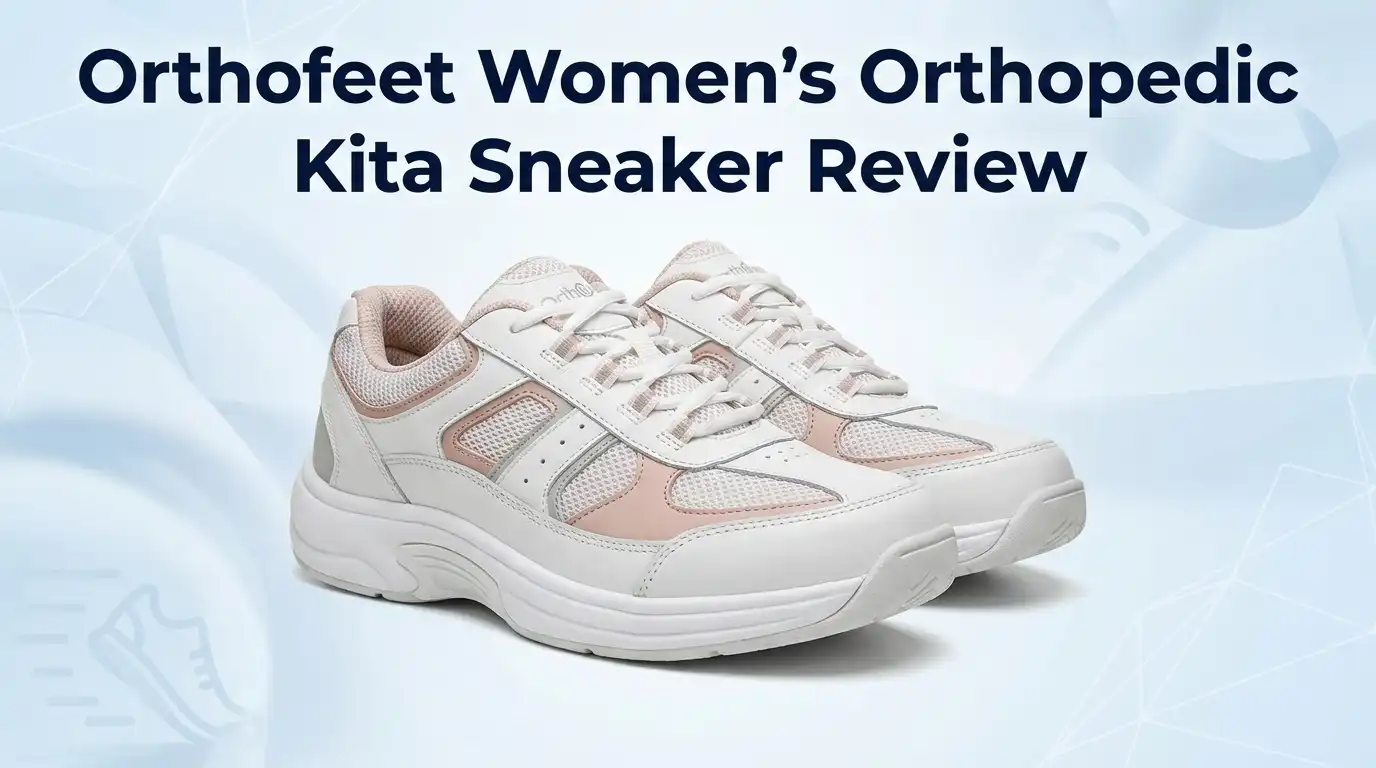
Orthofeet Women’s Orthopedic Kita Sneaker Review: Worth It?
Foot pain that flares the moment you stand up ruins mornings. Bending down to tie laces makes it worse, especially with arthritis, back trouble, or swollen ankles.
The Orthofeet Kita promises a fix: a hands-free slip-on sneaker with a built-in orthotic. This review looks at whether it delivers, based on the product specs and real buyer feedback from 2026.
I dug through hundreds of verified owner comments across Amazon, Zappos, and Orthofeet’s own pages. Some love it. Some sent it back. The truth sits in the middle, and the details matter a lot for plantar fasciitis, bunions, neuropathy, and wide feet.
In a Nutshell
- Hands-free entry: A firm heel counter lets you step in without bending. You tie the laces once, then treat it like a slip-on. Most buyers confirm this works, though a few with very swollen feet struggle.
- Built for foot pain: The removable orthotic insole targets plantar fasciitis, heel pain, diabetes, and overpronation through arch support and heel cushioning.
- Roomy fit: A wide toe box plus Wide and X-Wide widths suit bunions, hammertoes, and custom orthotics. Sizing runs true to size for most.
- Water-repellent upper: The stretch fabric shrugs off light rain and flexes over problem joints.
- Rating reality: It holds a 4.2-star average across nearly 2,000 Amazon reviews, which is strong for an orthopedic shoe.
- Common gripe: The tall tongue and stretchy material bother some. A slice of buyers report squeaking or heel-slip after break-in.
What the Orthofeet Kita Actually Is
The Kita is a women’s athletic sneaker with a medical purpose. Orthofeet designed it around its Ortho-Cushion System, which pairs a cushioned sole with a contoured orthotic insole. The goal is even weight distribution and less pressure on sore spots.

- Hands-Free Slip-On Entry: Tie laces once, then just step in and go. No bending required, and they...
- Water-Repellent Stretch Upper: Durable fabric sheds moisture while flexing with your foot in motion...
- Designed for Relief: Cushioning and arch support help ease plantar fasciitis, diabetes, bunions...
Last update on 2026-07-11 / Affiliate links / Images from Amazon Product Advertising API Some of the links on this website are affiliate links, which means that at no additional cost to you, I earn a commission if you click through and make a purchase. I only recommend products and services that I believe will add value to my readers. Thank you for your support!
The upper uses water-repellent stretch fabric. That fabric molds to bunions and swollen joints without pinching. The sole is rubber with a grippy tread for wet floors.
The headline feature is hands-free wear. A reinforced heel keeps its shape, so your foot slides in without hands. You set the laces once and forget them. For anyone who cannot reach their feet, this is the main draw.
Who This Shoe Is Built For
This sneaker fits a clear group. If you have plantar fasciitis, the arch support and extra heel cushioning aim straight at your pain. Buyers with the condition report real relief after break-in.
People with diabetes or neuropathy benefit from the seam-free interior and soft lining. There is no stitching to rub raw skin. That matters when you cannot feel a blister forming.
The Kita also suits wide and swollen feet. It comes in Medium, Wide, and X-Wide, plus a deep toe box for custom orthotics. One reviewer with a Morton’s neuroma and a plantar fibroma walked six miles a day in London straight out of the box. That is a strong sign for hard-to-fit feet.
Top 3 Alternatives for Orthofeet Kita

- Breathable Stretch Knit Upper: Lightweight fabric flexes and moves with your foot's natural shape...
- Seam-Free Interior Comfort: Smooth, padded inner lining eliminates friction and pressure points...
- Designed for Relief: Cushioning and arch support help ease plantar fasciitis, diabetes, bunions...
Last update on 2026-06-09 / Affiliate links / Images from Amazon Product Advertising API Some of the links on this website are affiliate links, which means that at no additional cost to you, I earn a commission if you click through and make a purchase. I only recommend products and services that I believe will add value to my readers. Thank you for your support!
Orthofeet Women’s Orthopedic Coral Stretch Knit Walking Sneaker
No products found.


Last update on 2026-04-11 / Affiliate links / Images from Amazon Product Advertising API Some of the links on this website are affiliate links, which means that at no additional cost to you, I earn a commission if you click through and make a purchase. I only recommend products and services that I believe will add value to my readers. Thank you for your support!
Orthofeet Women’s Orthopedic Nira Hands-Free Water-Repellent Walking Sneaker
No products found.
Orthofeet Women’s Orthopedic Francis Stretch No-Tie Walking Sneaker
The Unboxing Experience
The Kita arrives in a standard Orthofeet box. Inside, the shoes sit flat with the laces pre-tied. There is no strong glue or rubber smell, which surprised me. Fresh out of the box, they smell neutral.
Most pairs include two extra insole layers and a separate arch booster. These let you fine-tune the fit and lift. A few buyers reported missing inserts or a damaged box, so check your order on arrival.


Last update on 2026-04-11 / Affiliate links / Images from Amazon Product Advertising API Some of the links on this website are affiliate links, which means that at no additional cost to you, I earn a commission if you click through and make a purchase. I only recommend products and services that I believe will add value to my readers. Thank you for your support!
The fabric feels soft and slightly stretchy in hand. The sole is firm but not rigid. First impression: this looks like a real sneaker, not a clinical shoe. That understated style is a repeat compliment in reviews.
How It Feels On Your Feet
Slide your foot in and the stretch upper gives at once. The interior lining is smooth against the skin, with no rough seams near the toes or heel. For sensitive feet, this feel is the payoff.
The arch support is moderate, not aggressive. Zappos data shows 69% of buyers call the arch moderate. If you crave a firm, sculpted arch, add the included booster or your own orthotic.
Break-in matters here. Several owners found the shoe stiff or odd at first, then comfortable after a week. One noted her feet felt great after a short adjustment. Do not judge the Kita on day one.
The Hands-Free Feature, Tested
This is the selling point, so it deserves scrutiny. The reinforced heel holds its shape, letting most people step in without bending. Buyers with rods in their backs and artificial joints praise this daily.
But it is not flawless. The tongue is stitched to the sides to create the slip-on effect. On some pairs, the tongue doubles up as you step in. Anyone who truly cannot reach their feet may need help smoothing it out.
Very swollen or very wide feet can find the opening tight. One size-10.5 X-Wide buyer could not get her foot in at all. If your feet swell badly, size up in width and read return terms first.
Support for Plantar Fasciitis and Heel Pain
Orthofeet markets the Kita hard for plantar fasciitis, and the design backs the claim. The combination of proper arch support and extra heel cushioning is exactly what podiatrists suggest for heel pain.
Real feedback is mostly positive. Buyers report walking for hours without the sharp morning stab. The removable insole means you can swap in a prescribed orthotic if yours is stronger.
Honesty check: it is not magic. One long-term user found her plantar fasciitis pain returned after three to four months, sooner than with other brands. Another recovering from heel surgery found the interior heel design pressed on her incision. Results vary with your specific condition.
The Downsides You Should Know
No shoe is perfect, and the Kita has clear flaws. The tall tongue is the top complaint. It rises high on the ankle and rubs some wearers. A few hoped it would soften with time; others returned the shoe over it.
The stretchy fabric cuts both ways. It flexes over bunions beautifully, but a few buyers felt unstable, especially with bad knees. If you need a locked-down, structured feel, leather models suit you better.
Two more issues surface often. The tight sole tread traps dirt, and buyers resort to a garden hose to clean it. And a handful report a squeak when walking. Sizing can also run inconsistent between pairs, so try before committing to multiples.
Sizing and Fit Guidance
Get the size right and the Kita shines. Zappos fit data shows 86% felt it true to size and 91% true to width. Order your normal size to start.
Width is where this shoe earns its keep. Choose Wide or X-Wide if you have bunions, swelling, or wear thick orthotics. One buyer noted Wide ran too tight for her, so X-Wide was the fix.
Watch the laces. Several owners found the factory laces too long and thin, and swapped them for shorter, thicker pairs. This small change also tightens the hands-free hold and cuts heel slip. It is a cheap, easy upgrade.
Care and Durability
The water-repellent fabric handles light rain and quick spills. It is not waterproof, so do not wade through puddles expecting dry socks. Wipe the upper with a damp cloth to clean it.
Durability is decent for the price. Most buyers report months of daily wear without blowouts. The stretch fabric can loosen over time, so one long-term owner found the fit less snug after heavy use.
Keep them for pavement and indoor wear. The deep tread grabs garden dirt and holds it, per repeat complaints. If you want one clean pair for errands and work, the Kita fits that role well.
Value for Money
At its usual price near other Orthofeet models, the Kita sits in the mid-to-premium orthopedic range. You pay for the orthotic insole, the hands-free heel, and the extra inserts, not for a fashion label.
Compared to buying separate orthotics for a cheap sneaker, the bundle is fair. The 4.2-star average over nearly 2,000 reviews signals most buyers feel they got their money’s worth.
The real value lever is Orthofeet’s 60-day wear test on direct orders. You can walk in them for two months and return them if they fail you. For a shoe this dependent on personal fit, that safety net justifies the spend.
Final Verdict
The Orthofeet Kita is worth it for the right foot. If you need hands-free entry, a wide toe box, and honest relief for plantar fasciitis or bunions, it earns its place. The seam-free interior and moderate arch help the exact people it targets.
It is not for everyone. Skip it if you have severe swelling that blocks the opening, if you want firm structure over stretch, or if a tall tongue rubbing your ankle would drive you crazy. Try one pair, use the wear test, and swap the laces early.
Frequently Asked Questions
Is the Orthofeet Kita truly hands-free?
For most people, yes. The stiff heel lets you step in without bending. But the stitched tongue can double up, and very swollen feet may find the opening tight, so it is not universal.
Does the Kita help with plantar fasciitis?
It is built for it, with arch support and heel cushioning. Many buyers get real relief. A few found the effect faded over months, so pair it with your own orthotic if your case is severe.
Does the Orthofeet Kita run true to size?
Mostly yes. Around 86% of buyers say true to size and 91% true to width. Sizing can vary between pairs, so keep the box until you confirm the fit.
Can I use my own orthotics in the Kita?
Yes. The insole is removable and the toe box is deep, so custom orthotics fit well. Several buyers slot in prescribed inserts without cramping their toes.
What are the most common complaints?
The tall tongue rubbing the ankle, a squeak in some pairs, dirt trapping in the tread, and long thin laces. Swapping laces and wearing them indoors solves most of these.
Is the Kita good for wide or swollen feet?
Very good, with Wide and X-Wide options plus a roomy toe box. If your feet swell heavily, order X-Wide and check the return policy before buying multiples.
Disclosure: This content is part of an Amazon Creator Connections campaign, meaning I earn a commission from qualifying purchases. Using these links costs you nothing extra but directly supports my blog and future content.

Mia Smith is the founder of Shoe Storyteller, a blog that celebrates the art and stories behind shoes. With a passion for fashion and a flair for storytelling, Mia brings a unique perspective to the world of footwear.