Nike Interact Run Review 2026: Worth Buying?
Nike sells a lot of running shoes above $150. The Interact Run sits at the other end of the price list, and it still carries a Flyknit upper. That combination made runners curious the moment it landed, and it keeps selling well in 2026.
This review covers the shoe from the box to the road. You will read about the knit upper, the foam underfoot, the grip problems, the sizing quirks, and the wear patterns after real miles. You will also read the parts Nike got wrong, because a review that only lists strengths helps nobody.
If you want one budget trainer for easy runs, gym sessions, and errands, keep reading. By the end you will know if this shoe fits your feet and your weekly mileage.
In a Nutshell:
- The Interact Run weighs about 8.5 oz (241 g) in a men’s size 9. That number puts it below the average daily trainer. Your legs feel the difference during faster efforts and short runs.
- It is the first Nike Flyknit shoe priced under $100. The upper scores a perfect 5 out of 5 for breathability and a perfect 5 out of 5 for toebox durability in abrasion testing. That upper is genuinely premium for the money.
- The midsole is basic EVA foam with a low stack height of 29.7 mm at the heel. Shock absorption sits below average, and energy return measures around 54 percent. Long runs past 6 miles start to feel harsh.
- Wet grip is poor. Lab traction scored 0.21 against an average of 0.52. Skip this shoe on rainy roads, wet leaves, or painted crosswalks.
- The outsole rubber wears faster than average. Heavy heel strikers and high mileage runners will burn through it quickly.
- Best use case: two or three casual runs per week under 5 miles, plus daily wear. At $60 to $85, the value is strong for beginners and casual runners.
What Is the Nike Interact Run?

- Soft, responsive foam in the midsole gives you a comfortable, smooth ride for your run and wherever...
- Flyknit upper has zones of breathability where your foot heats up most, specifically at the toe box...
- We created the rubber outsole using runner-informed data for traction where you need it.
Last update on 2026-08-28 / Affiliate links / Images from Amazon Product Advertising API Some of the links on this website are affiliate links, which means that at no additional cost to you, I earn a commission if you click through and make a purchase. I only recommend products and services that I believe will add value to my readers. Thank you for your support!
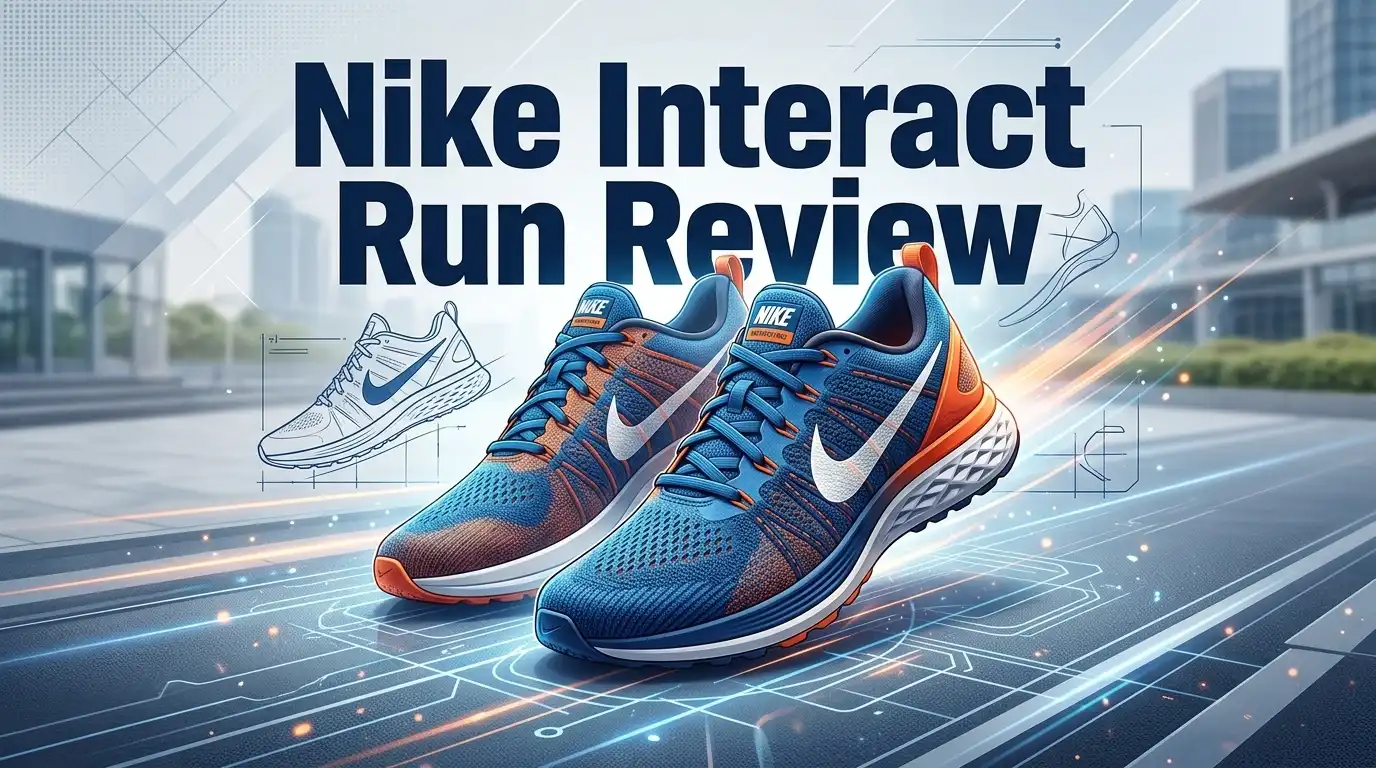
The Nike Interact Run is a neutral road running shoe built for casual runners and everyday movement. Nike launched it as an entry level trainer with a clear mission: bring Flyknit down to a budget price. The list price sits at $85, and street prices often drop to $59 or $65.
The name points to the QR code stitched onto the tongue. Scan it with your phone and Nike opens a page about the shoe’s materials, its recycling program, and cleaning tips. It is a small touch, but it works, and few shoes at this price bother with it.
The build is simple. A one piece Flyknit upper wraps the foot with no overlays. A full length injection molded EVA midsole sits below. A thin rubber outsole with a waffle pattern covers the bottom. The heel measures 29.7 mm and the forefoot measures 20.4 mm, giving a drop close to 9.3 mm.
Nike built this shoe under its Move to Zero program. The upper contains recycled polyester, and each Flyknit upper uses the equivalent of six or seven plastic bottles. Nike Grind material appears in the sole, made from factory scrap.
Understand what this shoe is not. It is not a max cushion trainer. It is not a stability shoe. It carries no plate, no Air unit, and no ZoomX foam. Nike positions it as a comfortable, light, breathable shoe for people who run a few times a week and want the same pair for the rest of the day.
Unboxing Experience and First Impressions
The box arrives plain. Standard orange Nike cardboard, no tissue paper, no extra laces, no shoe bag. You get the shoes and a small hangtag. The presentation matches the price, and that is fine.
Lift the first shoe out and the weight surprises you. It feels closer to a gym trainer than a running shoe. Squeeze the midsole and you feel a firm block of foam with very little give under your thumb.
The knit upper draws your eye first. The weave looks tight and clean, with a subtle texture across the forefoot. Hold it up to a window and light passes right through the midfoot panel. That single test tells you how breathable this shoe will feel in July.
The Swoosh is stitched, not printed. The heel carries a wide fabric pull loop, which looks sharp but is too wide to hook a finger through comfortably. The tongue is thick, padded with two foam layers measuring about 9 mm, and it is one of the plushest tongues in any budget shoe.


Last update on 2026-04-11 / Affiliate links / Images from Amazon Product Advertising API Some of the links on this website are affiliate links, which means that at no additional cost to you, I earn a commission if you click through and make a purchase. I only recommend products and services that I believe will add value to my readers. Thank you for your support!
Slide your foot in and the collar hugs the ankle like a sock. First impression on foot: stiff. The knit needs three or four wears before it relaxes around the midfoot. Several testers reported the same thing.
Bend the shoe in your hands and it flexes easily at the forefoot. Twist it and you feel moderate resistance. Pull the insole out and you find a thin 3.4 mm foam sheet, thinner than most. Swapping that insole for a better footbed is the cheapest upgrade you can make.
Nike Interact Run Design and Flyknit Upper
The upper is the star. Nike used a dense knit that feels plush against the skin yet moves air freely. Under a microscope the weave shows deliberate ventilation holes placed across the toebox and midfoot.
Nike split the upper into two zones. The rear section uses a thicker, tighter knit for structure and heel hold. The front section opens up for airflow. In smoke chamber testing the shoe earned a perfect 5 out of 5 for breathability.
Real world use backs that up. Runners in hot climates rank it among the coolest shoes they own. It also dries fast after rain, which matters if you only own one pair.


Last update on 2026-04-11 / Affiliate links / Images from Amazon Product Advertising API Some of the links on this website are affiliate links, which means that at no additional cost to you, I earn a commission if you click through and make a purchase. I only recommend products and services that I believe will add value to my readers. Thank you for your support!
Durability results are strong too. A rotary tool test at 5,000 RPM left the toebox untouched, earning a perfect score. Heel padding scored 4 out of 5. Cheap knit uppers usually shred in this test, so this result stands out.
One honest warning: some long term users report scuffing near the pinky toe after roughly 50 miles, especially if their foot presses wide against the panel. The knit resists abrasion from the outside but stretches thin from the inside.
There is no gusset on the tongue. Nike added fabric loops to keep it centered, and they mostly work, though the tongue can drift on longer runs. There is also no extra top eyelet, so runners who need a heel lock lace cannot use one.
The biggest safety miss: zero reflective elements. For a shoe aimed at casual runners who often train after work in the dark, that omission is hard to defend.
Top 3 Alternative for Nike Interact Run

- Breathable Upper: Engineered mesh on upper provides breathability.
- Responsive Ride: Our Cushlon 3.0 foam midsole combines with a full-length Nike Air unit to energize...
- Reliable Traction: Rubber waffle-inspired outsole offers reliable traction.

Last update on 2026-08-28 / Affiliate links / Images from Amazon Product Advertising API Some of the links on this website are affiliate links, which means that at no additional cost to you, I earn a commission if you click through and make a purchase. I only recommend products and services that I believe will add value to my readers. Thank you for your support!
Nike Winflo 11

- Style#: FB2207-010
- There’s a little more room in the forefoot compared to the 6, as well, so your toes don’t feel...
- soft cushioning
Last update on 2026-08-28 / Affiliate links / Images from Amazon Product Advertising API Some of the links on this website are affiliate links, which means that at no additional cost to you, I earn a commission if you click through and make a purchase. I only recommend products and services that I believe will add value to my readers. Thank you for your support!
Nike Revolution 7
No products found.
Nike Downshifter 13
Midsole Cushioning and Ride Feel
Here is where the shoe shows its price. The midsole uses injection molded EVA, the same basic foam family Nike has used in budget models for years. Nike markets the feel as soft, and it does deliver a mild cushion, but the numbers tell a plainer story.
Heel stack measures 29.7 mm against a category average near 35.5 mm. Forefoot stack measures 20.4 mm against an average near 27.1 mm. You are running on notably less foam than most modern trainers.
Shock absorption scored 108 SA at the heel and 89 SA at the forefoot, both below the 131 SA average. Energy return landed at 54.2 percent at the heel, again below average. In plain terms: the ground comes through, and the shoe gives little back.
Durometer readings show 20.8 HA, which is close to the middle of the softness range. So the foam is not brick firm. It simply lacks depth and bounce.
On the road this creates a specific feel. The first 3 miles feel light, quick, and connected. Somewhere past mile 3 the cushioning runs out and your legs start to notice every footfall. Multiple testers ended 5 mile runs feeling ready to stop.
The geometry helps a little. A curved heel with a flared base creates a smooth roll on landing, which suits heel strikers. The forefoot stays flat and flexible, giving a traditional toe off with no rocker assist.
Cold weather performance is decent. The foam firmed up only 25 percent after twenty minutes in a freezer, a respectable result for EVA. If you want plush cushioning for long slow miles, this is not your shoe.
Fit and Sizing Guide
The Interact Run fits true to size for most people. Over 200 user votes back that up, and internal length measured 270 mm in a men’s size 9, right at the category average.
The width story is more complicated. The upper measures 96.9 mm across the widest point, slightly above average, so the midfoot feels roomy enough. The toebox narrows to 71.2 mm, below the 73.2 mm average, following Nike’s classic tapered shape.
Toebox height measures 27.9 mm, so your toes get vertical space even if they lack side space. Tall toes are fine. Wide toes are not.
Nike offers this model in standard widths only. Men get D, women get B. No 2E or 4E option exists, which is unusual for a budget shoe and rules out a large group of runners.
Practical advice by foot type: narrow and average feet should order their normal size. Wide feet should try a half size up or look at another model, since going up in length only partly solves a width problem. Runners who wear thick socks should also size up half.
The knit runs stiff out of the box and softens after a few wears. Do not judge fit on the first walk around the living room. Give it three short outings.
Heel hold is good. The collar is thinner than average but the padding placement works, and testers reported no slipping and no rubbing. Nike used a small internal stiffener rather than a hard external heel counter, scoring an average 3 out of 5 for heel structure.
Outsole Grip and Traction Test Results
This section covers the shoe’s clearest weakness. Wet traction scored 0.21 in lab testing, one of the lowest results recorded, against a 0.52 average. That is not a small gap. That is a warning.
Dry grip performs acceptably. On clean asphalt, sidewalks, gravel, and dry grass, testers reported no slipping and no anxious moments. The waffle pattern does its job when the ground is dry.
Add water and the story changes. Wet metal, painted lines, tile floors, and slick pavement all become risky. Treat this shoe as a fair weather trainer and you will avoid the problem entirely.
The design explains the result. Nike used a thin, basic waffle layout with a wide exposed channel down the center. Less rubber on the ground means less contact area, and the rubber compound itself is soft and not grip focused.
Durability is the second issue. Abrasion testing removed 1.7 mm of rubber against a 1.1 mm average, and one lug disappeared completely during the test. Outsole thickness measures 3.3 mm, which is normal, but the compound gives up sooner than it should.
For comparison, cheaper Nike models like the Winflo have posted better outsole durability with a similar tread layout. This is where Nike cut cost to protect the price of the upper.
Expect 250 to 300 miles from a pair if you run mostly on road. Lighter runners with a midfoot strike will get more. Heavy heel strikers will get less, and they will see the foam peek through the heel corner first.
Weight, Flexibility, and Everyday Comfort
At 8.5 oz (241 g) the Interact Run undercuts the 9.2 oz category average. That is impressive given how much padding sits in the tongue and collar. Some size 12 samples weigh closer to 10 oz, which is still reasonable for the size.
Light weight changes how the shoe feels on faster days. Several testers said they enjoyed it most during track sessions, strides, and quick 5K efforts, exactly where a low stack and low weight help.
Flexibility measured 12.6 N in a 30 degree bend test, below the 15.5 N average. The shoe bends easily at the forefoot, which suits walking, standing, and casual movement.
Torsional rigidity scored 3 out of 5, right around average. The shoe resists twisting enough to feel secure but never feels locked down or plated.
As a daily wear shoe, it performs very well. It handles airport days, dog walks, grocery runs, and light gym work without complaint. The knit looks clean with jeans or shorts, and the colorways stay understated.
Stability deserves a note. Sidewalls give a mild cradle and the 91.5 mm heel base is average, but there is no medial post and no guide rails. Neutral runners only. Anyone with mild overpronation should choose a support model instead.
One more comfort factor: the sock like collar means you can wear it without socks for short trips, though the thin insole makes that less pleasant on longer outings.
Pros and Cons of the Nike Interact Run
Here is the honest scorecard after all testing.
Pros
- Excellent Flyknit upper. Perfect breathability score, perfect toebox abrasion score, and a genuinely premium feel at a budget price.
- Very light on foot. 8.5 oz keeps the shoe nimble for short runs and speed sessions.
- Strong value. Often available between $59 and $85, which is rare for Flyknit.
- Plush tongue and collar. 9 mm of tongue padding beats most shoes twice the price.
- Doubles as a lifestyle shoe. Clean looks, flexible sole, and comfortable all day fit.
- Dries fast after rain or a wash.
Cons
- Weak wet traction. A 0.21 score is dangerous on slick surfaces.
- Thin cushioning. Low stack and below average shock absorption make runs past 5 miles uncomfortable.
- Low energy return. The foam feels flat and gives little back.
- Outsole wears fast. Above average rubber loss in abrasion testing.
- No reflective details. A real safety gap for evening runners.
- Standard widths only. No wide or extra wide sizes exist.
- Stiff break in period. The knit needs several wears to relax.
- Thin 3.4 mm insole that most people will want to replace.
- No tongue gusset and no extra eyelet for lace lock adjustments.
Running Performance by Distance
Distance changes the verdict on this shoe more than any other factor. Break it down and the picture gets clear.
Under 3 miles: excellent. The shoe feels light, quick, and breezy. Nothing about the ride annoys you at this range, and the low stack keeps you connected to the road.
3 to 5 miles: good, with limits. Testers consistently reported the cushioning fading around mile 3. You can finish the run comfortably, but you notice your legs working harder near the end.
5 to 8 miles: rough. Multiple reviewers described being ready to stop by the end of a 5 mile effort. The lack of foam depth catches up with your calves and knees.
Over 8 miles: not recommended. There is simply not enough material between your foot and the pavement for repeated impact at that volume.
Track and speed work: surprisingly strong. The firm, low, light setup helps during intervals and strides. Several testers named this their favorite use case.
Treadmill: fine. Grip issues disappear indoors and the breathability is welcome in a warm gym.
Trail: avoid. The outsole lacks lugs, the rubber is soft, and there is no rock protection.
Weekly volume matters too. Two or three runs per week suits the shoe well. Daily training will wear the outsole down within a few months. Runners over roughly 200 pounds will compress the foam faster and should consider a thicker stack model.
Price, Value, and Where the Money Went
The Interact Run lists at $85. Real prices in 2026 often land between $55 and $75 depending on colorway and size, and older colors go lower during clearance events.
At those prices the value equation looks good. You are essentially buying a premium upper attached to a basic sole unit. Nike spent the budget on the knit and saved it on the rubber and foam.
That trade works for some buyers and fails for others. A beginner running 3 miles twice a week gets a comfortable, breathable, good looking shoe for the price of a takeout dinner or two. A marathon trainee logging 40 miles a week gets a shoe that will disappoint fast.
Compare it to nearby options. The Winflo costs more and delivers better foam and better outsole life. The Revolution 7 costs less and uses a plain mesh upper with softer, thicker cushioning. The Downshifter 13 sits close in price and offers longer outsole durability.
The Interact Run wins on materials and weight. It loses on the parts that touch the ground.
Cost per mile tells the real story. If you get 250 miles from a $65 pair, that is 26 cents per mile, which is competitive. If you get 200 miles from an $85 pair, the math weakens.
Best buying advice: wait for a sale, buy your true size, and treat it as a light mileage rotation shoe rather than your only trainer.
Care Tips to Make the Shoes Last Longer
A few habits will stretch the life of this pair, especially given the soft rubber.
Rotate your shoes. Running in the same pair every day compresses EVA foam and never gives it time to rebound. Alternating with a second pair can add weeks of usable life.
Skip the washing machine. The knit holds up well to abrasion, but machine agitation and heat break down the adhesive at the midsole bond. Use lukewarm water, a soft brush, and a small amount of mild detergent.
Air dry only. Keep the shoes away from radiators, dryers, and direct sun. Heat is the fastest way to warp EVA foam and shrink knit fibers. Stuff them with paper towels to hold shape and absorb moisture.
Loosen the laces before you take them off. Yanking the heel down repeatedly stresses the internal stiffener and the collar seam.
Avoid wet surfaces where you can. This protects you from the low traction score and also protects the outsole, since wet grit acts like sandpaper on soft rubber.
Replace the insole early. The stock footbed is thin at 3.4 mm. A better aftermarket insole adds real cushioning and costs far less than a new pair of shoes. This single change fixes the most common complaint about the ride.
Track your mileage in an app. Watch for a flat heel corner, exposed white foam, or a shoe that suddenly feels harsher. Those are your retirement signals.
Who Should Buy It and Who Should Skip It
Buy the Nike Interact Run if you:
Run two or three times a week at distances under 5 miles. Want one shoe for running, gym work, and daily wear. Live somewhere hot and value airflow above everything else. Are new to running and want quality materials without a big spend. Have narrow or average width feet. Prefer a firmer, lighter, ground connected ride.
Skip it if you:
Train for a half marathon or marathon. Need cushioning for long slow miles. Run in rain, snow, or on slick city streets. Have wide feet that need a 2E or 4E fitting. Overpronate or need any stability features. Run in low light and rely on reflective details. Weigh enough that thin foam bottoms out quickly. Log more than 25 miles per week.
The line is simple. This is a light mileage shoe with a heavy mileage upper.
Runners who fall in the middle can still make it work by treating it as a rotation piece. Use it for easy short days and speed sessions. Keep a cushioned trainer for long runs. That approach plays to the shoe’s strengths and hides its weaknesses.
Verdict: a genuinely good budget shoe with two real flaws you must plan around. The Flyknit upper punches far above its price. The outsole and midsole remind you exactly what you paid. Know your mileage, check your foot width, and check the weather forecast, and you will be happy with this purchase.
Frequently Asked Questions
Is the Nike Interact Run a real running shoe?
Yes, but with limits. Nike built it as an entry level road running shoe, and it handles easy runs, treadmill sessions, and speed work well. It lacks the cushioning depth for long distance training. Most testers describe it as a shoe for runs up to 5 miles that also works as a daily sneaker.
Does the Nike Interact Run run true to size?
Yes, for most people. Internal length matches the category average and over 200 user votes confirm a true to size fit. The toebox tapers narrower than average though, so wide footed runners should size up half or choose a different model. Nike offers standard widths only, with no wide options.
How long does the Nike Interact Run last?
Expect roughly 250 to 300 miles. The outsole rubber wears faster than average in abrasion testing, and the low stack midsole compresses sooner than thicker foams. Lighter runners with a midfoot strike will get more miles. Heavy heel strikers should watch the heel corner for early wear.
Is the Nike Interact Run good for wide feet?
Not really. The upper measures wide enough through the midfoot, but the toebox is narrower than average at 71.2 mm and the shoe comes in standard widths only. There is no 2E or 4E version. Wide footed runners should look at models offered in extra widths instead.
Can I wear the Nike Interact Run in the rain?
You can, but be careful. Wet traction scored 0.21 in lab testing against a 0.52 average, one of the lowest results on record. The shoe dries fast after getting soaked, which is a plus, but the grip on wet pavement, painted lines, and metal surfaces is unreliable.
How does the Interact Run compare to the Nike Revolution 7?
The Interact Run has the better upper, lighter weight, and cleaner looks. The Revolution 7 usually costs less and offers slightly softer cushioning with a plain mesh upper. Choose the Interact Run for breathability and speed. Choose the Revolution 7 for a lower price and a bit more underfoot comfort.
Is the Nike Interact Run good for walking and standing all day?
Yes, this is one of its best uses. The shoe is light, flexible, breathable, and the tongue and collar padding feel plush. The thin 3.4 mm insole is the weak point for long standing shifts. Swap in a thicker aftermarket footbed and the shoe becomes very comfortable for all day wear.

Mia Smith is the founder of Shoe Storyteller, a blog that celebrates the art and stories behind shoes. With a passion for fashion and a flair for storytelling, Mia brings a unique perspective to the world of footwear.