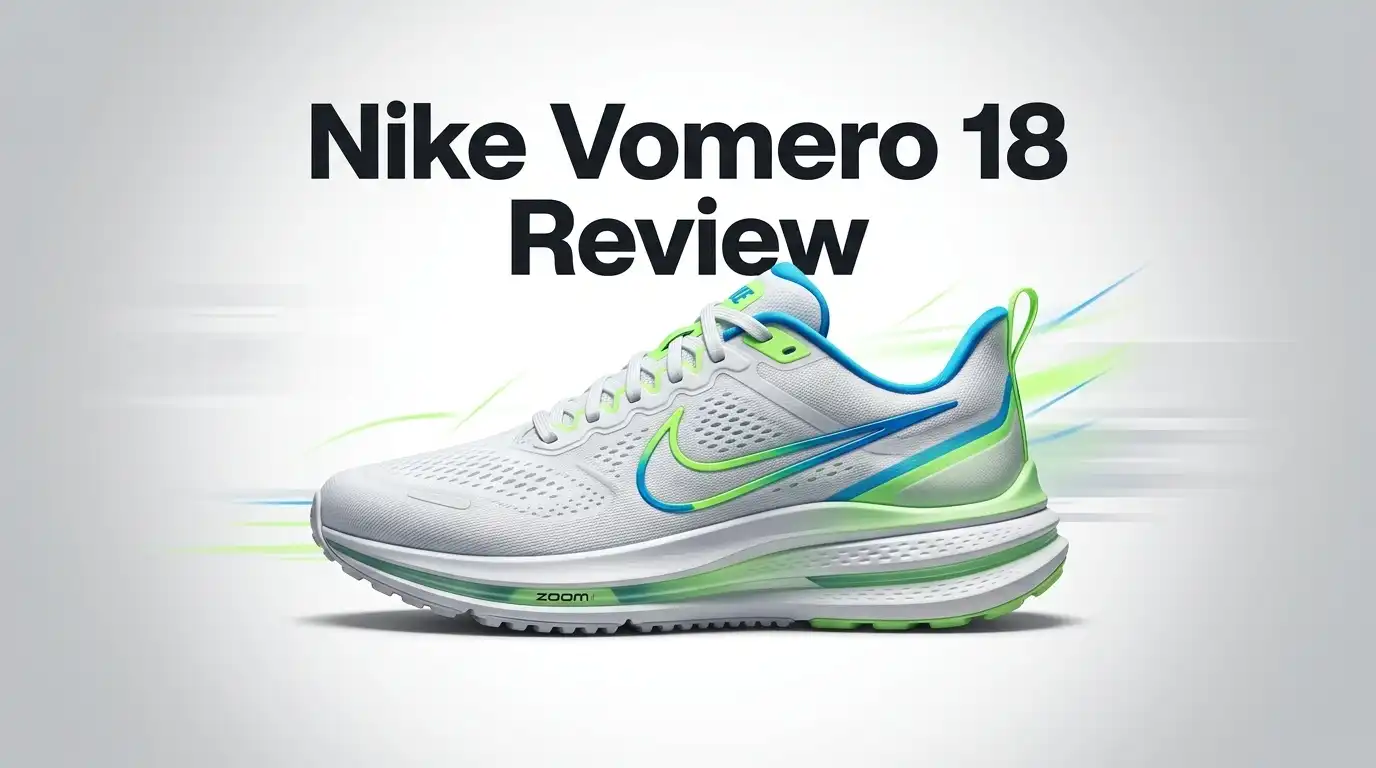
Nike Vomero 18 Review 2026: Still Worth It?
Nike changed the Vomero line in a big way, and runners noticed right away. The Vomero 18 arrived with a taller stack, a new foam pairing, and a lower price than the version before it. That combination made it one of the most talked about daily trainers of the past two years.
I have logged easy miles, long runs, and a few faster efforts in this shoe. I have also read through lab data, long term mileage reports, and plenty of frustrated forum posts. The picture that emerged is more interesting than a simple thumbs up.
This review covers the good, the average, and the parts Nike got wrong. You will learn how the shoe fits, how the foam behaves after a few hundred miles, who it suits, and who should look elsewhere. No marketing language, just what the shoe actually does on the road.
In a Nutshell:
- The Vomero 18 is now a max cushion trainer, not a moderate one. Lab measurements put the heel near 42.5 mm and the forefoot near 28.6 mm. Nike lists 46 mm and 36 mm. Either way, this is a much taller shoe than the Vomero 17.
- The foam setup improved. A thick ZoomX top layer sits over a firmer ReactX base. The ReactX replaced Cushlon 3.0, and the ride feels softer, calmer, and more protective on long easy runs.
- Weight went up and energy return went down. At roughly 10.5 oz in a men’s US 9, this is a heavy trainer. Forefoot energy return actually dropped compared to the Vomero 17.
- The toebox is narrow. Measured near 69.6 mm, well under the average of 73.2 mm. Runners with wide feet will feel squeezed.
- The price dropped to about $150. Nike split the line into standard, Plus, and Premium tiers, and the base Vomero slid into a friendlier bracket.
- Best use case: slow miles, recovery days, long runs, and walking. Worst use case: tempo work, race day, hot summer running, and wide feet.
Nike Vomero 18 Overview

- The upper is made of engineered mesh for soft breathability.
- Our dual-density midsole has ZoomX foam stacked on top of ReactX foam, 13% more responsive than...
- We placed pods around the outsole to help enhance agility and smoother heel-to-toe transitions.
Last update on 2026-08-30 / Affiliate links / Images from Amazon Product Advertising API Some of the links on this website are affiliate links, which means that at no additional cost to you, I earn a commission if you click through and make a purchase. I only recommend products and services that I believe will add value to my readers. Thank you for your support!
The Vomero 18 is Nike’s plush neutral daily trainer. It sits above the Pegasus in cushioning and below the Vomero Plus and Vomero Premium in price and tech. Nike aimed this shoe at runners who want comfort first and speed second.
The midsole uses two foams. A thick ZoomX layer handles softness and shock absorption. A ReactX layer underneath adds bounce, stability, and durability. This is not the same ZoomX found in the Vaporfly or Alphafly. Nike reuses the name across compounds. Under a microscope, the Vomero version looks denser and heavier, built for training mileage instead of racing.
The upper uses a double layer engineered mesh with heavy padding at the collar and tongue. A semi gusseted tongue keeps things locked down. Three reflective straps sit on the heel for low light visibility.
Stated weight lands around 10.5 oz or 298 g for a men’s US 9. Stated drop is 10 mm, though lab testing showed something closer to 13.9 mm because the forefoot stack is lower than advertised. That high drop matters. It pushes the shoe toward heel strikers and away from midfoot and forefoot runners who prefer a flat platform.
Retail price sits near $150, with frequent discounts on Amazon and at running retailers.
Unboxing the Nike Vomero 18
The box is standard Nike. Orange cardboard, no extra laces, no fancy tissue, no printed insert. If you expect a premium unboxing moment, you will not get one here. Nike saves that for the Premium tier.
Lifting the shoes out is where the first surprise hits. They feel heavy in hand. Noticeably so. The heel looks tall and thick, almost like a walking shoe from the side profile. The sidewalls curve up around the foam, and the ReactX layer shows as a contrasting color under the white ZoomX. Nike made the two foams visually obvious, which is a nice touch.
Squeezing the midsole tells you a lot. The top layer gives easily under thumb pressure. The bottom layer pushes back. That contrast is the whole design in one squeeze.
The step in feel is the real selling point. The heel collar is packed with soft padding. The tongue measures around 13.4 mm thick, which is more than double the average. Your foot sinks into a pillow. Nothing rubs, nothing pinches at the ankle.


Last update on 2026-04-11 / Affiliate links / Images from Amazon Product Advertising API Some of the links on this website are affiliate links, which means that at no additional cost to you, I earn a commission if you click through and make a purchase. I only recommend products and services that I believe will add value to my readers. Thank you for your support!
The insole pulls out without a fight, so custom orthotics slide in cleanly. Laces are flat and long. Some runners will need a runner’s loop at the top eyelet. First impression: comfortable, plush, and clearly built for cruising rather than racing.
Midsole Feel: ZoomX Over ReactX
This is the heart of the shoe. Nike stacked a soft PEBA based ZoomX layer on top of a firmer ReactX carrier, and the balance works better than the Cushlon setup used in the Vomero 17.
Shock absorption tested at 147 in the heel and 116 in the forefoot, both well above average. Landings feel deep and quiet. Heavier runners and heel strikers get real joint protection here. On tired legs after a hard workout day, the Vomero 18 feels like a reward.
Midsole softness measured at 30.5, which sits on the soft side of the scale. The ReactX base at 44.3 keeps things from turning mushy. You sink, then you get gently pushed back up.
Here is the honest catch. Energy return did not improve. Forefoot energy return dropped to roughly 58.9 percent from 64.5 percent in the Vomero 17. Heel return sits near 56.9 percent, slightly below the category average. So the shoe is softer but less springy. It absorbs more than it returns.


Last update on 2026-04-11 / Affiliate links / Images from Amazon Product Advertising API Some of the links on this website are affiliate links, which means that at no additional cost to you, I earn a commission if you click through and make a purchase. I only recommend products and services that I believe will add value to my readers. Thank you for your support!
The rocker is mild. Nike kept the traditional Vomero geometry instead of adding an aggressive curve. The heel bevel helps rearfoot strikers roll forward, but forefoot runners will not feel much assistance. Comfort went up, propulsion did not.
Top 3 Alternative for Nike Vomero 18

- Style#: HF0013-900
- Upgraded breathable engineered mesh upper
- ReactX foam midsole surrounds forefoot and heel Air Zoom units for an energized ride.
Last update on 2026-08-30 / Affiliate links / Images from Amazon Product Advertising API Some of the links on this website are affiliate links, which means that at no additional cost to you, I earn a commission if you click through and make a purchase. I only recommend products and services that I believe will add value to my readers. Thank you for your support!
Nike Pegasus 41

- THIS MEN’S SHOE IS FOR: Runners looking for a smooth ride that won’t distract from the fun of...
- SOFT CUSHIONING: The Ghost 16 offers neutral support while providing soft, nitrogen-infused DNA Loft...
- SMOOTH TRANSITIONS: The soft midsole and Segmented Crash Pad promotes an easy flow from landing to...
Last update on 2026-08-30 / Affiliate links / Images from Amazon Product Advertising API Some of the links on this website are affiliate links, which means that at no additional cost to you, I earn a commission if you click through and make a purchase. I only recommend products and services that I believe will add value to my readers. Thank you for your support!
Brooks Ghost 16
No products found.
ASICS Gel Nimbus 27
Fit and Sizing
The Vomero 18 fits true to size for most runners. Over six hundred user votes back that up. Order your normal Nike running size and you will land in the right place.
Overall width measured 95.6 mm, right at average. That number hides the real story. The toebox is the problem area. It measured 69.6 mm against a 73.2 mm average, which puts it firmly in the narrow category. Nike’s tapered last continues here, and the toe shape comes to a point.
If you have narrow or standard width feet, the fit feels secure and glove like. If you have wide feet or you like your toes to splay naturally, this shoe will frustrate you. Sizing up half a size does not fix a narrow toebox. It just makes the shoe longer and adds heel slip.
Toebox height measured 26.2 mm, slightly below average, but the soft mesh flexes enough that vertical pressure is not an issue. No black toenails in my testing.
Midfoot lockdown is excellent. The webbed eyelet system distributes lace tension across the instep instead of creating pressure points. The semi gusseted tongue stays centered. Heel hold is secure thanks to the deep padding and a moderate heel counter rated 3 out of 5 for stiffness.
Wide sizes are available in some colorways, which helps a little. Still, this remains one of the narrower daily trainers on the market.
Upper, Tongue, and Breathability
The upper is a double layer engineered mesh, and it is thick. Under a microscope the yarns look fluffy and dense. That construction explains the plush feel and part of the weight.
Comfort is genuinely high. The collar padding hugs the ankle. The tongue is a small cushion. Nothing about this upper causes hot spots or rubbing. Break in time is essentially zero.
Breathability is where the tradeoff shows. In smoke testing, air struggled to move through the mesh. Shining a light through the upper revealed almost no light passing. The shoe rated 3 out of 5 for airflow, below the 3.6 average.
In practice, this means warm feet in summer. On cool mornings the shoe feels cozy. On a humid July afternoon, expect sweat. Thin socks help. Runners in hot climates should consider the Vomero Plus, which uses a lighter and airier upper.
Toebox durability tested at 3 out of 5, which is above average for such soft mesh. Heel padding durability scored a rare 5 out of 5, meaning the collar will not shred even after heavy mileage.
One small critique. Given how heavy this shoe already is, a 13.4 mm tongue feels excessive. Cutting that to 6 or 7 mm would have saved weight without hurting comfort much. Nike chose plushness over grams every single time.
Ride Quality on Easy and Long Runs
This is the Vomero 18’s home turf. At conversational pace, the shoe disappears under you in the best way.
Landings are cushioned and quiet. The tall heel swallows impact. The ReactX base keeps the platform from feeling unstable despite the height. Transitions are smooth thanks to the beveled heel and the mild forefoot rocker. Ninety minutes into a long run, my legs felt noticeably fresher than in a firmer trainer.
Stability deserves a mention. The Vomero 18 is a neutral shoe, but the wide base, the firmer bottom foam, and the subtle midsole sidewalls create gentle guidance. Forefoot midsole width measured 116.6 mm and heel width 96.5 mm, both above average. Runners with mild pronation often do fine here without needing a dedicated stability shoe.
Torsional rigidity rated 4 out of 5. The shoe resists twisting, which adds to the planted feel. Flex testing showed 16.0N of force needed for a 30 degree bend, a 51 percent increase over the Vomero 17. This is no longer a flexible trainer.
Recovery runs, easy days, base miles, and long slow distance all suit the shoe perfectly. It also works well for walking, standing, and travel, which explains why so many non runners buy it.
Speed Work and Tempo Runs
Short version: do not buy this shoe for speed.
At faster paces the Vomero 18 pushes back in the wrong way. The weight becomes obvious. The soft ZoomX layer compresses and then takes its time returning. You feel like you are working against the shoe instead of with it.
The low energy return numbers explain why. Roughly 57 percent at the heel and 59 percent at the forefoot leave you doing more of the work yourself. Compare that to a modern super trainer, where numbers climb into the seventies.
The mild rocker also limits turnover. Aggressive rockered trainers help roll you forward at pace. The Vomero keeps its traditional geometry, which is great for comfort and average for speed.
Strides at the end of an easy run feel fine. A few pickups will not ruin your day. A full tempo session or a track workout will leave your legs feeling flat and heavy.
If you want one shoe for everything, this is not it. Pair the Vomero 18 with a lighter tempo shoe and you have a strong two shoe rotation. Used that way, the Vomero handles roughly 70 percent of weekly mileage and the faster shoe handles the rest. That split makes far more sense than asking one trainer to do both jobs badly.
Outsole Grip and Durability
Nike replaced the classic full length waffle outsole with a new layout. Rubber covers the heel and forefoot edges, while a smooth central groove and exposed foam sit through the midfoot. That saves weight but leaves gaps.
Wet grip is the weak point. Traction testing scored 0.38 against a 0.52 average. On dry pavement the shoe grips fine. On wet roads, painted lines, and metal covers, the rubber feels slick and slightly plasticky. Take corners with care in the rain.
Durability is mixed. Outsole thickness measured 3.8 mm, above the 3.1 mm average, which is a good sign. Dremel wear testing showed 1.1 mm of loss, exactly average and not impressive for a shoe in this weight class.
Real world reports back that up. Long term users at 300 to 500 miles report visible wear on the exposed foam sections and on the softer rubber at the outer heel. Runners with heavy heel strike see it soonest. Runners who land midfoot report cleaner wear patterns.
Realistic lifespan sits around 350 to 450 miles for most people. The foam holds up better than the outsole. Many users say the ride still feels good when the rubber starts thinning, which is a strange kind of compliment.
For a $150 shoe, that mileage is acceptable but not a standout. Some rivals at the same price last longer.
Nike Vomero 18 vs Vomero 17
This is the biggest year over year change the Vomero line has ever seen.
Stack height jumped from roughly 33.9 mm at the heel in the Vomero 17 to about 42.5 mm in the Vomero 18. That is nearly nine millimeters in one update. The shoe changed category, not just generation.
The Vomero 17 was a moderate daily trainer with a firmer, bouncier, faster feel. The Vomero 18 is a max cushion cruiser that prioritizes softness and protection.
Foam changed too. The 17 used ZoomX over Cushlon 3.0. The 18 uses ZoomX over ReactX. ReactX is the better carrier foam, offering more bounce and better durability than Cushlon ever managed.
Weight went up. Flexibility went down by 51 percent. Energy return went down slightly. Price went down by about $10.
Which is better depends entirely on you. Runners who loved the 17 for its snappy, ground connected feel often dislike the 18. Runners who always wished the Vomero had more cushioning finally got what they asked for.
If you want a versatile trainer that can handle a mixed pace run, hunt down remaining Vomero 17 stock. If you want a dedicated comfort shoe for slow miles, the 18 is the clear pick.
What the Vomero 18 Does Not Do Well
Every honest review needs this section, so here it is without softening.
Speed. The shoe is heavy and the energy return is below average. Fast running feels like a chore.
Wide feet. The narrow, pointed toebox is the single most common complaint. No lacing trick fixes it.
Hot weather. The thick double layer mesh traps heat. Summer runners in humid regions will not enjoy this upper.
Wet traction. A 0.38 grip score is well below average. The rubber compound simply does not bite on soaked pavement.
Weight. At 10.5 oz, it sits over an ounce heavier than the category average. Lighter shoes with similar cushioning exist.
Ground feel. The 13.9 mm effective drop and stiff platform remove almost all road feedback. Forefoot strikers and runners who like a natural feel should skip it.
Outsole coverage. Exposed foam in the midfoot wears faster than full rubber coverage would.
None of these flaws are dealbreakers on their own. Stack three or four of them together and you get a shoe with a clearly defined lane. Inside that lane, it performs very well. Outside it, there are better options at the same price.
Pros and Cons
Pros
- Deep, plush cushioning that protects joints on long runs and recovery days
- Excellent shock absorption, measured well above average at both heel and forefoot
- Upgraded ReactX base foam adds bounce and stability over the old Cushlon setup
- Outstanding step in comfort with a padded collar and a thick semi gusseted tongue
- Surprisingly stable for a neutral shoe thanks to a wide base and subtle sidewalls
- Heel padding durability scored a rare perfect 5 out of 5 in testing
- Price dropped to around $150, undercutting many rivals in the max cushion class
- Removable insole accepts custom orthotics without fit problems
- Reflective heel straps add visibility for early morning and evening runs
- Works extremely well as a walking and standing shoe
Cons
- Heavy at roughly 10.5 oz, over an ounce above the average trainer
- Narrow toebox measured at 69.6 mm, a real problem for wide feet
- Energy return dropped compared to the Vomero 17, especially in the forefoot
- Poor wet weather traction with a 0.38 grip score
- Warm upper with limited airflow, rated 3 out of 5 for breathability
- Very high effective heel to toe drop near 13.9 mm, unsuitable for flat platform fans
- Actual stack heights measured lower than Nike’s published numbers
- Not capable at tempo pace or on race day
- Exposed midfoot foam wears faster than full rubber coverage
- Tongue padding feels excessive on an already heavy shoe
Who Should Buy the Nike Vomero 18

- The upper is made of engineered mesh for soft breathability.
- Our dual-density midsole has ZoomX foam stacked on top of ReactX foam, 13% more responsive than...
- We placed pods around the outsole to help enhance agility and smoother heel-to-toe transitions.
Last update on 2026-08-30 / Affiliate links / Images from Amazon Product Advertising API Some of the links on this website are affiliate links, which means that at no additional cost to you, I earn a commission if you click through and make a purchase. I only recommend products and services that I believe will add value to my readers. Thank you for your support!
Buy this shoe if you are a heel striker who wants maximum protection underfoot. The tall, beveled heel and high drop suit rearfoot landings perfectly, and runners with Achilles sensitivity often find relief in a high drop platform.
Buy it if most of your weekly mileage happens at easy or conversational pace. The Vomero 18 rewards patience, not speed.
Buy it if you are a heavier runner. The deep cushioning and firm ReactX base handle higher impact loads better than lighter, softer trainers do.
Buy it if you have narrow or standard width feet. The tapered fit that frustrates wide footed runners feels secure and precise on narrow feet.
Buy it if you want one comfortable shoe for running, walking, travel, and standing all day. Few shoes cross over that well.
Skip it if you have wide feet, if you run in hot and humid weather, if you want a lightweight trainer, or if you need one shoe that handles both easy and fast running.
Also skip it if you loved the firmer, snappier Vomero 17. This is a different shoe wearing the same name, and pretending otherwise leads to disappointment.
Final Verdict
The Nike Vomero 18 is a good shoe with a clear personality. Nike moved it into the max cushion category, improved the foam pairing, and cut the price. Those are three real wins.
The tradeoffs are equally real. The shoe gained weight, lost energy return, kept a narrow toebox, and runs warm. Lab data and long term user reports agree on all four points.
Rating: 4 out of 5 for easy day comfort. 2 out of 5 for versatility.
At $150, and often less on sale, the value is strong for what it does. You get premium PEBA foam, a durable upper, and cushioning that competes with shoes costing $170 or more. Just understand what you are buying. This is a specialist comfort trainer, not a do everything workhorse.
Runners who slot it into a rotation as their easy day and long run shoe tend to love it. Runners who expect it to be their only shoe tend to complain within a month.
My advice is simple. Try it on before committing if you can, pay close attention to toebox space, and be honest about how much slow running you actually do. If the answer is most of your miles, the Vomero 18 will serve you well for several hundred of them.
Frequently Asked Questions
Is the Nike Vomero 18 true to size?
Yes. Most runners should order their usual size. Length is accurate and the heel holds well. The issue is width, not length. If you have wide feet, look for wide sizing rather than going up half a size, because a longer shoe does not create a wider toebox.
How many miles will the Nike Vomero 18 last?
Expect 350 to 450 miles for most runners. The ZoomX and ReactX foams hold their feel reasonably well. The outsole is the limiting factor, since exposed foam in the midfoot and softer rubber at the heel wear faster than the midsole degrades.
Is the Vomero 18 good for walking or standing all day?
Yes, and this is one of its strongest uses. The deep cushioning, plush collar, and stable base make it comfortable for nurses, teachers, retail workers, and travelers. The weight matters less when you walk than when you run.
Can I use the Vomero 18 for a marathon?
You can, but it is not ideal. The shoe is heavy and the energy return is below average, so it will cost you energy over 26.2 miles. It works better as a marathon training shoe for long slow runs than as a race day option. Slower marathoners who value comfort over speed sometimes make it work.
Vomero 18 or Vomero Plus, which should I pick?
Choose the Vomero 18 for a plusher, warmer, more protective ride at a lower price. Choose the Vomero Plus for a lighter, bouncier, more breathable ride with a full ZoomX midsole. The Plus costs more and suits faster running better.
Is the Vomero 18 a stability shoe?
No. It is a neutral shoe. That said, the wide platform, firmer ReactX base, and slight midsole sidewalls provide gentle guidance. Runners with mild overpronation often find it stable enough. Anyone needing structured support should look at a dedicated stability model.
Does the Vomero 18 run hot?
Yes. The double layer engineered mesh is thick and dense, and airflow testing rated it below average. It feels great in cool weather and warm in summer. Thin moisture wicking socks help, but the upper will never be a cool one.

Mia Smith is the founder of Shoe Storyteller, a blog that celebrates the art and stories behind shoes. With a passion for fashion and a flair for storytelling, Mia brings a unique perspective to the world of footwear.