Earth Runners Grounding Sandals Review 2026: Worth It?
You keep seeing them on hiking trails, at farmers markets, and on your friend who talks about circadian rhythm at brunch.
Two thin laces, a slim Vibram sole, and a small copper stud sitting between the big toe and second toe. Earth Runners have quietly become the most recognisable grounding sandal on the market, and 2026 is the year the question got louder.
Do these sandals earn the money, or are you paying eighty dollars for a nice pair of huaraches with a marketing story attached?
In A Nutshell:
- The sandals are excellent, the grounding claim is unproven. The build quality, Vibram outsole, and lacing system are genuinely strong. The health benefits attached to grounding rest on small studies with tiny sample sizes. Buy them for the sandal, treat the copper plug as a bonus.
- Expect a real break in period. The single continuous lace runs between your first and second toe. Many buyers report soreness, rubbing, or blisters during the first week or two. The softer ergonomic laces reduce this a lot.
- Fit takes patience, then rewards you. You adjust the lace off your foot, not on it. The first session takes twenty minutes of fiddling. Once dialled in, you rarely touch it again.
- Four sole options cover most feet. Primal sits at 7.5mm for maximum ground feel, Circadian at 9mm for balance, Alpha at 10.5mm for cushion, and Atlas at 15mm for technical trails.
- Durability is a strong point. Vibram outsoles, stainless steel stitching, replaceable laces, and a lifetime lace warranty mean these often outlast three seasons of heavy use.
- They are not for everyone. Wide forefeet, sensitive toe joints, cold weather, formal settings, and hard pavement marathons all expose real limits.
What Are Earth Runners Grounding Sandals?

- Notes:This shoe fits large: consider a smaller size This style fits large to size; it is more...
- Barefoot Design for Optimal Comfort: Experience the benefits of a barefoot design with a 23 mm drop...
- Flexible and Anti Slip Outsole: Equipped with a flexible and anti slip outsole, these shoes provide...
Last update on 2026-08-31 / Affiliate links / Images from Amazon Product Advertising API Some of the links on this website are affiliate links, which means that at no additional cost to you, I earn a commission if you click through and make a purchase. I only recommend products and services that I believe will add value to my readers. Thank you for your support!
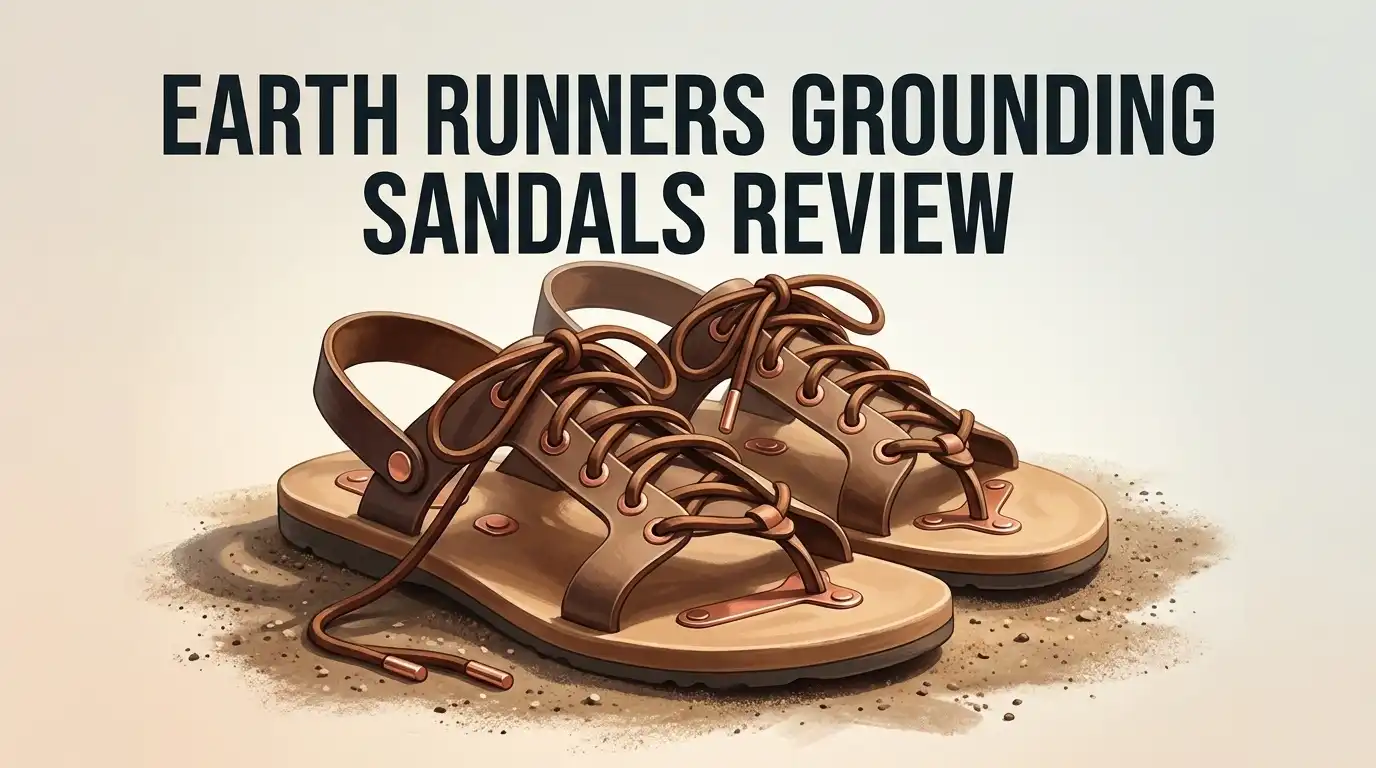
Earth Runners are minimalist adventure sandals handmade in Santa Cruz, California. The design borrows from the Tarahumara huarache, a running sandal made from a flat sole and a simple lace. Earth Runners updated that idea with a Vibram outsole, a continuous adjustable lace, and a conductive grounding system.
The company builds every pair around three ideas. First, zero drop geometry, meaning your heel and forefoot sit at the same height. Second, a flexible sole that lets your foot bend and your toes splay naturally. Third, a conductive path from your skin to the earth.
That third part is the brand signature. A copper plug sits at the toe post. Stainless steel thread runs through the sole to the ground. Carbon infused laces carry the connection along the strap. When you walk on soil, grass, sand, or wet concrete, the circuit completes and your body sits at the same electrical potential as the earth.
The lineup includes Primal, Circadian, Alpha, and Atlas models, plus kids sizes and replacement lace kits. Prices in 2026 sit between roughly seventy and one hundred and twenty dollars depending on model and sales. Every pair is vegan, uses GOTS certified organic dye on the footbed, and ships with a printable sizing template.
The short version: this is a serious minimalist sandal first, and a grounding device second.
Unboxing Experience: First Impressions Out Of The Box
The packaging is deliberately plain. A slim recycled cardboard box arrives with a small sticker, a sizing card, and a folded instruction sheet on lacing. No tissue paper, no branded dust bag, no plastic. Some buyers love the restraint. Others expect more theatre for an eighty dollar purchase.
Lift the lid and the first thing you notice is how little there is. Each sandal weighs about six ounces. Holding a pair feels like holding two thin slices of rubber with shoelaces attached. My first reaction was mild alarm, followed by curiosity.
The sandals arrive pre laced but not adjusted. The laces sit long and loose, coiled across the footbed. The copper plug catches the light at the toe post and looks surprisingly refined, like a small rivet rather than a gimmick. The Vibram outsole has a crisp tread pattern with no glue smears or trimming errors.
The canvas Earth Grip footbed on the Circadian and Alpha smells faintly of cotton and dye. It feels slightly rough under a bare hand, closer to canvas sneaker lining than to soft leather. That texture is intentional and gives wet grip.


Last update on 2026-04-11 / Affiliate links / Images from Amazon Product Advertising API Some of the links on this website are affiliate links, which means that at no additional cost to you, I earn a commission if you click through and make a purchase. I only recommend products and services that I believe will add value to my readers. Thank you for your support!
The instruction sheet matters more than the box. Set aside fifteen to twenty minutes, sit on the floor, and follow the diagrams. Trying to lace these while standing in a shop doorway is how people end up frustrated on day one.
Build Quality And Materials Breakdown
Earth Runners use domestically sourced Vibram rubber for the outsole across the Circadian, Alpha, and Atlas. The Circadian pairs a 7.5mm Vibram Gumlite outsole with a 1.5mm Earth Grip footbed for a total of 9mm. The Primal skips the footbed and runs a single 7.5mm Walkbase outsole, which makes it the thinnest and quickest drying option.
The Earth Grip footbed is moisture wicking canvas dyed in small batches to GOTS organic standards. It grips your sole when wet, which sounds minor until you cross a stream and your foot does not slide forward. The tradeoff is cleaning. Canvas holds dirt and needs a scrub brush and air drying. The Primal wipes clean in seconds.
Laces come in three flavours. Lifestyle laces are thinner and softer. Performance Adventure laces are wider and lock down harder for running and scrambling. Ergonomic laces sit in between and are the softest option for sensitive skin.
All laces carry conductive carbon. The stitching that anchors them uses stainless steel thread so the electrical path stays intact. The copper plug is solid, not plated foil, and it wears down slowly rather than flaking.


Last update on 2026-04-11 / Affiliate links / Images from Amazon Product Advertising API Some of the links on this website are affiliate links, which means that at no additional cost to you, I earn a commission if you click through and make a purchase. I only recommend products and services that I believe will add value to my readers. Thank you for your support!
Everything on the sandal is user serviceable. You can buy replacement laces and relace at home. That single detail explains why so many pairs survive four or five summers.
Top 3 Alternative for Earth Runners Grounding Sandals

- The Mono Winged Edition is the ultimate do everything, go everywhere adventure sandal. Its...
- Durable Vibram Morflex and LUNA’s own MGT footbed (Monkey Grip Technology) merge to create the...
- At 11mm thick (plus 4mm lug height) and 5.9 oz (single sandal), you can take your Monos on every...
Last update on 2026-08-08 / Affiliate links / Images from Amazon Product Advertising API Some of the links on this website are affiliate links, which means that at no additional cost to you, I earn a commission if you click through and make a purchase. I only recommend products and services that I believe will add value to my readers. Thank you for your support!
LUNA Sandals MONO Winged Edition

- Natural Movement Design: Barefoot + minimalist principles with a wide toe box for natural splay...
- Lightweight Performance: Just 4.6 oz per sandal (size 9)—you may forget you're even wearing them.
- Size up if in between (whole sizes only). Easy On/Off and Packable: Pre-laced and...
Last update on 2026-08-31 / Affiliate links / Images from Amazon Product Advertising API Some of the links on this website are affiliate links, which means that at no additional cost to you, I earn a commission if you click through and make a purchase. I only recommend products and services that I believe will add value to my readers. Thank you for your support!
Xero Shoes Genesis Barefoot Sandals
No products found.
Xero Shoes Aqua Cloud Barefoot Water Sandal
How The Grounding Technology Actually Works
The mechanism is simple electrical physics. The earth carries a mild negative surface charge. Standing barefoot on soil lets electrons move between the ground and your body until both sit at the same potential. Rubber and foam soles block that exchange because rubber insulates.
Earth Runners restore the path. The copper plug touches your skin at the toe post. Stainless steel thread runs from the plug through the sole to the outsole surface. Conductive carbon in the laces extends the contact area across the top of your foot. Walk on wet grass and the circuit closes.
Here is the honest part. The physics is real. The health claims are not settled. Published grounding research points at reduced inflammation markers, better sleep scores, faster recovery after exercise, and shifts in heart rate variability. Those studies are small, often unblinded, and frequently funded by people who sell grounding products.
Conductivity also depends on conditions. Dry asphalt, painted concrete, indoor flooring, and dry sand conduct poorly or not at all. Wet soil, damp grass, and moist sand conduct well. If you mostly walk on hot dry pavement, the grounding effect is close to zero.
My position after wearing them: treat the grounding as a pleasant maybe. If you feel better, wonderful. If you feel nothing, you still own a very good sandal.
Comfort And The Break In Period
This is where Earth Runners split opinion. The sandal has no arch support, no heel cup, and no padding. Your foot rests flat on rubber. If you already wear barefoot shoes, this feels like freedom. If you have spent thirty years in cushioned trainers, your calves and arches will complain for a week or two.
The bigger issue is the toe post. The lace passes between your first and second toe and angles across the second toe joint. New wearers frequently report rubbing, hot spots, or blisters in the first several outings. This is the single most common complaint about the brand, and it appears in review after review.
Three things fix it. Choose the softer ergonomic laces if you have sensitive skin. Wet the laces once or twice so they soften and mould. Wear them for short walks before committing to a full day.
Once broken in, the comfort is genuinely good. The canvas footbed moulds slightly to your foot shape. The lace stops registering as a separate object. Long hikes stop feeling like an experiment.
Some people never adapt. If you have arthritis in the toe joints, bunions, or a very short second toe, the geometry can stay irritating no matter how you adjust. That is a real limitation worth knowing before you buy.
Sizing And Fit Guide
Earth Runners run true to your normal sandal size for most people. The company provides a printable template. Print it at one hundred percent scale, stand on it, and trace. Do this rather than guessing, because a sandal that is too long drags at the heel and a sandal that is too short leaves your heel hanging off the back.
The lacing system is one continuous strap with no fixed anchor points. That sounds fiddly and it is, at first. The upside is a truly custom fit. High arches, low arches, narrow heels, and wide forefeet all get accommodated because you control every segment of the lace.
Adjust the sandal off your foot. Slide the lace through the sole holes to shift tension, then test, then adjust again. Expect three or four rounds. The buckle handles small daily changes once the base fit is set, which matters because feet swell in heat.
Two common fit errors show up repeatedly. The foot sits too far back on the sole, which means the toe post section is too long. Or the heel strap sits too high, which lets the heel lift. Both are lace adjustments, not sizing mistakes.
Return windows are usually thirty days and exchanges in the United States are free, though you may cover return shipping. Check current terms before ordering.
Performance On Trails, Water And City Streets
On dirt trails the Circadian performs impressively. The Vibram Gumlite tread bites into packed soil and loose gravel. Ground feel stays high enough that you read the terrain through your feet, which improves foot placement over time. The lace holds your heel steady on descents.
In water they shine. Nothing absorbs water except the canvas footbed, and that dries within an hour in sun. Stream crossings, kayak launches, and beach walks all work without a shoe change. The wet footbed grips better than dry leather ever does.
On rocky technical trails the picture changes. Thin soles transmit sharp rocks. A pointed stone under the heel hurts. The Alpha and Atlas add material for this reason, and the Atlas at 15mm handles scree far better than the Primal at 7.5mm.
City pavement is the weak spot. Concrete is flat, hard, and unforgiving. Eight hours of sightseeing in Primals leaves most people with sore feet unless they already have well conditioned soles. The Alpha handles urban days more comfortably.
Debris is the other daily annoyance. Open sandals collect grit, and small stones occasionally wedge under the arch. You stop, shake, and continue. Anyone switching from closed hiking shoes should expect this trade.
Model Comparison: Primal, Circadian, Alpha And Atlas
Choosing the model matters more than choosing the colour. Each sits at a different point on the ground feel scale.
The Primal uses a single 7.5mm Walkbase outsole with no footbed. It offers the most ground feel, dries fastest, and cleans easiest. It is also the most slippery of the four and the least forgiving on rocks. Pick it for everyday walking, travel, and beach use.
The Circadian is the best seller. It combines a 7.5mm Vibram Gumlite outsole with the 1.5mm Earth Grip footbed for 9mm total and weighs 5.9 ounces per sandal in a men’s nine. It balances grip, protection, and feel. Pick it if you want one sandal for hiking, water, and town.
The Alpha adds a thicker Vibram outsole for more cushion. It suits people new to minimalist footwear, heavier walkers, and long days on hard surfaces. It flexes less than the others.
The Atlas is the performance model at 15mm total, engineered for technical trails and long distance durability. It sacrifices ground feel for protection and lasts the longest.
A simple rule: strong feet and soft terrain point to Primal. New feet and hard terrain point to Alpha. Everyone else lands on Circadian.
What Earth Runners Do Not Do Well
An honest review names the failures, so here they are without softening.
The toe post causes real pain for a real percentage of buyers. Search any barefoot forum and you find threads about second toe soreness. Adjustment helps most people. It does not help everyone, and there is no alternative strap geometry on offer.
The canvas footbed stains and smells. Sweat, mud, and river water leave marks. Light colours discolour within a season. You need a brush and patience, and the footbed frays at the edges over time.
There is no arch support at all. People with plantar fasciitis or collapsed arches often need a transition period supervised by a physiotherapist, and some should not switch at all.
Cold weather is off limits. These are open sandals. Below roughly fifteen degrees Celsius they become uncomfortable. Toe socks help slightly but look unusual.
The grounding evidence is thin. If you buy specifically for inflammation relief or better sleep, you may get nothing measurable. The company markets the benefit heavily and the research does not fully support the confidence.
Adjustment frustrates beginners. The continuous lace has a learning curve, and the first attempt often fails. Some people give up before they ever reach the comfortable stage.
Formal settings rule them out. They look great with shorts and jeans. They do not work with anything smarter.
Pros And Cons
Here is the balanced scorecard after months of wear and a review of hundreds of owner reports.
Pros
- Genuine Vibram outsoles with excellent wet and dry traction across dirt, rock, and stream beds.
- Extremely light at around six ounces per sandal, which makes them ideal as backpacking camp shoes or travel spares.
- Fully customisable lacing that fits narrow, wide, high arched, and low arched feet without extra buckles.
- Waterproof by design. Nothing delaminates, nothing rots, and drying takes under an hour.
- Handmade in the United States with vegan materials and organic certified footbed dye.
- Replaceable laces plus a lifetime lace warranty, so one worn strap does not end the sandal’s life.
- Zero drop geometry that allows natural toe splay and encourages foot strength over time.
- Grounding hardware is well engineered even if the health claim stays unproven.
Cons
- Toe post discomfort during break in, and permanent irritation for some foot shapes.
- No arch support or cushioning, which rules them out for many people with existing foot conditions.
- Canvas footbed stains, frays, and needs scrubbing rather than a quick rinse.
- Steep lacing learning curve that demands patience on day one.
- Health marketing outpaces the evidence behind grounding.
- Poor choice for cold weather, formal wear, or long days on concrete.
- Debris collects underfoot on loose gravel trails.
- Price sits above budget minimalist sandals from larger brands.
Durability And Long Term Value
Durability is where Earth Runners quietly beat expectations. Multiple long term reviewers report pairs surviving two to four full summers of hiking, paddling, and daily wear with the outsole tread still readable and the laces intact.
The Vibram rubber wears slowly. Tread depth reduces first at the heel strike zone and under the ball of the foot. Most people notice reduced grip on wet rock before the sole thins enough to matter for protection.
The laces are the consumable part. Carbon infused fabric frays where it passes through the sole holes. Replacement lace kits cost a fraction of a new pair, and the lifetime warranty on straps covers premature failure. Relacing takes about fifteen minutes once you have done it before.
The footbed ages visibly. Edges fray, colour fades, and dirt sets in. This is cosmetic rather than structural. Function survives long after appearance declines.
Run the maths and the value case gets strong. A hundred dollar sandal that lasts three summers with one twenty dollar lace replacement costs about forty dollars a year. A cheap foam sandal at thirty dollars that dies each August costs the same and performs worse on trails.
The repairability is the real value. Very few footwear brands still design products you can fix at your kitchen table with a five minute video.
Who Should Buy Them And Who Should Skip
Buy Earth Runners if you already enjoy barefoot or minimalist footwear and want a sandal that handles trails, rivers, and town without a shoe change. They suit hikers who want camp shoes that double as hiking shoes, travellers packing one pair, and anyone who wants their feet to work rather than rest.
They also suit people curious about grounding who are comfortable treating it as an experiment. If you spend real time on grass, soil, or wet sand, the conductive system will actually function rather than sit idle.
Skip them if you need arch support, have plantar fasciitis, or have painful toe joints. Skip them if you spend most days standing on concrete. Skip them if you want a sandal that works straight out of the box with no adjustment or adaptation.
Also skip them if the grounding health claim is your only reason for buying. The evidence base does not justify a purchase made purely for inflammation or sleep benefits.
For everyone in between, the Circadian remains the safest first pair. It carries enough sole for mixed terrain, dries quickly, grips when wet, and costs less than most technical hiking sandals.
My overall rating sits at four out of five. Excellent product, honest craftsmanship, oversold science, and a break in period that catches too many buyers by surprise.
Frequently Asked Questions
Do Earth Runners grounding sandals actually work for grounding?
The electrical connection works. The copper plug, stainless steel thread, and conductive laces create a genuine path between your skin and the earth. Whether that connection improves your health is a separate question. Existing studies are small and often industry funded, so treat health claims cautiously.
Do Earth Runners hurt between the toes?
For many new wearers, yes, during the first one to two weeks. The lace passes between the first and second toe and can rub. Choosing the softer ergonomic laces, wetting the straps to soften them, and adjusting the fit carefully solve the problem for most people.
Which Earth Runners model should a beginner choose?
The Circadian suits most beginners because it balances ground feel and protection at 9mm total thickness. If you are coming from heavily cushioned shoes and want more padding while you adapt, the Alpha is the gentler starting point.
Can you run in Earth Runners?
Yes, and many people do. Choose the Performance Adventure laces for extra security and start with short distances. Your calves and feet need weeks to adapt to zero drop running, so build mileage slowly to avoid strain.
Are Earth Runners waterproof?
The soles and laces are unaffected by water. The canvas Earth Grip footbed absorbs some moisture but wicks and dries within about an hour in warm conditions. The Primal model has no footbed and dries almost instantly.
How do you clean Earth Runners sandals?
Rinse under water, scrub the footbed with a soft brush and mild soap, then air dry away from direct heat. Avoid washing machines and dryers, since heat can weaken the adhesive bond between footbed and outsole.
Are Earth Runners worth the price in 2026?
For minimalist footwear fans who spend time outdoors, yes. The Vibram sole, repairable design, and lifetime lace warranty deliver strong value across multiple seasons. For people needing support, cushioning, or a sandal with no adaptation period, the money is better spent elsewhere.

Mia Smith is the founder of Shoe Storyteller, a blog that celebrates the art and stories behind shoes. With a passion for fashion and a flair for storytelling, Mia brings a unique perspective to the world of footwear.