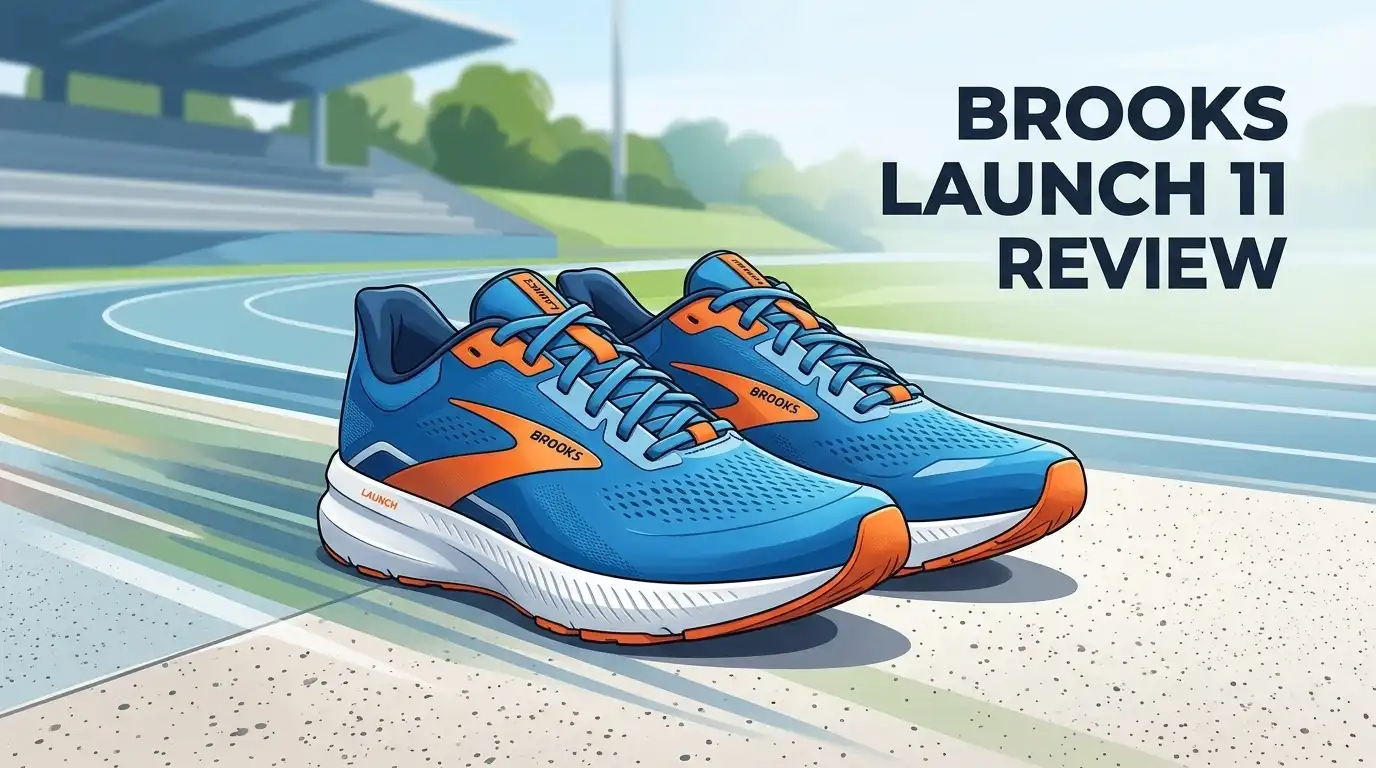
Brooks Launch 11 Review 2026: Still Fast Enough?
Running shoe shopping gets confusing fast. Prices climb, foam names multiply, and every brand promises a magic ride. The Brooks Launch 11 sits outside that noise. It costs around $120, weighs a little over 8 ounces, and asks for nothing complicated in return.
I put this shoe through easy miles, tempo sessions, treadmill runs, and a few rainy morning routes. I wanted to know one thing. Does the Launch still earn its name in 2026, or has Brooks let its budget speedster drift into ordinary territory?
The short answer surprised me. The Launch 11 received the biggest midsole change in the history of the line. Brooks removed the plain EVA foam and dropped in nitrogen infused DNA Flash v2.
In A Nutshell:
- The midsole upgrade is real. Brooks replaced basic EVA with nitrogen infused DNA Flash v2 in the forefoot. Energy return jumped to roughly 55 percent in the heel and 66 percent in the forefoot, which is strong for a shoe under $130.
- It stays light and low. The shoe weighs about 8.35 oz (237g) in a men’s size 9. Stack height sits near 33.5mm heel and 24mm forefoot, so you feel the road instead of floating above it.
- The fit runs narrow. Interior width measured 93.2mm, below the 95.2mm average. Toebox height is just 25.5mm. Wide footed runners should size up or skip this model entirely.
- Grip improved a lot. The Launch 10 slipped on wet pavement. The Launch 11 scored 0.51 friction on the wet traction test, which handles rain without drama.
- It is not a plush recovery shoe. The midsole reads 40.3 AC on the durometer, firmer than average. Long slow runs over 90 minutes feel harsh for heavier runners.
- Heel collar durability is weak. Lab abrasion testing gave the heel padding a 1 out of 5. Runners who wear holes in shoe collars should know this before buying.
Brooks Launch 11 Running Shoe Review
No products found.
The Launch line started as the cheap fast shoe in the Brooks catalog. Version 11 keeps that identity but sharpens it. This is now a genuine hybrid trainer rather than a stripped down budget option.
Brooks builds the Launch 11 as a neutral road shoe. It carries a stated 8mm drop, though independent lab testing measured closer to 9.5mm. Heel strikers will notice that extra ramp and generally appreciate it.
The midsole uses two foams. The main body holds DNA Flash, and a bouncier core of DNA Flash v2 sits under the forefoot. That second foam registers softer at 37.8 AC, which creates a small kick during toe off. ASICS uses a similar trick in the Magic Speed line, so Brooks borrowed a proven idea and priced it well below the competition.
The platform stays narrow on purpose. Forefoot width measures 112mm and heel width measures just 84.1mm. Both numbers land well under average. That slim base makes the shoe feel lively and quick rather than planted and safe.
You get a dual density engineered mesh upper, a semi gusseted tongue, and a full rubber outsole. There is no plate, no rocker geometry, and no reflective trim. Brooks spent the budget on foam instead of features.
The result is a shoe that handles easy miles, strides, and tempo work from one box. It does none of those jobs perfectly, but it does all of them well enough for most runners.
Unboxing The Brooks Launch 11
The box arrives plain. Brooks uses a simple recycled cardboard shoebox with the logo printed on one side. No tissue paper, no extra laces, no branded card telling you how special the purchase was. Honest packaging for an honest shoe.
Lift the lid and the shoes sit nose to tail with light paper stuffing in the toeboxes. My pair came in the black and white colorway. The mesh looked flatter and less shiny than photos suggested, which I actually liked. It reads as a running shoe rather than a fashion sneaker.
First thing I noticed was the weight in hand. Picking up both shoes felt closer to holding a pair of racing flats than a daily trainer. The narrow heel is obvious the moment you look down at the sole.


Last update on 2026-04-11 / Affiliate links / Images from Amazon Product Advertising API Some of the links on this website are affiliate links, which means that at no additional cost to you, I earn a commission if you click through and make a purchase. I only recommend products and services that I believe will add value to my readers. Thank you for your support!
The insole pulls out easily since Brooks does not glue it down. That matters if you run in custom orthotics. Underneath, the strobel board looks clean and the foam feels smooth.
Laces come pretreated with a light wax coating. They hold a knot well and did not loosen during any run. The tongue is thin at 5mm of padding, more racer than cruiser, but the sides are stitched down so it never slides.
The heel collar is the plushest part of the shoe. Squeeze it and the foam feels generous. The step in feel is snug through the midfoot and locked at the ankle.
Brooks Launch 11 Specifications And Lab Numbers
Numbers tell a cleaner story than marketing copy. Here is what the Launch 11 actually measures.
Weight: 8.35 oz or 237g in a men’s size 9, and roughly 7.2 oz or 204g in a women’s size 8. The category average sits near 9.2 oz, so the Launch stays comfortably light.


Last update on 2026-04-11 / Affiliate links / Images from Amazon Product Advertising API Some of the links on this website are affiliate links, which means that at no additional cost to you, I earn a commission if you click through and make a purchase. I only recommend products and services that I believe will add value to my readers. Thank you for your support!
Stack height: 33.5mm at the heel and 24mm at the forefoot in lab testing. Brooks markets figures closer to 35mm and 27mm. Either way, this is a mid stack shoe in a world drifting toward 40mm slabs.
Drop: 8mm claimed, 9.5mm measured. Slightly steeper than average.
Midsole firmness: 40.3 AC on an Asker C durometer. Average is 35.6 AC, so the Launch 11 runs firm. The forefoot insert softens to 37.8 AC.
Energy return: 55 percent heel and 66 percent forefoot. Both numbers improved over version 10.
Shock absorption: 129 SA heel and 103 SA forefoot, right at the category average.
Flexibility: 14.9N in longitudinal bend testing, up from 13.3N in the Launch 10. Torsional rigidity climbed from 3 to 5 on the scale.
Breathability: 4 out of 5. Airflow moves freely through the forefoot mesh.
Outsole: 3mm thick rubber that wore only 0.8mm in abrasion testing.
Price: $120, which is a $10 increase over the Launch 10.
Pros And Cons Of The Brooks Launch 11
Every shoe involves trade offs. Here is where the Launch 11 wins and where it falls short.
Pros
- Excellent value. You get nitrogen infused foam and a full rubber outsole for $120, while most competitors charge $140 or more for similar technology.
- Genuinely light. At 8.35 oz, it disappears on the foot during faster efforts and never feels like a chore on tired legs.
- Strong wet grip. The redesigned outsole scored 0.51 in friction testing, a large improvement over the slippery Launch 10.
- Great breathability. The dual density mesh earned 4 out of 5 for airflow, making it a smart summer trainer.
- Durable outsole. Only 0.8mm of rubber loss in testing points to a long service life.
- Semi gusseted tongue. Lockdown stays clean even during quick turnover, a detail some $160 shoes skip.
- Cold weather friendly. The foam firmed up only 16 percent after freezer testing, better than the 22 percent average.
Cons
- Narrow fit. Interior width of 93.2mm and toebox height of 25.5mm will pinch many feet.
- Firm ride. At 40.3 AC, the foam feels stiff on recovery days and long slow efforts.
- Weak heel collar. Abrasion testing scored a poor 1 out of 5 on heel padding.
- Heavier than before. Version 10 weighed a few grams less, and lightness is the Launch identity.
- No reflective details. Early morning and night runners get zero visibility help.
- Price increase. The $10 bump stings for longtime fans of the line.
- Stiffer than version 10. Foot strengthening runners may prefer a more flexible platform.
Top 3 Alternative for Brooks Launch 11
If the Launch 11 does not match your foot shape or your training needs, these three Brooks models cover the gaps.

- THIS MEN’S SHOE IS FOR: Runners looking for a smooth ride that won’t distract from the fun of...
- SOFT CUSHIONING: The Ghost 16 offers neutral support while providing soft, nitrogen-infused DNA Loft...
- SMOOTH TRANSITIONS: The soft midsole and Segmented Crash Pad promotes an easy flow from landing to...
Last update on 2026-08-30 / Affiliate links / Images from Amazon Product Advertising API Some of the links on this website are affiliate links, which means that at no additional cost to you, I earn a commission if you click through and make a purchase. I only recommend products and services that I believe will add value to my readers. Thank you for your support!
Brooks Ghost 16

- THIS MEN’S SHOE IS FOR: The Adrenaline GTS 25 is perfect for runners and walkers seeking reliable...
- GUIDERAILS HOLISTIC SUPPORT SYSTEM: Our innovative technology - known as “GTS” for “Go-To...
- SOFT & DYNAMIC CUSHIONING: Even more premium nitrogen-infused DNA Loft v3 cushioning delivers...
Last update on 2026-08-31 / Affiliate links / Images from Amazon Product Advertising API Some of the links on this website are affiliate links, which means that at no additional cost to you, I earn a commission if you click through and make a purchase. I only recommend products and services that I believe will add value to my readers. Thank you for your support!
Brooks Adrenaline GTS 24

- THIS MEN’S SHOE IS FOR: Kick your workout up a notch with the Hyperion 2. Designed with...
- EVERYDAY SPEED: Promoting faster transitions, the Nitrogen-infused DNA Flash v2 cushioned midsole is...
- VERSATILE PERFORMANCE: Lightweight, quick, and cushioned to power any run or gym session. The...
Last update on 2026-08-31 / Affiliate links / Images from Amazon Product Advertising API Some of the links on this website are affiliate links, which means that at no additional cost to you, I earn a commission if you click through and make a purchase. I only recommend products and services that I believe will add value to my readers. Thank you for your support!
Brooks Hyperion 2
How The DNA Flash v2 Midsole Actually Feels
Foam names mean nothing until your foot lands. So here is the honest description of what the Launch 11 does underfoot.
The first few steps feel firm. Not harsh, but definitely dense. This is not a marshmallow shoe. Press your thumb into the midsole and it barely dents.
Then you start running and the character changes. The forefoot insert of DNA Flash v2 compresses and springs back quickly. You feel a small pop during toe off that the Launch 10 never delivered. It is not carbon plate propulsion. It is more like the foam refusing to swallow your energy.
At easy pace, around 9 to 10 minutes per mile, the shoe feels adequate but unremarkable. The firmness sits right there in your awareness. Legs finish the run feeling worked rather than protected.
Push the pace to 7 minutes per mile and everything clicks. The narrow platform lets your foot roll naturally. The stiffer midsole stops the foam from bottoming out. The shoe wakes up when you do.
Cold weather runners get a bonus. Freezer testing showed only 16 percent firming, so December runs feel similar to July runs. Many EVA based shoes turn into bricks below freezing.
Nitrogen infusion works by injecting gas into the foam during production. That creates tiny bubbles which reduce weight and improve rebound. Brooks first used this process in the Hyperion Elite racing line, so the Launch 11 inherits real racing technology at a training shoe price.
Fit And Sizing Guide For The Launch 11
Fit is the single biggest reason people return this shoe. Read this section carefully.
The Launch 11 fits slightly small according to most owner feedback. Length feels true for narrow and average feet, but volume runs low throughout the shoe.
Lab measurement put the widest interior point at 93.2mm against a 95.2mm average. That difference sounds tiny on paper. On foot, it feels like a firm hug across the midfoot. Runners with wide forefeet report numbness after 60 minutes.
Toebox width measures 73.2mm, which actually lands right at average. So the pinch comes from the sides and the height, not the front. Vertical clearance sits at just 25.5mm compared to 27.1mm average.
My recommendation: if you normally wear a D width and your feet swell on long runs, order a half size up. If you wear 2E or wider, buy the wide version or choose a different shoe entirely. Brooks offers wide sizing in select markets and colorways.
The heel holds beautifully. The stiff heel counter, rated 4 out of 5, combines with plush collar foam to eliminate slippage. I never once felt my heel lift, even during hill repeats.
An extra eyelet near the ankle lets you tie a runner’s knot. Most people will not need it because lockdown is already excellent.
Upper Construction And Breathability
Brooks rebuilt the upper for version 11, and the change works.
The mesh uses a dual density design. Open, airy weave sits over the forefoot where you need cooling. Tighter, structured mesh wraps the midfoot and heel where you need support. You get ventilation and lockdown in the same panel.
Airflow testing gave the shoe a 4 out of 5 rating. Smoke pushed through the forefoot mesh without resistance. In practice, that means summer runs stay comfortable and your socks dry faster after wet weather.
I ran a 10 mile route in 88 degree heat and my feet felt hot but never swampy. That is a meaningful upgrade over the Launch 10, which trapped heat in the toebox.
The tongue deserves praise. Padding measures 5mm, which sounds thin, but it is stitched to both sides in a semi gusseted design. The tongue never slid, never bunched, and never dug into my instep. Plenty of pricier Brooks shoes, including the Glycerin 22, skip this feature.
Toebox abrasion testing returned a 3 out of 5 score, slightly above average. The thin mesh holds up better than its appearance suggests.
The heel collar is the weak spot. Abrasion testing scored 1 out of 5, which is genuinely poor. If your running form or sock choice grinds against the collar lining, expect visible wear within a few hundred miles.
Outsole Grip And Traction Performance
The Launch 10 had a real problem. Wet roads turned it into an ice skate. Brooks fixed that.
Version 11 uses a completely redesigned outsole with fewer forefoot cutouts and more rubber coverage across the heel. Wet friction testing under 500N of force on a 7 degree wedge returned a score of 0.51, essentially matching the 0.52 category average.
That number translates to real confidence. I ran through morning rain on painted crosswalk lines and metal drain covers without a single slip. Painted lines are the true test, and the Launch 11 passed.
Dry road grip is a nonissue. The rubber bites well on asphalt, concrete, and treadmill belts alike.
The extra heel rubber matters for two reasons. First, heel strikers get better durability where they land hardest. Second, the wider rubber contact patch adds a small amount of landing stability to a narrow platform that needs all the help it can get.
Coverage is not full. Brooks left exposed foam in the midfoot arch area to save weight. That is fine on roads but it will collect gravel on packed trails.
Speaking of trails, do not use this shoe off road. The tread pattern is shallow and the outsole rubber is tuned for pavement. Loose dirt, mud, and wet grass are outside its ability.
Ride Quality On Daily Training Runs
Here is where I get picky. The Launch 11 is sold as a daily trainer, so it needs to handle ordinary miles.
It manages, but it is not the best tool for the job. At relaxed paces the firm foam sends more road feedback into your legs than a softer trainer would. Shock absorption measured 129 SA at the heel, which is just average, and the low 24mm forefoot stack leaves little buffer for forefoot strikers.
Runs up to about 8 miles felt completely fine. Past that, I noticed foot fatigue that a Ghost or Glycerin would have prevented.
Body weight matters here. Lighter runners under roughly 160 pounds will find the cushioning adequate for most distances. Heavier runners will bottom out the forefoot on long efforts.
The narrow heel of 84.1mm demands clean form. Land off center and you feel the platform tip slightly. Neutral runners with efficient strides will not notice. Runners who overpronate will.
Torsional rigidity increased from 3 to 5, meaning the shoe resists twisting more than before. That helps stability at speed but reduces the natural foot movement some runners want from an everyday shoe.
Longitudinal flexibility sits at 14.9N, up from 13.3N. Still below average, but the trend goes the wrong direction for a shoe built on lightweight simplicity.
My verdict on daily use: good for four to eight mile runs, average for anything longer.
Speed Work And Tempo Day Performance
This is the Launch 11 in its natural habitat.
Everything that annoyed me at easy pace becomes a feature at tempo pace. The firm midsole stops collapsing. The narrow platform lets my foot cycle quickly. The 8mm drop keeps my stride from feeling flat.
I ran 6 x 800m repeats at 5K pace and the shoe felt fantastic. The DNA Flash v2 forefoot core adds a snap during push off that carries through the interval.
Turnover feels quick because there is nothing to fight. No tall stack to teeter on. No aggressive rocker forcing your foot into someone else’s rhythm. The Launch 11 rewards runners who already have decent form.
Tempo runs of 20 to 40 minutes suit it perfectly. Fartlek sessions work well. Strides after easy runs feel great.
It also works as a race day shoe for budget conscious runners. A 5K or 10K in the Launch 11 is entirely reasonable. Half marathon is possible for lighter, efficient runners. Full marathon is a stretch unless you race in the 3 hour range and prefer firm shoes.
The shoe has no plate, so do not expect super shoe economy gains. What you get instead is honest, unassisted speed. Your legs do the work and the shoe stays out of the way.
For a $120 shoe, that is exactly the right design choice.
What The Brooks Launch 11 Does Not Do Well
Real reviews name the failures. Here are mine.
It is not comfortable for wide feet. No amount of break in fixes a 93.2mm interior. I broke a pair in over 60 miles and the width never changed. Wide footed runners should look elsewhere.
It is not a recovery shoe. The 40.3 AC firmness makes sore legs feel worse. After a hard workout day, I reached for something plusher every single time.
The heel collar will wear out. A 1 out of 5 abrasion score is the worst result in the entire test panel. If you have ever pushed a thumb through the inside of a shoe collar, expect that here.
It got heavier. Version 10 was lighter. For a line built on being light, adding grams is a real step backward.
It offers zero night visibility. No reflective heel tab, no reflective logo, nothing. Dark morning runners need a vest or lights.
There is no heel pull tab. Getting the shoe on takes an extra second because the collar is stiff and there is nothing to grab.
It is not a long run shoe. Anything over 90 minutes exposes the modest 33.5mm heel stack and average shock absorption.
It lacks stability features. Neutral runners only. No guide rails, no medial post, no wide base. Mild overpronators should consider the Adrenaline GTS instead.
Brooks Launch 11 vs Brooks Launch 10
Upgrading from version 10? Here is what actually changed.
Midsole foam. The biggest difference by far. Version 10 used standard EVA. Version 11 uses nitrogen infused DNA Flash with a DNA Flash v2 core in the forefoot. Energy return improved noticeably. This alone justifies the upgrade for most runners.
Drop. Version 10 ran a 10mm drop. Version 11 drops to a stated 8mm, measured at 9.5mm. The change feels subtle but forefoot strikers will notice slightly more ground contact.
Wet grip. Version 10 was genuinely unsafe in rain. Version 11 fixed it with a redesigned outsole and more rubber coverage. This is the second best reason to upgrade.
Breathability. The new dual density mesh moves far more air than the older upper.
Weight. Version 11 gained a few grams. Small loss, but a loss.
Stiffness. Longitudinal flex went from 13.3N to 14.9N and torsional rigidity climbed from 3 to 5. The shoe feels firmer and less natural in the hand.
Fit. Version 11 fits narrower and lower in volume. Some Launch 10 owners will need to size up.
Price. $110 became $120.
My take: the foam and grip upgrades outweigh the weight gain and price bump. If you own Launch 10s and like them, buy version 11 without worry. If you found the 10 too narrow, the 11 will not help.
Who Should Buy The Brooks Launch 11

- THIS WOMEN’S SHOE IS FOR: The Launch 11 running shoe features DNA FLASH foam underfoot for quick...
- RESPONSIVE CUSHION FOR EVERYDAY RUNNING: Nitrogen-infused DNA FLASH midsole paired with DNA FLASH v...
- QUICK, SMOOTH TRANSITIONS: The updated RoadTack Rubber outsole delivers enhanced traction precisely...

Last update on 2026-08-31 / Affiliate links / Images from Amazon Product Advertising API Some of the links on this website are affiliate links, which means that at no additional cost to you, I earn a commission if you click through and make a purchase. I only recommend products and services that I believe will add value to my readers. Thank you for your support!
This shoe fits specific runners very well and other runners very poorly.
Buy it if you have narrow or average width feet. The snug interior turns into a locked in, secure feel when the shape matches your foot.
Buy it if you want one shoe for mixed training. Easy miles, tempo work, and short races all live comfortably in this shoe. For runners who cannot justify a three shoe rotation, this is smart money.
Buy it if you dislike tall stack shoes. The Launch 11 keeps you close to the ground while most brands push toward 40mm platforms. Ground feel is a real preference, not a flaw.
Buy it if your budget caps around $120. Nothing else at this price offers nitrogen infused foam plus full rubber coverage.
Buy it if you run in heat. The 4 out of 5 breathability score genuinely helps in summer.
Buy it if you are a beginner runner. The neutral geometry, modest cushioning, and reasonable price make it an easy first serious trainer.
Skip it if you have wide feet. Order the Ghost 16 or a wide fitting alternative instead.
Skip it if you weigh over roughly 200 pounds. The forefoot stack is too thin for heavier impact.
Skip it if you need stability. This shoe offers none.
Skip it if long slow distance is your main training. Something softer will treat your legs better.
Price And Value In 2026
At $120 retail, the Launch 11 sits well below the $157 average price of daily trainers.
That gap matters more than ever. Shoe prices climbed across every brand through 2025 and 2026. Flagship trainers now routinely cost $160 to $180. Super shoes crossed $250.
Against that backdrop, the Launch 11 delivers roughly 80 percent of a premium trainer experience for two thirds of the price. The foam is real technology, not filler. The outsole rubber is durable. The upper is well constructed.
Discounts appear often. Amazon has listed the Launch 11 around $90 during sale periods, and 30 percent off promotions show up regularly. At $85 to $95, this shoe becomes one of the best values in running.
The $10 increase over the Launch 10 annoyed longtime buyers, and that reaction is fair. But the foam upgrade cost Brooks money to implement, and passing along $10 is reasonable.
Expected mileage runs between 350 and 450 miles. The outsole will outlast the midsole based on wear testing. The heel collar may fail first for some runners.
Cost per mile lands around 28 cents at full price and closer to 21 cents on sale. That compares very well against $180 trainers with similar lifespans.
Value verdict: strong at retail, excellent on sale.
Care Tips To Extend Launch 11 Lifespan
A little maintenance adds real mileage to any running shoe.
Never machine wash them. Heat and agitation break down midsole foam and separate glued seams. Hand clean the upper with cool water, mild soap, and a soft brush.
Air dry only. Keep them away from radiators, dryers, and direct sun. Stuff them with newspaper to absorb moisture and hold shape. Heat is the fastest way to kill DNA Flash foam.
Rotate if you can. Foam needs 24 hours to fully rebound after a run. Alternating between two pairs can extend the life of both by a noticeable margin.
Untie the laces. Pulling shoes off while laced crushes the heel counter and grinds the collar lining. Given the weak 1 out of 5 collar durability score, this habit matters more here than in most shoes.
Use them for running only. Walking around all day compresses foam without providing training benefit. Keep a separate pair for errands.
Watch the outsole rubber. When the tread pattern smooths out at your main contact point, wet grip drops sharply. That is your replacement signal.
Track your mileage. Most running apps log shoe distance automatically. Plan to replace between 350 and 450 miles, or sooner if you feel new aches in your knees, shins, or hips.
Rinse after salty or rainy runs. Salt residue degrades mesh fibers over time.
Final Verdict On The Brooks Launch 11
The Brooks Launch 11 earns a solid recommendation with clear conditions attached.
Brooks made the right decision by upgrading the foam. Nitrogen infused DNA Flash transformed a decent budget trainer into a genuinely fun shoe. The wet grip fix removed the biggest complaint about version 10. Breathability improved. Durability of the outsole is excellent.
Rating: 8.5 out of 10 for narrow footed runners who want speed and value.
The problems are real but specific. The narrow fit excludes a large share of runners. The firm ride limits its usefulness on recovery days and long runs. The heel collar durability score is genuinely bad. Visibility features do not exist.
None of those flaws are dealbreakers if the shoe matches your foot and your training.
Here is how I would summarize it. The Launch 11 is the best $120 running shoe I have tested this year for tempo work and mixed daily training. It is not the most comfortable shoe, not the most cushioned shoe, and not the most forgiving shoe. It is the most honest shoe.
Buy it if you want lightweight speed without paying $180. Rotate it with something softer for your long runs. Order a half size up if you are between sizes.
For the right runner at the right price, the Launch 11 is an easy yes.
Frequently Asked Questions
Is the Brooks Launch 11 good for beginners?
Yes, with one condition. The neutral design, moderate cushioning, and affordable price make it a strong first training shoe. New runners should confirm the fit works for their foot width, since the narrow interior causes problems for wide feet. Beginners who overpronate should choose a stability shoe like the Adrenaline GTS instead.
Does the Brooks Launch 11 run true to size?
The Launch 11 runs slightly small in volume rather than length. Most runners with narrow or average feet find their normal size works fine. Runners with wider feet or feet that swell on long runs should order a half size up or select the wide version where available.
How many miles will the Brooks Launch 11 last?
Expect 350 to 450 miles from a single pair. The outsole rubber showed only 0.8mm of wear in abrasion testing, so the rubber will likely outlast the midsole foam. Heel collar lining may show wear earlier since it scored poorly in durability testing.
Can I use the Brooks Launch 11 for walking or gym workouts?
Yes, though it is built for running. The firm midsole and narrow platform work fine for treadmill sessions, light gym work, and casual walking. Runners planning long days on their feet will find softer options more comfortable. Avoid heavy lifting since the cushioned sole reduces ground stability.
Is the Launch 11 good for wide feet?
No. Lab measurements put interior width at 93.2mm and toebox height at 25.5mm, both below average. Wide footed runners consistently report tightness and numbness. Look at the Brooks Ghost 16 in a wide fitting or choose a brand known for roomier uppers.
What is the difference between the Launch 11 and the Ghost 16?
The Launch 11 is lighter, firmer, narrower, and faster feeling. The Ghost 16 is softer, roomier, more cushioned, and better for long runs and recovery days. Choose the Launch for tempo work and the Ghost for comfort focused daily mileage.
Is the Brooks Launch 11 waterproof?
No. The upper uses breathable mesh that lets water in and out freely. Brooks does sell weatherized versions of some models with water resistant coatings, but the standard Launch 11 offers no water protection. The upside is that wet shoes dry quickly thanks to strong airflow.
Can I run a marathon in the Brooks Launch 11?
Lighter and faster runners can manage it. Most runners will find the 33.5mm heel stack and firm midsole too demanding over 26.2 miles. A half marathon is a more realistic maximum for the average runner. For marathon racing, look at a higher stack shoe with softer foam.

Mia Smith is the founder of Shoe Storyteller, a blog that celebrates the art and stories behind shoes. With a passion for fashion and a flair for storytelling, Mia brings a unique perspective to the world of footwear.