
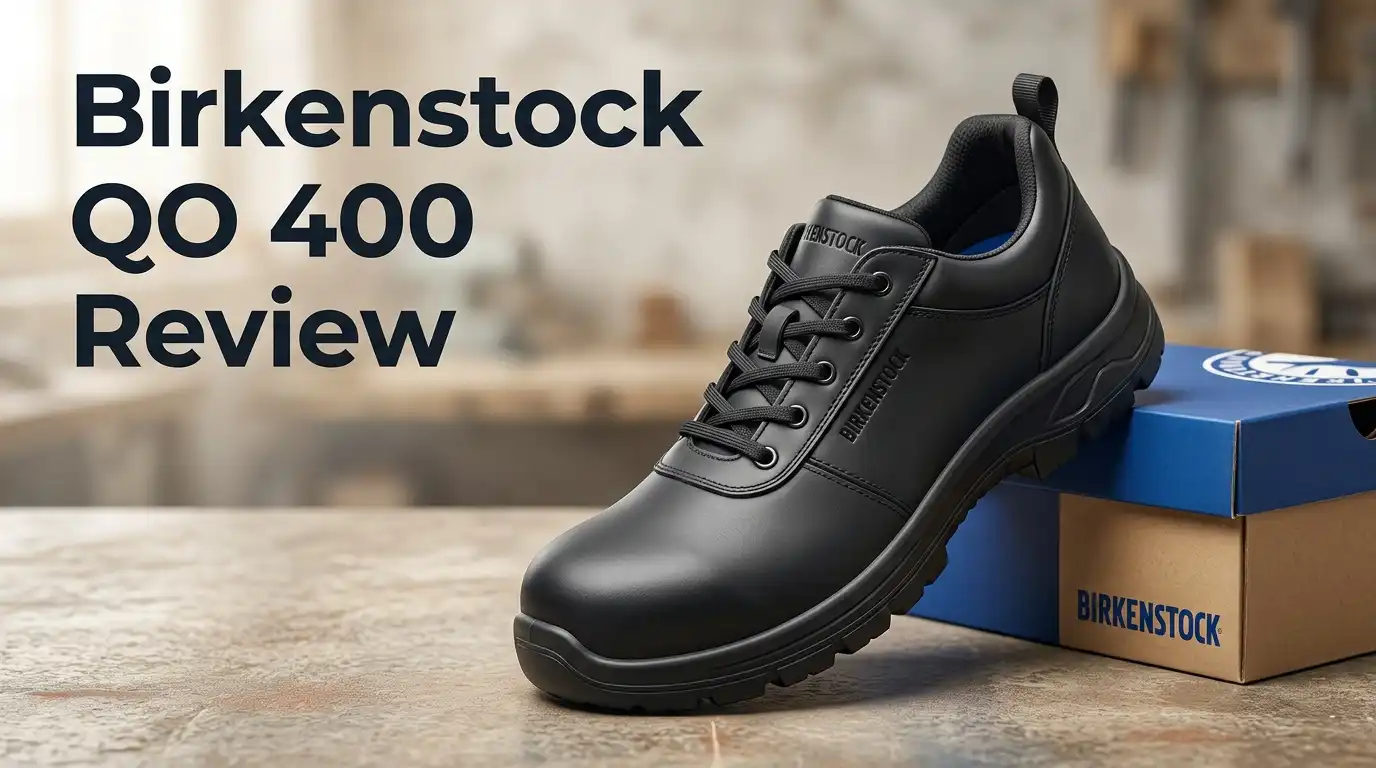
Birkenstock QO 400 Review 2026: Worth Buying?
Your feet hurt. You stand for ten hours. You slip on a wet kitchen floor and your heart jumps. Sound familiar? Millions of nurses, cooks, warehouse staff, and lab techs face this every shift. The Birkenstock QO 400 promises a fix. It takes the famous cork footbed from those classic sandals and wraps it inside a closed work shoe with a certified safety sole.
But does it actually work? Is the $165 price tag fair in 2026? And what about the complaints people whisper about online, like the heavy sole and the odd sizing?
I dug through manufacturer specs, user feedback from kitchens and hospitals, and real world durability reports. This review covers everything, including the parts Birkenstock would rather not advertise. Keep reading before you spend your money.
In a Nutshell:
- The footbed is the main reason to buy. The contoured cork and latex footbed molds to your foot shape over a few weeks. It is removable, so you can swap in your own orthotic. That alone separates the QO 400 from most cheap work shoes.
- Safety certification is real, not marketing fluff. The shoe carries EN ISO 20347 O2 certification with SRC slip rating, FO oil resistance, E heel energy absorption, and A antistatic protection. The nitrile rubber outsole handles grease and petrol.
- There is no steel toe. This is an occupational shoe, not a safety toe boot. Warehouse workers who need drop protection must look at the QS 500 instead.
- Sizing runs large and uses EU numbers. Birkenstock conversions confuse buyers constantly. Most people size down, and width choice matters a lot.
- It is heavy and stiff out of the box. Expect a break in period of one to three weeks. Some buyers return the shoe before this ever finishes.
- Value is good over two or three years. The leather is PU coated and fluid resistant, so spills wipe away. Replace the footbed instead of the whole shoe.
What Is the Birkenstock QO 400?

- Comfortable Safety: BIRKENSTOCK QO400 Safety Shoe with slip-on design for extended comfort in...
- Water-Resistant Durability: Crafted from water-resistant smooth leather (WRU) upper for protection...
- Removable Cork-Microfiber Footbed: Anatomically shaped footbed for cushioning and adaptability...
Last update on 2026-10-08 / Affiliate links / Images from Amazon Product Advertising API Some of the links on this website are affiliate links, which means that at no additional cost to you, I earn a commission if you click through and make a purchase. I only recommend products and services that I believe will add value to my readers. Thank you for your support!
The QO 400 is a slip on professional shoe from the Birkenstock Professional line. QO stands for “quality occupational.” It sits in the middle of the range, below the steel toe QS models and beside the lace up QO 500.
The design is simple. There are no laces at all. You push your foot in and go. The upper is smooth natural leather with a polyurethane coating, so water and soup and cleaning chemicals bead off instead of soaking through.
Underneath sits the real story: a cork and latex footbed with a microfiber lining, bonded to a thick nitrile rubber sole. Item number 1011240. Colors include black, navy, and white.
It targets healthcare, hospitality, food service, and light manufacturing. In short, jobs where you stand all day on hard floors.
Unboxing the Birkenstock QO 400
The box is plain brown cardboard with the Birkenstock wordmark. No tissue paper theatre, no glossy inserts. It feels practical, which matches the product.
Lift the lid and the first thing you notice is weight. Pick one shoe up and it feels substantial, almost like a light hiking shoe. The sole is visibly chunky from the side.
The leather smells genuinely of leather, not glue or plastic. Run your thumb across it and the PU coating gives a slightly slick, matte feel rather than a soft buttery one. That is intentional for wipe downs.
Inside the box you get a small care leaflet and the footbed already seated. Lift it out and you can see the cork layer clearly. That removable footbed is your proof of a real Birkenstock.
First impression? Serious tool, zero frills.


Last update on 2026-04-11 / Affiliate links / Images from Amazon Product Advertising API Some of the links on this website are affiliate links, which means that at no additional cost to you, I earn a commission if you click through and make a purchase. I only recommend products and services that I believe will add value to my readers. Thank you for your support!
Build Quality and Materials
Birkenstock still builds these in Europe, and the construction shows it. Stitching runs straight with no loose threads on the pairs people report receiving.
The upper uses natural smooth leather with WRU water resistance rating. WRU means the whole upper, not just a patch, resists water penetration during lab testing. Spilled coffee rolls off. Mop water does not soak in.
The footbed lining is microfiber. It is soft, tear resistant, and free of animal products, which also makes it easy to wipe clean.
The outsole is nitrile rubber, not EVA foam. Nitrile costs more and lasts longer around oil and heat. It is the same family of rubber used in industrial gloves and gaskets.
One honest note: the sole is bonded, not stitched. You cannot resole this shoe. Once the tread wears flat, the shoe is finished.


Last update on 2026-04-11 / Affiliate links / Images from Amazon Product Advertising API Some of the links on this website are affiliate links, which means that at no additional cost to you, I earn a commission if you click through and make a purchase. I only recommend products and services that I believe will add value to my readers. Thank you for your support!
Comfort and the Cork Footbed
This is where Birkenstock earns loyalty. The footbed is not flat foam. It has a raised arch support, a deep heel cup, and a toe grip ridge at the front.
Here is how it works. Your body heat and weight slowly soften the cork. Over two to four weeks, the footbed takes an impression of your own foot. After that, it feels custom.
People with plantar fasciitis often report real relief after the break in. The arch support holds the foot in place instead of letting it collapse through a long shift.
The sole is also roughly zero drop without an insole, meaning your heel and toes sit at similar heights. Runners and barefoot shoe fans like this. Anyone used to a raised heel may feel their calves stretch at first.
Big caveat: it is firm, not plush. Cork does not feel like a running shoe.
Top 3 Alternatives for Birkenstock QO 400
No products found.
Birkenstock Boston Super Grip Leather Clog

- Modern Safety Sneaker: BIRKENSTOCK QO500 combines safety with style, presenting a modern sneaker...
- Firm Grip and Comfort: Enjoy a firm grip and comfort with the nonslip, oil- and petrol-resistant...
- Water-Resistant Leather: Crafted from water-resistant smooth leather (WRU) upper, providing...
Last update on 2026-10-08 / Affiliate links / Images from Amazon Product Advertising API Some of the links on this website are affiliate links, which means that at no additional cost to you, I earn a commission if you click through and make a purchase. I only recommend products and services that I believe will add value to my readers. Thank you for your support!
Birkenstock QO 500 Safety Shoe

Last update on 2026-10-08 / Affiliate links / Images from Amazon Product Advertising API Some of the links on this website are affiliate links, which means that at no additional cost to you, I earn a commission if you click through and make a purchase. I only recommend products and services that I believe will add value to my readers. Thank you for your support!
Birkenstock QS 500 Steel Toe Safety Shoe
Safety Ratings Explained in Plain English
Those code letters on the box confuse everyone. Let me translate them.
O2 means occupational footwear with a closed heel, antistatic properties, energy absorption, and water penetration resistance. The key point: O classes contain no toe cap protection. S classes do.
SRC is the top slip resistance grade. It combines SRA testing on ceramic tile with soapy water and SRB testing on steel with glycerol. Passing both earns SRC.
FO means the sole resists fuel oil without swelling or breaking down.
E means the heel absorbs at least 20 joules of impact energy. Your knees appreciate this on concrete.
A means antistatic. The shoe drains static charge slowly, which matters in electronics and some medical settings.
So the QO 400 is certified for grease, water, static, and hard floors. It is not certified for falling objects.
Slip Resistance on Real Wet Floors
Kitchen floors are the toughest test. Grease plus water plus tile equals ice.
The nitrile outsole uses a patterned tread with deep channels. These channels push liquid sideways so rubber stays in contact with the floor. On wet tile and greasy restaurant floors, users consistently rate grip as strong.
Where does it struggle? Loose debris. On flour dust, dry powder, or sawdust, the grip drops noticeably. That is true of almost every SRC sole, not just this one.
It also performs poorly on outdoor ice and snow. This is an indoor work shoe. The tread is not aggressive enough for mud or winter sidewalks.
My take: trust it on your shift floor, and keep different shoes for the parking lot in January.
Sizing and Fit Guide
Pay close attention here, because this is the number one reason for returns.
Birkenstock uses EU sizing as the real measurement. The US conversion printed on the box is approximate and jumps unevenly. A EU 42 might show as 9 for men in one listing and 9.5 in another.
General advice from long time wearers: the shoes run slightly large. If you sit between sizes, size down rather than up.
Width matters more than length with this shoe. The QO 400 comes in Regular and Wide. Regular is genuinely narrow by American standards. If you normally wear a D or E width, choose Wide.
Best method: measure your foot in centimeters, then match it to the Birkenstock EU chart. Add about one centimeter of toe room. Do not guess from your sneaker size.
The Break In Period Nobody Warns You About
Here is the part reviews skip. The QO 400 is uncomfortable for the first week or two.
The cork is hard. The sole is stiff. The arch presses into a spot your foot has never felt pressure before. Some people describe it as walking on a wooden clog.
Reports from chefs suggest two full weeks before the shoe feels normal. That matches how cork behaves.
How to get through it? Wear them two to three hours per day at home before your first full shift. Flex the sole with your hands. Wear thicker socks early on.
If the arch still stabs you after three weeks, the fit is wrong, not the shoe. Birkenstock arches sit in a specific position. On some foot shapes, that position simply never lines up.
Who Should Buy the Birkenstock QO 400?

- Comfortable Safety: BIRKENSTOCK QO400 Safety Shoe with slip-on design for extended comfort in...
- Water-Resistant Durability: Crafted from water-resistant smooth leather (WRU) upper for protection...
- Removable Cork-Microfiber Footbed: Anatomically shaped footbed for cushioning and adaptability...
Last update on 2026-10-08 / Affiliate links / Images from Amazon Product Advertising API Some of the links on this website are affiliate links, which means that at no additional cost to you, I earn a commission if you click through and make a purchase. I only recommend products and services that I believe will add value to my readers. Thank you for your support!
This shoe fits specific people very well.
Buy it if you are a nurse, server, cook, barista, lab tech, or retail worker. You stand on hard floors for long shifts. You face liquid spills. You do not need toe protection.
Buy it if you have wide feet or need orthotics. The straight toe box and removable footbed make it rare and useful.
Buy it if you already love Birkenstock sandals. You know the arch shape and you want a closed version for work.
Skip it if you need steel toes, if your job involves outdoor terrain, or if you want a soft cushioned ride from day one. Also skip it if you cannot tolerate a two week break in. Honesty saves you a return label.
What the QO 400 Does Not Do Well
No shoe is perfect. These are the genuine weak spots.
It is heavy. The nitrile sole adds real weight. Compared to a lightweight nursing sneaker, you feel the difference by hour eight.
It is stiff. The sole barely flexes. Walking feels more like rolling than bending. Some users dislike this permanently.
The arch is aggressive. Zappos reviewers with low arches report the support hitting the wrong spot entirely.
No toe bar on the sole front. Some wearers miss this feature from classic Birkenstock footbeds.
It cannot be resoled. Sole wear ends the shoe.
The style is plain. It looks like a work shoe, because it is one. Nobody will compliment them.
Sizing is a gamble online. Order from a retailer with free returns.
Pros and Cons
Pros
- Removable cork and latex footbed molds to your foot and supports the arch through long shifts
- SRC slip rating gives strong grip on wet and greasy indoor floors
- Fluid resistant PU coated leather upper wipes clean in seconds
- Nitrile rubber outsole resists oil, grease, and petrol far better than foam soles
- Antistatic and heel energy absorption certified for healthcare and manufacturing
- Slip on design saves time, with no laces to untie or soak
- Available in Regular and Wide widths
- Roughly zero drop platform suits natural foot alignment
- Replaceable footbed extends the usable life of the shoe
Cons
- Heavy compared to nursing sneakers, noticeable late in a shift
- Stiff sole with very little flex
- Break in period of two to three weeks feels genuinely hard
- Arch support position does not suit every foot shape
- No steel toe, so it fails many industrial dress codes
- Cannot be resoled once the tread wears down
- EU to US sizing conversion causes frequent wrong orders
- Plain appearance with limited color choices
- Price sits well above budget work shoes
Cleaning and Care Tips
Caring for these takes two minutes a week.
Wipe the upper with a damp cloth after each shift. The PU coating means you do not need leather conditioner, and oils can actually damage the finish.
Pull the footbed out once a week and let it air dry overnight. Cork holds moisture, and trapped moisture creates odor. This single habit doubles footbed life.
Never machine wash them. Never put them near a radiator or in a dryer. Heat dries cork out and makes it crumble.
For the cork edge, Birkenstock sells a cork sealer. A thin coat once or twice a year stops cracking.
If the footbed finally flattens, order a replacement insert instead of a new pair. It costs a fraction of the shoe price and restores the original feel.
QO 400 vs QO 500: Which One?
These two models cause real confusion, so here is the clean comparison.
The QO 400 is a slip on. No laces. You step in and out fast. This suits healthcare and food service, where you remove shoes often and laces pick up spills.
The QO 500 is a lace up sneaker. You can tighten the fit across the instep. This helps narrow feet and anyone who wants a locked down feel for faster movement.
Both share the same cork footbed, the same fluid resistant leather, and the same SRC nitrile sole. Both carry O2 certification.
So the choice is purely about closure. Want speed and convenience? Take the 400. Want adjustability? Take the 500.
Neither has a steel toe. For that, the QS 500 is your answer.
Price and Value in 2026
The QO 400 lists at $165 on the Birkenstock site. Amazon pricing shifts, and you can often find it lower, especially in less popular colors.
Is that worth it? Run the math. A $60 work sneaker typically lasts six to nine months under daily shift use. The QO 400 regularly lasts two to three years, and you can refresh the footbed partway through.
That works out cheaper per month. The value case is strong if you actually wear them daily.
The value case weakens if you only work two shifts a week. At that rate, a mid range sneaker does the job.
Watch for sales in late January and August, when occupational lines get marked down. Buy from a seller with free returns, given the sizing issue.
Final Verdict: Should You Buy It?
Yes, with conditions.
The Birkenstock QO 400 is a genuinely good occupational shoe. The cork footbed delivers support that foam insoles cannot match. The SRC nitrile sole grips wet floors reliably. The leather shrugs off spills. The build quality justifies the price over a few years.
But it asks something from you first. You must survive a stiff break in period. You must get the sizing right. You must accept weight and a firm ride. And you must not need a steel toe.
Score: 4.3 out of 5.
If you stand all day indoors and your feet already hurt, these are one of the smartest purchases you can make. If you want instant softness, keep shopping.
FAQs
Does the Birkenstock QO 400 have a steel toe?
No. The QO 400 is occupational footwear in the O2 category. It offers antistatic protection, heel energy absorption, and water resistance, but no toe cap. For steel toe protection rated at 200 joules, choose the Birkenstock QS 500 instead.
Do the QO 400 shoes run big or small?
They generally run slightly large, and they use EU sizing as the true measurement. Most buyers size down if they fall between sizes. Measure your foot in centimeters and compare it to the official Birkenstock chart rather than trusting your sneaker size.
How long is the break in period?
Expect two to three weeks of daily wear. The cork footbed starts firm and softens as your body heat and weight shape it. Wearing them a few hours each day at home first makes the first full shift much easier.
Can I put my own orthotics inside?
Yes. The cork footbed lifts out completely, which leaves room for a custom orthotic or a prescribed insert. This is one of the strongest reasons people with foot conditions choose this model over sealed sneakers.
Are they good for nurses and chefs?
Yes. The SRC slip rating, oil resistant nitrile sole, and wipe clean leather suit hospital and kitchen floors well. Nurses value the arch support on long shifts, and chefs value the grease resistance. The slip on design also helps during fast changeovers.
Is the QO 400 waterproof?
Not fully waterproof, but highly water resistant. The PU coated leather carries a WRU rating, which means the upper resists water penetration in testing. Spills and mop water roll off. Standing in deep water will still get your socks wet.
Can the sole be replaced?
No. The nitrile outsole is bonded to the shoe and cannot be resoled. The footbed, however, is replaceable, and swapping it extends comfort life considerably before the tread finally wears out.

Mia Smith is the founder of Shoe Storyteller, a blog that celebrates the art and stories behind shoes. With a passion for fashion and a flair for storytelling, Mia brings a unique perspective to the world of footwear.