Adidas Women’s Crazyflight Volleyball Sneakers Review: Worth It?
If you play indoor volleyball, you already know the drill. You jump, you land, you cut hard, and you do it hundreds of times a match. Your knees, your ankles, and your lower back take the pounding.
The wrong shoe turns that pounding into chronic pain by season two. The right shoe lets you keep playing deep into your thirties without limping to the car after every tournament.
That is the exact problem the adidas Women’s Crazyflight line claims to solve. It has been one of the best-selling volleyball shoes for years, worn by liberos, setters, and middle hitters at every level from club to college.
In a Nutshell
- Best for: lighter players, liberos, and defensive specialists who value court feel over plush landings.
- Standout feature: Boost midsole paired with a thin TPU forefoot plate for snappy takeoffs.
- Traction: rubber outsole grips wood and synthetic courts well, even on dusty surfaces.
- Biggest weakness: cushioning is too thin for heavier strikers or high-jumping hitters.
- Price: sits around $140 MSRP, often discounted to the $84 to $120 range.
- Verdict: a great court-feel shoe that earns a 7 out of 10 because the foam bottoms out under real jump loads.

- Regular fit
- Textile and synthetic upper
- Lace closure
Last update on 2026-06-17 / Affiliate links / Images from Amazon Product Advertising API Some of the links on this website are affiliate links, which means that at no additional cost to you, I earn a commission if you click through and make a purchase. I only recommend products and services that I believe will add value to my readers. Thank you for your support!
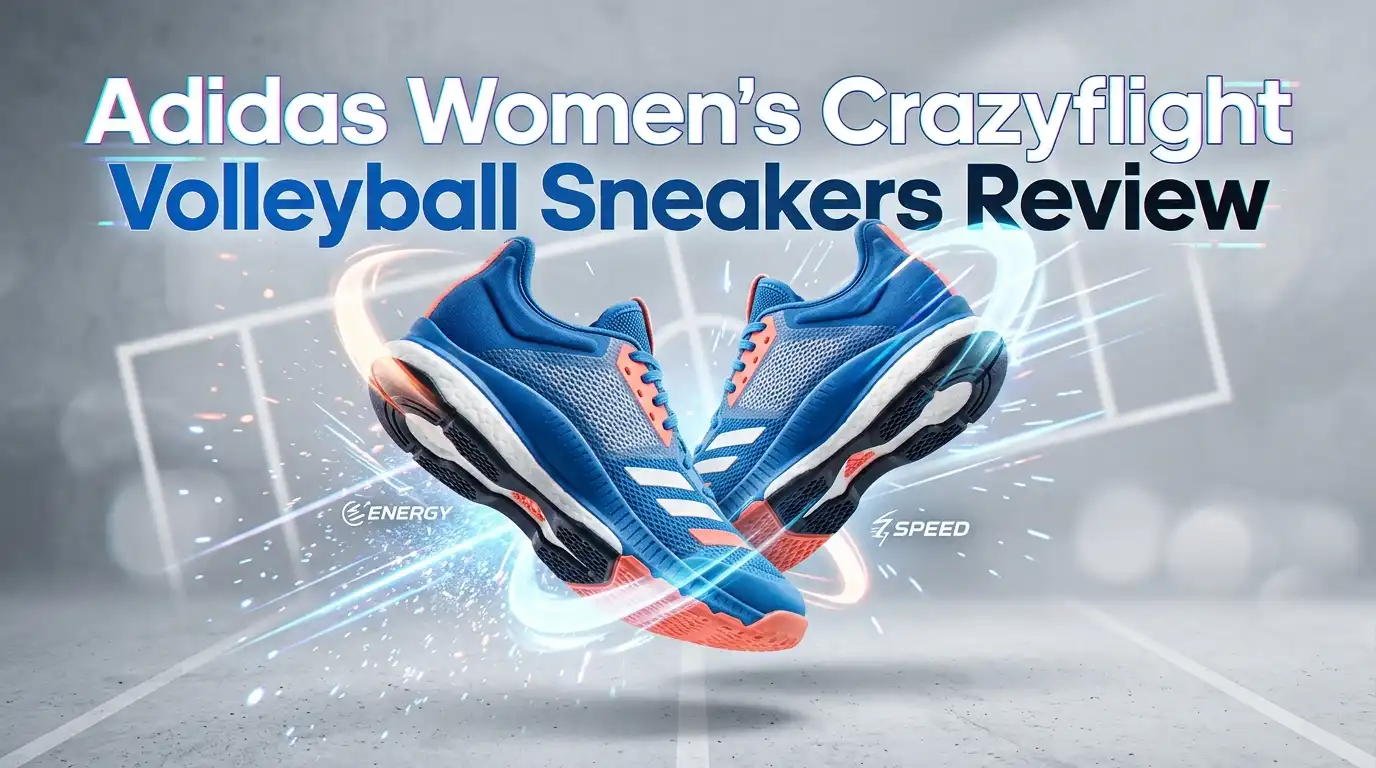
adidas Women’s Crazyflight Volleyball Sneakers
The Crazyflight 6 is the current flagship of the line, released for the 2026 indoor season. adidas kept the running-inspired silhouette that made earlier versions popular, then refined the upper and the plate system.
The shoe carries a breathable mesh upper with integrated TPU support yarns in the midfoot and forefoot. Those yarns lock your foot down during lateral cuts without adding bulk.
Underneath, the Boost midsole returns energy on every step. A thin TPU plate sits in the forefoot to stiffen the shoe for jump propulsion.
The outsole uses a grippy rubber compound with a herringbone-style traction pattern built for indoor hardwood and sport court surfaces. Weight lands around 11 ounces in a women’s size 8, which is light for a volleyball shoe at this price.
The mesh upper keeps your feet cool through long matches, while the cushioned heel insert pairs with the Lightstrike-infused midsole to soften landings. That is the marketing pitch. The real-world story is more nuanced, and that is what the rest of this review unpacks.
The Boost Midsole Story
The Boost midsole is the heart of the Crazyflight, and it is also the source of its biggest controversy. Boost is adidas’s thermoplastic polyurethane foam, expanded into thousands of tiny energy capsules.
It is the same cushioning tech used in the Ultraboost running line, and it is famous for bouncy, responsive energy return.
In the Crazyflight, adidas lays the Boost foam thin. That thinness is intentional. A lower stack height keeps your foot close to the court, which improves proprioception and court feel for quick defensive movements. The trade-off is plain: less foam means less impact protection on every landing.
A TPU forefoot plate adds stiffness under the ball of the foot. When you plant and jump, that plate acts like a springboard, returning energy into your takeoff. Players who attack at the net tend to love this snap. Players who land heavy tend to feel every landing in their knees within an hour.


Last update on 2026-04-11 / Affiliate links / Images from Amazon Product Advertising API Some of the links on this website are affiliate links, which means that at no additional cost to you, I earn a commission if you click through and make a purchase. I only recommend products and services that I believe will add value to my readers. Thank you for your support!
For neutral-arched, lighter-footed players, the setup feels lively and connected. For high-impact hitters over 175 pounds, the foam compresses until it nearly bottoms out. That single trait defines who should buy this shoe and who should walk away.
Top 3 Alternative for adidas Women’s Crazyflight Volleyball Sneakers
Not every foot fits the Crazyflight profile. If the thin Boost cushioning worries you, these three alternatives cover different needs without forcing you into the same compromise.

- FLYTEFOAM Propel technology cushioning: Increases impact absorption and responsiveness.
- TWISTRUSS technology: Improves quickness and cutting motions.
- 3D SPACE CONSTRUCTION feature: Improves stability.
Last update on 2026-06-17 / Affiliate links / Images from Amazon Product Advertising API Some of the links on this website are affiliate links, which means that at no additional cost to you, I earn a commission if you click through and make a purchase. I only recommend products and services that I believe will add value to my readers. Thank you for your support!
ASICS Women’s Netburner Ballistic FF 3 is the cushioning-first pick. It uses FlyteFoam in the midsole, which is plush and durable for heavier players who need impact protection on every jump. The supportive mid-cut fit locks the ankle, and the outsole grips cleanly on wood courts.

- Eva midsole
- Lightweight
- Wave technology provides both cushion and stability to get you through the entire match comfortably
Last update on 2026-06-17 / Affiliate links / Images from Amazon Product Advertising API Some of the links on this website are affiliate links, which means that at no additional cost to you, I earn a commission if you click through and make a purchase. I only recommend products and services that I believe will add value to my readers. Thank you for your support!


Last update on 2026-04-11 / Affiliate links / Images from Amazon Product Advertising API Some of the links on this website are affiliate links, which means that at no additional cost to you, I earn a commission if you click through and make a purchase. I only recommend products and services that I believe will add value to my readers. Thank you for your support!
Mizuno Women’s Wave Lightning Z6 is the speed-first pick. The parallel Wave plate adds lateral stability without the weight of a full cushion bed, and the EVA midsole stays light enough for liberos and setters who live on quick cuts.
No products found.
Nike Women’s Zoom HyperAce 2 is the all-rounder. A Zoom Air unit in the heel handles landings, and the Phylon midsole keeps the shoe light. It is a strong middle ground if you want cushion and court feel in one package.
Traction on Wood and Synthetic Courts
Traction is the most important feature in any court shoe, and the Crazyflight does this part right. The rubber outsole uses a soft, tacky compound with a multidirectional tread pattern. On clean hardwood floors, the grip bites immediately on starts, stops, and lateral shuffles.
The real test is dust. Volleyball courts collect dust fast, and cheaper shoes turn slippery within a set. The Crazyflight outsole sheds dust well. Even on dusty sport court surfaces, the grip stays reliable without picking up a heavy debris layer that needs constant wiping.
That dust resistance is a meaningful plus for tournament play, where you cannot stop to lick your hand and wipe the sole every rally. Players report consistent grip across wood, synthetic, and PVC court types through long multi-match days.
For liberos and defensive specialists, this traction quality is the single best argument for the shoe. You can trust your footwork, plant hard, and change direction without the slip that ruins a dig. That confidence shows up in your game.
Lateral Stability and Lockdown Fit
Lateral stability is where the Crazyflight earns its reputation. The shoe is light, but the upper holds your foot in place through aggressive cuts. The engineered mesh upper integrates TPU yarns through the midfoot, creating a cage that resists rollover when you push sideways.
The lacing system is basic. No fancy cables, no extra straps. It still locks the forefoot down effectively because the lace eyelets sit close to the footbed. A padded collar in the mid-top version adds ankle support without restricting mobility, and the heel counter holds the rearfoot firmly.
For narrow to medium-width feet, the fit feels true to size. Players with wide feet often size up a half size, and even then the forefoot can feel snug through the toes. That snugness is part of the lockdown story, but it is worth knowing before you order.
The midsole widens slightly under the heel, which adds a stable base for landing. Combined with the upper lockdown, the shoe feels planted through cuts. Pushing off laterally feels responsive, almost springy. That responsiveness pairs with the traction to make the Crazyflight feel quick.
Court Feel: The Good and the Risky
Court feel is the Crazyflight’s defining trait, and it is a double-edged sword. The low stack height puts your foot close to the floor. You feel the court under you on every step, which sharpens your reaction time and your footwork precision.
That connection matters most for defensive positions. Liberos and back-row defenders rely on quick, grounded movements. The Crazyflight gives them that grounded feel without the sluggishness of a thick-soled shoe. Heel-to-toe transitions stay smooth through your approach, and the flexible forefoot bends naturally with your foot.
The risk lives in the same trait. Low-to-the-ground means thin foam, and thin foam means impact forces travel straight into your joints on every landing. The shoe is responsive because the foam compresses to near-solid when you load it. That makes for explosive jumps. It also makes for jarring landings.
If you are a middle blocker jumping at the net on every play, that court feel turns into joint stress fast. If you are a defensive specialist who rarely leaves the floor, the same court feel is a competitive edge. Know your position before you commit.
Cushioning Reality Check
This is the section every potential buyer needs to read carefully. The Boost midsole in the Crazyflight is real, but it is thin. adidas prioritized court feel over plushness, and the result shows up on every jump landing.
The foam compresses under load. For players under 160 pounds, that compression stays in the responsive range. You get energy return without bottoming out. The shoe feels bouncy, light, and connected. This is the experience that built the Crazyflight’s loyal following.
For players over 175 pounds, or anyone who jumps high and lands hard, the foam bottoms out. When Boost bottoms out, you are essentially landing on a solid plate. The impact travels into your knees, your shins, and your lower back. After an hour of play, the discomfort becomes impossible to ignore.
The cushioned heel insert helps slightly, but it cannot compensate for the thin forefoot foam where most landing force concentrates.
Heavier players and high-jumping hitters should look at the ASICS Netburner Ballistic or the Mizuno Wave Momentum instead. The Crazyflight is not built for your load profile, and pretending otherwise will cost your joints.
Unboxing and Build Quality
Out of the box, the Crazyflight 6 looks sharp. The silhouette is sleek, with a running-shoe aesthetic that reads more lifestyle than clunky court shoe. The colorways for 2026 include a powder plum and a clear pink option that pop without screaming for attention.
The engineered mesh upper feels thin but well-finished. Stitching is clean, the TPU yarns sit flush against the mesh, and the heel counter holds its shape without flexing. The laces are flat and grip well through the eyelets. The pull tab on the heel is small but functional.
Inside, the soft lining feels comfortable against bare skin, which matters for players who wear low-cut socks. The insole is removable, which lets you swap in a custom orthotic if you need more arch support. The mid-top collar padding is firm enough to support the ankle without bunching.
Build quality is solid for the price. Nothing feels cheap, and nothing feels overbuilt. The shoe is light because adidas trimmed material thoughtfully. The one concern is long-term durability of the mesh upper in high-abrasion zones, particularly the medial forefoot where drag occurs during serves.
Breathability and Upper Mesh Performance
The Crazyflight’s engineered mesh upper does its primary job well: it breathes. Volleyball matches are long, indoor courts are warm, and feet sweat. A shoe that traps heat turns into a blister factory by the second set. The mesh here vents effectively through the forefoot and the midfoot.
The TPU yarns woven into the mesh add structure without sealing off airflow. They sit in a lattice pattern that holds the foot down on cuts while leaving channels for air to move through. After a full tournament day, the shoe still feels relatively dry inside.
The mesh does have a weakness. It is thin, and thin mesh trades breathability for durability. Players who drag their toe on serves or who play on rougher synthetic court surfaces report wear-through at the medial toe box within a season of heavy use. If you are a toe-drag server, expect to patch or replace sooner.
For players with sweaty feet or hot-court environments, the breathability is a real benefit. For toe-draggers, plan for the trade-off. A shoe-armor patch on the medial toe extends life considerably if you apply one early.
Honest Downsides: Who Should Skip This
The Crazyflight is not a universal win. Here is who should pass, plain and clear.
Skip it if you are a heavy hitter over 175 pounds. The Boost foam will bottom out under your landings, and your knees will pay the bill within a few matches. Skip it if you have wide feet. The upper runs narrow through the forefoot, and sizing up only partially fixes the squeeze.
Skip it if you are a toe-drag server who refuses to patch your shoes. The thin mesh wears through faster than thicker-leather alternatives. Skip it if you need plush, cushioned landings for old knee or back injuries. This shoe favors feel over comfort, and your joints will tell you the difference.
The low-top version can also carve into the Achilles for some players. If you have a history of Achilles irritation, choose the mid-top collar or look at the ASICS alternative in the section above.
None of these downsides make the Crazyflight a bad shoe. They make it a specialist shoe. It is excellent for its target player and disappointing for everyone else. Know which one you are before buying.
FAQ
Is the Crazyflight Good for Liberos?
Yes, the Crazyflight is excellent for liberos. Liberos live on quick lateral movements, digs, and grounded footwork. The shoe’s low-to-the-ground stack height gives you the court feel that defensive play demands. You feel the floor on every plant, which sharpens your reactions and your confidence on hard digs.
The traction is the second reason liberos love this shoe. The rubber outsole grips dust without picking up debris, so your cuts stay reliable through long matches. The lateral stability from the TPU yarn cage keeps your foot planted when you change direction hard.
The cushioning weakness barely matters for liberos because the position rarely involves max-effort jumps. You are not landing from a full approach swing every rally. The thin Boost foam stays responsive under a libero’s lighter, lower-impact load.
If you play defensive specialist or libero at any level from club to college, the Crazyflight is one of the best position-specific shoes you can buy. Pair it with a quality court sock and you have a setup that will last a full season.
Should Heavier Players Avoid This Shoe?
Yes, heavier players should generally avoid the Crazyflight. The Boost midsole is real, but the foam layer is too thin to absorb the impact loads that bigger players generate on every jump landing. The foam compresses to near-solid under loads over 175 pounds, which sends impact forces straight into your knees, shins, and lower back.
Heavier middle blockers, outside hitters, and right-side hitters land from full approach jumps dozens of times per match. That repeated bottoming-out adds up fast. Players report knee soreness, shin tightness, and lower-back stiffness after even a single heavy match in this shoe.
If you are a bigger player who still wants the adidas feel, the Crazyflight Mid version adds slightly more collar support, but the foam problem remains. Your better move is the ASICS Netburner Ballistic FF 3 with its FlyteFoam midsole, or the Mizuno Wave Momentum 3 built for bigger, harder-landing players.
The Crazyflight earns its place for the right athlete. Heavier hitters are not that athlete. Choose the tool built for your load, and your joints will thank you across the season.

Mia Smith is the founder of Shoe Storyteller, a blog that celebrates the art and stories behind shoes. With a passion for fashion and a flair for storytelling, Mia brings a unique perspective to the world of footwear.