Cougar Winter Boots Review 2026: Still Worth It?
Winter boots either save your day or ruin it. There is no middle ground once slush soaks through a seam at the bus stop. Cougar Shoes has been promising dry feet since 1948, and the brand still sits on shelves every November with that same confident claim.
So does a Canadian name from the 1970s hold up against 2026 competition? I spent several cold weeks walking, shoveling, commuting, and standing around in Cougar boots to find out.
This review covers warmth ratings that stretch the truth, sizing quirks that catch almost everyone, and the two models most people should actually consider. You will also see exactly where these boots fall short, because a review without complaints is just an advertisement.
In a Nutshell:
- Warmth is good, but ratings are optimistic. Cougar labels boots at minus 20C or minus 24C. In my testing, that number applies to walking, not standing still. Sitting on cold bleachers for two hours left my toes chilly, and multiple owner reviews report the same thing.
- Waterproofing is the strongest feature. Seam sealed construction kept my socks completely dry through slush puddles, wet snow, and salted sidewalk soup. This is where Cougar earns its reputation and your money.
- Most models run large. Owners consistently report ordering a half size or full size down. Many styles skip half sizes entirely, which creates real frustration if you land between numbers.
- Insoles are the weak point. The memory foam footbed feels thin after long days. Swapping in a thicker insole transforms comfort, and several reviewers did exactly that.
- Style genuinely stands out. The Pillow silhouette and the platform Vanetta look sharper than most snow boots. You can wear them with jeans without looking like you are heading to a job site.
- Warranty coverage is short. Footwear protection runs six months. Some owners report sole cracking after a season or two, so inspect your pair early.
Why Cougar Still Matters in 2026

- The Cougar Pillow Nylon Boot offers a fresh take on a classic design. Crafted with a durable and...
- Round toe shape.
- Lace-up design.
Last update on 2026-10-01 / Affiliate links / Images from Amazon Product Advertising API Some of the links on this website are affiliate links, which means that at no additional cost to you, I earn a commission if you click through and make a purchase. I only recommend products and services that I believe will add value to my readers. Thank you for your support!
Cougar started in Burlington, Ontario, and the brand built its name on one simple idea. Keep feet dry in brutal weather and make the boot look good doing it. That combination was rare in 1976 when the original Pillow boot launched, and it is still the brand’s whole identity.
Today Cougar competes in a crowded field. Sorel owns the premium shelf space, Kamik owns the budget end, and dozens of newer brands flood online listings. Cougar sits in the middle at roughly 130 to 200 dollars depending on the model and the sale.
What keeps the brand relevant is restraint. Cougar does not chase technical mountaineering features. It builds city winter boots for people who walk to transit, shovel driveways, and want something that looks intentional. That focus is a strength, not a limitation.
Cougar Pillow Nylon Boot Review
The Pillow Nylon is the modern version of the 1976 original, and it remains the boot I recommend first. The upper mixes leather and nylon with that signature quilted puff shaft. Shaft height measures about 13 inches, so coverage reaches mid calf comfortably.
Inside you get fleece lining and a memory foam insole. The cold rating sits at minus 20C or minus 4F. In practice, this boot handled every normal winter day I threw at it. Walking 40 minutes in minus 15C weather left my feet warm, not sweaty.
The lace up closure matters more than it sounds. You can cinch the ankle tight, which stops heel slip and keeps snow out. Traction from the rugged outsole held up on packed snow and wet concrete. It felt less sure on glazed ice, which is true of nearly every boot without studs.
Cougar Vanetta Waterproof Boot Review

- Waterproof suede upper
- Polar plush lining
- Removable molded foam insole
Last update on 2026-10-01 / Affiliate links / Images from Amazon Product Advertising API Some of the links on this website are affiliate links, which means that at no additional cost to you, I earn a commission if you click through and make a purchase. I only recommend products and services that I believe will add value to my readers. Thank you for your support!
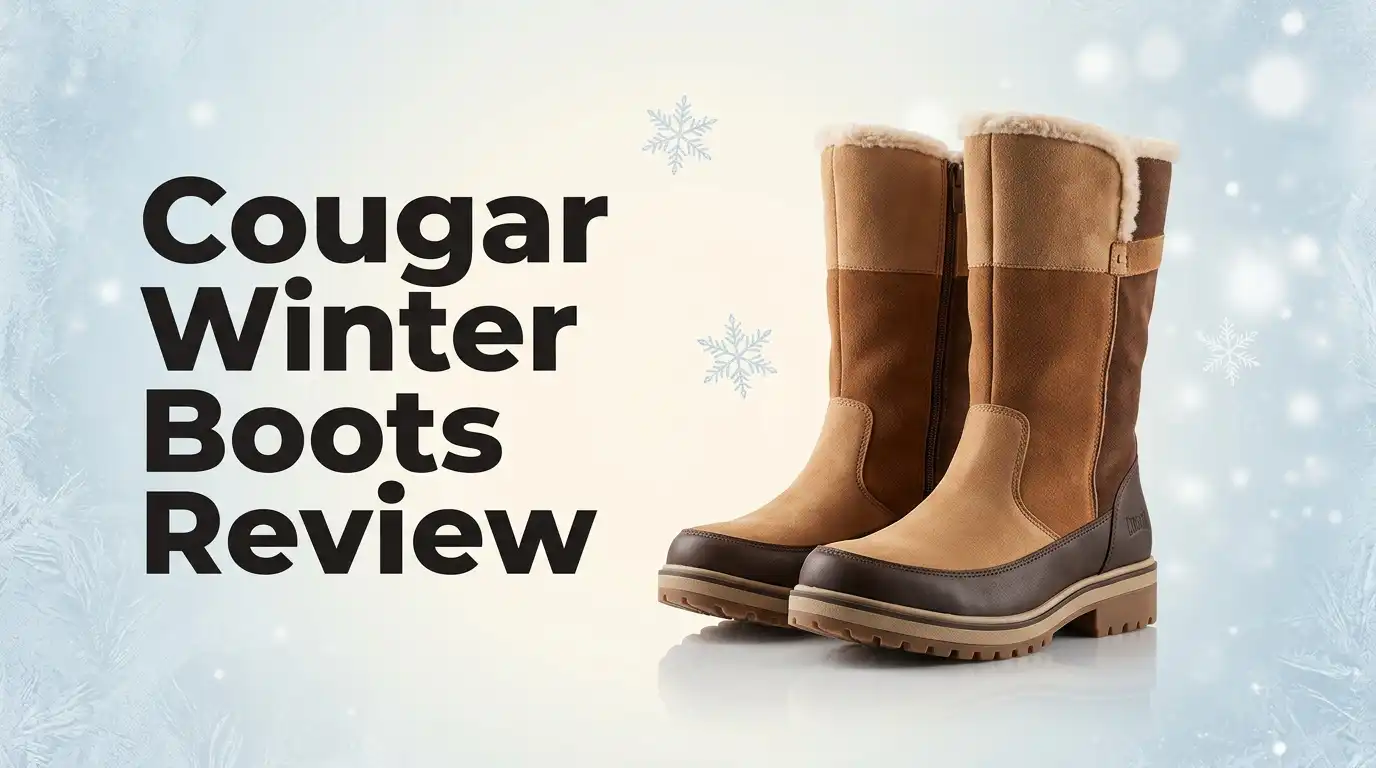
The Vanetta takes a different approach. Suede upper, faux fur trim at the collar, chunky platform sole, and a shorter 7.5 inch shaft. It reads more fashion boot than snow boot, which is exactly why people buy it.
That platform is smarter than it looks. Lifting your foot an inch off frozen pavement genuinely reduces cold transfer, and several owners mention this specifically. The grip pattern is aggressive and performs well on snow and slush.


Last update on 2026-04-11 / Affiliate links / Images from Amazon Product Advertising API Some of the links on this website are affiliate links, which means that at no additional cost to you, I earn a commission if you click through and make a purchase. I only recommend products and services that I believe will add value to my readers. Thank you for your support!
Here is the honest part. The Vanetta carries a minus 11F rating, and that number is the most disputed spec in the entire Cougar lineup.
One reviewer froze at a football game in 30F weather while wearing two pairs of socks. Standing still is this boot’s weakness. The suede also needs protective spray, since bare suede and road salt do not get along.
Top 3 Alternative for Cougar Pillow Nylon Boot

- COUGAR BETINA is the refined cold-season boot that balances rugged durability with sophisticated...
- Polyester lining and Memory foam insole.
- Waterproof construction.
Last update on 2026-10-01 / Affiliate links / Images from Amazon Product Advertising API Some of the links on this website are affiliate links, which means that at no additional cost to you, I earn a commission if you click through and make a purchase. I only recommend products and services that I believe will add value to my readers. Thank you for your support!
COUGAR Betina

- The Cougar Baneta boots are the ultimate winter boots, built for warmth and comfort with a sleek...
- Heel pull tab.
- Round toe shape.
Last update on 2026-10-01 / Affiliate links / Images from Amazon Product Advertising API Some of the links on this website are affiliate links, which means that at no additional cost to you, I earn a commission if you click through and make a purchase. I only recommend products and services that I believe will add value to my readers. Thank you for your support!


Last update on 2026-04-11 / Affiliate links / Images from Amazon Product Advertising API Some of the links on this website are affiliate links, which means that at no additional cost to you, I earn a commission if you click through and make a purchase. I only recommend products and services that I believe will add value to my readers. Thank you for your support!
COUGAR Baneta

- Waterproof
- Comfort rated to –30°C | –22°F
- Nylon/PU upper
Last update on 2026-10-01 / Affiliate links / Images from Amazon Product Advertising API Some of the links on this website are affiliate links, which means that at no additional cost to you, I earn a commission if you click through and make a purchase. I only recommend products and services that I believe will add value to my readers. Thank you for your support!
COUGAR Creek
Unboxing Experience: What Actually Arrives
The box is plain cardboard with the Cougar logo and a size label on the side panel. Nothing fancy, no tissue theatrics, no branded dust bag. For a boot in this price range, the packaging feels functional rather than premium.
Lift the lid and the boots sit nested toe to heel with paper stuffing in each shaft. My pair arrived with no creasing and no chemical smell, which is more than I can say for some imported winter footwear.
First impressions in hand: lighter than expected. The Pillow weighs noticeably less than a comparable Sorel, and you feel that difference after a long walk. The stitching looked clean, the eyelets felt solid, and the red interior lining added a small design flourish.
One annoyance. The size label on the box listed US sizing while the inner tag showed a European half size. That mismatch has confused plenty of buyers.
Warmth Ratings Explained: Read the Fine Print
Cougar publishes comfort ratings like minus 20C, minus 24C, and minus 32C across its range. These come from insulation testing, usually with PrimaLoft Gold or Polar Plush fill. The numbers are not invented, but they are not promises either.
Here is what that rating actually means. It reflects an active wearer, moving, generating body heat, wearing proper wool socks. Change any variable and the number collapses.
I tested this directly. Walking in minus 18C weather, my feet stayed genuinely comfortable for over an hour. Standing on a frozen sidewalk for 45 minutes in minus 8C weather, my toes went cold.
Practical advice: subtract about 15 degrees from any stated rating if you plan to stand still. Pair the boots with merino wool socks, never cotton. That single change outperforms any insulation upgrade.
Waterproofing in Real Snow and Slush
This is where Cougar delivers without excuses. The brand uses seam sealed waterproof construction rather than a simple water repellent coating, and the difference shows.
I walked through ankle deep slush, stood in melting snow, and crossed a flooded crosswalk. My socks stayed completely dry every single time. Multiple long term owners report the same experience across several winters.
The rubber shell bottom wraps high enough on most models to handle real puddles. Nylon uppers shed water instantly. Suede uppers, like on the Vanetta, repel water but absorb salt stains, so treat them before first wear.
One caution worth repeating. Waterproof construction depends on the sole staying intact. One owner reported soles cracking after roughly four months of light use, which let water in through the base. Inspect your soles at the end of each season.
Traction on Ice and Packed Snow
Cougar outsoles use rubber or TPR compounds with deep lug patterns. On packed snow, loose powder, and wet pavement, grip is reliable. I never had a scare on any of those surfaces.
Glare ice is a different story. No standard winter boot grips polished ice well, and Cougar is no exception. The lugs cannot bite a surface with nothing to grab.
If your commute includes icy stretches, buy a set of slip on ice cleats. They cost under 25 dollars and solve the problem completely. This is a category limitation, not a Cougar flaw.
The TPR compounds also stay flexible in deep cold, which matters more than tread depth. A stiff sole slides regardless of pattern. Cougar’s soles stayed pliable at minus 20C in my testing, and that is a quiet engineering win.
Sizing Guide: Why Most Buyers Size Down
This section may save you a return shipment. Cougar boots run large. Not slightly large. Consistently, noticeably large across multiple models.
Reviewer after reviewer reports the same pattern. A solid size 8 finds the size 8 Cougar too roomy. A 7.5 wearer orders a 7 and gets a perfect fit with thick socks.
My recommendation: order a half size below your normal boot size if you wear thin socks, and your true size if you plan on heavy wool socks. The toe box is average width, not narrow, so wide footed buyers generally do fine.
The real frustration is half sizes. Several popular models only come in whole sizes. If you sit between numbers, you are choosing between slightly tight and slightly sloppy. Adding a thicker insole fixes the loose version.
Comfort, Insoles, and Support
Out of the box, these boots need no break in period. That is genuine and widely reported. No stiff heel counter, no blisters, no three day adjustment.
Comfort over long days is more complicated. The removable memory foam insole feels adequate for an hour and thin after four. Arch support is minimal.
Several owners solved this by adding shearling insoles or orthotic footbeds, and the improvement is dramatic. I did the same and the boots went from acceptable to excellent. Budget 20 dollars for better insoles and treat it as part of the purchase price.
The Vanetta earned one specific complaint I can confirm. The collar edge can rub an ankle sore if your socks slip down. Tall socks eliminate the problem entirely.
Pros of Cougar Winter Boots
- Waterproofing works, genuinely. Seam sealed construction kept my feet dry through slush, puddles, and wet snow with zero leaks.
- Lightweight for the warmth. These boots weigh noticeably less than comparable Sorel models, which matters on long city walks.
- Zero break in time. Comfortable from the first wear, with no stiffness and no blisters reported by most owners.
- Style that works off the trail. The Pillow and Vanetta silhouettes pair with jeans, leggings, and coats without looking bulky or industrial.
- Good traction on snow and slush. Deep lugs plus a sole compound that stays flexible in deep cold.
- Removable insoles. You can upgrade the footbed or dry it separately after a wet day.
- Reasonable sale pricing. Cougar discounts aggressively, sometimes 50 percent off, which makes the value proposition strong.
Cons of Cougar Winter Boots
- Temperature ratings are optimistic. Expect cold toes if you stand still for long periods, regardless of the printed number.
- Sizing runs large and half sizes are limited. Returns are common, and fit between whole sizes becomes guesswork.
- Thin insoles. The stock footbed lacks arch support and cushioning for all day wear.
- Six month footwear warranty. Short coverage for a product that costs well over 100 dollars.
- Reports of sole cracking. A minority of owners experienced sole failure within the first year.
- Suede models need maintenance. Salt stains show quickly without protective treatment.
- Plain packaging. Minor, but the unboxing does not match the price point.
What Cougar Boots Do Not Do Well
Let me be direct about the limits. These are not expedition boots. If you work outdoors in extreme cold for eight hour shifts, buy Baffin or Kamik with removable liners instead.
They are also not hiking boots. Ankle support is soft, the sole flexes, and the fit is roomy. Rough terrain and uneven trails call for something stiffer.
They do not handle long periods of standing still in deep cold. This is the single most common complaint and it is legitimate.
They do not grip glare ice, though no boot in this class does.
And they do not reward neglect. Suede uppers left unprotected will stain, and soles left caked in salt will degrade faster. These boots need ten minutes of care each month to last five seasons instead of two.
Durability and the Warranty Fine Print
Long term reports split into two camps. One group reports three or more winters of daily wear with no issues, which matches my own impression of the construction quality. Another smaller group reports soles cracking within months.
That variance suggests inconsistent quality control rather than a bad design. The practical response is simple: inspect your boots carefully within the first few weeks.
Cougar’s footwear warranty covers defects for six months from purchase. You need proof of purchase and clear photos to file a claim. Outerwear gets a full year, which makes the footwear term feel stingy by comparison.
Keep your receipt. Keep the box. If you notice any sole separation or seam gap in month two, file immediately rather than hoping it holds. Waiting past six months leaves you with no recourse.
Cougar vs Sorel vs Kamik in 2026
Sorel offers more warmth and more brand recognition at a higher price, typically 160 to 250 dollars. Sorel boots also run narrow, which some wearers find uncomfortable, and they weigh more. If raw warmth is your priority, Sorel wins.
Kamik undercuts everyone on price, often landing between 70 and 120 dollars. Many Kamik models include removable liners, a genuine advantage for drying. The styling is more utilitarian.
Cougar sits between them. You get better looks than Kamik, lighter weight than Sorel, and waterproofing that matches both. What you give up is the extra warmth margin and the longer warranty.
My take: choose Cougar if you walk a city and care how the boot looks. Choose Sorel for severe cold. Choose Kamik if budget leads the decision.
Final Verdict: Who Should Buy These
Cougar winter boots deserve a place on your shortlist in 2026, with clear conditions attached.
Buy them if you commute on foot, walk a dog, run errands, and want a waterproof boot that looks good with normal clothes. For that use case, the Pillow Nylon is one of the best values in winter footwear, especially on sale.
Skip them if you stand outdoors for hours, work in extreme cold, or need serious arch support without modification.
Order a half size down. Buy wool socks. Add a thicker insole. Treat suede before first wear. Do those four things and these boots will likely serve you for several winters.
My overall score lands at 4 out of 5. Points lost for optimistic ratings, thin insoles, and a short warranty.
Frequently Asked Questions
Are Cougar boots actually waterproof?
Yes. Cougar uses seam sealed waterproof construction on its winter boots rather than a surface coating. My socks stayed dry through slush, puddles, and wet snow in every test. Long term owners report the same result across multiple seasons. The one caveat involves sole integrity, since a cracked sole lets water enter from below.
Should I size up or down in Cougar winter boots?
Size down. Owner feedback is remarkably consistent on this point, with most people finding their usual size too roomy. Order a half size below normal if you wear regular socks. Stick with your true size only if you plan to wear thick wool socks daily. Many models lack half sizes, so read listings carefully.
How cold can you wear Cougar boots?
Published ratings range from roughly minus 20C to minus 32C depending on model and insulation. Those numbers assume you are moving. For standing still, plan for comfortable performance down to about minus 10C with wool socks. Several owners report cold toes at temperatures well above the printed rating when stationary.
Are Cougar boots good for wide feet?
Generally yes. The toe box measures average to generous rather than narrow, and because the boots run large overall, wide footed buyers often find them more comfortable than Sorel equivalents. Buyers needing a true wide width should check whether the specific model offers one.
How long do Cougar winter boots last?
Most owners report three to five winters of regular wear. A minority experienced sole cracking within the first year, which suggests inconsistent quality control. Regular salt removal, suede protection, and proper drying extend life considerably. The factory warranty covers footwear defects for only six months, so early inspection matters.
Is Cougar still a Canadian company?
Cougar Shoes began in Burlington, Ontario, in 1948 and remains a Canadian brand with Canadian design. Manufacturing happens overseas, which is standard across the entire footwear industry. The brand continues to build boots specifically for Canadian winter conditions.

Mia Smith is the founder of Shoe Storyteller, a blog that celebrates the art and stories behind shoes. With a passion for fashion and a flair for storytelling, Mia brings a unique perspective to the world of footwear.