
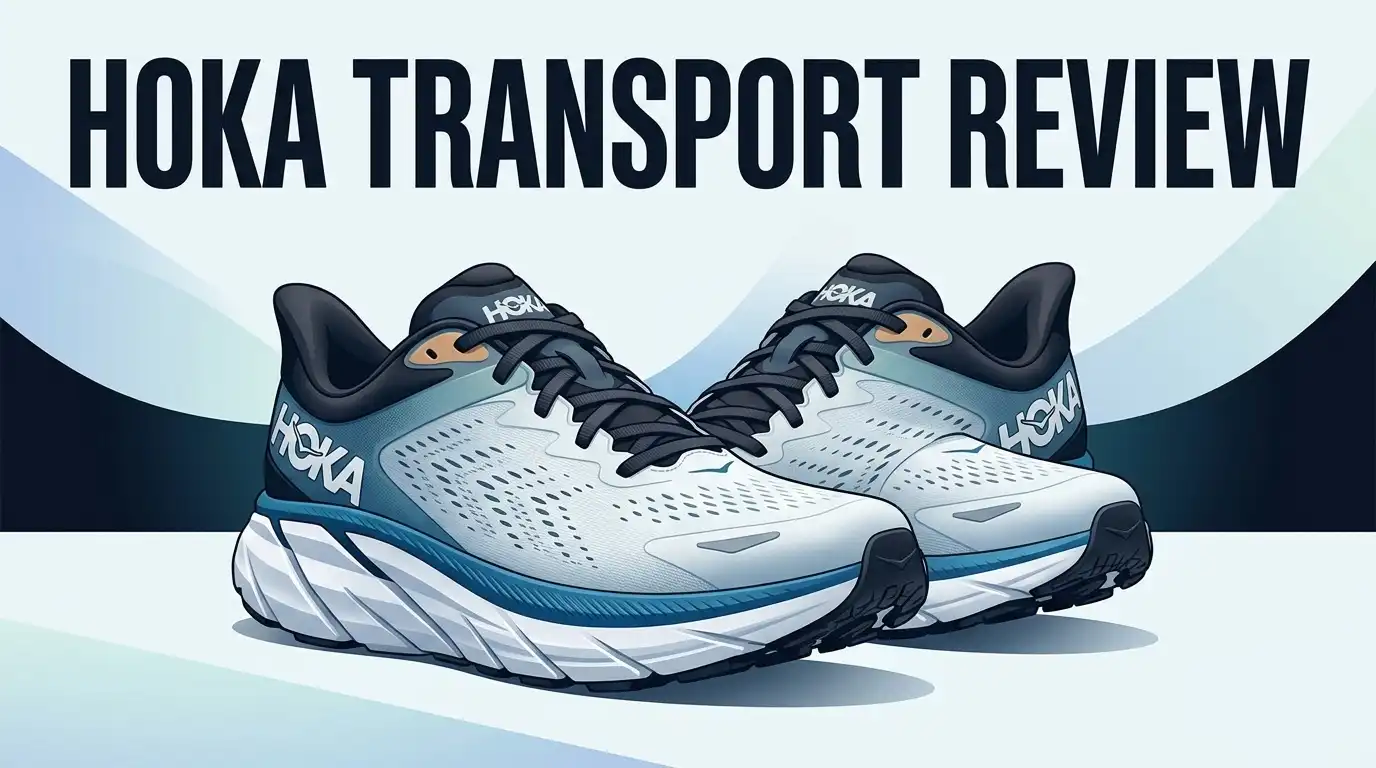
Hoka Transport Review 2026: Still Worth It?
The Hoka Transport is the shoe people buy when they want one pair that does everything. It walks the city. It handles light trails. It survives airports, dog walks, grocery runs, and long shifts on hard floors. But it also costs about $155, and that price makes buyers pause.
I tested this shoe across pavement, gravel, wet sidewalks, and a few easy hiking paths. I also compared it against dedicated walking shoes and light hikers.
This review covers what the Transport does well, what it does poorly, and who should skip it entirely. No fluff. Just what you need before you spend the money.
In A Nutshell:
- The Transport is a city to trail crossover shoe, not a running shoe. Hoka built it for walking, commuting, and travel. It handles a short jog for the bus, but it will feel heavy and stiff on a real run.
- The Vibram outsole is the best feature. Lab testing showed the rubber is roughly 13% firmer and 2mm thicker than the average walking shoe. That means grip on wet rock and a tread life that outlasts most sneakers.
- Breathability is the biggest weakness. The Cordura upper barely lets air through. Testers rated it 2 out of 5. Your feet will get warm in summer heat.
- Fit runs true to size with a roomy toe box. Over 300 user votes confirm true to size. Wide widths exist for both men and women.
- The Transport 2 adds more stack and softer cushion. The updated version sits at 36mm heel and 31mm forefoot with a 5mm drop, up from the original.
- Expect squeaking during break in. Early steps make an embarrassing noise. It fades after a few hours of walking.
Hoka Transport Review 2026

- Textile, Synthetic
- Polyurethane
Last update on 2026-09-08 / Affiliate links / Images from Amazon Product Advertising API Some of the links on this website are affiliate links, which means that at no additional cost to you, I earn a commission if you click through and make a purchase. I only recommend products and services that I believe will add value to my readers. Thank you for your support!
The Hoka Transport launched as a commuter shoe, and that identity still shapes everything about it. Hoka wanted a shoe you could wear on a bike, on a bus, and up a gravel path without changing footwear. That goal explains the odd mix of parts.
You get a walking shoe midsole, a hiking shoe outsole, and a lifestyle shoe silhouette. The upper uses Cordura fabric made from recycled plastic. The midsole uses compression molded EVA that contains 30% sugarcane. The outsole is Vibram EcoStep Recycle with 30% regrind rubber.
The result feels sturdy underfoot. It is stable rather than bouncy. Lab tests measured energy return at 45.3%, below the 51.3% average for walking shoes. So you will not feel springy pop with each step. You will feel planted.
Shock absorption tested at 116 SA against an average of 111 SA. That is above average protection for concrete. The heel stack sits at 34.1mm on the original model and the forefoot at 26.1mm. Both numbers beat typical walking shoes.
The Transport is a tool, not a toy. It rewards people who walk long distances on mixed surfaces. It frustrates people who wanted a soft, airy sneaker for warm days.
Unboxing Experience And First Impressions
The box is standard Hoka packaging. Simple cardboard, minimal branding, tissue paper, and a second set of traditional laces tucked inside. That extra lace set matters more than it sounds.
The shoe arrives with Quick Toggle stretch laces already installed. You pull one cord, the shoe tightens, and you are done. My first reaction was surprise at how fast I could get them on. My second reaction was doubt about whether the toggle would hold tight enough.
Pick the shoe up and you notice weight. At roughly 11.2 to 11.3 ounces per men’s shoe, this is not a light sneaker. It feels closer to a light hiker in the hand. The outsole lugs are visible and chunky enough to look serious.
The interior surprised me in a good way. The tongue measures around 7mm thick against a 4.1mm average. The collar is padded. Sliding my foot in felt plush and secure right away.


Last update on 2026-04-11 / Affiliate links / Images from Amazon Product Advertising API Some of the links on this website are affiliate links, which means that at no additional cost to you, I earn a commission if you click through and make a purchase. I only recommend products and services that I believe will add value to my readers. Thank you for your support!
No break in pain. No hot spots on day one. I wore them for four hours straight out of the box and felt fine. The only unpleasant surprise was the squeak, which showed up on hard indoor floors within the first ten minutes.
Key Specs Explained In Plain Words
Numbers on a spec sheet mean nothing without translation. Here is what each figure actually feels like on your foot.
Weight sits at 11.2 ounces for men and about 9.7 ounces for women. That is heavier than a road running shoe and lighter than a hiking boot. You notice it during the first hour, then you forget it.
Heel to toe drop is 5mm on the Transport 2 and 4mm on the original. Low drop shoes spread load across your foot instead of dumping it on your heel. Most walkers adapt within a day.
Stack height reaches 36mm heel and 31mm forefoot on the Transport 2. That is moderate to maximum cushion. You sit high off the ground, so ground feel is almost zero.


Last update on 2026-04-11 / Affiliate links / Images from Amazon Product Advertising API Some of the links on this website are affiliate links, which means that at no additional cost to you, I earn a commission if you click through and make a purchase. I only recommend products and services that I believe will add value to my readers. Thank you for your support!
Midsole softness measured 40.9 AC on the durometer. That falls in the balanced range, similar to the Hoka Bondi 9 at 43.0 AC. Not mushy. Not brick firm.
Forefoot width measured 112.8mm and heel width 92.5mm. Both beat the walking shoe averages of 107.5mm and 85.2mm. That extra width is why the shoe feels so stable.
Sizes run 7 to 15 for men and 5 to 11 for women, with regular and wide options. Six colorways exist in regular width and five in wide. All the colors stay neutral, which helps if you want to dress them down.
Top 3 Alternative for Hoka Transport

Last update on 2026-09-08 / Affiliate links / Images from Amazon Product Advertising API Some of the links on this website are affiliate links, which means that at no additional cost to you, I earn a commission if you click through and make a purchase. I only recommend products and services that I believe will add value to my readers. Thank you for your support!
Hoka Clifton 10
No products found.
On Cloud 6

- Pinnacle Plushness with Weather-Ready Capabilities
Last update on 2026-09-08 / Affiliate links / Images from Amazon Product Advertising API Some of the links on this website are affiliate links, which means that at no additional cost to you, I earn a commission if you click through and make a purchase. I only recommend products and services that I believe will add value to my readers. Thank you for your support!
Hoka Kaha 3 Low GTX
Hoka Transport 2: What Changed In The Newest Version

- Boosting the comfort of the original, the Transport 2 is back with its famous city-to-trail...
- Quick-toggle stretch lace
- 360-degree reflectivity
Last update on 2026-09-08 / Affiliate links / Images from Amazon Product Advertising API Some of the links on this website are affiliate links, which means that at no additional cost to you, I earn a commission if you click through and make a purchase. I only recommend products and services that I believe will add value to my readers. Thank you for your support!
Hoka updated the Transport quietly, without much marketing noise. The Transport 2 keeps the same DNA and fixes a few complaints.
Stack height went up. The Transport 2 measures 36.3mm heel and 31.3mm forefoot. That adds a few millimeters of foam under your foot. The ride feels softer and less firm than the original, especially during hour five of standing.
The sockliner got softer and the collar got plusher. These are small changes. You will not gasp at the difference. But the interior feels a little kinder around the ankle.
Drop shifted to 5mm. A one millimeter change means almost nothing in practice.
The upper moved to 100% recycled polyester mesh with a Cordura tongue. This version breathes better than the original Cordura upper, though it still runs warm compared to a mesh running shoe. Hoka added a PFC free and PFAS free water repellent treatment for light rain.
The Vibram EcoStep outsole stayed, which was the right call. Grip and durability were never the problem.
Price holds at $155. If you own the original and like it, the upgrade is optional. If you are buying fresh, get the 2. The extra cushion is worth it for long days.
Comfort And Cushioning On Long Days
This is where the Transport earns its price. I wore these through eight hour days that mixed standing, walking, and stair climbing. My arches did not ache. My heels did not throb.
The cushion is balanced, not plush. Hoka uses that word deliberately. Compare it to a Bondi and the Transport feels firmer. Compare it to a flat sneaker and the Transport feels like a couch.
The rocker shape does real work. The platform curves so your foot rolls forward without effort. That rocker matters because the shoe itself is stiff. Lab tests needed 18.1N of force to bend the forefoot to 30 degrees, about 30% more than average. A stiff shoe with a good rocker still walks smoothly. A stiff shoe without one feels like a plank.
The foam does not bottom out. After several hundred miles of reported testing, the midsole held its shape.
One real warning. Cold weather changes this shoe. Freezer testing showed the midsole got 43.2% firmer and 70.7% stiffer after 20 minutes in the cold. In winter, expect a harder first mile until your body heat softens things back up. It will not feel like concrete, but you will notice.
Fit, Sizing And Toe Box Room
Order your normal size. More than 300 user votes confirm the Transport fits true to size. I bought my usual size and had proper thumb space at the front.
The toe box feels roomy without being sloppy. Measured width at the widest forefoot point is 95mm and 75mm around the toes. Those numbers sit right at the average for medium width toe boxes, so roomy here means comfortable, not genuinely wide.
A few users report needing a half size up for comfort. That usually happens with thick socks or high volume feet. If you have wide feet, buy the wide version instead of sizing up. Sizing up creates heel slip.
The semi gusseted tongue keeps debris out and stops the tongue from sliding sideways. The heel counter rates about 3 out of 5 for stiffness. That is firm enough to stop ankle wobble without digging into your Achilles.
The Quick Toggle lacing is convenient but imprecise. One pull gets you 80% of a good fit. If you want a locked down feel for hiking or fast walking, swap in the included traditional laces. I did this after the first week and never went back.
Traction And The Vibram Outsole
The outsole is the single best part of this shoe. Hoka put a real Vibram compound on a walking sneaker, and it changes what the shoe can do.
I walked wet concrete, painted crosswalks, loose gravel, damp rock, and lightly snowy paths. The Transport gripped every one. Tile and linoleum floors also felt secure, which matters if you work indoors.
The rubber measures 3.7mm thick against a 1.7mm average. It is also 13% firmer than typical walking shoe rubber. Harder rubber lasts longer. After 50 miles of testing, my pair showed almost no visible wear.
The lugs are the smart part. They are deep enough to bite on dirt trails and shallow enough to avoid collecting mud or clicking loudly on hard floors. You get hiking grip without hiking clumsiness.
Limits exist. This is not a technical hiking shoe. It lacks a rock plate, a rigid shank, and a full toe cap. On steep scree or sharp rock, you will feel every stone and your ankle gets no help. Keep hikes moderate and under five miles and the Transport handles them well.
Some buyers also find the traction excessive for pure city use. If you never leave pavement, you are paying for grip you will not need.
Breathability And Warm Weather Problems
Here is the honest negative. The Transport runs hot.
Smoke testing on the original model showed almost no air passing through the upper. Testers rated breathability 2 out of 5, placing it among the least breathable walking shoes tested. Hold the shoe up to a light and barely any light comes through.
The Cordura fabric that makes this shoe so tough is the same fabric that traps heat. You cannot have both. Durability and airflow pull in opposite directions, and Hoka picked durability.
The Transport 2 improved things with a recycled polyester mesh vamp. It breathes better. It still does not breathe like a running shoe with an engineered mesh upper.
What this means in practice. In cool or cold weather, the Transport is excellent. Your feet stay warm and dry. In spring and autumn, it is fine. In summer heat above 80 degrees Fahrenheit, expect sweaty socks by afternoon.
Skip the GTX version unless you genuinely need waterproofing. Gore Tex makes the shoe even less breathable. The standard model with its water repellent treatment handles light rain adequately for most people.
If summer walking is your main use case, look at a mesh walking shoe instead. The Transport is the wrong tool for hot climates.
Durability After Months Of Wear
Durability is the Transport’s quiet strength. Abrasion testing with a rotary tool showed the upper holding up far better than a standard running shoe upper. Under a microscope, the Cordura fabric looked nearly identical to the Gore Tex textile on a dedicated Salomon hiker.
I dragged these through mud, scraped them on curbs, and kicked gravel. Scuffs wiped off with a damp cloth. No fraying at the toe. No blown seams.
The midsole is fully covered by rubber, unlike most road running shoes with exposed foam. Covered midsoles do not crumble at the edges. That single design choice adds months of life.
Expect 300 to 500 miles minimum. Several testers reported no visible wear after several months of regular use. At $155, that math works out better than a $140 running shoe that dies at 300 miles.
Cleaning is easy. The upper wipes clean. The neutral colorways hide dirt well, though the lighter shades like Eggnog and Alabaster show scuffs faster than black or navy.
One durability note that is not about materials. The Quick Toggle cord can loosen over time with heavy use. If it stops holding tension, the included traditional laces solve the problem permanently.
What The Hoka Transport Does Not Do Well
Authentic reviews name the flaws. Here are the Transport’s real failures.
It is not a running shoe. Hoka never claimed otherwise, but buyers keep trying. The stiff forefoot, low energy return, and 11 ounce weight make running feel like work. A short sprint for a train is fine. A 5K is not.
It squeaks out of the box. The sole makes a noticeable noise on hard indoor floors. It is genuinely embarrassing in a quiet office or library. The good news is it fades after a couple of hours of walking.
It gets hot. Already covered, but it deserves repeating. This is the number one reason people return the shoe.
It stiffens badly in cold. A 70.7% loss of flexibility in cold conditions is a big number. Winter walkers should expect a stiff first mile.
It masters nothing. The Transport is the second best choice for every task. A Bondi SR is more comfortable for pure pavement. A trail runner is more agile on dirt. A lifestyle sneaker looks better with jeans. The Transport just refuses to be bad at anything.
No ground feel. The high stack disconnects you from the surface. Runners and hikers who like proprioception will hate this.
Pros And Cons
Pros
- Vibram EcoStep outsole delivers grip that no standard walking shoe can match, on wet rock, gravel, tile, and light snow
- Above average shock absorption at 116 SA keeps feet fresh through eight hour days on concrete
- Outstanding durability, with a 3.7mm thick outsole and a Cordura upper that survives abrasion testing better than running shoes
- Quick Toggle lacing lets you slide in and out in seconds, which makes it a genuinely great airport and travel shoe
- Wide platform at 112.8mm forefoot and 92.5mm heel provides excellent stability for anyone worried about rolling an ankle
- True to size fit with a roomy toe box, plus regular and wide widths across a full size range
- 360 degree reflective detailing keeps you visible on early morning and evening walks
- Recycled and plant based materials throughout, including 30% sugarcane EVA and 100% recycled polyester upper
- Comes with traditional laces as a free backup if you dislike the toggle system
Cons
- Poor breathability, rated 2 out of 5, makes summer wear uncomfortable
- Audible squeaking during the break in period
- Cushioning stiffens 70.7% in cold weather
- Energy return of 45.3% is below average, so the ride feels flat rather than lively
- Heavy at 11.2 ounces per shoe compared to dedicated walking sneakers
- Not the best option for any single activity, only very good at several
- Vibram lugs feel like overkill for buyers who only walk pavement
- Almost zero ground feel due to the high stack
- $155 is a lot for a shoe most people will use casually
Who Should Buy The Hoka Transport
Buy this shoe if your days do not follow a script. The Transport shines when you cannot predict your terrain.
Commuters get the most value. If you walk to a station, cross wet crosswalks, cut through a park, and stand on a train, this shoe covers all of it. The slip on convenience alone justifies it for daily commuters.
Travelers are the second best fit. Airport security lines reward a shoe you can remove with one pull. Cobblestone streets and unexpected walking tours reward the Vibram grip. One pair replaces two.
Service and healthcare workers who stand for long shifts report real comfort. The moderate cushion holds up without bottoming out, and the slip resistance on smooth floors is a genuine safety feature.
Casual hikers who stick to easy trails under five miles will be happy. The Transport feels like a light hiker without hiking shoe bulk.
People with wide feet or stability concerns should look closely. The wide platform and wide sizing options make this one of the more accommodating shoes Hoka builds.
Cold climate walkers get a bonus. The warm upper that ruins summer makes winter walking pleasant.
Who Should Skip The Hoka Transport
Skip it if you live somewhere hot. Summer in Phoenix or Miami will make you regret this purchase. Buy a mesh walking shoe instead.
Skip it if you want a running shoe. The Clifton 10 or a similar daily trainer will serve you far better. The Transport is stiff, heavy, and flat feeling at pace.
Skip it if you only walk pavement. You are paying for trail grip you will never use. The Hoka Bondi SR or On Cloud 6 offer more comfort per dollar for pure city walking.
Skip it if you hike serious terrain. No rock plate, no ankle support, no full toe cap. Get a real hiking shoe for anything technical or anything over five miles.
Skip it if you want a fashion sneaker. The Transport looks decent and the neutral colorways help, but the chunky lugs read as outdoor gear. It will never look sleek with tailored clothes.
Skip it if you like feeling the ground. The high stack removes almost all connection to the surface. Minimalist shoe fans should look at low stack options instead.
Skip it if $155 stretches your budget. The Transport is good value for the durability, but plenty of $90 walking shoes handle basic walking fine.
Price And Value In 2026
The Transport and Transport 2 both sit at $155. That is the same price as a Hoka Clifton 10 and less than the Bondi SR at $170 to $180.
The value case rests on durability. A road running shoe at $150 often retires at 300 miles because the exposed midsole breaks down. The Transport’s covered midsole and thick Vibram outsole push realistic lifespan toward 500 miles or more. Cost per mile drops sharply.
The second value argument is replacement. If this shoe genuinely replaces both a walking sneaker and a light hiker, you saved $150. That works for travelers and commuters. It does not work for someone who already owns a hiking shoe and just wants a comfortable daily sneaker.
Buy from a retailer with generous returns. REI offers a one year satisfaction policy and a member dividend. Zappos offers 365 day free returns. Hoka’s own Fly For 30 guarantee lets you wear the shoes for 30 days and return them for a full refund if you are unhappy.
Discounts appear on older colorways when new ones drop. Watch for the original Transport dropping to $110 or less now that the Transport 2 is out. The original is still an excellent shoe if you can tolerate the warmer upper.
Final Verdict
The Hoka Transport is a very good shoe with one clear flaw and one clear strength.
The strength is versatility backed by real hardware. The Vibram outsole, the wide stable platform, and the tough Cushioned upper let this shoe go places walking sneakers cannot. It grips wet rock. It survives mud. It lasts.
The flaw is heat. The upper does not breathe, and no amount of good design elsewhere fixes that in July.
Score it around 86 out of 100. It is a genuine top pick among Hoka walking shoes and one of the best city to trail crossovers available in 2026.
Buy the Transport 2 over the original unless you find a steep discount. The extra stack height and softer sockliner improve long day comfort meaningfully.
My recommendation is simple. If you walk on mixed surfaces in a temperate or cold climate and you value durability over airiness, buy it. You will get years of use. If you live somewhere hot, or if your feet only ever touch pavement, spend your money elsewhere and thank me later.
Frequently Asked Questions
Is the Hoka Transport a running shoe?
No. Hoka designed it for walking, commuting, and hiking. It handles a short sprint for the bus but the stiff forefoot, low energy return, and 11 ounce weight make sustained running uncomfortable. Choose a Clifton or Bondi for running.
Does the Hoka Transport run true to size?
Yes. Over 300 user votes confirm true to size fit. The toe box is roomy without being wide. If you have wide feet, buy the wide version rather than sizing up, since sizing up causes heel slip.
What is the difference between the Transport and Transport 2?
The Transport 2 has more stack height at 36mm heel and 31mm forefoot, a 5mm drop, a softer sockliner, a plusher collar, and a more breathable recycled polyester mesh upper. The Vibram outsole stayed the same. Both cost $155.
Is the Hoka Transport waterproof?
The standard version is not waterproof. It has a water repellent treatment that handles light rain. A Gore Tex version exists for wet conditions, but it breathes even less than the standard model.
Can you hike in the Hoka Transport?
Yes, on moderate and non technical trails. The Vibram outsole grips gravel, dirt, and wet rock well. It lacks a rock plate and toe cap, so skip technical terrain and keep hikes under about five miles for best comfort.
Why does the Hoka Transport squeak?
The sole material creates friction against hard floors when new. The squeaking is loud and noticeable at first. It typically fades after a few hours of walking as the outsole breaks in.
How long does the Hoka Transport last?
Expect 300 to 500 miles minimum. The 3.7mm thick Vibram outsole is 2mm thicker than average and 13% firmer, and the midsole is fully covered by rubber. Many testers report no visible wear after several months.
Is the Hoka Transport good for standing all day?
Yes. Testers wore it for seven and eight hour standing shifts without arch pain. Shock absorption measured 116 SA against a 111 SA average. The cushion is balanced rather than plush, which suits standing better than very soft foam.

Mia Smith is the founder of Shoe Storyteller, a blog that celebrates the art and stories behind shoes. With a passion for fashion and a flair for storytelling, Mia brings a unique perspective to the world of footwear.


