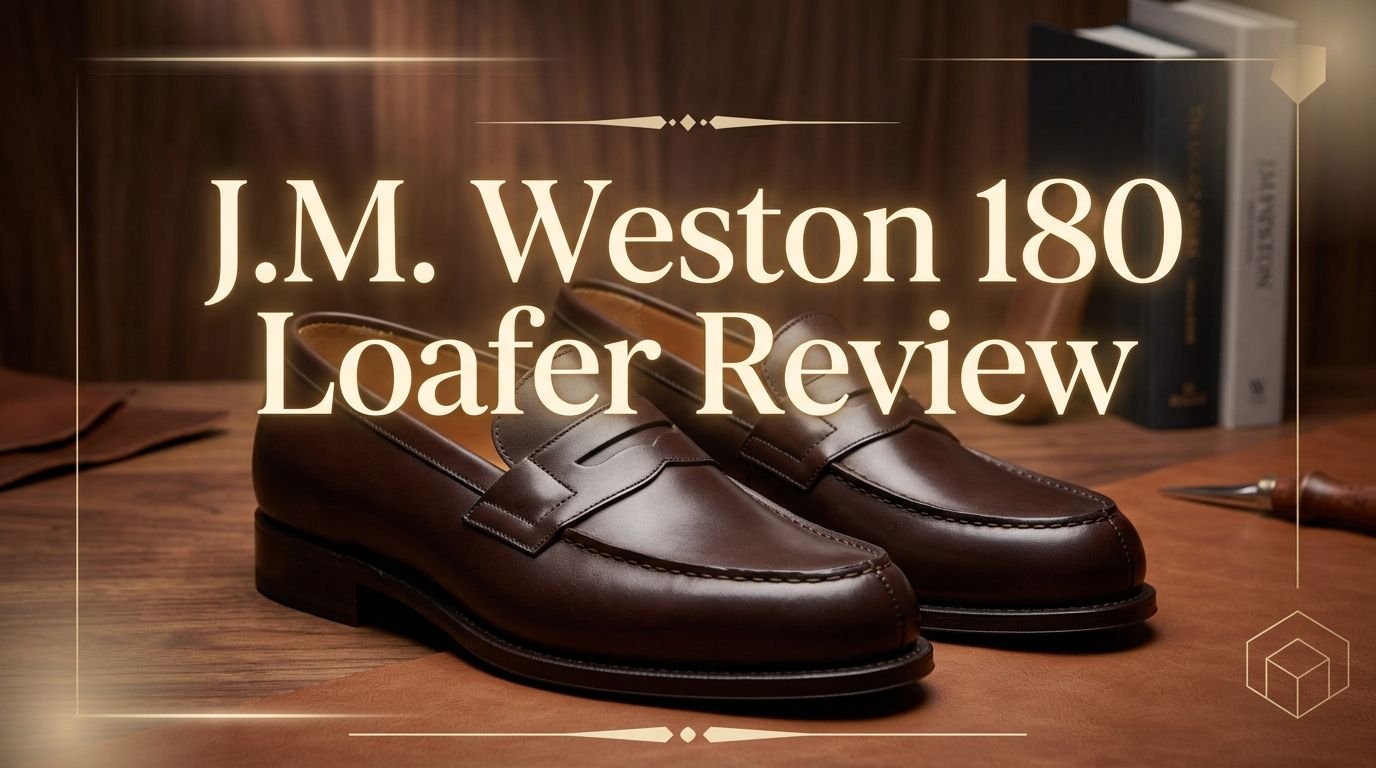
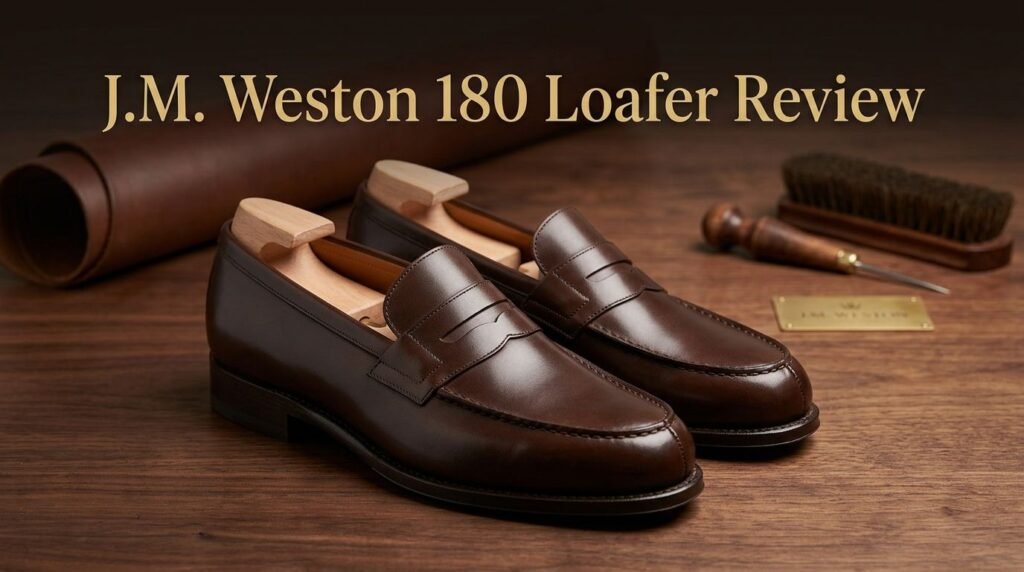
J.M. Weston 180 Loafer Review 2026: Is It Still Worth It?
Are you thinking about spending over $1,000 on a pair of penny loafers? The J.M. Weston 180 Loafer has been a style staple since 1946.
It carries 80 years of French shoemaking heritage on its shoulders. This shoe is handcrafted at the brand’s own factory in Limoges, France. Each pair requires exactly 180 individual hand steps to complete. That is how the shoe earned its name.
But a big question remains. Does the 180 Loafer deliver enough quality and comfort to justify its luxury price tag in 2026? This review covers every detail you need to know before buying.
Key Takeaways:
- The 180 Loafer is handcrafted in Limoges, France using 180 manual production steps. J.M. Weston has produced this shoe since 1946 at the same factory, and 2026 marks its official 80th anniversary with limited edition releases.
- Premium box calf leather forms the upper of this shoe. J.M. Weston sources its leather from the Du Puy tannery, which the brand owns. This gives them full control over leather quality and consistency.
- Goodyear welt construction makes this shoe fully resoleable. You can send it back to J.M. Weston for professional resoling. This extends the shoe’s lifespan to 10, 20, or even 30 years with proper care.
- The retail price sits around $1,065 in 2026. This places it in the luxury category. It is more affordable than Edward Green or John Lobb, but far above brands like G.H. Bass or Cole Haan.
- Sizing runs slightly large. J.M. Weston recommends going down half a size from your standard measurement. The box calf leather will stretch and mold to your foot over several weeks of wear.
- The break in period is real but manageable. Expect some firmness during the first two to four weeks. After that, the shoe conforms to your foot shape and becomes noticeably more comfortable with each wear.

- Series: Signature Loafer #180 Signature Loafer #180
- Material: Upper: Dark Brown Box Calf/ Sole: Single Leather Sole
- Color: Dark brown
Last update on 2026-06-07 / Affiliate links / Images from Amazon Product Advertising API Some of the links on this website are affiliate links, which means that at no additional cost to you, I earn a commission if you click through and make a purchase. I only recommend products and services that I believe will add value to my readers. Thank you for your support!
A Brief History of the J.M. Weston 180 Loafer
The J.M. Weston brand traces back to 1891 in Limoges, France. Bootmaker Edouard Blanchard founded the company. His son Eugène traveled to the United States in 1907 and brought back knowledge of Goodyear welting. This mechanical sole stitching technique became the foundation of all J.M. Weston shoes.
The 180 Loafer arrived in 1946 after Eugène saw American penny loafers during his travels. He wanted to create a French interpretation with finer leather and a sleeker shape. The result was a loafer that blended casual American spirit with European precision.
The shoe became a cultural icon in France over the following decades. Politicians, students, and artists all wore it. It crossed social classes in a way few shoes ever have. The 180 became linked to a particular effortless Parisian look that still carries influence today.
2026 marks the 80th anniversary of the 180 Loafer. J.M. Weston has launched special upcycled editions made from rare “sleeping leathers” to celebrate. The anniversary year will roll out in chapters, with each release highlighting a different feature of the original design. This renewed attention proves the 180 Loafer remains as relevant today as it was eight decades ago.
Design and Silhouette of the J.M. Weston 180
The J.M. Weston 180 sits between a chunky American penny loafer and a sleek European dress shoe. It has a rounded apron toe with a distinctive shape. The proportions stay balanced without looking too wide or too narrow.
The signature seagull strap runs across the vamp. This design element is unique to J.M. Weston. It gives the shoe a visual identity that is easy to recognize from across a room. The strap connects with a jointed apron that runs edge to edge, creating a clean horizontal line.
The overall profile has moderate substance to it. It looks sturdy without appearing heavy. Compared to American penny loafers from brands like G.H. Bass, the 180 has a more refined waist and a tighter heel cup. This gives it a distinctly continental personality that works well with both casual and dressed up outfits.
J.M. Weston offers the 180 in over 30 color options. These include classic black box calf, dark brown, burgundy, navy blue, and even white. Suede versions and exotic leather editions in alligator are also available. This wide color range means you can find a version that fits your personal style without much effort.
Top 3 Alternatives for J.M. Weston 180 Loafer
If the J.M. Weston 180 Loafer stretches your budget too far, these three alternatives offer solid penny loafer style at lower price points. Each one brings a different strength to the table.


Last update on 2026-04-11 / Affiliate links / Images from Amazon Product Advertising API Some of the links on this website are affiliate links, which means that at no additional cost to you, I earn a commission if you click through and make a purchase. I only recommend products and services that I believe will add value to my readers. Thank you for your support!
1. Cole Haan Pinch Penny Loafer

- OFFICIAL COLE HAAN: Men's Pinch Penny Loafers; Timeless style powered by innovation, for when you...
- ELEVATED HERITAGE STYLE: Pinch Penny Loafers combine classic dress shoe sophistication with...
- DRESS SHOES FOR THE OCCASION: A sophisticated blend of dress shoe elegance and Cole Haan comfort...

Last update on 2026-06-07 / Affiliate links / Images from Amazon Product Advertising API Some of the links on this website are affiliate links, which means that at no additional cost to you, I earn a commission if you click through and make a purchase. I only recommend products and services that I believe will add value to my readers. Thank you for your support!
The Cole Haan Pinch Penny Loafer is a classic American option with a leather upper and leather sole. It costs well under $200 and delivers a traditional penny loafer look. The moc construction and clean saddle strap give it a familiar shape. It lacks the resoleable Goodyear welt of the J.M. Weston, but it serves as a strong everyday loafer for buyers who want style without a luxury price.
2. G.H. Bass Larson Weejuns Loafer

- Leather Heel Sock With Golden Branding
- Gripping, Flexible Rubber Sole
- Hand-stitched Seams In Waxy Thread
Last update on 2026-06-07 / Affiliate links / Images from Amazon Product Advertising API Some of the links on this website are affiliate links, which means that at no additional cost to you, I earn a commission if you click through and make a purchase. I only recommend products and services that I believe will add value to my readers. Thank you for your support!


Last update on 2026-04-11 / Affiliate links / Images from Amazon Product Advertising API Some of the links on this website are affiliate links, which means that at no additional cost to you, I earn a commission if you click through and make a purchase. I only recommend products and services that I believe will add value to my readers. Thank you for your support!
The G.H. Bass Larson Weejuns is the original American penny loafer. It dates back to 1936 and carries serious heritage credentials. The polished leather upper and hand sewn construction give it a refined appearance at a budget friendly price. This shoe works best for buyers who want a historical penny loafer without spending four figures.
3. Allen Edmonds Newman Penny Loafer

- Slip-on penny loafer
- Everyday essential that can be dressed up or down. Classic fit: Take your regular size.
- Single layer, vegetable-tanned leather soles give it a sleek, low profile. Comfortable, handsewn...
Last update on 2026-06-07 / Affiliate links / Images from Amazon Product Advertising API Some of the links on this website are affiliate links, which means that at no additional cost to you, I earn a commission if you click through and make a purchase. I only recommend products and services that I believe will add value to my readers. Thank you for your support!
The Allen Edmonds Newman offers premium European leather and vegetable tanned leather soles. It sits in the mid range price category and provides hand sewn comfort. The slim, low profile sole gives it a sleek look that pairs well with chinos or dress trousers. This shoe bridges the gap between budget loafers and the J.M. Weston 180 with quality construction at a more accessible price.
Leather Quality and Material Breakdown
The box calf leather on the J.M. Weston 180 is one of its greatest strengths. J.M. Weston owns the Du Puy tannery, which supplies the leather for most of its shoes. This vertical integration gives the brand direct control over raw material quality.
Box calf leather has a smooth, tight grain with a subtle natural sheen. It takes a polish very well and develops a rich patina over time. The leather on the 180 feels firm at first but softens with wear. It is not as thick as some workboot leathers, but it carries a refined density that resists scuffs and scratches.
The calfskin lining inside the shoe is soft and breathable. It sits in a natural color that contrasts nicely against the outer leather. This lining helps manage moisture and keeps the foot comfortable during extended wear.
The sole on the standard 180 is a single layer leather sole. J.M. Weston also offers a triple sole version for buyers who want extra durability. Some newer models use a monogram rubber outsole for better grip on wet surfaces. Every version uses high quality materials that hold up well under regular use.
Goodyear Welt Construction Explained
The Goodyear welt is the backbone of the J.M. Weston 180 Loafer. This construction method stitches the upper, insole, and outsole together through a strip of leather called the welt. The result is an extremely durable bond that also allows for future resoling.
J.M. Weston uses a slightly different approach than most Goodyear welted shoes. The brand implements a hand welting technique done by machine. This hybrid process gives each pair a tighter, more precise stitch than standard factory Goodyear welting. It also adds to the overall build quality and longevity.
The practical benefit of this construction is resoling capability. You can send your worn 180 Loafers back to J.M. Weston for a full resole service. This means a single pair can last 10 to 30 years with proper maintenance. The initial investment of over $1,000 becomes more reasonable when you spread that cost across decades of wear.
Goodyear welt construction also affects comfort over time. The cork layer between the insole and outsole gradually compresses and molds to your foot shape. After the break in period, the shoe fits like a custom piece. This personalized fit improves with every wear and makes the shoe feel better the longer you own it.
Sizing and Fit Guide for the 180 Loafer
Getting the right size for the J.M. Weston 180 is important. The shoe fits slightly large, and the brand recommends sizing down by half a size from your standard measurement. J.M. Weston uses its own sizing system, so checking their online size guide before buying is essential.
The 180 comes in multiple width options. The standard D width works for most regular feet. An E width is available for wider feet. This width selection gives buyers a better chance of finding a comfortable fit without guessing.
The initial fit should feel snug but not painful. The box calf leather will stretch over the first few weeks. Some owners on style forums report that overly tight sizing can lead to painful break in experiences. A slightly snug fit is ideal. The shoe should hold your heel securely and have just a small amount of room in the toe box.
J.M. Weston operates physical boutiques in major cities like Paris, New York, and London. Visiting a store for a professional fitting is the best way to find your exact size. The staff can measure your foot on J.M. Weston’s own last and recommend the right combination of size and width. If no store is nearby, the brand’s online size guide uses foot measurements in centimeters for accurate ordering.
Break In Period: What to Expect
The J.M. Weston 180 has a firm break in period. This is common for shoes with Goodyear welt construction and stiff box calf leather. Expect the first two to four weeks to feel tight and somewhat rigid.
During the initial wear, the leather sole and upper are both working to soften. The cork footbed is also compressing to match your foot shape. Many owners recommend wearing the shoe for short periods at first. Start with one to two hours per day and gradually increase the duration.
Some buyers on Nordstrom and Styleforum describe the break in as surprisingly manageable. One verified reviewer called it an “easy break in period” and praised the quality once the shoe settled. Others note that sizing mistakes can make the process painful, so getting the correct size is critical.
After the break in, the 180 becomes remarkably comfortable. The molded cork bed, softened leather, and personalized fit create a shoe that feels uniquely yours. Longtime owners often say the 180 gets better with every year of use. This long term comfort is one of the main reasons people invest in this shoe despite its premium price.
How to Style the J.M. Weston 180 Loafer
The J.M. Weston 180 works across casual, smart casual, and business casual settings. Its balanced silhouette makes it easy to dress up or down. This versatility is a major selling point.
For a casual look, pair the 180 with cuffed selvedge denim and a relaxed linen shirt. The brown or burgundy versions work best for this combination. The shoe adds a polished touch without making the outfit feel overdressed.
In a smart casual setting, the 180 pairs well with chinos, a crewneck sweater, and a sport coat. Black or dark brown versions are ideal here. The clean lines of the loafer give the outfit a sharp edge that sneakers or desert boots cannot match.
For business casual offices, the 180 fits right in with dress trousers and a button down shirt. It offers a less formal option than Oxford dress shoes while still looking professional. The Goodyear welt and premium leather signal quality to anyone who notices fine footwear.
The shoe also works well with no socks or invisible socks during warmer months. This sockless look has been a signature Parisian styling choice for decades. It shows off the shoe’s low cut profile and adds a relaxed vibe to any summer outfit.
Durability and Long Term Performance
The J.M. Weston 180 is built to last for decades, not just seasons. The combination of Goodyear welt construction, high grade box calf leather, and leather soles creates a shoe that ages gracefully.
Box calf leather develops a rich patina over time. Regular polishing and conditioning keep the leather supple and protected. The leather responds well to cream polish, and owners report that the surface gets more beautiful with each year of use.
The leather sole wears down gradually with regular use. Walking on pavement will show wear faster than indoor surfaces. Adding a rubber half sole or toe taps can extend the life of the original sole. When the sole does wear through, J.M. Weston offers a full resole service that restores the shoe to near original condition.
Some owners on Reddit’s r/goodyearwelt community have shared 10 year reviews of their 180 Loafers. These long term reports consistently praise the shoe’s ability to hold its shape and structure. The leather remains firm yet comfortable. The welt stitching stays intact. With regular maintenance, the 180 proves its worth as a true buy it for life purchase.
One quality concern raised in 2025 on Styleforum involved the outsole separating from the midsole on newer models with rubber outsoles. This appears to be an isolated issue, but it is worth inspecting the shoe periodically if you own a rubber soled version.
The 80th Anniversary Editions in 2026
J.M. Weston has made 2026 a celebration year for the 180 Loafer. The brand is releasing special editions in multiple chapters throughout the year. Each chapter highlights a different aspect of the 180’s legacy.
The first release is the 180 Upcycled Loafer collection. These shoes are made from “sleeping leathers,” which are rare hides stored in the J.M. Weston archives. Each pair uses unique color combinations and textures that cannot be replicated. This limited availability makes them collector’s items.
The anniversary lineup also includes hybrid versions of the 180. The Commando 180 features a chunky rubber sole for added grip and a modern look. These hybrid models push the classic design in new directions while keeping the core seagull strap and apron toe intact.
J.M. Weston is rolling out these releases through its boutiques and official website. Social media channels including Instagram and TikTok showcase each new chapter with styling inspiration. The brand has also partnered with fashion media to spread awareness. GQ named the 180 one of the most important loafers for men in 2026, which highlights its continued relevance in the current fashion landscape.
Pros and Cons of the J.M. Weston 180 Loafer
Pros:
- Outstanding leather quality sourced from J.M. Weston’s own Du Puy tannery. The box calf is smooth, durable, and develops a beautiful patina.
- Goodyear welt construction allows full resoling. This makes the shoe a long term investment that can last decades.
- Iconic design with over 30 color options. The seagull strap and rounded apron toe are instantly recognizable.
- Made entirely in France at the Limoges factory. Over 195 skilled workers produce every pair.
- Excellent long term comfort after the break in period. The cork footbed molds perfectly to your foot shape.
Cons:
- High retail price of around $1,065. This puts it out of reach for many buyers.
- Firm break in period that can take two to four weeks. The stiff leather requires patience.
- Does not include shoe trees at this price point. Several reviewers on Nordstrom mentioned this as a disappointment.
- Limited availability on third party platforms. Amazon listings are often parallel imports with limited sizing.
- Rubber soled versions may experience outsole separation based on recent forum reports.
Is the J.M. Weston 180 Loafer Worth It in 2026?
The answer depends on your budget and how you view shoes. If you treat footwear as a long term investment, the 180 Loafer makes a strong case. Its ability to be resoled, its leather quality, and its timeless design mean you can wear it for 20 or more years.
The cost per wear drops dramatically over time. At $1,065, wearing the shoe 200 times brings the cost per wear down to about $5.33. Many fast fashion shoes cost $100 and fall apart after 50 wears, giving them a higher cost per wear of $2. The difference narrows quickly, and the 180 eventually wins on value.
For buyers who want premium French craftsmanship and a shoe with genuine history, the 180 Loafer is hard to beat. It holds its own against shoes from Edward Green and John Lobb at a lower price point. The 80th anniversary editions in 2026 add extra appeal for collectors and enthusiasts.
However, if your budget is under $500, the alternatives listed earlier provide solid penny loafer options without the luxury premium. The Allen Edmonds Newman and Cole Haan Pinch both deliver good leather quality and classic styling at a fraction of the cost. The right choice depends on what matters most to you in a pair of shoes.
How to Care for Your J.M. Weston 180 Loafer
Proper care extends the life of the 180 Loafer significantly. Start with cedar shoe trees inserted after every wear. These absorb moisture and help the shoe retain its shape. J.M. Weston does not include shoe trees, so you will need to purchase them separately.
Clean the leather regularly with a damp cloth to remove surface dirt. Apply a quality cream polish every two to three weeks to nourish the leather and maintain its sheen. Avoid heavy wax polish on box calf leather, as it can build up and dull the natural surface.
Rotate your shoes and avoid wearing the same pair two days in a row. This gives the cork footbed and leather time to dry out between wears. Rotation also reduces sole wear and extends the time between resoles.
Store your 180 Loafers in the dust bags that come with the shoe. Keep them in a cool, dry place away from direct sunlight. Heat and moisture can damage the leather and weaken the welt stitching over time. With this basic care routine, your J.M. Weston 180 will serve you well for many years to come.
Frequently Asked Questions
How does the J.M. Weston 180 Loafer fit?
The J.M. Weston 180 Loafer fits slightly large. The brand recommends sizing down by half a size from your standard shoe size. The shoe comes in D and E widths. The box calf leather will stretch over the first few weeks of wear, so a snug initial fit is normal and expected.
What is the price of the J.M. Weston 180 Loafer in 2026?
The standard J.M. Weston 180 Loafer retails for approximately $1,065 in 2026. Prices vary based on the leather type and sole option. The triple sole version and exotic leather editions cost more. Limited edition 80th anniversary models may carry a higher price as well.
Is the J.M. Weston 180 Loafer resoleable?
Yes. The 180 Loafer uses Goodyear welt construction, which makes it fully resoleable. You can send the shoe to J.M. Weston for professional resoling. This service restores the sole and extends the shoe’s usable life by many years.
How long does the break in period last?
The break in period for the J.M. Weston 180 typically lasts two to four weeks with regular wear. The stiff box calf leather and cork footbed need time to soften and mold to your foot. Start with short wear sessions and gradually increase the duration to make the process more comfortable.
Where is the J.M. Weston 180 Loafer made?
The J.M. Weston 180 Loafer is made in Limoges, France. The brand operates its own factory with over 195 skilled workers. Every pair is produced from start to finish in this single facility using traditional shoemaking methods.
What makes the J.M. Weston 180 special compared to other penny loafers?
The 180 stands out because of its 180 step handcrafted production process, its premium box calf leather from the brand’s own tannery, and its Goodyear welt construction. The signature seagull strap and French origin give it a distinct identity. Few other penny loafers combine this level of heritage, quality, and resoleable construction at this price point.

Mia Smith is the founder of Shoe Storyteller, a blog that celebrates the art and stories behind shoes. With a passion for fashion and a flair for storytelling, Mia brings a unique perspective to the world of footwear.