Thursday Boot Captain Review 2026: Still Worth It?
The Thursday Boot Captain has one job. It wants to be the only boot in your closet. For a price that sits near $199, that is a bold promise. I have watched this model grow from a Kickstarter curiosity into the boot that almost every menswear writer names first.
So I dug into the details, the owner complaints, the long term wear reports, and the small things that Thursday does not advertise.
This review covers leather, sizing, comfort, sole grip, water resistance, and the parts of the boot that let people down. You will also see three solid alternatives if the Captain silhouette does not match your feet or your style.
In a Nutshell:
- The price stays the strongest argument. The Captain sits near $199 with Goodyear welt construction, full grain leather uppers, and a leather midsole. Most competing service boots start above $300.
- Comfort arrives early. Thursday uses a foam footbed instead of a stiff leather insole. Break in takes days, not weeks. Your first wear will not feel like punishment.
- Sizing runs long. Order a half size smaller than your average sneaker size. Wide (EE) and extra wide (EEE) options exist on popular leathers.
- The toe box divides people. The standard last looks slim and slightly pointed. Fans call it a classic service boot shape. Critics call it long and awkward with baggy jeans.
- It is water resistant, never waterproof. Rain and puddles pose no problem. Snow shoveling and creek crossings will soak your socks.
- Leather choice changes everything. Rugged and Resilient leathers wear harder and break in slower. Classic leathers feel softer and dress up better.
What Is the Thursday Boot Captain?

- THE PERFECT FIT - We recommend ordering the size you typically wear in leather boots or dress shoes...
- THE CAPTAIN ANKLE BOOT - Complement any outfit from jeans to a business suit in this versatile...
- UNPARALLELED WORKMANSHIP - Genuine leather boots carefully crafted from hand-selected materials so...
Last update on 2026-09-08 / Affiliate links / Images from Amazon Product Advertising API Some of the links on this website are affiliate links, which means that at no additional cost to you, I earn a commission if you click through and make a purchase. I only recommend products and services that I believe will add value to my readers. Thank you for your support!
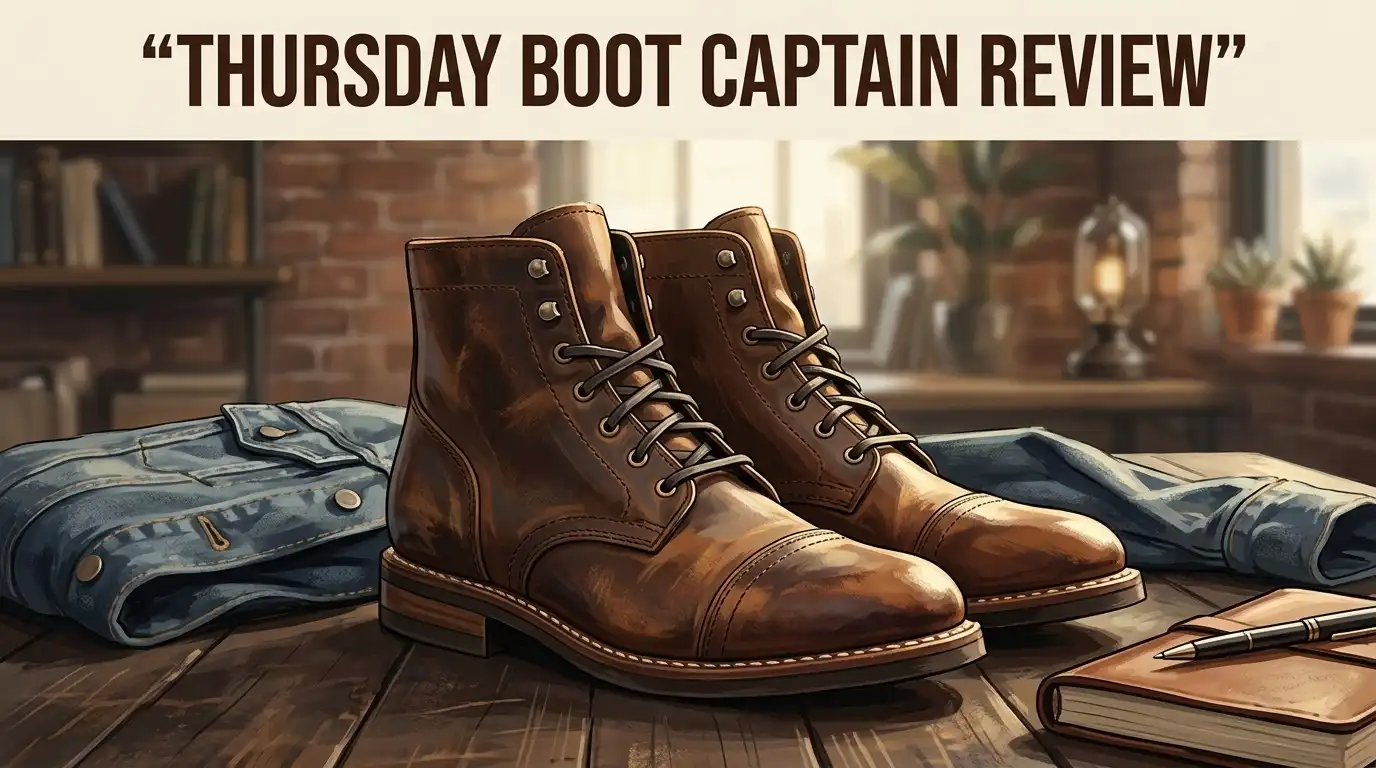
The Captain is a cap toe service boot. That category sits between a dress boot and a work boot. The shaft measures about 5.5 inches tall. The heel adds roughly 1.25 inches, so you gain real height without looking like you are wearing platforms.
Thursday builds the Captain with a 360 degree Goodyear welt on most versions. Some leathers use a storm welt, which adds extra water resistance at the seam. Both types allow a cobbler to replace the sole. That single feature separates the Captain from every fashion boot at this price.
The upper uses full grain leather that measures around 1.8 to 2.0 millimeters thick. Work boots usually run above 2.2 millimeters. Dress shoes usually sit below 1.4 millimeters. Thursday picked the middle path on purpose.
You get two rows of speed hooks at the top, so lacing takes seconds. Inside, you find a leather lining, a steel shank for stability, a vegetable tanned leather midsole, and a foam insole for shock absorption.
The design borrows from United States Navy service boots. That means a lower profile than a Red Wing and a cleaner shape than a Timberland. You can wear it with jeans, chinos, or flannel trousers without looking mismatched.
The Unboxing Experience
The box arrives plain. Thursday ships in a sturdy dark box with the logo printed on top. Nothing inside screams luxury, and that matches the price. You will not find scented tissue, dust bags, or a branded shoe horn.
Open the lid and you get the boots wrapped in tissue paper, each stuffed with paper to hold shape. A small card explains care basics. Some orders include a spare set of laces. Some do not, which annoys buyers who expected them.
The leather smell hits first. It smells like a tannery, not like a chemical plant. That is a good sign. Run your thumb across the vamp and you feel a slight wax coating on the Rugged and Resilient leathers.
Check the Goodyear welt stitching immediately. On good pairs, the stitch line stays even from toe to heel. Quality control does wobble, though. Owners report occasional glue marks near the welt, uneven toe caps, and small color blotches. Amazon buyers sometimes get boxes that clearly traveled through a warehouse twice.


Last update on 2026-04-11 / Affiliate links / Images from Amazon Product Advertising API Some of the links on this website are affiliate links, which means that at no additional cost to you, I earn a commission if you click through and make a purchase. I only recommend products and services that I believe will add value to my readers. Thank you for your support!
My advice stays simple. Inspect both boots under bright light within the first ten minutes. Thursday handles exchanges without much fuss, but only if you catch problems before you scuff the soles outdoors.
Leather Quality and Colour Options
Thursday splits the Captain lineup into three leather families, and the choice matters more than the colour name.
Rugged and Resilient leathers are oil tanned. They resist weather, hide scuffs, and develop dramatic colour highs and lows as you wear them. Black Matte and Arizona Adobe lead this group. The trade off is honest: these leathers feel stiffer, break in slower, and refuse to dress up.
Classic leathers feel softer from day one. Brown, Brandy, and Terracotta belong here. The grain looks smoother and the colour stays more consistent. These pairs handle a sport coat without looking out of place. Reviewers who wore Rugged leathers first reported blisters. The same reviewers reported none with Classic leathers.
Suedes and roughouts put the flesh side outward. Thursday sells a traditional snuff suede and a WeatherSafe suede loaded with hydrophobic oils. Water beads off the WeatherSafe version. Waxed flesh versions appear occasionally and age with a patina that boot nerds love.


Last update on 2026-04-11 / Affiliate links / Images from Amazon Product Advertising API Some of the links on this website are affiliate links, which means that at no additional cost to you, I earn a commission if you click through and make a purchase. I only recommend products and services that I believe will add value to my readers. Thank you for your support!
All hides come from United States cattle. Most uppers come from the Lefarc tannery in León, Mexico, which also supplies Timberland and Huckberry. Premium versions use Horween Chromexcel from Chicago. Lefarc holds a gold rating from the Leather Working Group, so the sourcing story holds up.
Top 3 Alternative for Thursday Boot Captain

- The product is natural leather and its easy for scuffs to happen but they rub out.This can be...
- Many customers buy Red Wing Heritage footwear 1/2 size smaller than their normal size. Goodyear welt...
- Features a bump toe for more room up-front. Double layer leather toe cap and leather heel pocket
Last update on 2026-09-08 / Affiliate links / Images from Amazon Product Advertising API Some of the links on this website are affiliate links, which means that at no additional cost to you, I earn a commission if you click through and make a purchase. I only recommend products and services that I believe will add value to my readers. Thank you for your support!
Red Wing Heritage Iron Ranger

- THE PERFECT FIT - We recommend ordering the size you typically wear in leather boots or dress shoes...
- THE PRESIDENT - Clean and timeless design built for longevity; whether at work, on a date, or in...
- UNPARALLELED WORKMANSHIP - Genuine leather boots carefully crafted from hand-selected materials to...
Last update on 2026-09-08 / Affiliate links / Images from Amazon Product Advertising API Some of the links on this website are affiliate links, which means that at no additional cost to you, I earn a commission if you click through and make a purchase. I only recommend products and services that I believe will add value to my readers. Thank you for your support!
Thursday Boot Company President

Last update on 2026-09-08 / Affiliate links / Images from Amazon Product Advertising API Some of the links on this website are affiliate links, which means that at no additional cost to you, I earn a commission if you click through and make a purchase. I only recommend products and services that I believe will add value to my readers. Thank you for your support!
Wolverine 1000 Mile
Sizing and Fit Guide
Thursday changed its sizing at the end of 2023, so old advice online will mislead you. The current rule stays clear: order a half size smaller than your average sneaker size.
Most boot brands tell you to subtract a half size from your Brannock measurement. Thursday found fewer returns when customers sized down from sneakers instead. If your Nikes are a 10.5, order a 10.
The Captain runs long. That length creates the biggest fit complaint. Buyers with wide forefeet and low volume feet often love the toe box because it gives room across the ball of the foot. Buyers with short, wide, high volume feet feel like they are wearing clown shoes.
You have two ways to fix width. Order a wide (EE) or extra wide (EEE) fit on popular leathers, or size up a half size. Both options exist on the Captain, which makes a perfect fit likely for most people.
Expect a small amount of heel slip on the first wears. Relace the boot with tension at the top hooks and the slip usually disappears. Real slip that never settles means you sized too large.
Half sizes run across the whole range. That flexibility beats most boutique brands, which only stock full sizes and one width.
Comfort and Break In Time
The Captain feels closer to a sneaker than a traditional boot, and that is deliberate. Thursday skipped the stiff leather insole and used a foam footbed with cushioning under the heel and forefoot.
The result cuts break in down hard. Classic leathers feel comfortable within two or three wears. Rugged and Resilient leathers need a week of short wears because the oil tanned upper stays rigid at the ankle flex point.
Shock absorption beats older work boots because those boots have no midsole cushioning at all. If you walk on pavement all day, your knees will notice the difference. I would happily wear these through an airport.
There is a real trade off, though. Foam does not mould to your foot the way a thick leather insole does. Traditional boot owners describe leather footbeds that form a personal impression after months of wear. The Captain never gives you that sensation. It stays generically comfortable instead of custom comfortable.
Arch support sits at a moderate level. It works for neutral feet. People with flat feet or high arches often swap in their own insoles, which the boot accommodates.
Bring backup shoes for your first few outings in a Rugged leather. Blisters at the cap toe stitch line happen more often than Thursday admits.
Sole Options and Grip Performance
The Captain comes with two rubber outsole choices, and each one changes the character of the boot.
The flat rubber sole looks like a Dainite style studded sole. Recessed lugs give grip without shouting hiking boot. This is the versatile pick. It handles wet city sidewalks, light gravel, and office floors. Reviewers who wore this sole through New York winters reported no slipping incidents.
The StormKing sole adds a chunky lugged profile. It grips loose dirt and snow better. It also adds visual bulk and pushes the boot toward casual territory. Choose this one if you spend weekends outdoors.
Neither sole is a hiking outsole. Do not expect Vibram Megagrip performance on wet rock. On smooth ice, both soles slide, exactly like every leather boot rubber compound.
Sole wear reports look reasonable. Owners who wear their Captains three or four days a week describe heel wear appearing around the eighteen month mark. Toe wear shows earlier if you drive in them.
Here is the good news. Because of the Goodyear welt, your cobbler can replace either sole for roughly $80 to $120. You can repeat that cycle for years, which changes the real cost of ownership completely.
Water Resistance in Real Weather
Let me be direct. The Thursday Captain is not waterproof. Thursday never claims otherwise, but plenty of buyers assume leather boots equal dry feet in all conditions.
Here is what the Captain actually handles. A twenty minute walk in steady rain leaves your socks dry. Stepping into a puddle causes no problem. Wet grass and slush on the sidewalk pose no threat. The Goodyear welt seals the upper to the sole well enough for daily weather.
Here is what soaks them. Standing in water above the welt line. Shovelling deep snow for an hour. Crossing a creek. Long exposure to salt slush without wiping the boots down afterward.
Leather choice shifts the results. Oil tanned Rugged and Resilient leathers and WeatherSafe suede repel water far better than smooth Classic leathers. A storm welt version adds another layer of protection at the seam.
Salt is the real enemy, not water. Road salt dries leather and leaves white stains that turn permanent if you ignore them. Wipe the boots with a damp cloth after salty walks.
Treat the Captain as a three season boot with winter capability, not as a snow boot. If you need genuinely waterproof footwear, buy a dedicated pair.
What the Captain Does Not Do Well
Honest reviews name the weak spots, so here they are.
The last shape frustrates people. The standard Captain toe box looks long and slightly pointed. Reddit threads fill with owners saying the boots look comically long, especially on shorter wearers or with straight leg 501 jeans. Thursday changed lasts several times, so older pairs look rounder than current ones.
Quality control varies. Trustpilot reviews mention sole separation, sizing inconsistency between pairs, and leather flaws. Most orders arrive fine. A meaningful minority does not.
It fails as a work boot. No safety toe. No ASTM rating. No electrical hazard protection. Do not wear these on a job site that requires certified footwear.
Leather does not age like premium boots. After a year of hard wear, Captains look worn rather than distinguished. Alden and Red Wing hides develop richer patina because the leather is thicker and better finished. You get what you pay for here.
Thursday Chrome scratches easily. The finish on some Classic leathers marks with light contact. A horsehair brush fixes most of it, but you will brush often.
It is not made in the USA. Production happens in Mexico and Asia. If domestic manufacturing matters to you, look elsewhere.
Pros and Cons of the Thursday Captain
Pros
- Outstanding price for Goodyear welt construction. Almost nothing else under $200 can be resoled repeatedly.
- Fast break in thanks to the foam footbed and moderately thick leather.
- Genuine versatility. The low profile shape works with jeans, chinos, and business casual outfits.
- Huge size range. Half sizes plus D, EE, and EEE widths on popular colours.
- Strong water resistance from the Goodyear welt and oil tanned leather options.
- Real leather sourcing from Lefarc and Horween tanneries, with Leather Working Group certification.
- Free shipping and exchanges from the brand, which reduces online buying risk.
- Two sole choices so you can pick dressy or outdoorsy.
Cons
- Long, slim toe box looks awkward to some wearers and clashes with wide leg pants.
- Inconsistent quality control across pairs, including occasional sole separation reports.
- Foam insole never moulds to your foot like a leather footbed.
- Rugged leathers cause blisters during the first week for some buyers.
- Not a work boot or a snow boot. No safety certifications, no waterproof rating.
- Leather ages adequately, not beautifully. Premium hides look better after two years.
- Not made in the United States, which matters to part of the market.
- Scratch prone finishes on certain Classic leathers require regular brushing.
Long Term Durability After Real Wear
Multi year wear reports tell the real story. A boot reviewer who wore Terracotta Captains for five years still had a working pair. The leather softened, the colour deepened, and the sole needed replacing once.
Typical wear patterns show up in a predictable order. Creasing appears across the vamp within a month. The toe cap picks up scuffs by month three. Heel counters soften around month six. Sole tread wears down between eighteen months and three years depending on your mileage and weight.
Stitching holds up well in most reports. The welt stitch rarely fails. When failures do occur, they usually involve the outsole separating at the toe, which a cobbler can reattach cheaply.
Rotation extends life dramatically. Wearing the same boots every single day traps moisture in the lining and breaks down the leather faster. Alternate with another pair and add cedar shoe trees between wears.
Realistic expectation: with light care and rotation, a pair of Captains lasts three to five years before needing a resole, then several more years afterward. That performance at $199 beats almost anything else on the market.
Compare that to a $120 fashion boot with a cemented sole. That boot dies in eighteen months and cannot be repaired.
Care Routine That Actually Works
Leather care sounds intimidating. It takes ten minutes twice a year.
Start by wiping the boots with a damp rag to lift dust and salt. Heavy dirt calls for a dedicated leather cleaner. Extreme grime calls for saddle soap, applied sparingly.
Next, put a small amount of leather conditioner on the rag and work it into the upper. Cover the creases and the welt area. Thursday created Cobbler’s Choice conditioner for this purpose, though any quality cream works.
Wipe the boot until only a thin film remains. Buff with a horsehair brush. Let them dry for ten minutes. Done.
Frequency depends on leather type. Classic leathers want conditioning every six to twelve months. Rugged and Resilient leathers carry so much oil that they rarely need it, though a light application causes no harm. Suede and roughout need no conditioner at all. Brush them with a suede brush and use a suede eraser on marks.
Cedar shoe trees do more for boot longevity than any cream. They absorb moisture and hold the shape, which prevents deep creases from cracking.
One warning. Do not dry wet boots near a heater or radiator. Rapid heat drying cracks leather permanently. Stuff them with newspaper and let them dry at room temperature.
Captain vs President vs Heritage Captain
Thursday sells three related boots, and the differences are simple.
The Captain has a cap toe. The stitched line across the toe adds visual detail and a slightly dressier look. It comes in the widest range of leathers.
The President is the same boot without the cap toe. Plain toe, cleaner face, marginally more minimal. Construction, last, sole, and price stay identical. Pick between them on looks alone. Neither is more durable.
The Heritage Captain is the upgrade. It uses a rounder toe box, beefier construction, thicker leather, and a more traditional build. Owners who found the standard Captain too pointed report that the Heritage version solves the problem completely. It costs more, usually in the $250 to $300 range.
Reddit owners who compared Heritage Captains against Red Wing Iron Rangers said the fit and toe shape feel similar, with better arch support from Thursday and better leather finishing from Red Wing.
My recommendation splits by taste. Want the classic slim service boot look at the lowest price? Standard Captain. Prefer a rounder, chunkier boot closer to Red Wing territory? Heritage Captain. Dislike toe stitching? President.
Prices and lineups shift, so check current listings before you decide.
Price and Value in 2026
The Captain has held near $199 for years, including shipping, on both the Thursday site and Amazon. Some leathers and the Heritage line cost more. Prices may have shifted since my last check, so verify before buying.
At that number, the value case is straightforward. Goodyear welted boots from Red Wing, Wolverine, and Grant Stone start between $300 and $400. Meermin sits around $275. Alden climbs past $600.
Look at what fails at lower prices. Boots under $150 almost always use cemented or direct injected soles. Dr. Martens cannot be resoled by a normal cobbler. Portland Leather sold Thursday lookalikes cheaper, could not be resoled, and went out of business anyway.
The resole factor changes the math. A $199 boot that accepts three resoles at $100 each gives you maybe a decade of wear for $500. A $150 boot that dies in two years costs you $750 across the same period.
The honest summary: you are not buying heirloom footwear. You are buying a genuinely repairable, genuinely comfortable leather boot at half the price of the traditional entry point. That is a strong deal, and nobody has matched it yet.
Who Should Buy and Who Should Skip
Buy the Captain if you want one boot that works with most outfits. It handles jeans, chinos, henleys, flannels, field jackets, and wool coats. It survives rain and daily walking.
Buy it if you have never owned real leather boots and dislike the idea of a painful break in. The foam footbed and moderate leather thickness make this the friendliest entry point available.
Buy it if you have wide feet. Few brands offer EE and EEE widths across multiple colours. That alone justifies choosing Thursday over boutique competitors.
Skip the Captain if you need certified safety footwear, a true waterproof boot, or a hiking boot. It is none of those things.
Skip it if you love chunky, round toe silhouettes. The standard last will bother you every time you look down. Consider the Heritage Captain or an Iron Ranger instead.
Skip it if made in the USA matters, or if you want leather that ages into something spectacular. Higher tiers do that better.
My verdict: the Thursday Captain earns its reputation in 2026. It is the most sensible first pair of quality boots you can buy, with real flaws that Thursday should keep fixing.
Frequently Asked Questions
Are Thursday Captain boots waterproof?
No. They are water resistant. The Goodyear welt and treated leather keep your feet dry in rain and puddles. Deep snow, creek crossings, and submersion will soak through.
What size should I order in Thursday Captains?
Order a half size smaller than your average sneaker size. Thursday confirmed this rule after changing sizing in late 2023. Wide and extra wide widths are available on popular leathers.
Can Thursday Captains be resoled?
Yes. Every Captain uses Goodyear welt construction, so any competent cobbler can replace the outsole. Expect roughly $80 to $120 per resole. Some versions use a storm welt, which is simply a more water resistant Goodyear welt.
How long does the break in take?
Classic leathers feel comfortable within two or three wears. Rugged and Resilient leathers need about a week of short wears because the oil tanned upper is stiffer.
Is the Captain a work boot?
No. It has no safety toe, no ASTM rating, and no electrical hazard protection. It is a service boot for daily and business casual wear.
Where are Thursday Boots made?
Thursday sources leather from United States cattle, tanned mostly at Lefarc in Mexico and Horween in Chicago. Assembly happens outside the United States.
Captain or President, which is better?
They are the same boot. The Captain has a cap toe, the President has a plain toe. Choose based on the look you prefer.
How tall are Thursday Captains?
The shaft measures about 5.5 inches. The heel and sole add roughly 1.25 to 1.5 inches of height.

Mia Smith is the founder of Shoe Storyteller, a blog that celebrates the art and stories behind shoes. With a passion for fashion and a flair for storytelling, Mia brings a unique perspective to the world of footwear.