
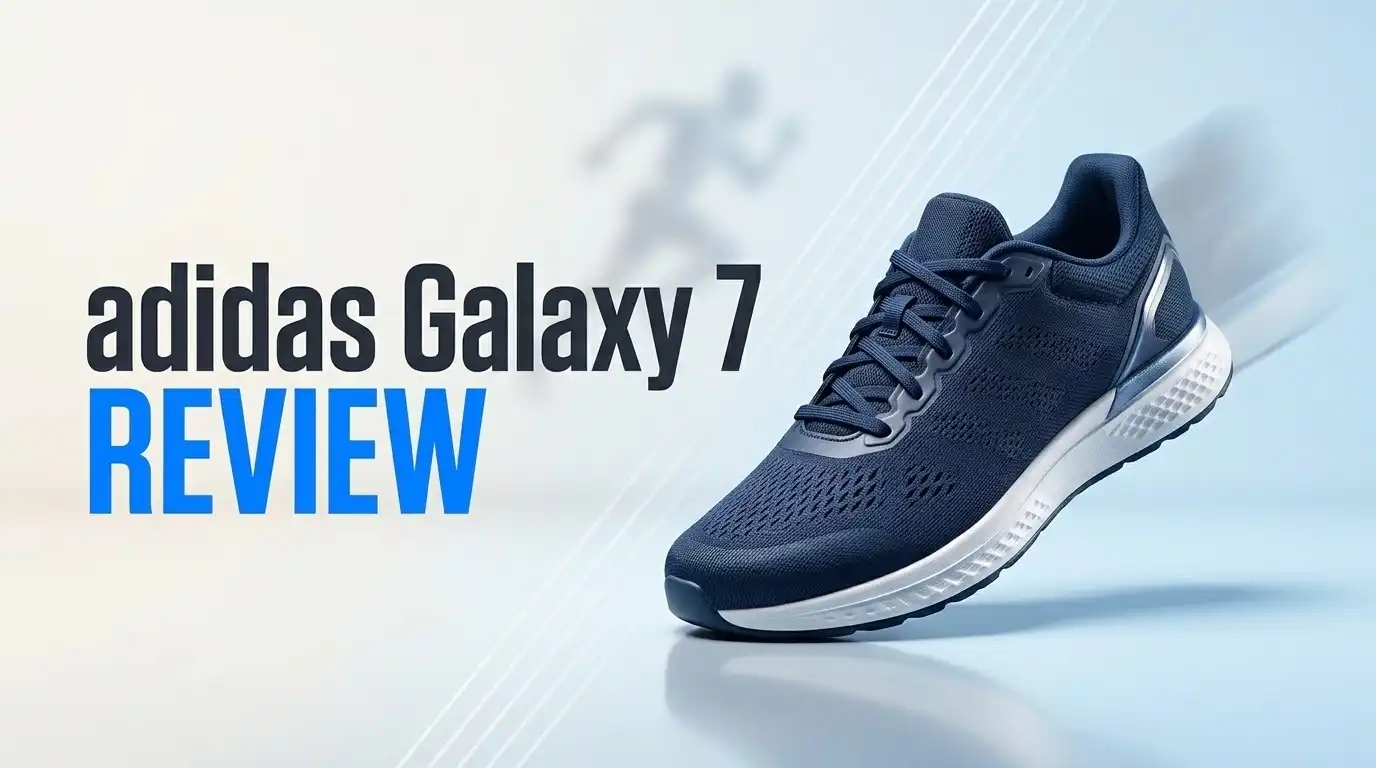
adidas Galaxy 7 Review 2026: Still Worth It?
Budget running shoes usually ask you to give something up. Cushioning, grip, or comfort. The adidas Galaxy 7 tries to keep all three for around $60, and that promise pulls in thousands of new runners every year.
I spent weeks in this shoe. I walked in it, ran in it, stood in it at work, and wore it through wet pavement. Some parts impressed me more than I expected.
Other parts frustrated me enough that I need to be blunt about them. This review covers the good, the bad, and the parts adidas quietly hopes you will not notice.
Key Takeaways:
- The price is the headline feature. At roughly $60, the Galaxy 7 sits far below the $158 average price of modern running shoes. For new runners, that gap matters more than any marketing claim.
- Grip improved dramatically over the Galaxy 6. The new TPU outsole more than doubled traction scores in testing, moving from a weak 0.24 to a solid 0.57. Wet roads feel much safer now.
- The ride is cushioned, stable, and friendly, but never exciting. Cloudfoam returns about 50% energy. It absorbs shock politely and moves on. You will not feel bounce or pop.
- Weight is the biggest flaw. At 10.9 oz (309g), this shoe runs heavy. It is 7% lighter than the Galaxy 6, yet still well above the 9.2 oz category average.
- Breathability is poor. The engineered mesh scored only 2 out of 5 for airflow. Hot summer runs turn this shoe into a sauna, though winter walkers will enjoy the warmth.
- Durability is mixed. The outsole wears faster than average, and heel padding scored a weak 1 out of 5 for abrasion resistance.
adidas Galaxy 7 Overview
No products found.
The adidas Galaxy 7 is an entry level neutral running shoe built around a full length Cloudfoam midsole. It uses an engineered mesh upper, a removable Ortholite insole, and a new TPU outsole with generous rubber coverage.
adidas lists the stack at 34 mm heel and 28 mm forefoot with a 6 mm drop, while independent lab measurements came in at 34.9 mm and 27.3 mm for a 7.6 mm drop.
That puts the Galaxy 7 right in the middle of the market for height, which is exactly the point. This shoe does not chase trends.
It targets beginners, casual joggers, gym users, and people who need one affordable pair for daily life. adidas also added a noticeable heel rocker, which is unusual at this price and helps the shoe roll forward smoothly.
Unboxing Experience
The box arrives plain. White cardboard, the adidas wordmark, a sticker with the style code. No tissue paper, no extra laces, no cute inserts. That fits the price, and honestly I prefer the honesty over fake luxury.
Lift the lid and the first thing you notice is the padding. The tongue feels thick and pillowy, measuring around 8.9 mm, which is far above the 5.8 mm average. The heel collar is stuffed too. Step in feel is genuinely plush for a $60 shoe.
There is a light factory smell from the foam that fades in a day. The laces feel thin and slightly slippery, and they are the first part that feels cheap. Pick the shoe up and your hands immediately register the weight. It feels dense, not airy.
Design and Build Quality
The Galaxy 7 looks like a running shoe from a distance and a lifestyle sneaker up close. The silhouette is clean, the three stripes sit as welded overlays, and most colorways stay simple. Triple black hides the adidas heel logo almost completely.
Stitching is neat. The overlays sit flat with no bubbling. Glue lines along the midsole are tidy, which is not always true at this price point. Under a microscope, the engineered mesh is standard stuff, similar to what competitors use for the same money.


Last update on 2026-04-11 / Affiliate links / Images from Amazon Product Advertising API Some of the links on this website are affiliate links, which means that at no additional cost to you, I earn a commission if you click through and make a purchase. I only recommend products and services that I believe will add value to my readers. Thank you for your support!
One smart touch deserves praise. adidas combined punched eyelets with two lace loops, one on each side. That setup spreads lace pressure across the instep instead of digging into one spot. Small detail, real comfort payoff.
Top 3 Alternative for adidas Galaxy 7

- Engineered mesh upper improves breathability and wraps your foot in a soft and comfortable fit
- FLYTEFOAM cushioning is paired with GEL technology for a soft feel underfoot
- AHAR heel plug rubber helps improve durability
Last update on 2026-11-10 / Affiliate links / Images from Amazon Product Advertising API Some of the links on this website are affiliate links, which means that at no additional cost to you, I earn a commission if you click through and make a purchase. I only recommend products and services that I believe will add value to my readers. Thank you for your support!
ASICS Gel Pulse 16
No products found.
adidas Duramo SL 2


Last update on 2026-04-11 / Affiliate links / Images from Amazon Product Advertising API Some of the links on this website are affiliate links, which means that at no additional cost to you, I earn a commission if you click through and make a purchase. I only recommend products and services that I believe will add value to my readers. Thank you for your support!

- Ground Contact EVA outsole with rubber pods delivers lightweight cushioning while providing abrasion...
- Upper features no-sew construction for a sleek fit and feel
- Synthetic/textile construction
Last update on 2026-11-10 / Affiliate links / Images from Amazon Product Advertising API Some of the links on this website are affiliate links, which means that at no additional cost to you, I earn a commission if you click through and make a purchase. I only recommend products and services that I believe will add value to my readers. Thank you for your support!
New Balance 411v3
Cushioning and Midsole Feel
Cloudfoam is the heart of this shoe, and it behaves exactly how the name suggests. Lab testing measured softness at 38.1 AC, which sits slightly firmer than the 35.4 AC average but still reads as moderately soft underfoot.
Shock absorption is a mixed bag. The heel scored 112 SA against a 131 SA average, while the forefoot landed at 101 SA. In plain terms, protection is adequate for short runs and daily walking, not for marathon pounding.
Energy return sits at 49.5% in the heel and 52.8% in the forefoot, below the 61.5% average. You will not feel springy. You will feel cushioned and level. The rocker does more for your stride than the foam does. Heel contact to full ground contact takes about 6 cm, so transitions roll smoothly even at slow paces.
Fit and Sizing
The Galaxy 7 fits true to size for most people, based on a strong majority of user votes. Order your normal adidas size and you will likely be fine.
Width is where this shoe surprises. The platform measures 99.1 mm at its widest point, clearly above the 95.2 mm average for running shoes. That extra room makes it friendlier than most budget trainers for medium and slightly wide feet.
The toebox tells a different story. At 73.1 mm it sits right at average, and adidas kept the classic tapered shape. Runners with Greek or Roman foot shapes may feel their toes squeezed during longer efforts. Toebox height measures 27.5 mm, so vertical room is fine. A wide version exists in some markets, though availability varies.
Traction and Outsole Grip
This is the single biggest improvement in the Galaxy line. The Galaxy 6 scored a dismal 0.24 in forefoot traction testing. The Galaxy 7 reached 0.57, above the 0.53 average and more than double its predecessor.
adidas switched to a TPU outsole, which also allowed broad rubber coverage across the bottom. The pattern mixes different lug shapes in the forefoot and heel, and that mix clearly helps on wet pavement. Rainy morning runs no longer feel like a gamble.
Outsole thickness measures 3.2 mm, slightly above the 3.1 mm average. Coverage is generous enough to spread wear evenly. If you run in a damp climate, this upgrade alone justifies choosing version 7 over version 6.
Weight and On Run Feel
Here is where I have to be honest. The Galaxy 7 is heavy. It weighs 10.9 oz (309g) in a men’s size 9, against a 9.2 oz category average. adidas trimmed 7% from the Galaxy 6, which is real progress, but the shoe still drags.
You feel it most when you try to pick up pace. Easy jogs feel fine. Tempo work feels like effort you did not earn. Strides and intervals are simply not this shoe’s job.
Part of the weight comes from the thick padding and the generous rubber coverage, so the trade is not pointless. Still, if you care about leg turnover, this shoe will frustrate you. The rocker helps mask some of it, but physics wins in the end.
Breathability and Comfort
Airflow scored 2 out of 5 in testing, and that number matches the running experience. The mesh has very few open pores, so hot air stays trapped inside. Summer runs above 75°F leave the interior damp.
There is one upside. The warm upper is genuinely pleasant in cold weather. Winter walkers and early morning runners in November will appreciate it.
Comfort outside of ventilation is strong. The thick tongue and padded heel create a secure, cosy lockdown. The Ortholite insole measures 5.2 mm, thicker than the 4.4 mm average, and it is removable if you use custom orthotics. The tongue is not gusseted, which is expected at this price, and it does slide slightly on long runs.
Stability and Support
Support has always been the Galaxy line’s quiet strength. Version 7 keeps it. The midsole measures 117.6 mm wide in the forefoot and 97.5 mm in the heel, both above average, which creates a planted and secure base.
adidas actually narrowed both areas slightly compared to the Galaxy 6, trimming 2.7 mm in the forefoot and 6.2 mm in the heel. That was a smart call. The shoe lost bulk without losing stability.
Torsional rigidity measures 13.0 Nm, a balanced middle ground. The heel counter also firmed up considerably, scoring 3 out of 5 where the Galaxy 6 felt floppy. Neutral runners and mild overpronators both get useful guidance here.
Durability: The Honest Truth
Durability is the weakest chapter of this review. The outsole showed 2.6 mm of wear in abrasion testing, more than double the 1.1 mm average. TPU grips well but gives up material quickly.
Heel padding scored just 1 out of 5. If you are the kind of runner who shreds heel collars, expect holes. That is a real complaint, not a nitpick.
Toebox mesh held up better at an average 3 out of 5. Realistically, plan for 250 to 350 miles rather than the 400 to 500 you might get from pricier trainers. At $60, the cost per mile still works out fine, but do not expect a workhorse.
adidas Galaxy 7 vs Galaxy 6
The upgrade is real. Traction more than doubled. Weight dropped 7%. The heel counter went from floppy to structured. The platform slimmed down without losing support.
What stayed the same? Cloudfoam, energy return, and breathability. The Galaxy 6 breathed poorly and so does the 7. Both shoes remain heavy for their class.
Users who owned both generally agree the cushioning feels better in version 7 and the fit runs wider. If you liked the Galaxy 6 and wore it out, the 7 is a clear step forward. If you own a nearly new Galaxy 6, the upgrade is nice but not urgent. The grip improvement is the reason to switch, especially for wet weather runners.
Pros and Cons of the adidas Galaxy 7
Pros
- Outstanding price. Around $60 against a $158 market average makes this one of the cheapest adidas running shoes ever released.
- Much better grip. The TPU outsole scored 0.57 in traction testing, above average and far ahead of the Galaxy 6.
- Spacious platform. A 99.1 mm width gives more room than most budget rivals.
- Plush step in feel. Tongue padding of 8.9 mm and a thick 5.2 mm Ortholite insole feel premium.
- Stable and supportive. Wide midsole and a firmer heel counter suit beginners and mild overpronators.
- Smooth rocker. Uncommon under $100 and it genuinely helps transitions.
Cons
- Heavy. 10.9 oz is well above average and kills any fast pace ambitions.
- Poor breathability. A 2 out of 5 airflow score makes summer runs sweaty.
- Weak heel padding durability. Scored 1 out of 5 for abrasion resistance.
- Fast outsole wear. 2.6 mm of damage in testing, double the average.
- Low energy return. Around 50% means no bounce or pop.
- No reflective details. Night runners get zero visibility help.
- Tapered toebox. Wide forefeet may feel pinched.
Who Should Buy the adidas Galaxy 7
No products found.
Buy this shoe if you are starting out and need a reliable first pair without spending real money. It is forgiving, stable, and comfortable from the first wear.
It also works well for walkers, gym users, students, and people who spend hours on their feet. The cushioning and wide base handle standing and strolling better than running.
Cold weather runners benefit too. The warm upper that fails in July becomes an asset in January. Midfoot strikers who dislike high drop shoes will like the 7.6 mm setup, which feels balanced rather than tilted forward.
Finally, if you want a backup pair for rainy days or messy conditions, the improved grip plus the low price make this an easy second shoe.
Who Should Skip It
Skip the Galaxy 7 if speed matters to you. The weight makes tempo runs and intervals feel sluggish. Lighter options in the same family serve that purpose better.
Skip it if you run in hot climates. The upper traps heat, and no amount of thin socks fixes that.
Skip it if you log high weekly mileage. Durability limits mean you will replace these sooner than better built trainers. Skip it if you have genuinely wide feet, because the tapered toebox restricts toe splay. And skip it if you run at night on roads, since there are no reflective elements anywhere on the shoe.
Price and Value in 2026
At roughly $60 list, and often discounted to $35 or less during sales, the Galaxy 7 delivers honest value. The average running shoe now costs around $158, so you are paying about a third of market price.
Value is not the same as performance. This shoe does not match a premium trainer in foam quality, weight, or lifespan. It does not try to.
What you get is a cushioned, stable, grippy shoe that handles easy runs and daily wear without complaint. For a beginner running three times a week, that is enough. For an experienced runner chasing personal bests, the savings are not worth the compromises.
Final Verdict
The adidas Galaxy 7 earns a solid recommendation with clear limits. adidas fixed the two worst problems from the Galaxy 6, improving grip massively and trimming weight slightly. Comfort, stability, and fit all land above expectations for the money.
The flaws are equally clear. It is heavy, it breathes badly, and it wears down faster than average. None of those are dealbreakers at $60, but they are reasons experienced runners should look elsewhere.
My rating sits around 7.5 out of 10 for beginners and 5.5 out of 10 for serious runners. Buy it as a first running shoe, a walking shoe, or a wet weather backup. Do not buy it expecting speed or a long life.
Frequently Asked Questions
Is the adidas Galaxy 7 good for running?
Yes, for easy runs and short distances. It offers cushioned, stable support and reliable grip. The heavy 10.9 oz build makes it a poor choice for fast paces or long race efforts.
Does the adidas Galaxy 7 fit true to size?
Yes. Most users confirm true to size fit. The platform is wider than average at 99.1 mm, though the toebox stays tapered. Wide footed runners should look for the wide version where available.
How long do adidas Galaxy 7 shoes last?
Expect roughly 250 to 350 miles. The TPU outsole wears faster than average and the heel padding scored poorly for abrasion resistance. Casual walkers will get far more time out of them.
Is the Galaxy 7 better than the Galaxy 6?
Yes, clearly. Traction more than doubled, weight dropped 7%, and the heel counter became much firmer. Breathability and energy return stayed the same.
Can I use the adidas Galaxy 7 for walking and the gym?
Absolutely. The wide base, thick insole, and plush padding make it comfortable for long days on your feet, treadmill sessions, and light gym work.
Does the adidas Galaxy 7 run hot?
Yes. Airflow scored only 2 out of 5. The mesh traps heat, which hurts in summer but helps in cold weather.
What is the drop on the adidas Galaxy 7?
adidas lists 6 mm. Independent measurement found 7.6 mm, with a 34.9 mm heel and 27.3 mm forefoot. Either way, it feels balanced and midfoot friendly.

Mia Smith is the founder of Shoe Storyteller, a blog that celebrates the art and stories behind shoes. With a passion for fashion and a flair for storytelling, Mia brings a unique perspective to the world of footwear.