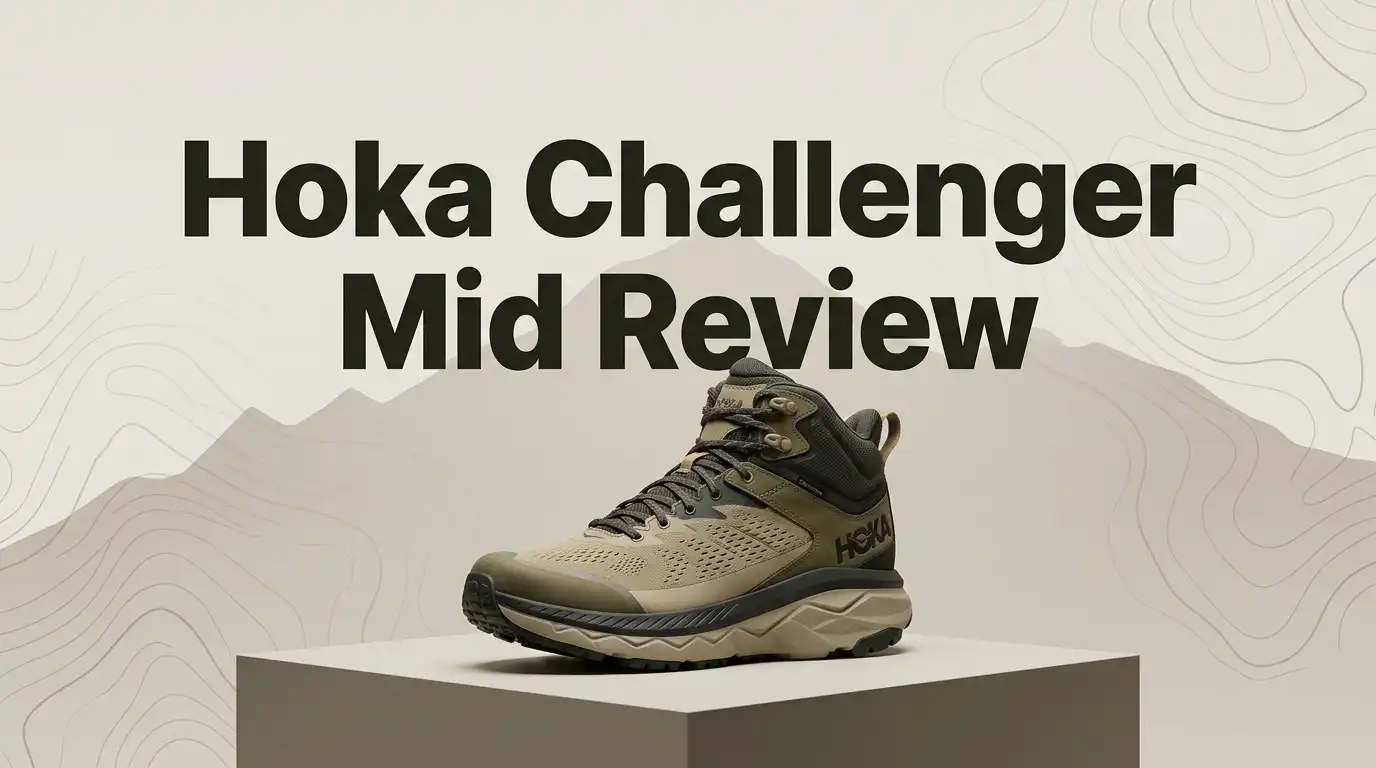
Hoka Challenger Mid Review 2026: Still Worth It?
The Hoka Challenger Mid GTX sits in a strange spot. It is not quite a hiking boot. It is not quite a trail runner either. Hoka built it as a bridge between both, and that decision makes it either perfect or frustrating depending on what you actually do outdoors.
I have logged real miles in this boot across wet forest trails, gravel fire roads, muddy spring paths, and plain city sidewalks. I have also watched it fail in situations where a proper boot would have saved me. This review covers all of it, including the parts Hoka would rather not advertise.
If you are deciding whether to spend money on the Challenger Mid in 2026, read the honest parts. They matter more than the marketing copy.
In a Nutshell:
- Comfort is the main selling point. The oversized EVA midsole delivers that signature Hoka softness. Your feet feel fresh after long days. This is the single best reason to buy it.
- Waterproofing works well, but only up to the collar. The Gore Tex bootie blocks rain, dew, mud, and shallow puddles. Step into water deeper than three inches and your sock gets soaked instantly.
- Breathability is poor. This is the boot’s biggest flaw. In heat above 75 degrees Fahrenheit your feet will sweat. Drying time after a soaking runs close to 12 hours.
- Traction handles moderate terrain only. The 4mm sticky rubber lugs grip dirt, gravel, grass, and light mud. They slip on wet rock slabs and steep loose scree. Technical hikers should look elsewhere.
- Fit runs narrow. Hoka uses a tapered toebox. Wide feet need the wide version or a half size up. High volume feet may feel pressure across the top.
- Value depends on your use case. Around $165 to $185, it beats most cushioned boots for comfort. It loses badly to Salomon and Vibram soled boots on technical ground.
What Is the Hoka Challenger Mid?

- 100% rRPET Engineered Mesh
- GORE-TEX Invisible Fit Membrane
- 3D Screenprinted Toe Cap, Heel Loop
Last update on 2026-10-05 / Affiliate links / Images from Amazon Product Advertising API Some of the links on this website are affiliate links, which means that at no additional cost to you, I earn a commission if you click through and make a purchase. I only recommend products and services that I believe will add value to my readers. Thank you for your support!
The Challenger Mid is the ankle height version of Hoka’s long running Challenger series. The low version started life as a road to trail running shoe. Hoka then raised the collar, added a waterproof nubuck leather upper, and sealed the inside with a Gore Tex bootie.
The result is a hybrid. It uses a CMEVA foam midsole, an early stage Meta Rocker geometry, and a podular outsole with 4mm lugs. Hoka lists the men’s weight near 14.6 ounces per shoe, which puts it on the heavier side of the Challenger family.
The brand positions it for hiking, travel, dog walks, and light trail work. It is not built for alpine scrambling or heavy pack carries. Understanding that boundary saves you a return shipment.
Unboxing Experience: First Impressions Out of the Box
The box arrives in Hoka’s standard recycled cardboard with the brand’s chunky logo across the lid. Nothing fancy. No tissue paper theatrics. You get the boots, a small paper insert about the Gore Tex membrane, and a care card.
Lifting them out, the first thing you notice is the midsole. It looks absurd. The foam block is tall and wide, and the boot stands taller than most hiking footwear on a shelf. The nubuck leather feels genuinely premium, with a soft matte finish rather than the plastic sheen of cheaper synthetic uppers.
The collar foam is molded and soft to the touch. Laces come pre threaded and slightly too long. My first walk around the kitchen felt like stepping onto a yoga mat. There is no stiff break in period here, which is rare for leather footwear.
Design and Build Quality
Hoka wrapped the Challenger Mid in waterproof nubuck leather rather than mesh. That change alone lifts the perceived quality. Stitching is clean and even. The toe area carries a reinforced overlay that resists scuffs from rocks and roots.
A stitched midfoot panel acts as a seatbelt across the top of your foot. It pulls the upper tight when you lace up, and it works. My heel never slipped, even on steep descents.
The tongue is fully gusseted on both sides. This is essential on a waterproof boot because water and grit cannot sneak past the laces. The heel counter is stiff and holds your foot in place firmly.


Last update on 2026-04-11 / Affiliate links / Images from Amazon Product Advertising API Some of the links on this website are affiliate links, which means that at no additional cost to you, I earn a commission if you click through and make a purchase. I only recommend products and services that I believe will add value to my readers. Thank you for your support!
One design complaint stands out. There are no reflective elements anywhere on the boot. For a product marketed around all day wear, that omission feels careless in 2026.
Cushioning and Ride Feel
The cushioning is why people buy this boot. The CMEVA foam stack sits tall underfoot, and lab measurements on the related Challenger GTX models show roughly 39mm in the heel and 28mm in the forefoot. That is deep padding by hiking standards.
Walking feels soft and slightly bouncy. The Meta Rocker shape rolls you forward, which reduces calf fatigue on long flat stretches. After eight hours on gravel roads, my feet felt noticeably better than they do in traditional stiff boots.
There is a tradeoff. Ground feel disappears completely. You cannot sense small rock edges or root angles under your sole. On technical ground that blindness becomes a liability.
The foam also runs firmer than Hoka’s plush road shoes. Expect balanced support rather than pillow softness. Over several hundred miles the foam packs down and loses some spring.


Last update on 2026-04-11 / Affiliate links / Images from Amazon Product Advertising API Some of the links on this website are affiliate links, which means that at no additional cost to you, I earn a commission if you click through and make a purchase. I only recommend products and services that I believe will add value to my readers. Thank you for your support!
Top 3 Alternative for Hoka Challenger Mid

- JACQUARD KNIT UPPER
- Lining Textile
Last update on 2026-08-31 / Affiliate links / Images from Amazon Product Advertising API Some of the links on this website are affiliate links, which means that at no additional cost to you, I earn a commission if you click through and make a purchase. I only recommend products and services that I believe will add value to my readers. Thank you for your support!
Hoka Speedgoat 6 Mid GTX

- HOKA
- HOKA Anacapa 2 Mid Gtx Mens Shoes Size 8, Color: Black/Black
- Black/Black
Last update on 2026-10-05 / Affiliate links / Images from Amazon Product Advertising API Some of the links on this website are affiliate links, which means that at no additional cost to you, I earn a commission if you click through and make a purchase. I only recommend products and services that I believe will add value to my readers. Thank you for your support!
Hoka Anacapa 2 Mid GTX

- Pinnacle Plushness with Weather-Ready Capabilities
Last update on 2026-10-03 / Affiliate links / Images from Amazon Product Advertising API Some of the links on this website are affiliate links, which means that at no additional cost to you, I earn a commission if you click through and make a purchase. I only recommend products and services that I believe will add value to my readers. Thank you for your support!
Hoka Kaha 3 GTX
Waterproofing: Does the Gore Tex Bootie Hold Up?
Yes, within limits. The Gore Tex Invisible Fit membrane sits inside the upper rather than outside it. That construction keeps the boot flexible and avoids the cardboard stiffness some waterproof footwear suffers from.
I walked through wet grass at dawn, light rain for two hours, and ankle deep mud. My socks stayed completely dry each time. The gusseted tongue deserves credit here because it blocks the usual leak point.
The ceiling is the collar height. You get roughly three inches of protection above the sole. Cross a creek deeper than that and water pours straight in over the top.
Drying is the real problem. Once water gets inside, the waterproof membrane traps it. My pair took close to 12 hours to dry fully indoors. Plan accordingly on multi day trips.
Traction and Grip on Real Trails
The outsole uses Hoka’s own sticky rubber with 4mm lugs arranged in a podular pattern. On dirt, packed gravel, grass, and moderate mud, grip is genuinely good. I never felt the need to slow down on those surfaces.
Cobblestone and wet pavement also feel secure, which makes this a solid travel boot for European city walking.
Performance drops on wet rock. The in house rubber compound is not Vibram Megagrip. On smooth damp slabs I felt the sole skate slightly before catching. On steep loose scree, the shallow lugs cannot bite deep enough.
Short lugs clear mud well but sacrifice depth. If your hikes involve granite scrambles, snow, or sustained steep descent, the grip will feel underbuilt. For rolling forest trails and fire roads it is plenty.
Fit and Sizing Advice
The Challenger Mid fits true to length for most people. Order your normal size and the heel to toe measurement will be correct.
Width is the issue. Hoka uses a tapered toebox, and lab measurements on the GTX models show the big toe area sitting around 70mm wide, which is below the category average. Wide feet will feel squeezed at the little toe and big toe.
Toebox height is also low, close to 25mm. High volume feet or thick socks will create pressure across the top of the toes.
Three fixes exist. Buy the wide version if your region stocks it, go half a size up, or swap the stock insole for a thinner one. The insole is fully removable and standard shaped, so third party orthotics drop in without trouble.
Ankle Support from the Mid Collar
The molded foam collar sits above the ankle bone and wraps closely. It feels supportive without being restrictive. Side to side motion is limited more than in a low shoe, but less than in a traditional leather boot.
This is soft support, not structural support. The collar adds proprioception and keeps debris out. It will not stop a hard ankle roll on uneven rock the way a stiff high cut boot would.
I found it genuinely useful on sloppy trails where small stones kick up constantly. No pebbles got inside during testing.
One warning from long wear. Some users report rubbing at the inner ankle after several consecutive full days. I felt mild irritation on day four of a travel trip. It never blistered, and it faded as the collar softened.
Weight and Daily Comfort
At roughly 14.6 ounces per shoe in men’s sizing, the Challenger Mid is not light. A pair sits well over a pound and a half. On paper that reads heavy.
On foot it feels lighter than the number suggests. The rocker geometry and soft foam disguise the mass during normal walking cadence. Fatigue arrives later than in a traditional boot of similar weight.
Climbing, however, exposes it. Lifting that stack repeatedly on steep ascents costs energy, and faster hikers will notice.
For all day casual wear the comfort is outstanding. I wore mine through airports, long museum days, and dog walks without any desire to take them off. That versatility is where this boot quietly earns its price.
Breathability: The Biggest Weakness
I will be blunt. Breathability is bad. Independent lab testing scored the related Challenger GTX models at 2 out of 5 for airflow, which sits well below the category average.
The nubuck leather upper combined with a sealed Gore Tex bootie leaves almost nowhere for heat to escape. Most airflow happens through the tongue, and that is not enough.
In temperatures above 75 degrees Fahrenheit my feet got hot and damp within an hour. Thin moisture wicking socks help. Heavy wool socks make it worse.
If you hike mostly in summer or in a hot climate, skip this boot entirely. The non waterproof Challenger or a mesh hiking shoe will serve you far better. This is a cool season and wet season product.
Durability After Months of Use
The upper holds up well. Nubuck leather resists abrasion better than mesh, and the reinforced toe area shows only light scuffing after months of use. Lab Dremel testing on the Challenger GTX upper returned a perfect durability score thanks to a TPU reinforcement layer.
The outsole rubber measures around 81 HC hardness, which balances grip and wear. After consistent use my lugs show visible rounding but plenty of remaining depth.
The midsole is the weak link. EVA foam compresses over time. Expect the soft bouncy feel to flatten noticeably somewhere between 300 and 500 miles.
Heel padding durability tested at only average levels. Several long term owners report inner heel lining wear within six to nine months of daily use. Rotate your footwear if you want more life from them.
What the Challenger Mid Does Not Do Well
Honest reviews list failures. Here are the Challenger Mid’s real ones.
It does not handle technical terrain. The tall stack feels tippy on sharp uneven rock, and torsional rigidity is extremely high, which fights you on tight switchbacks and twisting descents.
It does not breathe. Covered above, and it is disqualifying for hot weather use.
It does not fit wide feet in standard width. The tapered toebox is a known Hoka trait.
It does not support heavy packs. The soft foam collapses under load. Carry more than 25 pounds and stability suffers.
It does not dry quickly. Twelve hours indoors is a long wait.
It does not include reflective detailing, which is a simple miss on an everyday boot.
Pros and Cons
Pros
- Exceptional cushioning that keeps feet fresh across long days on moderate terrain
- Zero break in period thanks to soft molded collar and flexible upper construction
- Reliable Gore Tex waterproofing for rain, dew, mud, and shallow puddle crossings
- Premium waterproof nubuck leather upper with clean looks suitable for town and travel
- Gusseted tongue blocks water and trail debris at the usual entry point
- Strong stability for a tall stack boot, with a wide base and stiff heel counter
- Durable reinforced toe area that resists scuffing from rocks and roots
- Removable standard shaped insole accepts aftermarket orthotics without modification
- Grippy on dirt, gravel, grass, cobblestone, and wet pavement
- Foam stays consistent in cold weather, losing only about 10 percent softness
Cons
- Poor breathability makes it unsuitable for hot weather hiking
- Long drying time of roughly 12 hours once water gets inside
- Narrow tapered toebox and low toebox height exclude many foot shapes
- Shallow 4mm lugs slip on wet rock slabs and steep loose scree
- High torsional rigidity feels awkward on twisting technical descents
- Midsole foam packs out and loses bounce over a few hundred miles
- No reflective elements anywhere on the boot
- Heavy at roughly 14.6 ounces per shoe
- Collar protects only about three inches above the sole
- Occasional inner ankle rubbing reported during consecutive full days of wear
Who Should Buy the Challenger Mid?
Buy it if comfort is your top priority and your terrain is moderate. Day hikers on established trails, forest paths, gravel roads, and rail trails will love it.
Travelers get real value here. It walks city streets, museum floors, and light trails equally well, and the leather upper looks acceptable with normal clothes.
It suits people with foot fatigue, plantar discomfort, or joint sensitivity who need deep cushioning underfoot. Dog walkers in wet climates will appreciate the waterproofing.
Skip it if you hike technical alpine terrain, carry heavy packs, hike in hot weather, or have wide high volume feet. Those four groups will be disappointed, and no amount of comfort compensates for the wrong tool.
Price and Value in 2026
Expect to pay somewhere between $165 and $185 depending on colorway and retailer. Current Challenger GTX models sit around $165, and the mid cut leather versions carry a small premium.
Compared to the competition, that pricing is fair. Salomon’s X Ultra 5 GTX runs about $175 and the Saucony Peregrine 16 GTX hits $180, both with less cushioning.
Value hinges entirely on matching the boot to your use. For moderate trails and travel, few boots deliver this comfort at this price. For technical hiking, you are overpaying for features you cannot use.
Watch for seasonal discounts. Older colorways regularly drop 20 to 30 percent, and the boot does not change dramatically year to year, which makes last season’s version a smart buy.
Final Verdict
The Hoka Challenger Mid is a comfort first boot with clear limits. It gets cushioning, waterproofing, stability, and looks right. It gets breathability, technical grip, and width options wrong.
My rating sits at 4 out of 5 for moderate terrain hikers and travelers. It drops to 2 out of 5 for technical mountain use.
Buy it for the comfort. Accept the sweaty feet. Keep a second pair of footwear for rock and heat.
Frequently Asked Questions
Is the Hoka Challenger Mid fully waterproof?
The Gore Tex bootie blocks water reliably up to the collar height, which gives about three inches of protection. Deeper crossings will flood the boot over the top. Once wet inside, drying takes close to 12 hours.
Does the Challenger Mid run true to size?
Length runs true to size for most people. Width runs narrow because of the tapered toebox. Wide or high volume feet should order the wide version or go half a size up.
Can I hike technical trails in the Challenger Mid?
It is not the right choice. The shallow 4mm lugs lose grip on wet rock and loose scree, and the tall stack feels tippy on sharp uneven ground. A Vibram soled boot serves technical terrain far better.
How long does the Challenger Mid last?
The upper and outsole hold up well for a year or more of regular use. The EVA midsole compresses sooner, usually losing its bounce somewhere between 300 and 500 miles. Rotating footwear extends overall life.
Is it good for wide feet?
Not in standard width. Hoka’s toebox measures narrower than average, and toebox height is low. The wide version solves this for many people, though it is not always stocked in every colorway.
Can I wear it for everyday use and travel?
Yes, and this is one of its strengths. The nubuck leather upper looks clean enough for casual outfits, and the cushioning handles long days of walking on hard surfaces comfortably.
How does it compare to the Hoka Anacapa 2 Mid GTX?
The Anacapa 2 Mid is the more hiking focused option with a sturdier build and Vibram outsole. The Challenger Mid is lighter feeling, softer underfoot, and better suited to mixed road and trail use.

Mia Smith is the founder of Shoe Storyteller, a blog that celebrates the art and stories behind shoes. With a passion for fashion and a flair for storytelling, Mia brings a unique perspective to the world of footwear.