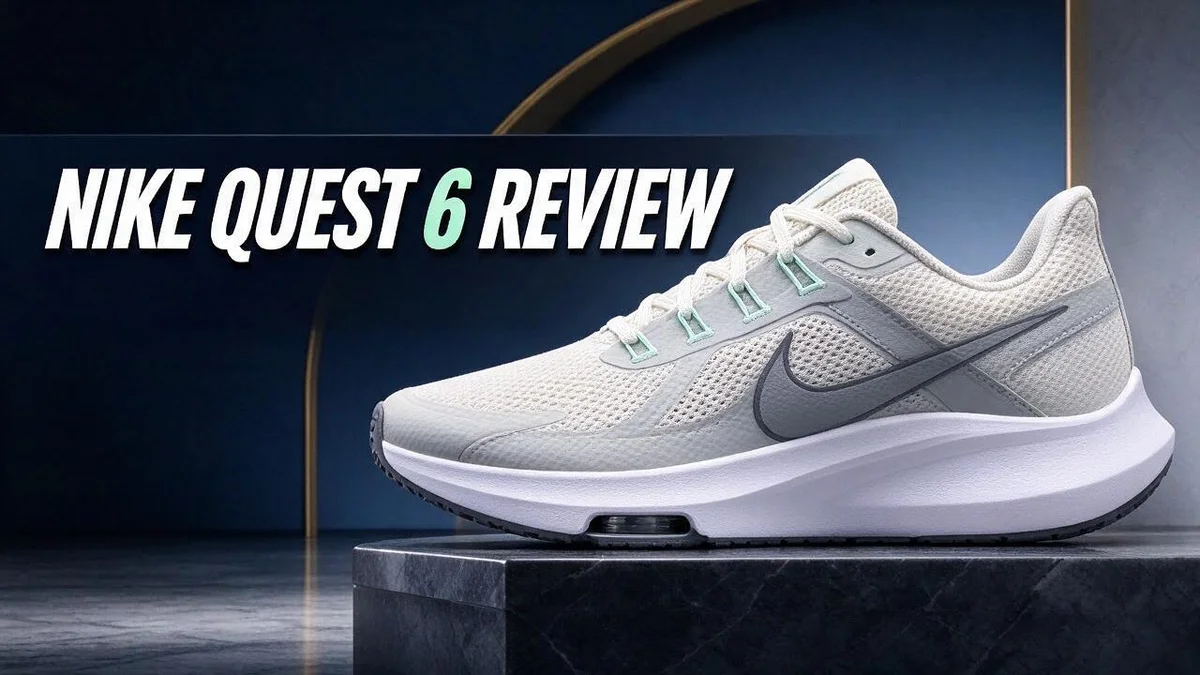
Nike Quest 6 Review: Cushioning, Support, Fit and Durability Tested
Looking for a shoe that feels smooth from the first run? The Nike Quest 6 might be the one. It gives everyday runners a soft, responsive ride that feels easy on the legs.
Many people search for a reliable daily trainer. This shoe checks a lot of boxes. It weighs about 295 g, or 10.4 oz, in men’s US size 10.
The supportive midfoot band keeps your foot secure. The foam feels soft yet springy. Heel strikers often enjoy the solid cushioning under the heel.
In a Nutshell
- Light on your feet: The shoe weighs about 295 g, or 10.4 oz, in men’s US size 10. That weight keeps every stride feeling easy, even on longer runs.
- Cushioning for heel strikers: The soft, responsive foam absorbs impact well. Heel strikers often notice the difference right away on pavement.
- A gentle 10 mm drop: The heel sits 10 mm higher than the forefoot. This setup suits many runners who land on their heels first.
- Steady underfoot: The sole gives you a firm, stable base. You can keep a steady pace without feeling wobbly.
- Sizing you can trust: This shoe fits true to size. Most people can order their usual size with confidence.
- Ready for more than running: You can wear it for runs, errands, or gym days. One pair handles many jobs in your routine.
Cushioning and Ride Feel

- Secure Fit: Midfoot fit band helps keep your foot more secure the tighter your laces are.
- Softer, More Responsive: Increased midsole height means a softer and more responsive ride compared...
- Grippy Traction: Rubber outsole has the traction to help keep your feet gripped to the pavement.

Last update on 2026-11-10 / Affiliate links / Images from Amazon Product Advertising API Some of the links on this website are affiliate links, which means that at no additional cost to you, I earn a commission if you click through and make a purchase. I only recommend products and services that I believe will add value to my readers. Thank you for your support!
Ride feel is where the Nike Quest 6 really shows its character. Many runners notice the difference within the first few steps.
The foam feels soft when you step in. It also gives a light bounce as you push off.
Many runners find their legs feel fresher after steady miles. The soft midsole keeps each stride feeling smooth and calm.
Pace changes the feel a little. Slower jogs feel plush and cozy. Faster efforts feel more lively because the foam responds quickly.
Start each run with an easy jog. Your legs settle into the cushion once they loosen up. Notice how the ride feels after the first mile.
Terrain matters too. On smooth pavement, the ride feels steady and predictable. Rough trails are less ideal for this road shoe.
Try the shoe in the store if you can. Walk, jog, and pay attention to how the heel lands. A relaxed landing often signals a comfortable match.
Some shoes feel firm and harsh. This one leans into softness.
Lacing changes how the ride feels too. A snug lockdown can make the shoe feel more connected. Looser laces can feel softer on the top of the foot.


Last update on 2026-04-11 / Affiliate links / Images from Amazon Product Advertising API Some of the links on this website are affiliate links, which means that at no additional cost to you, I earn a commission if you click through and make a purchase. I only recommend products and services that I believe will add value to my readers. Thank you for your support!
A thicker sock can change how the foam feels under your arch. Socks and insoles can change the cushion too.
Compare the ride with similar shoes. Some runners also test the adidas Evo SL or the ASICS Novablast 5.
Those models may suit people who want a different level of bounce.
Think about your own comfort level. Do you like plush landings or a firmer push? Your answer shapes whether this ride suits you.
Breaking in takes time for many runners. Many say the ride feels more natural after several outings. Keep track of how it feels week by week.


Last update on 2026-04-11 / Affiliate links / Images from Amazon Product Advertising API Some of the links on this website are affiliate links, which means that at no additional cost to you, I earn a commission if you click through and make a purchase. I only recommend products and services that I believe will add value to my readers. Thank you for your support!
Long days need comfort. A shoe that feels good in the first mile should still feel good later.
The Nike Quest 6 offers a soft, steady ride for everyday miles. Try it, notice the landing, and choose what feels right for you.
Midfoot Support and Stability
The midfoot is the bridge of every stride. It connects your heel to your toes. When this area holds firm, each step feels more balanced.
Many people overlook this zone when they shop. Yet the middle of the foot does much of the work on flat ground. A shoe that supports it can reduce wobble.
The Nike Quest 6 uses its midfoot band to help keep the middle of your foot in place. This matters most on longer runs. Your foot tends to spread a little as miles pile up.
Lacing plays a big role in midfoot lock. Pull the laces snug across the middle of your foot. Keep the top eyelets looser if your foot feels pinched.
Think about what happens when you step off a curb or change direction. Your weight shifts sideways for a moment. A stable midfoot helps you recover without a sudden twist.
Gym days bring a different test. Lateral moves, lunges, and quick pivots put pressure on the middle of the shoe. Check whether the upper feels secure before each set.
Watch for signs of fading support. Look at the midfoot sole every few weeks. Uneven wear in that zone can show that support is slipping.
Walk your normal path around the house. Notice whether your foot sinks or slides inside the shoe. A secure feel at a slow pace often predicts comfort later.
Compare the midfoot feel with a few rivals. Try the New Balance Fresh Foam 680 v8 or the Nike Downshifter 13 nearby. Notice which one holds your middle foot with less effort.
Your foot shape decides the best fit. Wide feet may need extra room across the middle. Narrow feet often feel locked in from the start. Trust how your foot feels in the store.
Take a few minutes to walk, step side to side, and rise onto your toes. This simple check shows how the midfoot responds. Good support should feel calm, never pinched.
Fit and Sizing
Fit starts with length. Stand up and press your toes against the front of the shoe. Leave about a thumb width of space past your longest toe.
This shoe fits true to size, so your usual running size makes a strong starting point. Still, always test the fit before you decide.
Measure both feet. Most people have one foot that runs slightly larger. Always fit the larger foot first.
Check the toe box. Your toes need room to spread when each foot lands. Tight toes can cause pressure and blisters on longer runs.
Do a quick toe check. Stand and lean forward slightly. Your toes should not touch the front edge.
Shop later in the day. Feet swell a little as the day goes on. Trying shoes in the afternoon gives you a more accurate fit.
Focus on the heel. Your heel should feel snug without slipping. A small lift when you walk is normal, but heavy slipping can cause rubbing.
Use your own sizing history. If your Nike Revolution 8 or Nike Downshifter 13 already fits well, use that size as a reference point. Compare the fit feel side by side.
Ask a staff member for help. A fitting expert can measure your foot length and width. They can also explain which size suits your running style.
Keep a fit note. Write down your size and how each shoe feels. Next time, you can shop faster and avoid guesswork.
Think about your running plans. Choose a size that works for both short jogs and longer days. Your plans shape how much room you need.
Trust your own feet. Stand, walk, and move for a few minutes before you buy. If you feel pressure or pinching, try another size.
Plan for a little break-in. Some shoes feel slightly different after several runs. Mild adjustment is normal, but painful pressure is not.
Recheck fit after a few weeks. Your feet can change over time. A fit that felt right at the start may need a second look later.
Top 3 Alternatives
Brooks Ghost 16

- THIS MEN’S SHOE IS FOR: Runners looking for a smooth ride that won’t distract from the fun of...
- SOFT CUSHIONING: The Ghost 16 offers neutral support while providing soft, nitrogen-infused DNA Loft...
- SMOOTH TRANSITIONS: The soft midsole and Segmented Crash Pad promotes an easy flow from landing to...
Last update on 2026-11-01 / Affiliate links / Images from Amazon Product Advertising API Some of the links on this website are affiliate links, which means that at no additional cost to you, I earn a commission if you click through and make a purchase. I only recommend products and services that I believe will add value to my readers. Thank you for your support!
This shoe offers a soft and smooth ride from the first step. It suits daily runs and long, easy miles without feeling harsh on the legs. Many runners like its steady support for a natural heel-to-toe motion.
Its cushioning feels plush without feeling heavy. It works well for runners who want comfort on every step. Many runners notice how calm the ride feels on tired days.
ASICS Gel-Contend 8

- Runs small
- Engineered mesh upper: A lightweight, breathable mesh material helps reduce the need for additional...
- Rearfoot GEL technology: Shock-attenuating material placed in the midsole of the shoe for cushioning...
Last update on 2026-11-10 / Affiliate links / Images from Amazon Product Advertising API Some of the links on this website are affiliate links, which means that at no additional cost to you, I earn a commission if you click through and make a purchase. I only recommend products and services that I believe will add value to my readers. Thank you for your support!
This trainer keeps things simple and comfortable. It features a breathable mesh upper that keeps feet cool during warm workouts. The gel cushioning in the heel absorbs impact with every stride.
It is a great pick for beginners. Runners who value easy wear will enjoy the snug, secure fit and steady feel. Many people also like its flexible build for regular training.
Saucony Ride 17

- Everyday Running and Walking Sneaker – Saucony Women’s Ride 17 Sneaker is designed for daily...
- Breathable Engineered Mesh Upper – Crafted with breathable mesh materials to help promote airflow...
- Soft Cushioning for Daily Comfort – Responsive midsole cushioning helps provide a smooth and...
Last update on 2026-11-10 / Affiliate links / Images from Amazon Product Advertising API Some of the links on this website are affiliate links, which means that at no additional cost to you, I earn a commission if you click through and make a purchase. I only recommend products and services that I believe will add value to my readers. Thank you for your support!
This shoe brings balance between softness and energy. It uses responsive foam that helps your stride feel smooth and light. Its design handles a wide range of running styles.
Runners who train for different distances often choose it. It makes a solid option for both short jogs and longer runs. Many people appreciate that one pair can handle most weekly training.
Durability and Wear Life
Durability depends on how you use the shoe. Every running shoe has a limited life. The Nike Quest 6 can last a long time when you match it to the right mileage.
One user reported that the shoe wore out in two to four weeks. That report stands out. Still, it does not tell the full story, because mileage, surfaces, and body weight all shape wear.
Start by tracking your weekly total. A runner who covers thirty miles a week will reach the end of a shoe much sooner than someone who runs ten. Keep a simple log so you know when a pair has done its job.
Outsole rubber often wears first at the heel. Check the back edge after each run. If the rubber looks smooth or flat in one spot, the cushion may already be losing its bounce.
Wet pavement also matters. Water can soften some surfaces and speed up grip loss over time. Let the shoe dry at room temperature after a rainy run. Avoid direct heat, because it can dry out the foam and weaken the upper.
Rotation helps too. Owning a second pair gives each shoe a rest between runs. The foam can bounce back, and the upper can dry fully. Many runners find this habit extends the life of both pairs.
Storage counts as well. Keep the shoes in a cool, dry closet rather than a hot car trunk. Sunlight can fade the material and make it brittle with time.
Avoid using the Nike Quest 6 for every activity. Treadmill sessions, stair climbing, and sudden stops add stress the shoe was not built to handle. Save it for road running and everyday walks.
Pay attention to how the shoe feels, not just how it looks. If your legs feel more tired after runs, the shoe may no longer absorb impact well. That feeling often arrives before damage shows on the surface.
In short, the Nike Quest 6 can serve you well for many months. Track your miles, check the heel, dry the shoes properly, and store them with care. These steps help you get the most from every pair.
Pros and Cons
Pros
- Good for new runners who want an easy start
- Solid cushioning for heel strikers
- Works well for everyday use beyond running
- Classic and easy to run in
- Stable sole for steady footing
Cons
- At about 10.4 oz, it is not the lightest choice
- The 10 mm drop may feel high for some runners
- Durability can vary, as one user saw wear in two to four weeks
Who Should Buy It
The Nike Quest 6 suits runners who mostly stick to paved roads. Its road running design feels natural on steady miles.
Returning runners may find this shoe a smart choice. After a long break, your legs need gentle support. The soft foam helps ease you back into rhythm.
Treadmill fans also fit the profile. The stable sole keeps each stride predictable. You can switch between warm-up jogs and steady cardio sessions with confidence.
People who dislike flashy tech will likely enjoy this design. The classic look and simple build appeal to anyone who wants a straightforward shoe. You get comfort without extra features to learn.
Walkers who want to try jogging can also start here. The shoe moves with your stride as your fitness grows. Many people appreciate that smooth transition.
Commuters who run to catch trains may enjoy this comfort. The responsive foam gives a light spring at each step. Short sprints feel easy in this shoe.
Runners who like training on quiet neighborhood streets will feel at home. The stable sole handles smooth pavement well.
Shoppers who want a firm feel through the midfoot should take a close look. The supportive band holds the foot in place.
If you prefer a softer ride, compare it with the ASICS Gel Contend 9 before you decide.
Runners who chase fast race times may want a different option. This shoe fits relaxed, comfortable miles far better than race day efforts.
Think about how you plan to use the shoe over the next few months. Set a simple goal, such as three runs each week. A clear plan helps you choose well.
Ask yourself which runs matter most to you. Choose the shoe that supports those runs best. Shoes work best when they match your habits.
In short, this shoe suits people who want simple, comfortable road miles. Think about your running goals first. If those goals match, this shoe is a sound pick.
Final Verdict
The Nike Quest 6 is a practical road shoe that does its job well. It suits everyday runners who want a dependable pair for regular miles. Think of it as a shoe you can count on week after week.
Start with your running goals. If you want a shoe for easy miles and relaxed sessions, the Quest 6 makes good sense. If you chase fast race times, a lighter or firmer option may serve you better.
Compare it with close rivals before you buy. The adidas Evo SL, ASICS Novablast 5, and New Balance Fresh Foam 680 v8 all compete in the same space. Try on two or three of them. Notice which one feels most natural with your stride.
The Nike Quest 6 also wins points for simplicity. It does not rely on flashy features or loud design. Many people prefer that calm, straightforward ride. It keeps your attention on the run itself.
Your local running conditions matter too. Paved roads, treadmill sessions, and quiet neighborhood loops all show off this shoe well. Trail runs and very rough surfaces are a different story. Choose a shoe built for those conditions instead.
Our overall take is positive. The shoe offers a supportive base, soft and responsive foam, and a classic feel. It works for a wide range of runners who value comfort over fancy extras.
Still, keep your expectations realistic. No running shoe lasts forever. Check the back edge of the outsole, track your total mileage, and watch how your legs feel after each session. When fatigue creeps in, it may be time for a fresh pair.
Final recommendation: choose the Nike Quest 6 if you want a comfortable, easy going companion for everyday running. Visit a store if you can. Walk around, jog a few steps on a hard surface, and see how the shoe responds. Your body will tell you whether this shoe is the right fit.
Frequently Asked Questions
Does the Nike Quest 6 fit true to size?
Yes, the Nike Quest 6 fits true to size. Most runners can order their usual size and expect a comfortable fit. Still, foot shapes vary, so trying a pair on before you run in them is a smart move. Wear the socks you plan to run in.
Is the Nike Quest 6 stable on pavement?
Yes, the shoe has a stable sole that helps your foot stay steady on each step. The supportive midfoot band adds to that feeling of control. This setup works well for flat, paved routes where you want a secure ride over many miles.
What should you check when you try the shoe on?
Stand up and walk around for a few minutes. Make sure your toes have room at the front of the shoe. Your heel should stay in place without slipping. If the shoe pinches or rubs, try another size before you head out for a run.
How can you make the Nike Quest 6 last longer?
Try to rotate it with a second pair on alternate days. This gives the foam time to recover between runs. Save the shoe for road runs and treadmill sessions, and avoid rough trails. Track your miles so you can replace the shoes before the cushioning feels flat.

Mia Smith is the founder of Shoe Storyteller, a blog that celebrates the art and stories behind shoes. With a passion for fashion and a flair for storytelling, Mia brings a unique perspective to the world of footwear.