Nike Winflo 12 Review 2026: Worth Buying?
The Nike Winflo has always been the quiet one in Nike’s running lineup. It never got the hype of the Pegasus. It never got the tech of the Vomero. It just showed up, did the job, and cost less than everything else on the wall.
Nike took the Winflo 12 and stacked it with foam. A lot of foam. The heel now sits at nearly 41mm, which puts this shoe in max cushion territory next to shoes that cost fifty dollars more. The foam got softer. The bounce went up. The price stayed near the bottom of the shelf.
So is this the budget running shoe steal of 2026, or did Nike break something that already worked? I put miles on this shoe, dug through lab data, read what actual owners said, and found some real problems nobody mentions in the ads.
Key Takeaways:
- The Winflo 12 is now a max cushion shoe, not a basic trainer. The heel stack jumped from 37.6mm on the Winflo 11 to roughly 41mm here. The forefoot sits around 30mm. That is more foam than the Pegasus 42 offers. Nike essentially built a budget Vomero and priced it at entry level.
- Bounce improved by a real margin. Energy return climbed about 8% over the previous version, landing near 61%. You feel this on easy runs. The shoe pushes back instead of swallowing your stride.
- Weight is the deal breaker for some runners. At roughly 10.6oz (301g) in a men’s US 9, this shoe is heavier than average. It feels planted, not peppy. Speed work is not its friend.
- The fit runs true to size with a wider midfoot than older Nikes. Lab measurements showed a generous 98mm width. The toebox, though, stays tapered and low at 24.4mm height. Wide foot runners will feel squeezed up front.
- Durability is split. The outsole rubber and heel padding scored excellent marks. The toebox mesh scored the lowest possible rating. Expect the upper to show wear before the sole does.
- Best value in Nike’s road lineup right now. Around $110 retail, often less on sale, with cushioning that punches far above the price.
Nike Winflo 12 Overview: What Nike Actually Built

- Air Winflo 12
Last update on 2026-08-28 / Affiliate links / Images from Amazon Product Advertising API Some of the links on this website are affiliate links, which means that at no additional cost to you, I earn a commission if you click through and make a purchase. I only recommend products and services that I believe will add value to my readers. Thank you for your support!
The Nike Winflo 12 is a neutral daily trainer built for easy miles, recovery runs, long walks, and standing shifts. Nike positions it as the affordable door into their running range. The 2026 version arrived with the biggest redesign the series has seen in years.
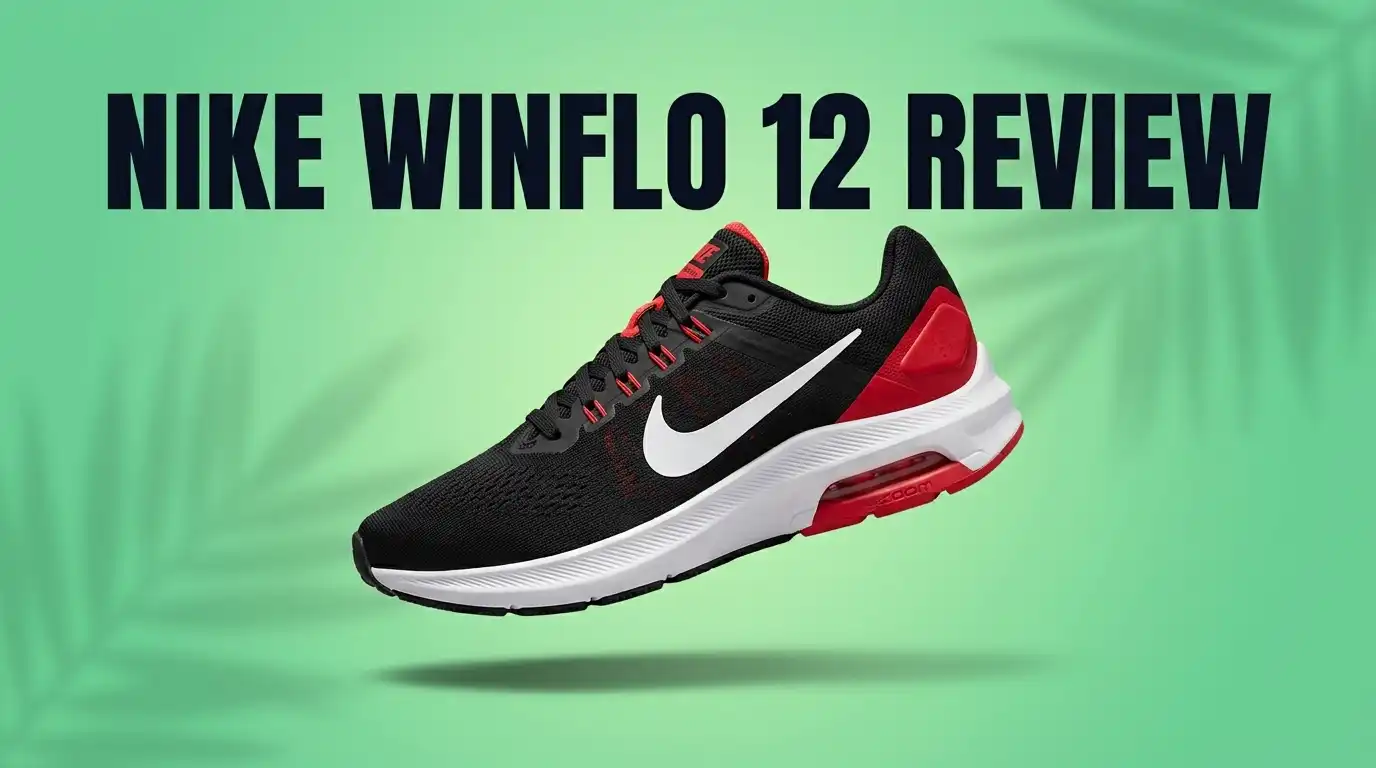
Here is the spec sheet in plain language. The midsole uses Cushlon 3.0 foam, a softer EVA blend that Nike also runs in other value models. A Zoom Air unit sits in the heel only, replacing the full length unit found in the Winflo 11. Heel stack measures about 41mm. Forefoot measures about 30mm. Drop stays at 10mm, which suits heel strikers.
Men’s weight lands near 10.6oz. Women’s runs closer to 9.2oz. The upper is engineered mesh with a semi gusseted tongue, an extended heel collar, and small reflective hits.
What does that mean on the road? It means Nike stopped trying to make the Winflo a cheaper Pegasus. The Pegasus is nimble and firm. The Winflo 12 is tall, soft, and wide. Think of it as the affordable cousin of the Vomero 18 rather than a stripped Pegasus.
The redesign also borrows visual cues from the Pegasus Premium. The sidewall looks like it hides a full length Air unit. It does not. That is styling, not function.
Unboxing The Winflo 12: First Impressions Out Of The Box
The box is standard Nike. Orange, thin cardboard, no extras, no dust bag, no spare laces. Nothing fancy at this price and nobody expects it.
Lift the lid and the first thing you notice is size. These shoes look bigger than the photos suggest. The midsole flares wide at the heel and the sidewalls climb high. Set them next to a Pegasus and the Winflo 12 looks like the older, heavier sibling.
Pick one up and the weight registers immediately. They feel dense in the hand. Not brick heavy, but noticeably more substantial than a Pegasus or a Gel Cumulus. The rubber outsole coverage explains part of that. Nike went generous with rubber, which is good news for longevity and bad news for your legs on mile ten.
The upper feels soft to the touch. Almost too soft. Squeeze the toebox and the mesh gives easily with very little structure behind it. The heel counter, by contrast, is firm and well padded.


Last update on 2026-04-11 / Affiliate links / Images from Amazon Product Advertising API Some of the links on this website are affiliate links, which means that at no additional cost to you, I earn a commission if you click through and make a purchase. I only recommend products and services that I believe will add value to my readers. Thank you for your support!
Slide your foot in and the step in comfort is genuinely impressive. The collar hugs the ankle. The insole is thin at 4.1mm and clearly basic, but the foam underneath does the heavy lifting. Standing still, the shoe feels plush and stable at the same time.
The laces are flat, average length, and hold a knot fine. The tongue is thinner than last year at 4.5mm. It still avoids lace bite thanks to the loop and eyelet hybrid lacing setup.
Nike Winflo 12 Women’s Version: Same Shoe, Different Numbers
No products found.
The women’s Winflo 12 shares the same midsole geometry, the same Cushlon 3.0 foam, and the same heel Air unit. The differences sit in the numbers and the last shape.
Women’s weight comes in around 9.2oz (261g) in a US 8, which is meaningfully lighter than the men’s build. The heel to toe drop is listed at 9mm rather than 10mm. That single millimeter sounds trivial. On long runs it shifts a small amount of load off the calf and onto the quad.


Last update on 2026-04-11 / Affiliate links / Images from Amazon Product Advertising API Some of the links on this website are affiliate links, which means that at no additional cost to you, I earn a commission if you click through and make a purchase. I only recommend products and services that I believe will add value to my readers. Thank you for your support!
Owner feedback lines up with the men’s version. Runners praise the softness and the stability. Nurses, teachers, and retail workers keep showing up in the reviews, and they love this shoe for twelve hour shifts. That tells you something about the cushioning quality.
The complaints also match. Wide foot runners report pressure across the forefoot. Several reviewers went up half a size for toe room, then dealt with heel slip as a result. If your feet are wide, size adjustments will not fix a narrow toebox. Look elsewhere.
Colorways for 2026 lean into pastels, white on white, and a few bolder pink and teal options. The white versions ventilate best, which matters more than people think in summer heat.
One practical note. The stock insole is thin and forgettable. It pops out easily. If you use custom orthotics, this shoe accepts them without much fuss, and the wide platform gives them room to sit flat.
Top 3 Alternative for Nike Winflo 12
If the Winflo 12 does not fit your feet or your budget, these three are worth a serious look.

- Running shoes for asphalt (extra wide) - Men
Last update on 2026-08-28 / Affiliate links / Images from Amazon Product Advertising API Some of the links on this website are affiliate links, which means that at no additional cost to you, I earn a commission if you click through and make a purchase. I only recommend products and services that I believe will add value to my readers. Thank you for your support!
Nike Revolution 7

- THIS MEN’S SHOE IS FOR: The Ghost 17 is for runners and walkers alike looking for an everyday...
- SOFT & DYNAMIC CUSHIONING: The Ghost 17 offers neutral support with premium nitrogen-infused DNA...
- SMOOTH TRANSITIONS: The newly designed midsole incorporates precise flex grooves that enhance the...
Last update on 2026-06-08 / Affiliate links / Images from Amazon Product Advertising API Some of the links on this website are affiliate links, which means that at no additional cost to you, I earn a commission if you click through and make a purchase. I only recommend products and services that I believe will add value to my readers. Thank you for your support!
Brooks Ghost 17
No products found.
ASICS Gel Cumulus 27
Cushioning And Ride Quality: The Big Upgrade
This is where the Winflo 12 earns its money.
Shock absorption measured 139 in the heel and 112 in the forefoot in lab testing, against a category average near 131. Those are numbers you normally see on shoes with a $160 price tag. Landing feels cushioned and quiet. Heel strikers get a soft, forgiving platform that absorbs impact without collapsing.
Midsole softness came in at 28.3 on the Asker C scale, down from 33.2 last year. Lower means softer. The Winflo 12 sits well below the average of 35.6. You feel this within the first hundred meters. The shoe sinks under your weight, then rebounds.
Energy return reached 61%, up 8% from the Winflo 11. That is a genuine improvement, not marketing noise. On easy runs the shoe feels lively rather than dead.
Here is the honest limitation. This is still EVA foam, not a supercritical compound. It performs well at easy and moderate paces. Push toward tempo effort and the softness turns mushy. The foam compresses and takes a beat to return. You will not run fast in this shoe, and Nike never claimed you would.
Cold weather also affects it. After twenty minutes in freezing conditions, the foam firmed up by 30%, compared to a 22% average. Winter runners in cold climates will notice a harder ride during the first mile.
The rocker geometry got a mild reshape to match the taller stack. It is subtle. There is enough curve in the forefoot to help roll through, but this is not a heavily rockered shoe.
Fit And Sizing: Go True To Size, With One Warning
The Winflo 12 fits true to size for the large majority of runners. Owner votes back this up strongly. If you wear a US 10 in the Pegasus, order a US 10 here.
Midfoot width measured 98mm in lab testing against a 95.2mm average. That is generous by Nike standards. The brand has been slowly widening its lasts, and the Winflo 12 shows that shift clearly. Medium and slightly wide feet will feel comfortable through the arch.
The toebox is the problem. Width came in at 72.6mm, slightly below the 73.2mm average. Height measured 24.4mm against a 27.1mm average. The shape stays tapered, following a traditional last. Runners with wide forefeet, bunions, or high volume feet will feel the pinch.
Nike does offer extra wide versions in some colorways. If your feet are wide, buy that version rather than sizing up. Going up half a size only creates heel slip and does nothing for width across the ball of the foot.
Internal length measured 269.9mm, dead average. So the fit is honest lengthwise.
The lockdown deserves credit. The hybrid lacing system mixes punched eyelets with two lace loops per side. That spreads pressure across the instep instead of concentrating it. No lace bite, even cranked tight.
The semi gusseted tongue stops sideways slide and keeps debris out. At this price, most brands skip gussets entirely. Nike included one.
Weight: The One Thing That Holds This Shoe Back
Let me be direct. The Winflo 12 is heavy.
Lab scales put it at 10.6oz (301g) in a men’s US 9. The average across hundreds of tested running shoes is 9.2oz (262g). That is a 40 gram penalty per foot. Over ten thousand steps, that difference adds up in your legs.
Nike lists the men’s shoe at approximately 322g in a US 10, which tracks with the lab figure once you adjust for size.
Why so heavy? Three reasons. First, more foam means more mass, and Nike added roughly 6mm of stack. Second, the heel Air unit adds weight and manufacturing complexity while contributing little that the foam does not already do. Third, Nike covered the outsole in thick rubber for durability instead of exposing foam to save grams.
That last choice is defensible. Budget shoe buyers usually want longevity over a light feel. Still, it makes the Winflo 12 feel planted rather than quick.
Here is what that means practically. Easy runs feel fine. Recovery runs feel great. Long slow miles are comfortable. Strides, intervals, and tempo work feel like dragging anchors.
If you already own a light shoe for fast days, the Winflo 12 makes a solid partner for everything else. If this will be your only running shoe and you like to mix in speed, look at something lighter like the ASICS Gel Pulse or a Pegasus.
Upper And Breathability: Better Than Expected
The Winflo 12 upper is standard engineered mesh. Nothing exotic. It looks like a dozen other shoes at this price, and that is fine because it works.
Breathability scored 4 out of 5 in ventilation testing, comfortably above the 3.6 average. Airflow concentrates in the toebox and tongue, where you need it most. The lateral side is more structured, adding support at the cost of a little ventilation.
That balance makes the shoe genuinely usable year round. It vents well enough for summer without turning into a wind tunnel in November. The white colorways breathe best.
The heel area gets generous padding. Nike went plusher here than on several recent Pegasus models. The collar wraps the ankle without pressing on the Achilles. The extended heel tab makes slipping the shoe on easy, which sounds minor until you try it on a cold morning.
Reflective elements are present but small. Enough to catch headlights at close range. Not enough to replace a proper reflective vest for dark road running.
The downside of the soft mesh is durability, and it is a real one. In abrasion testing the toebox scored 1 out of 5, the lowest possible mark. The material tore quickly. If you drag your toe, scuff on treadmill decks, or run trails, expect the front of the upper to wear through well before the midsole gives up.
Heel padding, by contrast, scored a perfect 5 out of 5. So the back of the shoe will outlast the front by a wide margin.
Outsole, Grip, And Durability
Nike put thick rubber where it counts. Outsole thickness measured 3.3mm against a 3.1mm average. In abrasion testing the rubber lost only 1.0mm of material, beating the 1.1mm average.
Translation: this outsole will last. Most runners should get 400 to 500 miles before the tread pattern disappears. That is strong mileage for a shoe in this price bracket, and it matters because budget buyers usually want maximum life per dollar.
The pattern draws on Nike’s classic waffle design. Black rubber covers the main contact zones at the heel and forefoot, with exposed foam in the midfoot. It looks slightly old fashioned next to modern outsoles that skip rubber to save weight. Old fashioned works here.
Wet grip scored 0.47 in traction testing. The average is 0.52, so the Winflo 12 sits below par. It is still an improvement over previous versions, which scored 0.38 and 0.42. Nike is moving in the right direction on a weakness they have carried for years.
Practically, this means you will be fine on damp pavement and wet sidewalks at easy pace. Painted road markings, wet metal grates, and smooth tile will feel slick. Slow down on those surfaces.
Do not take this shoe on trails. The tread is shallow, the platform is tall, and the soft upper will not survive rocks.
Longitudinal stiffness came in at 13.5N against a 15.5N average, so the shoe flexes easily. That suits walking and easy running.
Stability: Surprisingly Solid For A Soft Shoe
Soft foam usually means wobbly. The Winflo 12 dodges that.
The reason is platform width. Forefoot midsole width measured 122.2mm against a 115.1mm average. Heel midsole width measured 104.4mm, a massive jump from the 84.6mm on the Winflo 11.
That heel figure is wider than many dedicated stability shoes. It creates a broad base that resists sideways roll. Heel strikers land on a platform that simply does not tip.
The shoe achieves this without posts, guide rails, or medial wedges. Torsional rigidity measured 12.5 Nm, below the 14.5 Nm average, so the shoe still twists naturally. Heel counter stiffness scored 3 out of 5, right at average. Neither of those explains the stability. The width does all the work.
For mild overpronators and runners who want a secure feel underfoot, this is genuinely useful. The Winflo 12 is a neutral shoe that behaves like a mildly supportive one.
The tradeoff is agility. This shoe does not corner sharply. It does not change direction quickly. On winding paths and tight turns it feels bulky. Think of it as a tank. Stable, planted, comfortable, and slow to maneuver.
Runners who want a nimble, connected road feel should look at the Pegasus 42 instead.
Winflo 12 vs Winflo 11: What Actually Changed
The gap between these two versions is the largest in the series history.
Stack height. The Winflo 11 sat at 37.6mm in the heel. The Winflo 12 climbs to 40.9mm. The forefoot grew proportionally to keep the drop near 10mm.
Foam. Softness went from 33.2 to 28.3 AC. The Winflo 12 is meaningfully plusher underfoot.
Bounce. Energy return rose from roughly 53% to 61%. This is the single best upgrade.
Air unit. Nike replaced the full length Zoom Air unit with a heel only unit. Counterintuitively, this coincided with better energy return. The foam is doing more work than the Air ever did.
Platform width. The heel widened from 84.6mm to 104.4mm. That is a 20mm jump and it transforms the stability profile.
Weight. Slightly heavier than version 11. Not dramatically, but the shoe gained rather than lost mass.
Tongue. Thinner at 4.5mm, down from a plusher previous build. Still comfortable, less luxurious.
Grip. Improved from 0.42 to 0.47 on wet surfaces.
Should Winflo 11 owners upgrade? If you loved the lower, firmer, more traditional feel of version 11, you may not enjoy version 12. It is a different shoe with the same name. If you wanted more cushioning and a softer landing, this is a clear upgrade worth the money.
Winflo 12 vs Pegasus 42 vs Vomero 18
Three Nike trainers, three different jobs.
The Pegasus 42 sits at 36mm in the heel with a firmer, more responsive ReactX midsole. It weighs less. It turns faster. It handles tempo runs and strides that the Winflo cannot. It costs around $145. Choose the Pegasus if you want one shoe that does easy runs and faster efforts.
The Vomero 18 is Nike’s max cushion flagship, running ZoomX and ReactX foam in a tall dual layer stack. It costs around $150 to $160. It delivers the plushest ride in the lineup with better foam quality than Cushlon 3.0.
The Winflo 12 now sits closer to the Vomero than the Pegasus in feel, at roughly $110. You get similar stack height and a similarly soft landing. What you give up is foam quality, weight, and refinement.
Here is the honest comparison. The Winflo 12 delivers maybe 80% of the Vomero experience for 70% of the price, while carrying an extra ounce and a half. For runners doing easy miles and daily walking, that trade makes sense. For runners logging heavy weekly mileage where every gram compounds, the Vomero justifies its premium.
Against the Pegasus, the Winflo 12 offers more cushioning and more stability for less money. The Pegasus offers versatility and a lighter, livelier ride.
Pros And Cons Of The Nike Winflo 12
Here is the straight scorecard after real miles and lab data.
Pros
- Outstanding cushioning for the price. Shock absorption numbers rival shoes costing $50 more, with 139 in the heel and 112 in the forefoot.
- Real bounce improvement. Energy return hit 61%, an 8% gain over the Winflo 11, which you feel on every easy run.
- Excellent stability without support elements. The 104.4mm heel platform is wider than many dedicated stability shoes and stops sideways roll cold.
- Strong outsole durability. Thick 3.3mm rubber lost just 1.0mm in abrasion testing, pointing toward 400 to 500 mile life.
- Great breathability. A 4 out of 5 ventilation score makes this comfortable in summer heat and usable in cooler months.
- Semi gusseted tongue and smart lacing. Features usually reserved for pricier shoes, and they eliminate lace bite completely.
- True to size fit with roomy midfoot. The 98mm width is generous for a Nike.
- Superb step in comfort. Padded heel collar and plush foam make this a favorite for long standing shifts.
Cons
- Heavy. At 10.6oz (301g) it sits well above the 9.2oz average and feels sluggish at faster paces.
- Terrible toebox durability. A 1 out of 5 abrasion score means the front mesh will wear through early.
- Tapered, low toebox. At 72.6mm wide and 24.4mm tall, wide foot runners will feel cramped.
- Below average wet grip. The 0.47 traction score trails the 0.52 average on slick surfaces.
- Foam stiffens in cold. A 30% firmness change in freezing temperatures against a 22% average.
- Not built for speed. Cushlon 3.0 goes mushy under tempo effort and the shoe lacks snap.
- Basic insole. Thin at 4.1mm and clearly a cost saving choice.
- The Air unit adds little. Heel only Zoom Air contributes weight without obvious performance gain.
Price And Value: Is $110 Worth It?
The Winflo 12 retails around $110. The average running shoe in the tested category costs $157. Sale pricing regularly drops it into the $80 to $95 range.
Nike raised the price slightly over the Winflo 11. That increase is justified this time. You are getting more foam, better bounce, a wider platform, and improved grip. Those are material upgrades, not cosmetic refreshes.
Value math works like this. At $110, with an outsole likely to survive 400 to 500 miles, you are paying roughly 22 to 27 cents per mile. A $160 shoe with the same lifespan costs 32 to 40 cents per mile. The Winflo 12 wins on cost efficiency by a clear margin.
The comparison that matters most is against the Vomero 18. That shoe uses better foam and weighs less. It costs $40 to $50 more. For a runner doing three to four easy runs per week, that extra spend buys refinement rather than necessity. The Winflo 12 covers the same job.
Where the value breaks down is for high mileage runners. If you run 40 plus miles per week, the weight penalty and the fragile toebox become real costs. You will replace the upper before the sole, which wastes the durability you paid for.
One caution. Nike keeps nudging this price upward. At $110 the Winflo is a bargain. At $130 it would collide with the Pegasus and lose the argument that makes it special.
Who Should Buy The Winflo 12 And Who Should Skip It
Buy the Winflo 12 if you are:
A beginner runner who wants maximum comfort without spending $150. This shoe forgives sloppy form and cushions heavy landings.
A heel striker. The 10mm drop, the 41mm heel stack, and the 104.4mm heel platform were built for you specifically.
Someone who stands for a living. Nurses, teachers, warehouse staff, and retail workers consistently rate this shoe highly for twelve hour days.
A runner who liked the Vomero but not the Vomero price. This is the closest budget approximation Nike sells.
A walker logging serious daily distance. The cushioning and stability suit walking exceptionally well.
Skip the Winflo 12 if you are:
A runner who hates heavy shoes. At 10.6oz there is no getting around it. Try the ASICS Gel Pulse 16 for something lighter.
Someone with wide feet or bunions. The tapered 72.6mm toebox will cause problems no lacing trick can fix.
A runner who wants one shoe for everything including speed work. This shoe cannot do fast.
A fan of low, firm, traditional trainers. Version 12 abandoned that character entirely. Look at the New Balance Fresh Foam 680 v8 or the adidas Duramo Speed 2 instead.
A trail runner. Wrong shoe. Wrong outsole. Wrong platform height.
Final Verdict: The Best Value In Nike Running Right Now
The Nike Winflo 12 is the most improved shoe Nike released this cycle, and it succeeds by copying its own expensive sibling.
The cushioning is legitimately excellent. The stability is better than shoes marketed as stability trainers. The outsole will outlive most competitors. The fit is honest. The price undercuts nearly everything with comparable specs.
Rating: 8.5 out of 10 for its intended purpose.
The weight is the flaw you cannot ignore. At 10.6oz this shoe feels every bit as substantial as it looks. Nike faces a hard choice for version 13: cut rubber to save grams and lose durability, or move to a lighter foam and lose the price advantage. Neither path is clean.
The toebox durability rating of 1 out of 5 is the other genuine weakness. Soft mesh feels lovely and wears out fast. Toe draggers will see holes within a few months.
But context matters. This is a $110 shoe. Judged against other $110 shoes, the Winflo 12 is not close to its competition. It beats them on cushioning, stability, and outsole life while matching them on fit and breathability.
Buy it for easy runs, recovery days, long walks, and long shifts on your feet. Pair it with something lighter for speed sessions. Manage those expectations and this shoe will serve you well for hundreds of miles.
Nike quietly built the best budget trainer in their catalog and barely mentioned it.
Frequently Asked Questions
Is the Nike Winflo 12 good for beginners?
Yes, and it is one of the better beginner options available in 2026. The generous cushioning absorbs impact from the heavier, less efficient landings that new runners typically produce. The wide platform adds stability, which helps when your ankles and feet are still building strength.
Does the Nike Winflo 12 run true to size?
Yes. The Winflo 12 fits true to size for most runners, and internal length measured 269.9mm, right at the category average. If you wear a US 10 in the Nike Pegasus, order a US 10 here. The midfoot is roomier than older Nike models at 98mm width.
How many miles will the Nike Winflo 12 last?
Expect 400 to 500 miles from the midsole and outsole. The rubber lost only 1.0mm in abrasion testing, which beats the average, and outsole thickness measures 3.3mm. That is strong longevity. The limiting factor is likely the upper rather than the sole.
Can I use the Nike Winflo 12 for walking and standing all day?
Absolutely, and this may be its strongest use case. Owner reviews are full of nurses, teachers, and warehouse workers who wear this shoe through twelve hour shifts. The soft Cushlon 3.0 foam, the wide stable base, the padded heel collar, and the breathable upper all suit long hours on hard floors.
Is the Winflo 12 better than the Nike Pegasus 42?
They serve different runners. The Winflo 12 offers more cushioning, a wider and more stable platform, and costs about $35 less. The Pegasus 42 weighs less, feels firmer and more responsive, and handles faster paces the Winflo cannot.

Mia Smith is the founder of Shoe Storyteller, a blog that celebrates the art and stories behind shoes. With a passion for fashion and a flair for storytelling, Mia brings a unique perspective to the world of footwear.