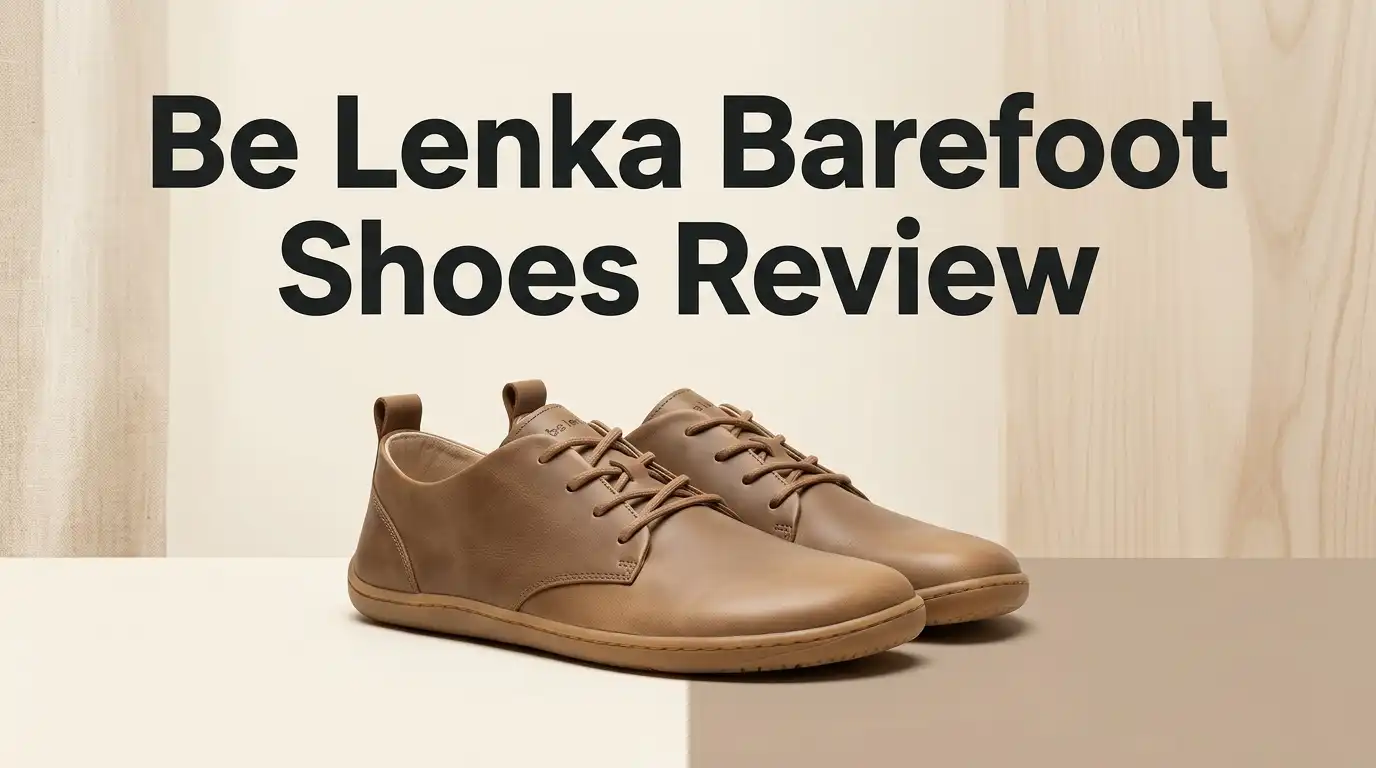
Be Lenka Barefoot Shoes Review 2026: Worth Buying?
Barefoot shoes have gone from a fringe idea to a mainstream comfort choice, and Be Lenka sits right in the middle of that shift.
This Slovakian brand builds foot shaped shoes with wide toe boxes, flat soles, and styling that does not scream “weird toe shoes.” But the internet is split. Some owners rave about the fit. Others complain about stiff soles and slow customer service.
I dug into real owner feedback, tested fit patterns across models, compared Be Lenka against Vivobarefoot and Xero Shoes, and pulled together the honest picture for 2026.
In a Nutshell:
- Be Lenka makes some of the widest toe boxes in barefoot footwear. Owners consistently report more toe room than Vivobarefoot. If your pinky toe gets squished in most shoes, this brand deserves a look.
- Quality varies by model, and that is the biggest catch. The City, Entice Neo, Ranger, and Trailwalker 2.0 earn strong praise. The Champ line and some newer stiff sole models draw regular criticism. Model choice matters more than brand loyalty here.
- Sizing runs true to size for most people, but volume is medium. High volume feet may feel tongue rub. People between sizes should go up.
- Newer soles feel stiffer than older ones. Long time owners say the brand drifted away from the thin flexible feel that made it popular. Buyers wanting maximum ground feel should pick minimal sole models.
- Prices land between $100 and $160. That is cheaper than Vivobarefoot and pricier than Amazon budget brands like WHITIN.
- Returns cost you money. Be Lenka does not cover return postage, and the brand publishes only glowing reviews on its own site. Buy from a retailer with free returns when possible.
Be Lenka Brand Overview: Who Makes These Shoes?

- Pure barefoot feeling: Zero‑Drop sole without heel ensures natural barefoot walking and...
- Wide toe box and flexible: anatomically shaped construction with extra space on the forefoot allows...
- Breathable and lightweight: made of ultra-light, breathable material - ideal for warm days, travel...
Last update on 2026-09-01 / Affiliate links / Images from Amazon Product Advertising API Some of the links on this website are affiliate links, which means that at no additional cost to you, I earn a commission if you click through and make a purchase. I only recommend products and services that I believe will add value to my readers. Thank you for your support!
Be Lenka started in Slovakia and now ships worldwide. The company builds most footwear inside the European Union and runs additional production in Vietnam. It also owns Barebarics, a sister label that looks like regular sneakers while keeping the same anatomical shape underneath.
The brand builds every shoe around three rules. Zero drop soles keep your heel and forefoot at the same height. Anatomical toe boxes follow the natural fan shape of a human foot instead of a narrow point. Flexible thin soles let your foot bend and feel the ground.
Be Lenka covers more categories than most barefoot brands. You get sneakers, hiking shoes, winter boots, ballet flats, sandals, dress shoes, and kids models. That range is a real advantage. Once you adapt to flat flexible footwear, going back to stiff shoes for work or hiking feels awful, so a brand that covers every season saves frustration.
The catalogue size is also the weakness. A company producing dozens of models across many factories loses consistency. Community feedback backs this up. The same shopper often praises one pair and returns another. Treat Be Lenka as a collection of individual shoes rather than a single guaranteed experience, and your odds improve a lot.
Be Lenka Velocity Barefoot Trainers
The Velocity is the athletic workhorse of the lineup. Be Lenka built it for gym training and daily wear, and it has become one of the brand’s most talked about releases.
The numbers are simple. Stack height sits at 5mm. Heel to toe drop is 0mm. Weight lands near 10.5 ounces in a men’s size 10. The upper blends textile with TPU overlays placed low for durability. The ActiveGrip NEO rubber outsole is stitched around the edge to stop the sole from separating over time.
Where it shines is strength training. Reviewers who deadlift heavy report excellent ground feedback and a stable flat platform. The rubber grips gym floors well, and the lacing locks your foot down even during wide stance pulls. The toe box also runs genuinely wide, wider than comparable Vivobarefoot and Xero models, which makes it a rare find for 3E and 4E feet.
It is not a running shoe. Testers describe the sole as clunky past two or three miles. The insole is not removable in this model, which limits customisation. High volume feet report the mesh tongue rubbing during break in, so wear taller socks for the first week.
Retail price sits around $139.99, though sales near $90 appear often. At sale pricing this becomes one of the better value barefoot trainers available.


Last update on 2026-04-11 / Affiliate links / Images from Amazon Product Advertising API Some of the links on this website are affiliate links, which means that at no additional cost to you, I earn a commission if you click through and make a purchase. I only recommend products and services that I believe will add value to my readers. Thank you for your support!
Be Lenka Trailwalker 2.0 Barefoot Shoes

- Spacious, wide toe box allows toes to spread freely
- Zero-drop construction aligns the body and promotes a natural walking stride
- Ultra-thin 4mm sole enhances ground sensation and activates foot nerves
Last update on 2026-09-01 / Affiliate links / Images from Amazon Product Advertising API Some of the links on this website are affiliate links, which means that at no additional cost to you, I earn a commission if you click through and make a purchase. I only recommend products and services that I believe will add value to my readers. Thank you for your support!
The Trailwalker 2.0 is the model barefoot purists keep recommending, and there is a good reason for that.
This is the outdoor shoe of the range. The upper uses leather with an inner lining. The sole measures roughly 4mm before lugs, and the tread pattern was designed for grip on mountain trails. A reinforced rubber rim wraps the toe to protect against rocks. The shoe is water resistant rather than fully waterproof, so expect damp toes in deep puddles.
Owners praise the ground feel above everything else. One long time barefoot user described it as one of the closest sensations to walking with nothing on your feet while still getting protection. The sole flexes in every direction, which helps enormously on uneven ground where your foot needs to wrap over rocks and roots.
Be aware of the version difference. Be Lenka replaced the 2.0 with the 3.0, and community reaction has been mixed. The 3.0 uses the TrailProGrip outsole with deeper lugs and adds stability, but multiple owners report it feels noticeably stiffer and less roomy than the 2.0. If your priority is a true barefoot feel, hunt down the 2.0. If you want more protection on rough descents, the 3.0 makes sense.


Last update on 2026-04-11 / Affiliate links / Images from Amazon Product Advertising API Some of the links on this website are affiliate links, which means that at no additional cost to you, I earn a commission if you click through and make a purchase. I only recommend products and services that I believe will add value to my readers. Thank you for your support!
A minority of owners also report the tapered toe shape pushing their outer toes inward. Measure your foot width before buying.
Top 3 Alternative for Be Lenka Barefoot Shoes
If Be Lenka pricing, shipping, or return policy puts you off, these three deliver similar foot shaped comfort.

- Natural Movement Design: Barefoot + minimalist principles with a wide toe box for natural splay...
- Lightweight Performance: A sleek take on our icon; multi-purpose performance trainer
- True to size. Supportive Fit: Breathable mesh upper with moisture-wicking lining
Last update on 2026-08-31 / Affiliate links / Images from Amazon Product Advertising API Some of the links on this website are affiliate links, which means that at no additional cost to you, I earn a commission if you click through and make a purchase. I only recommend products and services that I believe will add value to my readers. Thank you for your support!
Xero Shoes Men’s Prio Neo Barefoot Training Shoes
No products found.
WHITIN Men’s Barefoot Shoes Wide Toe Box Zero Drop

- Natural Knit Comfort: Made with a 92% TENCEL knit upper, the Primus Lite Knit Natural delivers a...
- Train Naturally: This barefoot performance trainer promotes balance, mobility, and strength while...
- Flexible Ground Feel: The ultra-thin, zero-drop design keeps you close to the ground for enhanced...
Last update on 2026-09-01 / Affiliate links / Images from Amazon Product Advertising API Some of the links on this website are affiliate links, which means that at no additional cost to you, I earn a commission if you click through and make a purchase. I only recommend products and services that I believe will add value to my readers. Thank you for your support!
Vivobarefoot Men’s Primus Lite Knit Natural Running Shoe
Unboxing Experience: What Arrives in the Box
Be Lenka keeps packaging simple, and honestly that is welcome at this price. Your shoes arrive in a sturdy branded box with the logo printed on the lid. Inside you get the pair wrapped in thin paper, plus a small card explaining the barefoot transition process.
The first thing you notice is weight, or the lack of it. Lift the box and it feels almost empty. Pull the shoes out and the difference against conventional sneakers is immediate. There is no chunky heel wedge, no rigid arch bump, no stiff plastic shank.
The second thing you notice is shape. Looking down at the pair from above, the toe box looks wider than you expect. Several first time buyers describe it as odd or even duck footed for the first few days. That reaction fades fast once you wear them.
Then comes the roll test. Grab the heel and the toe and twist. Most Be Lenka models fold into a soft curl. Some of the newer stiffer soles resist this, and that resistance is your early warning sign about the model you picked.
Colours match website photos closely, which matters if you ordered a specific shade. Stitching quality on arrival is generally clean and tight. Some pairs carry a mild factory residue on the outsole, which explains early reports of slipperiness on wet stone.
Be Lenka Sizing and Fit Guide
Sizing is where most Be Lenka disappointment starts, so read this section twice.
Most models fit true to size in EU measurements. Be Lenka publishes a size chart with insole length in centimetres for every model, plus a short video showing how to measure. Use it. Do not guess from your usual sneaker size, especially if you normally buy US sizes. Several buyers report ordering their usual US number and receiving shoes roughly an inch too long.
Here is the method that works. Stand on paper, trace both feet, measure heel to longest toe, add 10mm to 12mm of wiggle room, then match that number to the insole length chart.
If you sit between two sizes, go up. Reviewers who sized up consistently report better toe splay and no length problems, because barefoot shoes do not rely on a snug fit to hold your foot.
Width sits in the wide to slightly extra wide range. That covers most feet but not very square feet, where outer toes may still press the wall. Volume is medium across most models, with Barebarics running higher. Low volume feet can tighten the laces or add the removable insole. High volume feet should check tongue padding before committing.
The Ranger boot has an expandable tongue and fits most volumes, though it runs slightly short.
Comfort and Ground Feel During Daily Wear
Comfort in barefoot shoes works differently from cushioned sneakers. You are not sinking into foam. You are feeling the ground while your own foot does the shock absorption.
Be Lenka handles this well when you pick a flexible model. Owners of the City, Entice Neo, and Trailwalker 2.0 describe all day wear with no rubbing, no blisters, and no hot spots. The anatomical shape means your toes never fight the shoe wall, which removes the single biggest source of pain in conventional footwear.
Break in time is short. Most owners report immediate comfort or a few days of adjustment. Leather models soften faster than the newer synthetic athletic uppers.
Ground feel varies wildly across the range, and this is the honest complaint. Long time customers say Be Lenka soles have grown thicker and stiffer over recent generations. Multiple owners of the Rebound and Velocity call the soles clunky and heavy compared to older releases. If a genuine barefoot sensation is your goal, the brand’s own minimal sole options are the only safe pick.
Breathability is another split. Textile models breathe fine. Owners of the Voyager and Velocity report sweaty overheated feet despite mesh uppers. Leather winter models like the Entice and ArcticEdge earn praise for warmth without dampness, with one owner rating ArcticEdge warmer than Vivobarefoot winter boots.
Build Quality and Long Term Durability
Be Lenka positions itself as a premium brand, and the materials support that claim. Full grain leather, nubuck, stitched outsoles, and reinforced toe rims all appear across the lineup.
Long term reports are genuinely mixed, and pretending otherwise would be dishonest. One five year customer says quality is good and shoes last well. Another owner got over a year of daily wear from the Nevada boot before the welt began splitting. A third reports the Champ 2.0 failing in under twelve months of normal use, while the Nevada bought the same month stayed solid.
The most concerning report involves the Velocity, where an owner saw TPU peeling away from the mesh upper after two weeks. The support response asked for a return shipped at the customer’s expense with no guarantee of outcome.
So what should you expect realistically? Leather models hold up well. Boots like Entice and Ranger survive full seasons with minimal wear. Athletic synthetic models are the risk category.
Sole longevity is decent. The Trailwalker tread is rated for thousands of miles, and Velocity owners report less wear than comparable low profile Vivobarefoot outsoles after equal use.
One recurring quality quirk deserves mention. Several Entice buyers found the soles dangerously slippery on wet paving and algae. The effect faded after weeks of wear, likely factory residue, but that is a real safety window.
Where Be Lenka Falls Short
Every honest review needs this section. Here is what Be Lenka does badly.
Return shipping is on you. International customers face expensive return postage, which turns a wrong size into a costly mistake. One buyer described a $120 pair going straight to a donation bin after an exchange was refused.
The brand filters its own reviews. Multiple customers report writing four star reviews that never appeared on the product page. Every review on the official site sits at five stars. That is a trust problem, and it means you must rely on independent sources for real feedback.
Sole stiffness has drifted. The company that built its reputation on thin flexible soles now sells several models that owners describe as stiff, clunky, and heavy. The toe box shape has also become more tapered on some releases, which excludes square footed buyers who previously fit fine.
Quality consistency is the core weakness. The same customer can love the Barebarics Rebels and return the Champ 2.0. Buying blind from this brand is a gamble.
Model specific letdowns worth knowing: the Champ line draws repeated criticism for an awkward curved shape and low volume. The Voyager and Velocity run hot. The Trailwalker forced pronation for at least one owner. The Elite feels stiff. Be Lenka also offers no repair service, which undercuts the sustainability message.
Be Lenka Pros and Cons
Here is the balanced summary at a glance.
Pros
- Toe box width beats most competitors, coming in slightly wider than Vivobarefoot on comparable models
- Genuine zero drop soles across the entire catalogue with no hidden heel lift
- Huge model range covering sneakers, hiking shoes, winter boots, flats, sandals, and dress styles
- Styling looks close to mainstream footwear, especially in the Barebarics line, so you avoid the obvious barefoot look
- Removable insoles on most models let you adjust volume and ground feel
- Clear size charts with insole measurements in centimetres plus a measuring video
- Pricing undercuts Vivobarefoot while using comparable leather and stitching
- Vegan options available across boots, trainers, and flats
- Strong winter performance, with ArcticEdge rated warmer than several premium rivals
Cons
- Quality consistency swings hard between models, so research each shoe individually
- Return postage is not covered, making sizing errors expensive
- Only five star reviews appear on the official site, which hides real feedback
- Newer soles feel stiffer and thicker than older generations, reducing barefoot feel
- Some models run hot and sweaty despite mesh uppers
- No repair service offered
- Certain models slip on wet stone until factory residue wears off
- Customer service reports include slow responses and returns shipped at buyer cost
- Very square feet may still feel pressure from tapered toe shapes
- Sizing confuses US buyers who skip the measurement chart
Be Lenka vs Vivobarefoot vs Xero Shoes
These three brands dominate the barefoot conversation, and they solve different problems.
Be Lenka wins on width and price. Its toe boxes measure wider than Vivobarefoot, and comparable models cost noticeably less. A Barebarics trainer runs around €159 against nearly €200 for a similar Vivobarefoot pair. If your feet are wide and your budget is limited, Be Lenka is the obvious pick.
Vivobarefoot wins on consistency and thinness. Reviewers describe Vivo shoes as reliably well built and durable despite very thin flexible soles. The fit is narrower and slopes toward the big toe, so square feet struggle. Vivo uppers also trap heat. Purists who want the absolute thinnest sole still choose Vivo.
Xero Shoes wins on slimmer feet and value. Xero fits medium width with a closer heel and midfoot hold. Buyers who find barefoot shoes floppy and oversized often land here. Prices sit near $90 to $100, and the Prio line carries a long sole warranty.
One useful detail: Xero and Vivobarefoot men’s models run wider than their women’s models. If you have wide feet and fit a men’s size, order men’s regardless of the section it sits in.
Relative sizing is simple. Buyers report going the same size across Be Lenka, Vivobarefoot, Xero, and WHITIN.
Price and Value in 2026
Be Lenka sits in the upper middle of barefoot pricing. Sneakers land roughly between $95 and $140. Hiking shoes like the Trailwalker 3.0 retail around €159.90. Winter boots such as the Ranger and ArcticEdge climb higher.
Is that fair? For leather models, yes. You are buying full grain leather, stitched construction, EU manufacturing, and a shape that genuinely fits a human foot. Compared against a $180 Vivobarefoot pair, Be Lenka delivers similar materials with more toe room for less money.
For synthetic athletic models the value case weakens. The Velocity at $139.99 competes with shoes that cost half as much and perform similarly for casual wear. At the frequent sale price near $90, the same shoe becomes a strong buy. Waiting for a discount is smart with this brand.
Budget shoppers have a genuine alternative. WHITIN sells wide toe box zero drop sneakers on Amazon for a fraction of the price. The build is visibly cheaper, some seams rub without socks, and certain models include mild toe spring. But for testing whether wide toe box footwear suits you at all, spending $40 first makes more sense than spending $140.
Growing teenagers are another case where cheaper options win outright, since feet outgrow shoes faster than shoes wear out.
Who Should Buy Be Lenka Barefoot Shoes
Be Lenka suits some feet brilliantly and frustrates others. Here is how to tell which group you land in.
Buy Be Lenka if your feet are wide. This is the strongest argument for the brand. Owners who get squeezed in Vivobarefoot and Xero repeatedly find relief here. Wide forefeet, spread toes, and bunion pressure all improve with this toe box shape.
Buy Be Lenka if you want barefoot shoes that look normal. The Barebarics line in particular passes as regular sneakers. Reviewers report compliments rather than confused stares, which matters if you wear these to an office.
Buy Be Lenka if you need cold weather barefoot footwear. Winter boots are a genuine weak spot across this whole category, and Be Lenka’s Entice, York, Ranger, and ArcticEdge models rank among the better options available.
Skip Be Lenka if your feet are narrow or low volume. You will swim in these. Xero Shoes fits far better.
Skip Be Lenka if maximum ground feel is your priority. Newer soles have thickened. Vivobarefoot or Mukishoes serve purists better.
Skip it too if you cannot absorb return shipping costs, or if you need a brand with flawless consistency across every model.
Care and Cleaning Tips for Longer Life
Barefoot shoes have thin soles and soft uppers, so care habits matter more than with chunky sneakers.
Rotate two pairs if you can. Uppers and linings need drying time. Wearing the same pair daily accelerates odour and material breakdown, especially in models that already run warm.
Clean leather with a damp cloth and condition it monthly. Nubuck models like the Ranger need a suede brush and a protective spray rather than water. Never dry leather near a radiator, because heat cracks the material and stiffens the sole.
Handle new slippery soles deliberately. Owners who found early grip problems fixed them by scrubbing outsoles with dish soap and a stiff brush to strip factory residue. Do this before your first wet weather walk rather than after a fall.
Textile and canvas models tolerate gentle hand washing. Remove the insole first, use cool water and mild soap, then air dry stuffed with paper to hold the shape.
Check the outsole edge stitching every few months. That stitch line is what prevents sole separation, and catching a loose thread early saves the shoe. Be Lenka offers no repair service, so a local cobbler is your only recovery option.
Finally, store shoes flat rather than crushed in a pile. Thin flexible soles hold creases.
Final Verdict: Be Lenka Barefoot Shoes in 2026
Be Lenka is a good brand with an inconsistency problem, and both halves of that sentence are true.
When you pick the right model, the shoes are excellent. The toe box is among the widest available. The zero drop platform is honest. Leather models survive full seasons of daily wear. Styling lets you wear foot shaped shoes without looking unusual. Prices undercut the obvious premium rival.
When you pick the wrong model, you get a stiff, hot, expensive disappointment with return postage on your own card. The Champ line, some newer synthetic athletic models, and the review filtering on the official site are all real marks against the brand.
My practical recommendation is this. Measure your feet properly. Choose a model with a documented history of positive independent feedback, such as the City, Entice Neo, Trailwalker 2.0, Ranger, or the Barebarics Zing and Rebels. Buy from a retailer that offers free returns in your country. Wait for a sale if you are looking at the athletic lineup.
Do that and Be Lenka delivers one of the better wide toe box experiences on the market. Buy blind from the catalogue and you are rolling dice with $140.
For wide feet, Be Lenka earns a solid recommendation. For narrow feet or absolute ground feel, look elsewhere.
Frequently Asked Questions
Do Be Lenka shoes run true to size?
Most models fit true to size when you use the brand’s insole length chart in centimetres. Do not convert from your usual US sneaker size, because several buyers received shoes far too long that way. Measure your foot, add 10mm to 12mm, and match the chart. Buyers between two sizes should go up.
Are Be Lenka shoes good for wide feet?
Yes, and this is the brand’s biggest strength. Owners report toe boxes slightly wider than Vivobarefoot and enough room for full toe splay. Barebarics models run extra wide. Very square feet may still feel pressure from tapered shapes, so check the sole outline photos before ordering.
Which Be Lenka model is best for beginners?
The City and the Barebarics Zing get the most consistent praise from new barefoot wearers. Both look like conventional sneakers, fit a wide range of foot shapes, and need almost no break in time. Avoid the Champ line as a first purchase.
Are Be Lenka shoes waterproof?
Some are, most are not. Winter boots like the Entice and Ranger include waterproof membranes and warm linings. The Trailwalker is water resistant only, meaning light rain is fine but puddles are not. Sneakers and canvas models offer no water protection.
How long do Be Lenka shoes last?
Reports range from under a year to five years. Leather models and boots hold up best, with several owners getting full seasons of daily use. Synthetic athletic models are the weaker category. Outsole tread life is generally strong, with some models rated for thousands of miles.
Is Be Lenka better than Vivobarefoot?
It depends on your feet. Be Lenka offers more toe width and lower prices. Vivobarefoot offers thinner soles and more consistent quality across models but a narrower fit that suits slimmer feet. Wide footed buyers usually prefer Be Lenka.
Can you run in Be Lenka barefoot shoes?
Short runs, yes. Longer runs, not comfortably in most models. Testers describe the Velocity as clunky beyond two or three miles. The brand serves walking, hiking, training, and daily wear far better than distance running.
Does Be Lenka cover return shipping?
No. Customers pay return postage themselves, which gets expensive for international orders. Buying through a local retailer with free returns removes this risk entirely.

Mia Smith is the founder of Shoe Storyteller, a blog that celebrates the art and stories behind shoes. With a passion for fashion and a flair for storytelling, Mia brings a unique perspective to the world of footwear.