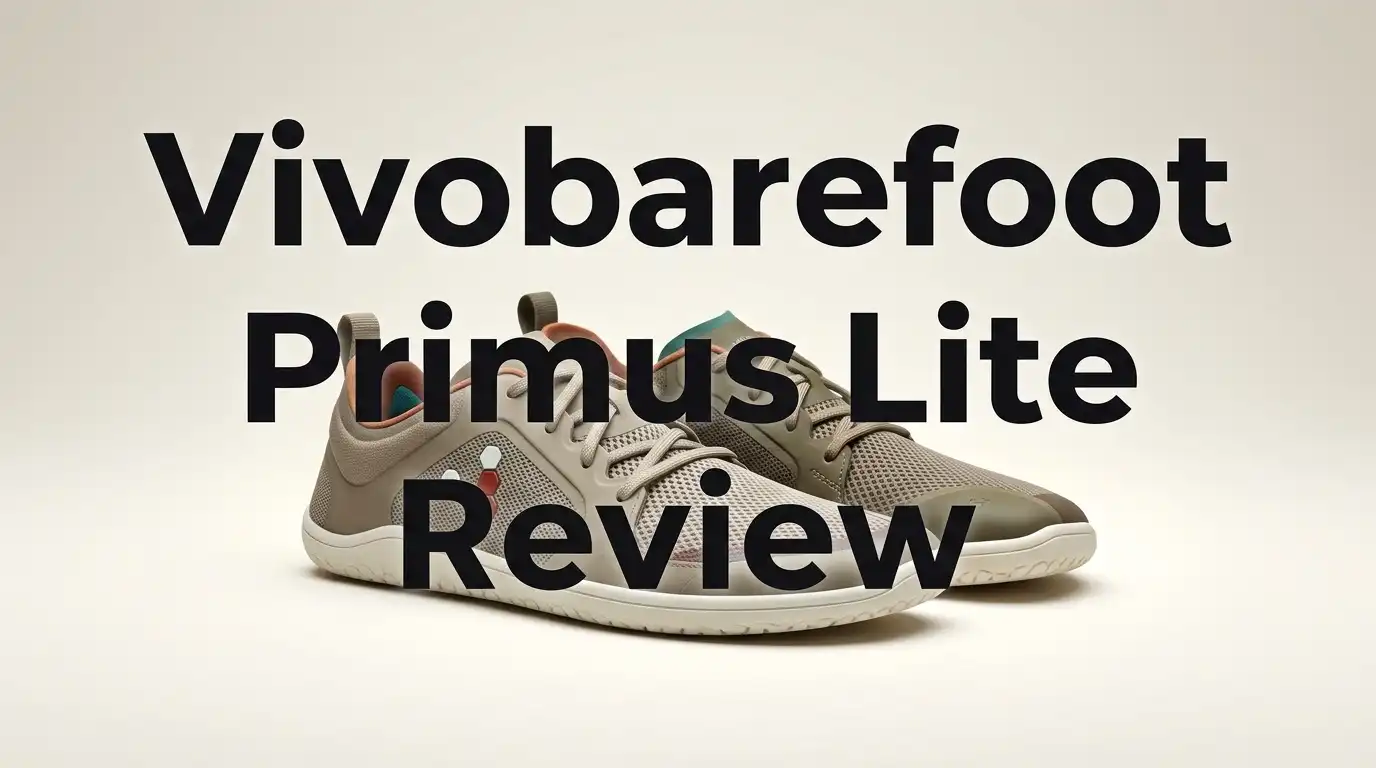
Vivobarefoot Primus Lite Review 2026: Worth It?
Your feet were built to feel the ground. Most sneakers hide that feeling under thick foam. The Vivobarefoot Primus Lite takes the opposite path. It gives you a 4mm sole, a zero drop platform, and a toe box wide enough for your toes to spread out like they do on sand.
I have trained, walked, lifted, and run in this shoe. I have also watched a white pair turn a sad shade of yellow. This review covers the good parts and the parts that annoyed me.
You will learn how it fits, how long it lasts, how it performs in the gym, and whether the price tag makes sense in 2026.
In A Nutshell:
- The barefoot feel is real and uncompromised. Lab testing puts the stack height at 8.5mm heel and 8.5mm forefoot with a true 0.0mm drop. The insole measures only 2.5mm and pops out if you want even more ground feel.
- It is the lightest and most flexible trainer in its class. A men’s size 9 weighs about 8.3 oz. It takes just 2.5N of force to bend the shoe 30 degrees, which was the lowest reading recorded in a lab that tested dozens of training shoes.
- The toe box is genuinely wide. Measurements show 77.8mm across the big toe area and 30.3mm of vertical room. Wide feet, flat feet, and bunion sufferers finally get space.
- Durability is a strong point. Upper and heel padding both scored 5 out of 5 in abrasion testing. The outsole rubber held up better than average.
- The price stings. Expect roughly $160 to $170 at full retail, which is more than many cushioned cross trainers cost.
- It is not for everyone. No half sizes, almost no shock absorption, a floppy heel counter, and zero reflective details. Beginners who rush the transition will feel sore calves fast.
Vivobarefoot Primus Lite III

- Barefoot training shoe for natural movement: The Vivobarefoot Primus Lite IV features a wide toe...
- Lightweight & breathable mesh upper: Engineered with recycled polyester mesh for superior airflow...
- Sustainable & eco-friendly materials: Made with high recycled content, including a 98% recycled...
Last update on 2026-09-01 / Affiliate links / Images from Amazon Product Advertising API Some of the links on this website are affiliate links, which means that at no additional cost to you, I earn a commission if you click through and make a purchase. I only recommend products and services that I believe will add value to my readers. Thank you for your support!
The Primus Lite III is the model most people mean when they say Primus Lite. Vivobarefoot calls it their hero trainer, and it has become the best selling shoe the brand has ever made.
The recipe is simple. A thin mesh upper sits on top of a 4mm Active sole made from recycled polyurethane foam and rubber. There is no midsole foam, no arch support, and no heel lift. Stabilising TPU overlays wrap the sides to hold your foot in place.
Vivobarefoot builds this shoe around three ideas: wide, thin, and flexible. Wide gives your foot a natural base. Thin lets nerves in your sole read the ground. Flexible lets your foot bend the way it wants to bend.
The brand also points to research from 2021 showing that daily activity in minimalist footwear increased foot strength by roughly 60% over six months. That is a real study, though results depend on how much you actually walk in them.
Sizing runs in whole sizes only. A men’s EU 42 pair weighs around 232 grams, which is lighter than most running socks feel after a rainy day. The shoe is vegan, and the packaging uses recycled materials.
My honest take: this shoe does one job extremely well. It gets out of the way. If you want a sneaker that does the work for you, look elsewhere.
The Unboxing Experience
The box arrives flat, plain, and recycled. There is no tissue paper theatre and no plastic shell. My pair came wrapped in a recycled bag with a small card explaining the brand’s regenerative footwear mission.
The first thing you notice is the weight. You pick up the box and think it is empty. I actually shook mine to check. Both shoes together feel lighter than one traditional running shoe.
Then you hold the shoe and bend it. It folds in half without resistance. You can roll it into a tube and stuff it in a jacket pocket. My partner walked past and asked why I was playing with a sock.


Last update on 2026-04-11 / Affiliate links / Images from Amazon Product Advertising API Some of the links on this website are affiliate links, which means that at no additional cost to you, I earn a commission if you click through and make a purchase. I only recommend products and services that I believe will add value to my readers. Thank you for your support!
The mesh upper feels thinner than expected. Light passes through it when you hold it up to a window. That thinness worried me at first, and I assumed it would tear within a month. It did not.
The insole slides out with one tug. Underneath you see the bare inside of the sole unit, which is where the true barefoot experience lives.
Laces are the one dull note. Older pairs shipped with short, slippery laces that came undone during training. Vivobarefoot updated the laces on newer pairs, so recent buyers get a better set. Still, keep a spare pair of longer laces handy if you like a very tight lockdown.
First wear takes about ten seconds. No break in period exists because there is nothing stiff to break in.
Design And Build Quality Explained
Look closely and the Primus Lite is smarter than its plain shape suggests. The outsole uses a hexagonal tread pattern. Those small pods flex in every direction, so the sole twists with your foot instead of fighting it.


Last update on 2026-04-11 / Affiliate links / Images from Amazon Product Advertising API Some of the links on this website are affiliate links, which means that at no additional cost to you, I earn a commission if you click through and make a purchase. I only recommend products and services that I believe will add value to my readers. Thank you for your support!
A subtle rubber wrap runs around the toe. That wrap saves your toes when you kick a squat rack or a curb. It adds protection without adding stiffness.
Lab testing measured outsole thickness at exactly 4mm, matching the brand’s own claim. Honest specs are refreshingly rare in footwear, so credit is due here.
The upper is a single layer of perforated mesh. Breathability scored a perfect 5 out of 5 in smoke testing. Air moves straight through, especially across the forefoot. Summer feet stay cool. Winter feet get cold fast.
Torsional rigidity came in at 5.1 Nm, the lowest value on record in that test group. You can twist this shoe like a wet towel. The heel counter scored 1 out of 5 for stiffness, meaning it collapses under light pressure.
That softness is intentional. The design assumes your own foot muscles provide stability. Traction measured a friction coefficient of 0.37, slightly above average for a trainer. Rubber gym mats and hardwood feel secure. Wet tile and loose gravel feel less sure.
Build quality overall feels tight. Stitching is clean. Glue lines are neat. Nothing on my pair peeled or separated.
Top 3 Alternative for Vivobarefoot Primus Lite

- Natural Movement Design: Barefoot + minimalist principles with a wide toe box for natural splay...
- Lightweight Performance: Performance road running shoe
- Supportive Fit: Breathable mesh upper with moisture-wicking lining
Last update on 2026-09-01 / Affiliate links / Images from Amazon Product Advertising API Some of the links on this website are affiliate links, which means that at no additional cost to you, I earn a commission if you click through and make a purchase. I only recommend products and services that I believe will add value to my readers. Thank you for your support!
Xero Shoes Men’s HFS II Barefoot Running Shoes

- 100% recycled breathable mesh upper
- Merrell Air Cushion in the heel absorbs shock and adds stability
- 100% recycled laces and webbing
Last update on 2026-08-31 / Affiliate links / Images from Amazon Product Advertising API Some of the links on this website are affiliate links, which means that at no additional cost to you, I earn a commission if you click through and make a purchase. I only recommend products and services that I believe will add value to my readers. Thank you for your support!
Merrell Men’s Vapor Glove 6 Sneaker

- Minimalist Sneaker Styling – Canvas uppers deliver a clean, timeless look that pairs easily with...
- Wide Toe Box Design – Provides ample space for your toes to spread naturally, keeping your feet...
- Barefoot-Inspired Everyday Comfort – Combines casual style with the benefits of barefoot footwear...
Last update on 2026-09-01 / Affiliate links / Images from Amazon Product Advertising API Some of the links on this website are affiliate links, which means that at no additional cost to you, I earn a commission if you click through and make a purchase. I only recommend products and services that I believe will add value to my readers. Thank you for your support!
WHITIN Men’s Barefoot Shoes Wide Toe Box Zero Drop
Fit And Sizing Guide
Most people should order their normal size. Voting data from reviewers lands firmly on true to size. Internal length on a men’s size 9 measured 271mm, which is slightly longer than the average trainer.
Here is the catch. The Primus Lite III does not come in half sizes. If you normally wear a 9.5, you face a choice.
Use this rule. Check your current half size shoe. If you have about a thumb’s width of space past your longest toe, size down. If your toes already press the front, size up.
The shoe runs a touch long, so sizing down usually wins for people between sizes. Sizing up creates heel slip, and the soft heel counter cannot hold a loose fit. Heel slip is the number one sizing complaint I see online.
Width is the star. The widest point between big toe and pinkie measured 99.3mm. The big toe area measured 77.8mm, ranking among the widest ever recorded in that lab. Toe box height hit 30.3mm, so nothing presses down on your nails.
Measure your feet before ordering. Trace both feet on paper, measure heel to longest toe, then add roughly 10mm of wiggle room. Compare that number to the brand’s size chart.
One more note. The tongue has almost no padding at 1.7mm and no gusset. During side to side movement the tongue can shift sideways. Lace it evenly to reduce that shifting.
How The Primus Lite Performs In The Gym
This is where the Primus Lite earns its reputation. Lifting in a flat, wide, flexible shoe changes how the floor feels under you.
Deadlifts feel the best. Your heel sits at true ground level, so the bar travels a shorter path. Your toes spread and grip. Reviewers have pulled well over 500 lb in this shoe without any complaint about sole compression.
Squats feel stable once you adapt. There is no foam to sink into, so your weight stays where you put it. People with tight ankles may miss a raised heel, and that is a mobility issue rather than a shoe issue.
Pull the insole out for heavy sets. That drops you another 2.5mm closer to the floor. The difference sounds tiny. It feels obvious.
Lunges, split squats, and single leg work benefit from the wide platform. Your foot can splay across a larger surface, which improves balance.
Jump rope and plyometric work rate a little lower. Some forefoot sliding happens because the tongue is not gusseted. Box jumps feel great going up. Landings send more impact through your legs since shock absorption measured only 17 SA against a category average of 81 SA.
Sled pushes reveal the traction limit. The hexagonal tread grips well but not aggressively. On dusty rubber flooring I felt a small slip during hard pushes.
For general strength training this shoe deserves a 9 out of 10.
Running In The Primus Lite
Running is possible here, but expectations need adjusting. Energy return measured 32.1%, far below the 53.7% average for training shoes. You get back what your own tendons produce and nothing more.
That makes the Primus Lite a skill building shoe rather than a distance shoe. Short runs of one to three miles work well for adapted feet. Your stride shortens naturally. Your cadence rises. Your landing moves toward the midfoot.
New barefoot runners should start with half a mile. Then rest a day. Calves and Achilles tendons take weeks to adapt, and rushing this stage causes real injuries.
Ground feel during running is excellent. You read every pebble and crack. That feedback teaches lighter landings faster than any coaching cue.
Long runs on concrete are a different story. After about four miles my legs felt beaten up, and that was with two years of minimalist shoe experience. There is simply nothing between you and the pavement.
Treadmill running suits this shoe better. Indoor surfaces are forgiving and predictable. Indoor use also extends the life of the outsole tread, which fades faster on rough asphalt.
Trail running works on smooth paths only. The tread lacks deep lugs for mud, and the thin sole offers little protection from sharp rocks.
My verdict: excellent for form work and short efforts, poor for marathon training.
Vivobarefoot Primus Lite Knit
No products found.
The Knit version deserves its own mention because many buyers confuse the two. It shares the same 4mm Primus sole and the same zero drop platform. The upper is the change.
Knit fabric replaces mesh panels. The result feels more like a sock and less like a sneaker. Foot entry is easier. The fit is relaxed rather than snug.
Lab weight for a men’s size 9 came in at 8.3 oz, the lightest training shoe on record in that test group. Flexibility matched the III at 2.5N. Breathability again scored 5 out of 5.
Durability results impressed me most. The toe box survived abrasion testing with a 5 out of 5. Heel padding also scored 5 out of 5. Outsole wear measured a 0.9mm dent against a 1.1mm average, so the rubber outperforms most rivals.
The trade off is price. Retail sits around $170, well above the $129 category average. That puts it in the same bracket as heavily featured cross trainers.
Choose the Knit if you want a stretchy, sock style fit and a casual look. Choose the III if you prefer a more structured upper and slightly better lockdown for lateral work.
Neither version offers arch support. If you need that, add your own thin insole.
Daily Wear And Everyday Style
Plenty of barefoot shoes look like orthopaedic experiments. The Primus Lite avoids that trap. The silhouette is low and clean, and the colourways stay simple.
I have worn mine with jeans, joggers, and shorts without anyone commenting. That is high praise in the barefoot category. Nobody asked why my shoes looked like flippers.
All day comfort depends on your surfaces. Carpet, grass, and wooden floors feel wonderful. Eight hours on concrete feels tiring at first, then normal after a few weeks.
Packing is a joy. The shoe squashes flat into a suitcase corner. Travellers who count grams will appreciate that.
Weather limits the fun. The mesh drains quickly but soaks through instantly. Cold rain turns this shoe into a cold puddle. Vivobarefoot sells insulated models for winter, and you will want one.
Sock choice matters more than usual. Thin toe socks preserve ground feel. Thick socks fill the toe box and remove the whole point.
There are no reflective elements anywhere on the shoe. Evening walks near traffic need a reflective band or a light.
Barefoot inside the shoe works too. The interior lining feels smooth, and the insole is removable if you prefer bare skin against the sole.
Durability After Months Of Wear
Thin shoes look fragile. This one is not. Abrasion testing damaged only the surface layer of the mesh without opening a hole, earning a perfect score.
Real world use matches the lab. Reviewers report 10 to 12 months of consistent daily wear before serious complaints appear, with some pairs pushing past two years.
Two problems do show up. First, tread fade. The hexagonal pods flatten out with heavy outdoor mileage, and grip drops as they smooth over.
Second, colour. White pairs yellow badly. Mine shifted to a dull cream tone within a year, and no amount of cleaning brought them back. Buy a darker colourway if this bothers you.
Heel padding held up better than expected given how thin it is. No interior lining tore on my pair.
Care is easy. Brush off dirt, wipe with mild soap and cool water, then air dry away from heat. Machine washing degrades the glue, so avoid it.
Rotating two pairs extends life for both. Foam and rubber recover between wears.
Vivobarefoot also runs a repair and resell programme in some regions, which suits the brand’s sustainability angle. Availability varies by country, so check before you count on it.
What The Primus Lite Does Not Do Well
Every honest review needs this section. Here is where the shoe falls short.
Shock absorption is nearly absent. At 17 SA against an 81 SA average, hard landings travel straight into your joints. Heavy runners on concrete will feel it.
Lateral stability is minimal. There are almost no rubber reinforcements at the midfoot or rearfoot. Hard cutting movements in basketball or tennis feel unsafe.
The heel counter is floppy. It scored 1 out of 5 for stiffness. Combined with the missing half sizes, this creates heel slip for many buyers.
No gusseted tongue. The tongue slides sideways during lateral drills, which breaks the otherwise sock like fit.
Cold weather performance is poor. Single layer mesh plus a 4mm sole equals frozen toes below roughly 10 degrees Celsius.
The price is hard to defend. At $160 to $170 you pay premium money for very little material. Xero Shoes, Tolos, and budget Amazon brands deliver similar geometry for far less.
No reflectivity at all. Early morning and evening use needs extra visibility gear.
Transition time is real. This shoe will make your calves hurt if you jump straight in from cushioned trainers. Expect four to eight weeks of gradual adaptation.
None of these flaws are dealbreakers for the right buyer. All of them matter for the wrong one.
Pros And Cons
Here is the quick summary after months of testing.
Pros
- True barefoot feel with 8.5mm stack, 0.0mm drop, and a removable 2.5mm insole
- Exceptionally light at roughly 8.3 oz for a men’s size 9
- Most flexible trainer tested, bending with only 2.5N of force
- Very wide toe box measuring 77.8mm at the big toe with 30.3mm of height
- Excellent durability scores for upper, heel padding, and outsole rubber
- Perfect breathability rating thanks to the single layer perforated mesh
- Great for lifting, especially deadlifts, squats, and single leg work
- Casual looks that pass as normal sneakers
- Vegan build using 98% recycled polyurethane foam and recycled packaging
- Packs flat for travel
Cons
- High price near $160 to $170 with cheaper rivals available
- No half sizes, which causes fit headaches
- Very low shock absorption at 17 SA
- Soft heel counter scoring 1 out of 5 for stiffness
- No gusseted tongue and only 1.7mm of tongue padding
- Weak lateral support for cutting sports
- Cold and wet weather struggles
- White colourways yellow within a year
- No reflective elements
- Requires a slow transition period
Price And Value In 2026
Full retail sits around $160 for the Primus Lite III and near $170 for the Knit. Sale prices drop to roughly $96 during seasonal promotions, and that is when this shoe becomes genuinely good value.
Compare that to the market. The average training shoe costs about $129. Nike Metcon models sit in similar territory while offering far more material and features.
So why pay it? Geometry is what you are buying. The 4mm sole, the true zero drop, and that unusually wide toe box are hard to find together. Cheaper shoes often widen the forefoot but keep a tapered toe or add a hidden heel lift.
Durability improves the maths. A pair that survives a year of daily wear costs about 44 cents per day. That is reasonable for a shoe you wear constantly.
Budget alternatives deserve a fair look. Xero Shoes models run $90 to $120. Tolos Archetype sits near $105 to $115. Amazon brands like WHITIN sell for $40 to $60 and get the basic shape right, though materials feel cheaper.
My advice: if this is your first barefoot shoe, start with a budget pair. Confirm you like the feel. Then upgrade to the Primus Lite when it goes on sale.
If you already know barefoot works for you, the Primus Lite is a safe long term pick.
Who Should Buy And Who Should Skip
Buy the Primus Lite if you lift weights and want maximum ground contact. Deadlifts and squats feel noticeably better in a flat, wide shoe.
Buy it if you have wide feet, flat feet, or bunions. The 77.8mm toe box solves problems that regular sneakers create.
Buy it if you already wear minimalist footwear and want a durable daily pair with a clean look. The build quality justifies the upgrade.
Buy it if you travel light. The shoe weighs almost nothing and packs flat.
Skip it if you are brand new to zero drop shoes and impatient. Your calves and Achilles need weeks of adaptation, and shortcuts cause injuries.
Skip it if you run high mileage on concrete. You need cushioning that this shoe does not have.
Skip it if you play sports with hard cutting movements. Lateral support is minimal by design.
Skip it if you wear half sizes and hate fit gambles. Order two sizes and return one, or choose a brand with half sizes.
Skip it if $160 feels painful. Cheaper shoes deliver most of the same geometry.
My overall score: 8 out of 10. Brilliant execution of a specific idea, held back by price and a few fit quirks.
Frequently Asked Questions
Are Vivobarefoot Primus Lite shoes true to size?
Yes for most people. Voting data and reviewer consensus both land on true to size. The shoe runs slightly long, so people between sizes should usually size down. Remember that half sizes do not exist in this model.
How thick is the Primus Lite sole?
The outsole measures 4mm. Total stack height measured 8.5mm at both heel and forefoot with a 0.0mm drop. The removable insole adds 2.5mm.
Can I run long distances in the Primus Lite?
You can, but most people should not. Shock absorption measured 17 SA against an 81 SA average. Short runs up to three miles work well for adapted feet. Longer distances on hard surfaces leave your legs sore.
How long do Vivobarefoot Primus Lite shoes last?
Expect 10 to 12 months of heavy daily wear, with many pairs lasting longer. Upper and heel padding scored 5 out of 5 in abrasion testing. Tread fade and yellowing on white pairs appear first.
Do these shoes have arch support?
No. Barefoot shoes deliberately omit arch support so your foot muscles do the work. You can add a thin insole if you need temporary support during transition.
What is the difference between Primus Lite III and Primus Lite Knit?
Both share the same 4mm sole and zero drop platform. The III uses a mesh upper with TPU overlays for a more structured fit. The Knit uses stretchy knit fabric for a relaxed sock like feel and costs slightly more.
Are barefoot shoes good for your feet?
Research from 2021 found that daily activity in minimalist footwear increased foot strength by about 60% over six months. Benefits depend on a gradual transition. Anyone with existing foot problems should speak to a podiatrist first.
Can I wear the Primus Lite in winter?
Not comfortably in cold or wet conditions. The single layer mesh soaks through and the thin sole conducts cold. Look at insulated barefoot models for winter instead.
Do the laces come undone?
Older pairs shipped with short, slippery laces that loosened during training. Vivobarefoot has since updated the laces. If yours still slip, replacement laces cost very little.
Is the Primus Lite worth $160?
At full price it is a stretch given that budget rivals cost $40 to $120. On sale near $96 it becomes strong value. If you are new to barefoot shoes, test the style with a cheaper pair first.

Mia Smith is the founder of Shoe Storyteller, a blog that celebrates the art and stories behind shoes. With a passion for fashion and a flair for storytelling, Mia brings a unique perspective to the world of footwear.