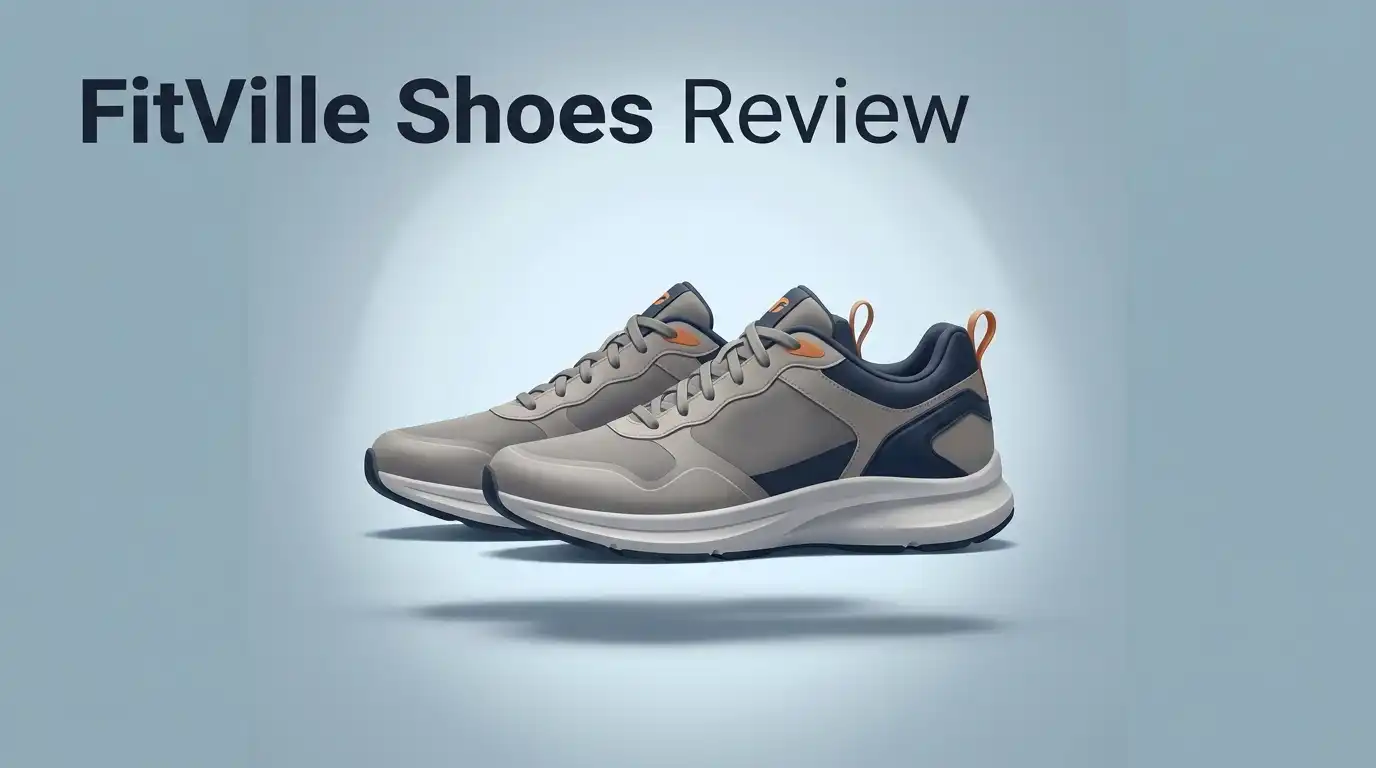
FitVille Shoes Review 2026: Worth the Price Tag?
Most people find FitVille the same way: after a podiatrist appointment, a bunion flare, or a night spent measuring their forefoot against a size chart at 1 a.m. Standard sneakers in D width squeeze the fifth metatarsal. Going up two sizes gives you room, but the heel slips and the arch lands in the wrong place.
FitVille sells shoes built around that exact problem. The brand offers 2E, 4E, and 6E widths across walking shoes, boots, sandals, and slip-ons, usually at half the price of Brooks or Orthofeet.
The question is whether a five-year-old direct-to-consumer brand can deliver real orthopedic value or just a roomy upper with marketing attached. I wore the Rebound Core daily, read hundreds of verified buyer complaints, and compared the construction against shoes costing twice as much.
In a Nutshell
- The width is real, and that is the main reason to buy. FitVille offers genuine 4E and 6E volume, not a stretched D-width upper. Buyers with lymphedema, post-surgical swelling, and bunions consistently report the toe box clears pressure points that mainstream brands crush.
- The price sits between $55 and $95. That is roughly half of a comparable Brooks or Orthofeet model. You are paying orthopedic-adjacent money, not orthopedic money, and the materials reflect that.
- Arch support is the most divisive feature. The stock insole feels firm and tall to some wearers and flat and thin to others, depending on the model. Removable insoles let you swap in custom orthotics, which many owners do immediately.
- Cushioning compresses faster than premium foam. Several long-term owners report the midsole packing out within a few months of heavy court or gym use. Casual walkers report far better mileage.
- Buy through Amazon, not the brand site. Direct returns are slow and frustrating, with partial refund offers and long overseas shipping windows. Amazon gives you a clean 30-day return on a shoe that depends entirely on fit.
- This is a walking and standing shoe, not a running shoe. Treat it as an all-day comfort trainer for flat feet, wide feet, diabetic feet, and neuropathy, and expectations line up with reality.
FitVille Rebound Core Review

- Classic Loafer Style: You can dress these penny loafers up or down—pair them with suits, dress...
- Wide & Extra Wide Fit: You get a roomy toe space that lets your toes spread freely and...
- Soft Vegan Leather: You enjoy a supple and lychee-grain vegan leather upper that feels gentle on...
Last update on 2026-08-01 / Affiliate links / Images from Amazon Product Advertising API Some of the links on this website are affiliate links, which means that at no additional cost to you, I earn a commission if you click through and make a purchase. I only recommend products and services that I believe will add value to my readers. Thank you for your support!
The Rebound Core is the model most people mean when they say “FitVille.” It is the brand’s flagship lace-up trainer and the shoe carrying the bulk of its reviews.
The upper combines suede overlays with a breathable mesh body, which gives the shoe more structure than a knit runner. Structure matters here because a very wide shoe with a soft upper collapses sideways.
Inside, you get a deep heel cup, a dual density EVA midsole, and a removable footbed. The forefoot is genuinely square rather than tapered, so the fourth and fifth toes sit flat instead of stacking.
The women’s version shares the platform with a slightly narrower heel and lower collar. Both run true to length in my testing, with the 4E feeling closest to a traditional 2E from Nike or Adidas.
Weight is the first honest downside. At roughly 13 ounces per shoe in a men’s 10, this is a heavy shoe that you notice on long days.
Unboxing, Texture, and Packaging
The box arrives plain, matte, and slightly undersized, with the shoes stuffed nose to tail and wrapped in thin tissue. No dust bag, no extra laces, no insole card. It feels like a value brand, and it does not pretend otherwise.
The first thing you notice is smell. There is a distinct factory adhesive and rubber odor on opening, stronger than a Brooks or New Balance box. It faded after about three days of airing out on my porch.
Texture is mixed. The suede overlays feel dense and slightly synthetic under the thumb, while the mesh panels feel stiff rather than plush. Owners who describe the shoe as “plasticky” are reacting to this exact combination.
The insole is the pleasant surprise. It is a thick, contoured PU footbed that lifts out cleanly in one piece, which matters if you wear custom orthotics.


Last update on 2026-04-11 / Affiliate links / Images from Amazon Product Advertising API Some of the links on this website are affiliate links, which means that at no additional cost to you, I earn a commission if you click through and make a purchase. I only recommend products and services that I believe will add value to my readers. Thank you for your support!
Packaging functionality is basic but adequate. The box survives a return trip, and the tissue does nothing useful.
How the 2E, 4E, and 6E Widths Actually Run
Width is where FitVille earns its reputation, and where most sizing mistakes happen. The brand publishes forefoot measurements in millimeters, and those numbers are more useful than the letter grades.
In practice, FitVille 4E runs close to a standard 2E from mainstream athletic brands. If you already wear 4E in New Balance, size to 6E here rather than matching the letter.
Length runs true for most wearers. A minority report a half size long, particularly in the slip-on and boot models, which have more toe spring.
The instep is the quiet advantage. These shoes have high volume through the midfoot, which helps swollen feet, high arches, and AFO braces far more than width alone.


Last update on 2026-04-11 / Affiliate links / Images from Amazon Product Advertising API Some of the links on this website are affiliate links, which means that at no additional cost to you, I earn a commission if you click through and make a purchase. I only recommend products and services that I believe will add value to my readers. Thank you for your support!
The common complaint is the opposite problem. Several owners with narrow heels report the ankle collar feels too wide, causing heel lift on the 6E models.
Measure your forefoot with a tape at the widest point, compare it to the millimeter chart, and ignore the letter. That single step prevents most returns.
Top 3 Alternatives for FitVille Rebound Core

- THIS MEN’S SHOE IS FOR: Everyday runners, walkers, and fitness enthusiasts who want the perfect...
- LIGHTWEIGHT & DYNAMIC CUSHIONING: Powered by nitrogen-infused DNA LOFT v3 foam for a soft...
- SECURE, BREATHABLE FIT: Features a redesigned upper construction with a flexible flat knit tongue...
Last update on 2026-08-01 / Affiliate links / Images from Amazon Product Advertising API Some of the links on this website are affiliate links, which means that at no additional cost to you, I earn a commission if you click through and make a purchase. I only recommend products and services that I believe will add value to my readers. Thank you for your support!
Brooks Men’s Ghost Max 2 Running and Walking Shoes

- MOTION CONTROL DESIGN - Engineered with motion control technology to provide superior stability and...
- ROLLBAR STABILITY POST - ROLLBAR technology reinforces the medial and lateral sides of the midsole...
- ABZORB CUSHIONING - ABZORB cushioning absorbs impact at the heel and forefoot, delivering all-day...
Last update on 2026-08-01 / Affiliate links / Images from Amazon Product Advertising API Some of the links on this website are affiliate links, which means that at no additional cost to you, I earn a commission if you click through and make a purchase. I only recommend products and services that I believe will add value to my readers. Thank you for your support!
New Balance Men’s 928 V3 Lace Up Walking Shoe

- PODIATRIST-CERTIFIED SUPPORT: Featuring advanced arch support technology developed with 20 years of...
- CUSTOMIZED COMFORT: Removable insole system molds to your foot shape, providing mens running shoes...
- BREATHABLE DESIGN: Engineered mesh upper construction creates sneakers for men with enhanced airflow...
Last update on 2026-07-31 / Affiliate links / Images from Amazon Product Advertising API Some of the links on this website are affiliate links, which means that at no additional cost to you, I earn a commission if you click through and make a purchase. I only recommend products and services that I believe will add value to my readers. Thank you for your support!
Skechers Men’s Arch Fit 2.0 Sneaker
Inside the PropelCore Midsole
FitVille markets a PropelCore dual density EVA platform with what it calls four-in-one rebound technology. Stripped of the branding, that means a firmer outer carrier foam wrapped around a softer core, plus a molded heel ring.
The claim is shock absorption plus energy return. The honest observation is that this foam is stable and dense rather than bouncy.
Underfoot, the ride feels closer to a supportive clog than a modern running shoe. Heel strike lands soft, then the foam firms up quickly and holds you flat.
That firmness is genuinely useful for standing all day on concrete, which is where nurses, baristas, and warehouse workers give the brand its best reviews. It is less pleasant for anyone expecting the pillowed feel of a HOKA or Ghost Max.
The heel ring is the most functional piece of the design. It locks the rearfoot in place and reduces the wobble that plagues very wide shoes.
Flexibility is limited. The forefoot bends late and stiffly, which some wearers with plantar fasciitis appreciate and others find restrictive.
Arch Support and the Plantar Fasciitis Question
This is the single most contested part of every FitVille review, and the disagreement is not random. The brand uses different footbeds across models, so two buyers can have opposite experiences with the same brand.
On the Rebound Core, the arch sits moderately high and quite firm. Wearers with genuinely flat feet often describe it as intrusive during the first week.
Reviews split cleanly along that line. One camp reports real relief from heel pain and morning stiffness. Another reports the arch felt stiff, barely flexible, and made the condition worse.
There are also credible reports of numbness after an hour of wear, which usually points to a lacing or volume mismatch rather than a defect.
My honest read: this is a structured, motion-limiting shoe, not a cushioned one. That helps some plantar fasciitis cases and aggravates others.
The practical workaround is the removable insole. Pull the stock footbed, drop in your own orthotic, and you keep the width while controlling the arch profile yourself.
Durability After Months of Daily Wear
No products found.
Durability is where the price shows. The outsole rubber is decent, and the tread pattern holds up on wet tile and gravel without obvious wear at the heel edge.
The midsole is the weak point. Multiple heavy users report noticeable foam compression within weeks, especially pickleball and gym players who load the forefoot laterally.
Casual walkers tell a very different story. Several long-term owners report hundreds of miles with no structural failure, and one widely repeated account claims well over two thousand.
The upper sits somewhere in the middle. Stitching held clean on my pair, but the suede overlays scuff easily and the mesh shows creasing after a month.
Treat the realistic lifespan as six to twelve months of daily wear, not the two to three years you might get from a premium orthopedic brand.
At this price, that math still works for many buyers. Two pairs of FitVille per year cost roughly what one pair of Orthofeet costs.
Who These Shoes Are Built For
FitVille is a specialist brand pretending to be a general one, and the specialty is foot volume.
The clearest fit is anyone with swelling driven by a medical condition. Buyers managing lymphedema, edema, diabetes, neuropathy, or post-surgical recovery consistently rate these highest, particularly the strap and velcro models that open completely flat.
The second group is people with severe bunions or Morton’s neuroma who need forefoot room without a custom last. The square toe box removes lateral pressure that mainstream shoes create.
The third group is flat-footed workers on hard floors who want structure and stability over plushness. The firm platform suits long standing shifts.
Bracewearers are a smaller but well-served group. The high instep and full opening on several models accommodate an AFO better than most retail shoes.
Budget matters too. If you need extra wide shoes and cannot spend $150, this brand is one of the few honest options available.
Who Should Skip FitVille Entirely
Runners should look elsewhere. This platform lacks the energy return, weight savings, and forefoot flexibility that any real running shoe delivers, and the brand’s own fans say so.
Skip it if you have narrow heels with wide forefeet. The generous ankle collar creates heel slip that lacing cannot fully solve.
Anyone with a rigid, sensitive arch should be cautious. If firm arch shaping has irritated your feet before, this shoe will likely repeat that.
Avoid it if you need shoes quickly. Fulfillment varies by warehouse, and direct orders can take one to three weeks, sometimes shipping from overseas.
Skip it if returns stress you out. The brand’s direct return process is widely described as convoluted, with partial refund offers instead of clean exchanges.
Finally, avoid it if you want premium materials. The construction is competent value manufacturing, and buyers expecting leather-grade finish will be disappointed by the synthetic hand feel.
Pros and Cons of FitVille Shoes
Pros
- Genuine extra wide sizing up to 6E, with published millimeter charts rather than vague letter grades.
- Square, high volume toe box that clears bunions and splayed forefeet without pressure.
- Removable contoured insoles, so custom orthotics drop straight in.
- Strong stability from the molded heel ring and dual density platform, useful for long standing shifts.
- No break-in period reported by most owners, which is rare in orthopedic-style footwear.
- Excellent price positioning, typically half the cost of comparable therapeutic brands.
- Strap and velcro models open completely flat for swollen or stiff feet.
Cons
- Midsole foam compresses early under heavy or athletic use.
- Arch shape is polarizing, described as too stiff by a significant minority of buyers.
- The shoe is heavy and warm, with limited airflow through the mesh panels.
- Ankle collar runs wide, creating heel lift for narrow-heeled wearers.
- Direct customer service and returns draw frequent, credible complaints.
- Shipping times are inconsistent, occasionally stretching past two weeks.
- Materials feel synthetic and plasticky compared with premium competitors.
Price, Returns, and Buying Advice
List prices run roughly $70 to $110, but almost nobody should pay that. The brand runs near-constant promotions, and 25 to 50 percent discounts appear regularly on its own site.
That creates a genuine tradeoff. The brand site has the better prices and the worse return experience.
Amazon lists a narrower selection at slightly higher prices, but gives you a clean 30-day return window and a refund you do not have to negotiate. For a shoe whose entire value depends on fit, that protection is worth the premium.
Order one pair first. Owners who bought three styles at once frequently report that only one fit properly, since lasts vary across models.
Check the warehouse before ordering directly. Some orders ship domestically in under a week while others route from overseas.
If a size fails, request the exchange immediately and keep the packaging. Worn shoes are frequently refused outright, and that policy is enforced strictly.
Expert FAQs
Are FitVille shoes actually good for plantar fasciitis?
For some people, yes. The firm heel cup and structured platform limit heel motion, which reduces morning pain for many wearers. Others find the arch too rigid and report worsening symptoms. If your fasciitis responds well to firm orthotics, this shoe suits you. If it responds better to soft cushioning, choose a max-cushion trainer instead.
Is FitVille a legitimate company or a scam?
It is legitimate. The company ships real products, honors most orders, and maintains warehouses in the United States. The frustration people describe is poor service quality, not fraud, specifically slow replies, template responses, and awkward return handling.
Where are FitVille shoes made?
They are manufactured in China, like nearly all athletic footwear. Some orders ship from domestic warehouses and some ship internationally, which explains the wide variation in delivery times.
Should I size up or down in FitVille?
Order your true length and focus on width instead. Most wearers should choose one width grade above their usual letter, since FitVille’s 4E fits closer to a mainstream 2E.
Can I use my own orthotics in FitVille shoes?
Yes, and many owners do. The stock footbed removes in one piece, and the shoe has enough internal depth to accept a full-length custom orthotic without crowding the instep.
Are FitVille shoes good for running?
No. They are walking and standing shoes. The weight, stiff forefoot, and limited energy return make them a poor choice for regular running mileage.
How long do FitVille shoes last?
Expect six to twelve months of daily walking before the foam flattens noticeably. Light or rotational use extends that considerably, while court sports shorten it sharply.
Are they suitable for diabetic feet?
Many owners with diabetes and neuropathy use them successfully because of the seamless interior and generous volume. They are not certified therapeutic footwear, so anyone with active ulceration or advanced neuropathy should confirm the choice with their podiatrist first.
Final Thoughts
FitVille solves one problem extremely well and several problems adequately. If your feet are genuinely wide, swollen, or bunion-affected, the width and volume are real and hard to find at this price.
Set expectations at the right level. This is a value orthopedic-style shoe, not a premium one, and it wears like it.
Buy through a retailer with easy returns, order a single pair, and measure your forefoot before checkout. Done that way, the odds are strongly in your favor.

Mia Smith is the founder of Shoe Storyteller, a blog that celebrates the art and stories behind shoes. With a passion for fashion and a flair for storytelling, Mia brings a unique perspective to the world of footwear.