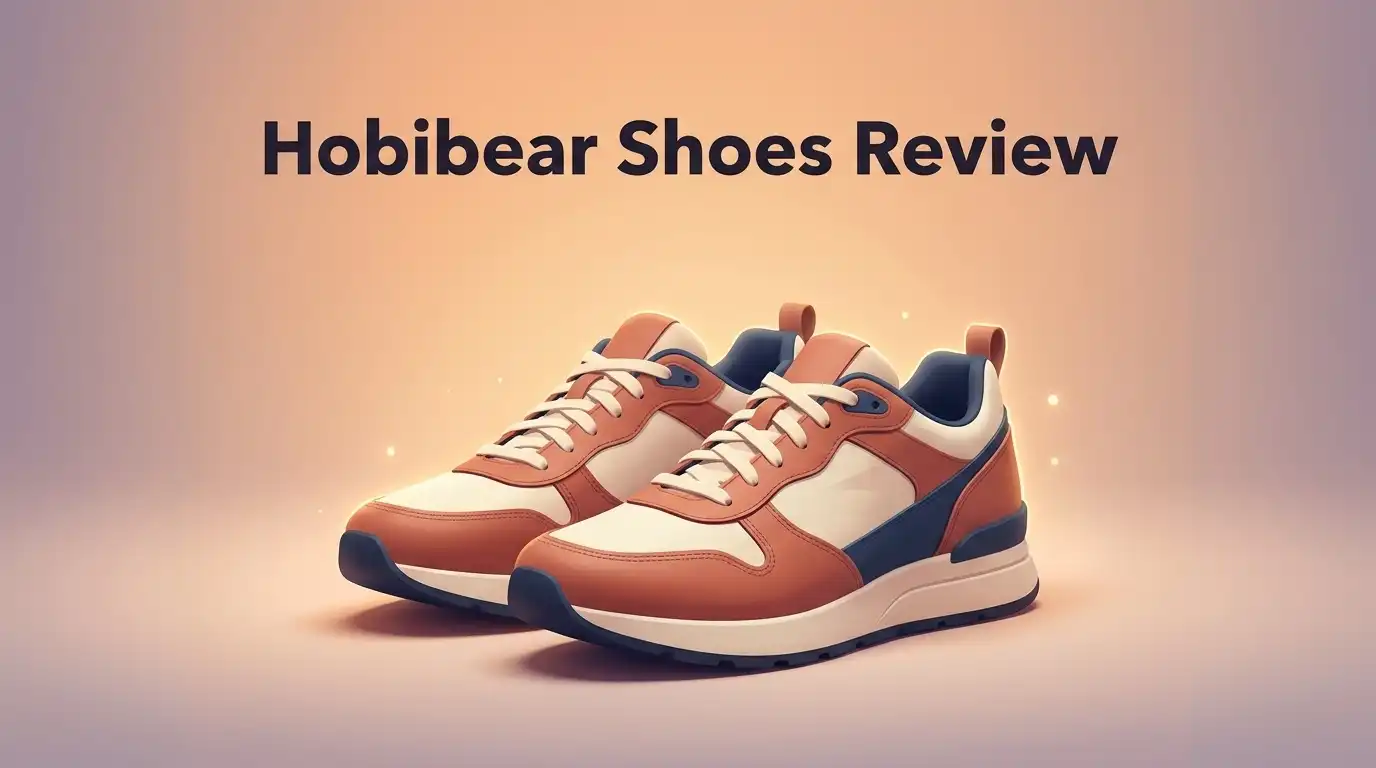
Hobibear Shoes Review 2026: Worth It?
If your little toe has spent the last decade folded under the one beside it, you already know the problem. Most sneakers are shaped like a teardrop, and human feet are not.
Barefoot shoes fix that shape issue, but the well-known brands ask for $120 or more. That price makes “just trying it” a genuinely expensive experiment.
HOBIBEAR sits at the other end of the shelf, usually between $35 and $50. I bought a pair with my own money, wore them daily for months, and read through hundreds of owner reports to see whether cheap actually means bad here.
Short answer: the shoe is better than the price suggests, and the company behind it is worse. Here is the full breakdown.
In a Nutshell
- Genuinely wide toe box. This is the strongest feature. Several long-term wearers measured roughly 11 cm across the forefoot, wider than some Xero and Vivobarefoot models costing three times more.
- Zero drop, but not purist barefoot. The 4mm flexible rubber outsole delivers real ground feel. There is still noticeable toe spring, so barefoot veterans will find it soft.
- The insole is the weak link. Pull out the thin foam sockliner and the shoe flattens out, the toe spring relaxes, and ground feedback improves immediately. Do this on day one.
- Best suited to wide feet, bunions, and transitioning walkers. People with plantar fasciitis or those who rely on arch support should approach carefully or plan to add orthotics.
- Durability is fair, not great. Heavy daily users report tread wearing through at the ball of the foot around the four to six month mark. Light wearers get much longer.
- Buy through Amazon, not the brand site. Return complaints against hobibear.com are frequent and serious. Amazon’s return window removes almost all of the risk.
HOBIBEAR Barefoot Minimalist Zero Drop Sneaker

- [WIDE TOE BOX] Wide toe box for optimum toe space, foot returns to natural shape.
- [ZERO DROP] A non-elevated zero drop heel for proper posture, low-to-the-ground design for perfect...
- [THIN OUTSOLE] Thin to enable you to feel more, provides flexibility without sacrificing style.
Last update on 2026-08-01 / Affiliate links / Images from Amazon Product Advertising API Some of the links on this website are affiliate links, which means that at no additional cost to you, I earn a commission if you click through and make a purchase. I only recommend products and services that I believe will add value to my readers. Thank you for your support!
This is the model most people mean when they say “Hobibear.” It is the unisex mesh sneaker with the wide forefoot, a thin rubber outsole, and a lace closure.
The brand markets it as a full barefoot shoe. That claim is slightly stretched, and I want to be direct about it.
A strict barefoot shoe has zero heel lift, zero toe spring, a flat footbed, and a sole thin enough to read the ground through. This one delivers three of those four things.
The heel and forefoot do sit at the same height. The sole is flexible enough to roll into a tube. The toe box is legitimately generous.
What it adds is a slight upward curve at the toes and a soft insole that undoes some of the flatness. Both are fixable, and I explain how below.
For a first pair, that combination is arguably an advantage. Feet that have lived in cushioned trainers for twenty years rarely enjoy a sudden switch to a 3mm slab of rubber.
Unboxing and First Impressions
The box is plain cardboard with the logo printed on the lid. No tissue paper, no dust bag, no branded extras.
Mine arrived flat-packed with the shoes stuffed with paper, which is standard for this price bracket. There was a faint new rubber and adhesive smell that faded after about two days of airing.


Last update on 2026-04-11 / Affiliate links / Images from Amazon Product Advertising API Some of the links on this website are affiliate links, which means that at no additional cost to you, I earn a commission if you click through and make a purchase. I only recommend products and services that I believe will add value to my readers. Thank you for your support!
Weight is the first surprise. A men’s size 10 lands near 8 ounces per shoe, so picking them up feels closer to lifting a slipper than a sneaker.
The mesh is tightly woven and slightly stiff out of the box. It softens after roughly a week of wear.
Stitching quality is the honest weak point. On my pair the seams were clean, but a meaningful number of buyers report visible glue residue along the midsole line and uneven stitching at the heel.
First step in them is strange in a good way. The floor suddenly feels like information rather than a flat surface, and your toes have nowhere to hide.
Materials and Build Quality
The upper is a synthetic knit mesh on the standard model, with a faux leather version available for wet weather. The outsole is abrasion resistant rubber, roughly 4mm thick with a shallow tread pattern.


Last update on 2026-04-11 / Affiliate links / Images from Amazon Product Advertising API Some of the links on this website are affiliate links, which means that at no additional cost to you, I earn a commission if you click through and make a purchase. I only recommend products and services that I believe will add value to my readers. Thank you for your support!
Inside sits a thin removable foam sockliner. It offers no real arch support, just a barrier between your foot and the outsole stitching.
Here is the honest observation about breathability. The mesh looks airy but it is not perforated, so airflow is moderate rather than excellent.
Several owners in warm climates described feet feeling sealed in during summer. Others in Oregon and Australia reported the same mesh kept rain out well, which is the same property viewed from the other side.
The faux leather variant holds up better than expected. Owners a year in describe no cracking and continued water resistance, though the low cut means deep puddles still win.
Build quality overall reads as competent budget manufacturing. It is not premium, and the brand does not really pretend otherwise once you look past the marketing copy.
Top 3 Alternatives for HOBIBEAR Barefoot Shoes

- Minimalist Sneaker Styling – Canvas uppers deliver a clean, timeless look that pairs easily with...
- Wide Toe Box Design – Provides ample space for your toes to spread naturally, keeping your feet...
- Barefoot-Inspired Everyday Comfort – Combines casual style with the benefits of barefoot footwear...
Last update on 2026-08-01 / Affiliate links / Images from Amazon Product Advertising API Some of the links on this website are affiliate links, which means that at no additional cost to you, I earn a commission if you click through and make a purchase. I only recommend products and services that I believe will add value to my readers. Thank you for your support!
WHITIN Men’s Barefoot Shoes Wide Toe Box Zero Drop Sneakers

- Wide Toe Box: The widened design of the toe provides ample space for the natural stretching and...
- Mesh + Leather Upper: The mesh fabric material provides excellent breathability, promoting airflow...
- Zero-Drop Design: The 6mm thick sole maintains a flat structure from heel to toe, providing a...
Last update on 2026-07-31 / Affiliate links / Images from Amazon Product Advertising API Some of the links on this website are affiliate links, which means that at no additional cost to you, I earn a commission if you click through and make a purchase. I only recommend products and services that I believe will add value to my readers. Thank you for your support!
SAGUARO Barefoot Shoes Wide Toe Box Minimalist Outdoor Sneakers

- Natural Movement Design: Barefoot + minimalist principles with a wide toe box for natural splay...
- Lightweight Performance: Our icon that started it all; multi-purpose athletic shoe
- True to size. Supportive Fit: Breathable mesh upper with moisture-wicking lining
Last update on 2026-07-31 / Affiliate links / Images from Amazon Product Advertising API Some of the links on this website are affiliate links, which means that at no additional cost to you, I earn a commission if you click through and make a purchase. I only recommend products and services that I believe will add value to my readers. Thank you for your support!
Xero Shoes Men’s Prio Barefoot Athletic Sneaker
Sizing and Fit for Wide Feet
Sizing is the single most common complaint, and the reason is that the advice contradicts itself online. Some buyers insist the shoes run small, others swear they run large.
Both groups are right, because fit varies by model. The mesh sneakers tend to run true or slightly large, while the leather and boot styles run noticeably tighter.
Ignore your usual US size and measure your foot in centimetres. Compare that number to the brand chart, then add about 5mm of toe room.
For wide feet and bunions, the forefoot is excellent. The problem area is the midfoot, where the shoe is cut fairly standard.
That means someone with a genuinely wide heel or high instep may find the lacing pulls tight before the shoe feels right. A few owners with B-width heels reported the opposite issue, with the shoe swimming around the back.
One recurring flaw deserves a warning. Some pairs have an internal seam near the pinky toe that rubs, and trimming it rarely helps.
Ground Feel, Toe Spring and That Removable Insole
This section matters more than any other, so I will be specific. Out of the box, the shoe feels softer than a barefoot shoe should.
The reason is the insole. It is thin, but it lifts your foot just enough to blunt sensation and it holds the toe box in its upward curve.
Take it out. The sole immediately flattens, the toe spring relaxes under your body weight, and ground feedback jumps significantly.
After removing mine, I could feel the seams between pavement slabs and the small height differences at kerbs. That is the whole point of the category.
The trade-off is that the interior stitching becomes slightly noticeable underfoot. Most people stop registering it within a week, but sensitive soles may prefer to keep the insole in.
Compared to the reference points, these land between Vivobarefoot and Lems on the cushioning scale. More padding than Vivo, less than Lems.
For anyone still transitioning away from supportive trainers, that extra few millimetres is helpful rather than a defect.
Comfort Across a Full Day on Your Feet

Last update on 2026-09-12 / Affiliate links / Images from Amazon Product Advertising API Some of the links on this website are affiliate links, which means that at no additional cost to you, I earn a commission if you click through and make a purchase. I only recommend products and services that I believe will add value to my readers. Thank you for your support!
I wore these for a normal working week, which meant roughly five miles of walking per day on concrete and tile. Here is how that went.
The first three days produced mild calf soreness. That is expected with any zero drop shoe, because your calves and Achilles take load that a raised heel used to absorb.
By week two the soreness disappeared and the shoes became the pair I reached for automatically. The toe splay alone made my usual sneakers feel like a vice.
Long days on hard floors are the real test. Around hour seven my feet felt tired in a way that cushioned shoes prevent, and I think that is honest to report rather than something to hide.
People who stand still for long periods on concrete tend to struggle most. Walkers do far better than standers.
One quirk nobody mentions in the marketing: these squeak loudly on polished indoor floors. In a quiet shop or office, it is genuinely noticeable.
Durability, Traction and Breathability
Durability depends entirely on your mileage. A wearer covering five miles daily on rough concrete reported the tread at the ball of the foot worn smooth at four months.
Casual wearers get considerably longer. Several owners are past a year on the leather models with no visible failure.
At roughly $40, a four month lifespan under punishing use is defensible. At Vivobarefoot prices it would not be.
Traction on wet pavement is better than expected, largely because your whole foot contacts the ground. Reports from Oregon and Melbourne are consistently positive on rain performance.
The exception is smooth indoor surfaces with standing water. One owner nearly went down on a single water drop on tile, so treat the non-slip claim as approximate rather than certified.
Breathability is the weakest performance area. The mesh moves some air, but it is not the ventilated knit the product photos imply, and hot feet are a legitimate complaint in summer.
Pros and Cons
Pros
- The wide toe box is the real thing, measuring wider than several premium barefoot brands and genuinely relieving toe crowding and bunion pressure.
- Zero drop geometry encourages better posture and midfoot landing, and the 4mm flexible sole rolls up completely for packing.
- Price sits near $35 to $50, which makes testing the barefoot category affordable instead of a financial commitment.
- Extremely lightweight, around 8 ounces per shoe, so long walks feel less fatiguing than the sole thickness suggests.
- Removable insole lets you dial ground feel up or down, and removing it improves the shoe measurably.
- Good wet weather grip outdoors, and the faux leather version resists rain well.
Cons
- Toe spring is present and the stock insole is not flat, so purists will find the design compromised.
- Internal seams near the pinky toe rub on some pairs and cannot always be fixed.
- Breathability is limited, with hot feet reported in warm conditions.
- Soles wear quickly under heavy daily mileage, often within four to six months.
- Glue residue and uneven stitching appear on a noticeable share of pairs.
- Direct customer service and returns are widely described as poor.
Who These Shoes Are Not For
I want to be clear about the people who should walk past this pair. Buying the wrong shoe is worse than buying no shoe.
If you have plantar fasciitis, severe overpronation, or diabetic neuropathy, a zero drop minimalist sole is not a starting point. Speak with a podiatrist before removing support your feet currently depend on.
If you need arch support to get through a shift, these will not provide it. The insole is padding, not structure, though the wide interior does accept slim orthotics if you accept the compromise.
Strict barefoot wearers coming from Vivobarefoot or Be Lenka will likely be disappointed. The toe spring and softer sole feel like a step backwards.
Anyone who stands in one place for eight hours on concrete should also think twice. Walking in these is comfortable, standing still is not.
Finally, if a shoe that lasts three years matters more to you than a shoe that costs $40, buy once at a higher price instead.
Buying Direct Versus Amazon and the Final Verdict
This is the part that changes my recommendation, so read it before you order. The shoes and the shopping experience deserve separate scores.
Buyer reports about hobibear.com are consistently alarming. Returns require emailing rather than a portal, and the standard reply offers a 20% partial refund if you keep or regift shoes that do not fit.
Multiple people describe being stalled for weeks over a return address, and some report having their emails blocked entirely. Chargebacks come up repeatedly in these accounts.
Amazon removes that problem completely. Same product, standard return window, no negotiation over shoes that do not fit.
So my verdict splits neatly. The shoe earns a solid recommendation as an affordable entry into wide toe box footwear, and the direct sales channel earns none.
Pull the insole out, size by centimetres, expect four to six months of hard use, and buy where returns actually work. Do that and this is one of the better $40 purchases your feet will make this year.
Expert FAQs
Are HOBIBEAR shoes true barefoot shoes?
Partly. They are zero drop with a genuinely wide toe box and a flexible 4mm sole, which satisfies most of the definition.
They also have mild toe spring and a slightly raised insole, which strict definitions exclude. Removing the insole brings them much closer to the real thing.
Do HOBIBEAR shoes run small or large?
It depends on the model. The mesh sneakers run true to slightly large, while the leather styles and boots run smaller.
Measure your foot in centimetres and use the brand chart rather than your usual size. Adding roughly 5mm of toe room gives the best result.
How long do HOBIBEAR shoes last?
Heavy daily walkers on concrete report the outsole wearing thin around four to six months. Casual wearers routinely pass a year, and the faux leather versions tend to outlast the mesh.
Are these good for plantar fasciitis or flat feet?
Not as a first choice. Minimalist soles remove the support these conditions often rely on, and switching too fast can worsen symptoms.
Anyone with an existing foot condition should get professional advice before transitioning to zero drop footwear.
Should I remove the insole?
Yes, if you want real ground feel. The shoe flattens, the toe spring relaxes, and flexibility improves noticeably.
Keep the insole if your soles are sensitive or if you are new to thin shoes.
Where should I buy HOBIBEAR shoes?
Amazon, for the return policy alone. The brand’s own site has a long record of difficult refunds, partial refund offers, and unresponsive support.
Is HOBIBEAR the same as WHITIN?
They are separate labels producing very similar shoes from the same manufacturing base. Fit and shape differ slightly, so it is worth comparing size charts rather than assuming they match.

Mia Smith is the founder of Shoe Storyteller, a blog that celebrates the art and stories behind shoes. With a passion for fashion and a flair for storytelling, Mia brings a unique perspective to the world of footwear.