Groundz Grounding Shoes Review 2026: Worth Buying?
Walking barefoot on wet grass feels good. Most people know that feeling. Groundz built an entire footwear brand around it. The company makes leather shoes, sneakers, and sandals with a copper plug or carbon infused outsole that lets electrons pass from the earth into your feet.
I wore Groundz shoes daily for several weeks. I tested them on grass, on damp soil, on concrete, and on office carpet. I checked them with a grounding tester. I also wore them to a dinner where nobody guessed they were wellness shoes.
This review covers the unboxing, the fit, the sizing quirks, the real comfort level, and the things Groundz gets wrong. Grounding footwear sits in a crowded market in 2026, and the price tags keep climbing.
In A Nutshell:
- Build quality is genuinely high. Groundz uses vegetable tanned leather, water buffalo soles, beeswax soaked cotton thread, and hand stitching. The Clays models come from a Yemeni shoemaking tradition that goes back roughly 700 years. These are not mass produced sneakers with a copper screw glued in.
- The grounding connection works, but only on real ground. A copper rivet or carbon plug does nothing on your living room floor. You need grass, soil, sand, unsealed concrete, or damp pavement. Indoor wear gives you zero grounding effect.
- Sizing runs true, though the break in period is real. Leather models feel stiff for the first two or three wears. Groundz recommends sizing up if you fall between sizes or plan to wear socks.
- The price stings. Models range from roughly $120 to $210. You pay a premium over standard barefoot shoes that offer similar foot health benefits without the copper.
- The science is thinner than the marketing. Grounding research exists, but sample sizes are small and results are early. Treat the health claims as promising rather than proven.
- Best for people who already want barefoot shoes. If you like wide toe boxes and flat soles, Groundz adds grounding on top. If you hate minimalist footwear, the copper will not change your mind.
What Are Groundz Grounding Shoes?

- 【Breathable and Elastic】 Upper is made of ultra-light stretchy mesh and flexible like socks, 3D...
- 【Anti-collision toe cap】The toe cap adopts a wrapped design, which effectively protects the toes...
- 【Anti-slip grip sole】Women's hiking shoes are made of super wear-resistant rubber, and the...
Last update on 2026-08-31 / Affiliate links / Images from Amazon Product Advertising API Some of the links on this website are affiliate links, which means that at no additional cost to you, I earn a commission if you click through and make a purchase. I only recommend products and services that I believe will add value to my readers. Thank you for your support!
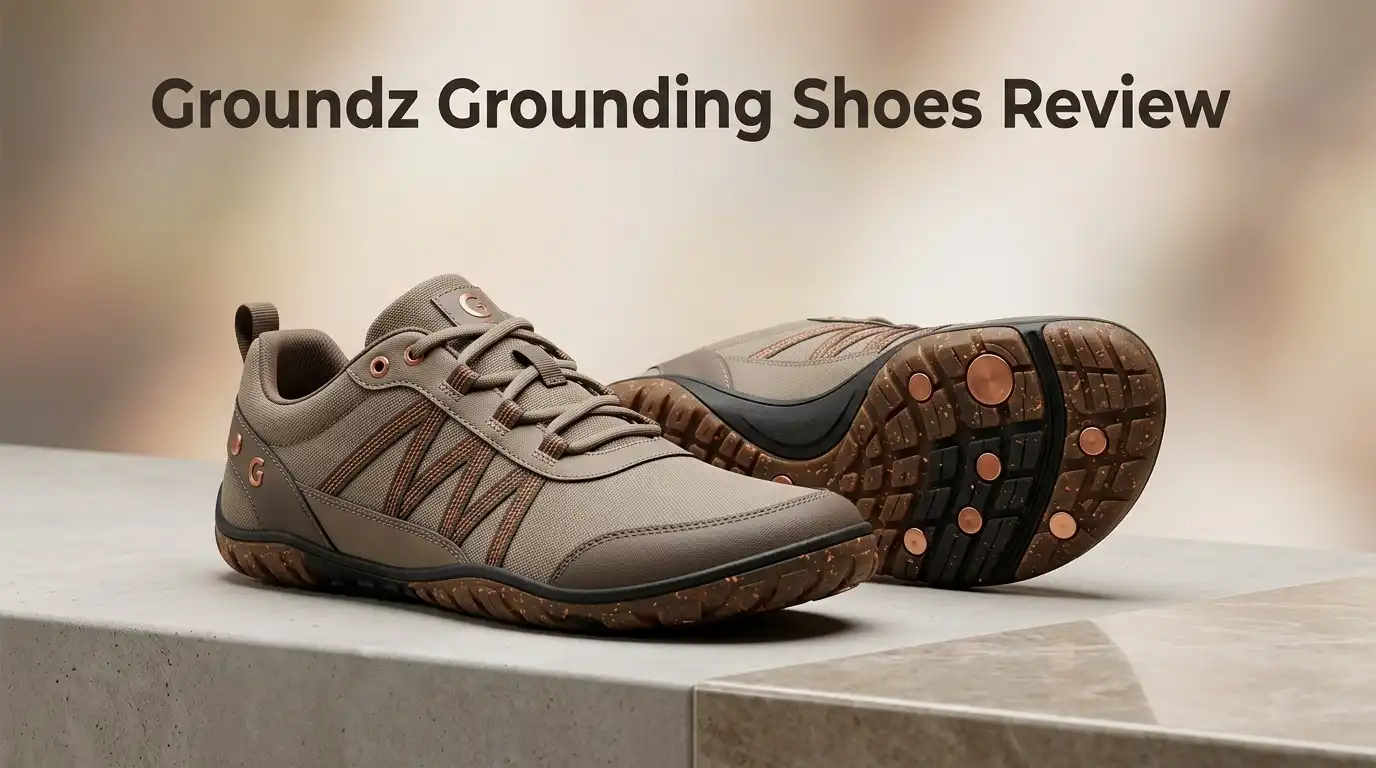
Groundz makes footwear that connects your body to the earth through a conductive pathway in the sole. The brand combines two ideas into one product: barefoot shoe design and earthing.
The barefoot part means three things. The shoes have a wide toe box so your toes splay naturally. They have zero drop, meaning your heel sits at the same height as your forefoot. They have thin flexible soles so you feel the texture of the ground under you.
The grounding part comes from materials. Groundz uses copper rivets in the leather models. Copper conducts electrons well and resists bacteria. Newer sneaker models use a carbon infused rubber outsole instead, which spreads the conductive path across a wider surface area.
Some styles skip metal entirely and rely on vegetable tanned leather soles. Leather conducts once it picks up moisture from your feet or from damp ground. This is the oldest grounding technology on earth, and it worked fine for a few thousand years.
The company also applies a natural clay paste between the sole and the upper instead of synthetic glue. Synthetic glue insulates. Clay does not. That detail tells you the design thinking runs deeper than sticking a screw through a rubber sole.
Groundz sells men’s slip ons, women’s slip ons, sneakers, and sandals. Most styles land somewhere between casual and dressy, which is unusual for this category.
Unboxing The Groundz Shoes
The delivery box was plain brown cardboard. No branding overload. Inside, the shoes came wrapped in a recyclable hemp drawstring bag with a small printed card explaining the grounding concept.
I appreciated the bag. It doubles as a travel pouch and it does not end up in the bin like tissue paper does. The card was short and readable rather than a twelve page manifesto.
The first thing I noticed was the smell. Real vegetable tanned leather has a warm earthy scent that synthetic uppers never produce. It smells like a saddle shop, not a shoe store.


Last update on 2026-04-11 / Affiliate links / Images from Amazon Product Advertising API Some of the links on this website are affiliate links, which means that at no additional cost to you, I earn a commission if you click through and make a purchase. I only recommend products and services that I believe will add value to my readers. Thank you for your support!
The stitching stood out next. Cotton thread soaked in beeswax runs around the perimeter of the sole in an even line. You can see the hand work. A few stitches sat slightly uneven, which is normal for handmade goods and honestly adds character.
The copper rivet sits flush in the sole. I ran my finger over it and felt nothing sharp. Once the shoes were on, I could not detect it at all underfoot.
Weight surprised me. My pair came in at around 470 grams for a size nine, which is heavier than a knit barefoot sneaker but lighter than any dress shoe I own.
No insole card, no shoe trees, no dust bags. The presentation is modest. Some buyers spending $200 will want more ceremony. I preferred the restraint.
How The Grounding Technology Actually Works

- Heel-Covered Conductive Fabric: Features metallic conductive material on the heel (the key contact...
Last update on 2026-08-31 / Affiliate links / Images from Amazon Product Advertising API Some of the links on this website are affiliate links, which means that at no additional cost to you, I earn a commission if you click through and make a purchase. I only recommend products and services that I believe will add value to my readers. Thank you for your support!


Last update on 2026-04-11 / Affiliate links / Images from Amazon Product Advertising API Some of the links on this website are affiliate links, which means that at no additional cost to you, I earn a commission if you click through and make a purchase. I only recommend products and services that I believe will add value to my readers. Thank you for your support!
Here is the basic physics without the wellness language. The earth carries a mild negative charge. Your body accumulates positive charge from daily activity and from surrounding electrical fields. When a conductive path connects your skin to the ground, electrons move and the charge equalizes.
Rubber and plastic soles block that path. Almost every shoe sold since the 1960s insulates you completely. Groundz reopens the circuit.
In the leather models, the path runs like this: your foot touches the leather lining, the lining meets a copper rivet, the rivet passes through the buffalo leather outsole, and the outsole touches the earth. Moisture from your feet improves conductivity along the way.
In the carbon models, conductive rubber replaces the single rivet. The advantage is surface area. A carbon outsole grounds across the whole footprint instead of one small point.
I tested mine with a simple grounding tester and a multimeter. On damp grass, the reading dropped immediately. On wet soil, same result. On dry indoor tile, nothing happened. On painted or sealed concrete, nothing happened.
This is the honest limitation nobody prints on the box. Grounding shoes only work when you stand on a conductive natural surface. Asphalt roads, sealed floors, wooden decks, and carpet all block the connection.
If your day runs office to car to house, these shoes will spend most of their life ungrounded. You would need to plan walks on grass or dirt to get the intended effect.
Top 3 Alternative for Groundz Grounding Shoes
No products found.
Vivobarefoot Primus Lite Knit Men’s Barefoot Shoes

- Natural Movement Design: Barefoot + minimalist principles with a wide toe box for natural splay...
- Lightweight Performance: A sleek take on our icon; multi-purpose performance trainer
- True to size. Supportive Fit: Breathable mesh upper with moisture-wicking lining
Last update on 2026-08-31 / Affiliate links / Images from Amazon Product Advertising API Some of the links on this website are affiliate links, which means that at no additional cost to you, I earn a commission if you click through and make a purchase. I only recommend products and services that I believe will add value to my readers. Thank you for your support!
Xero Shoes Men’s Prio Neo Barefoot Training Shoes

- GROUNDING TECHNOLOGY: Features a proprietary conductive carbon and rubber plug positioned under the...
- CONTOURED SUPPORT: Designed with a contoured arch support for comfort during casual wear, with a...
- VERSATILE STYLE: Feminine black flip flops suitable for various outdoor settings including beaches...
Last update on 2026-08-31 / Affiliate links / Images from Amazon Product Advertising API Some of the links on this website are affiliate links, which means that at no additional cost to you, I earn a commission if you click through and make a purchase. I only recommend products and services that I believe will add value to my readers. Thank you for your support!
HARMONY 783 Women’s Plug Flip Flop
Comfort And Wearing Experience
The first wear was stiff. The buffalo leather sole barely flexed. Walking felt like wearing a thin board strapped to my foot, and I wondered whether I had made a mistake.
By day three, the leather started to soften. By the end of week one, the sole flexed at the ball of my foot and the upper had molded around my instep. Leather shapes itself to your foot in a way that knit uppers never do.
Ground feel is decent but not extreme. The stack height sits around 10mm, so you sense texture without feeling every pebble. Gravel paths were comfortable. Sharp rocks were fine.
I wore these for a full eight hour day on my feet, mostly walking city streets. My feet were tired at the end, but no hot spots, no rubbing, no arch ache. The wide toe box gives your toes room to spread on every step, which reduces that squeezed feeling by evening.
Breathability impressed me most. Water buffalo leather is porous. I wore the shoes without socks for a week straight in warm weather and there was no odor. That alone justifies part of the price for me.
Cold weather is a different story. Thin leather soles transmit cold from the pavement straight into your feet. In winter, I needed wool socks and the fit tightened noticeably. Plan for that when you order.
Sizing And Fit Guidance
Groundz footwear generally runs true to size, but there are wrinkles worth knowing.
The Clays leather models should feel snug, even slightly tight, on the first fitting. Leather stretches. A pair that feels perfect on day one will feel loose in a month. The brand advises sizing up only if you are between sizes or you plan to wear thick socks regularly.
The sneaker models fit medium width through the midfoot with a wide forefoot. If you have a high volume foot, you will still find room. If you have a narrow foot, the toe box may feel cavernous at first.
Measure your foot before ordering. Stand on paper, trace the outline, measure heel to longest toe in centimeters, then add about 5mm of wiggle room. Compare that number to the insole length on the size chart rather than guessing from your usual shoe size.
One issue I hit: my foot felt slightly wider than the sole itself during the first few days. The upper leather overhung the edge a little. That resolved as the shoe broke in, but it looked odd in photos at the start.
Half sizes are limited. The range runs roughly EU 23 to 48, which covers kids through large adult sizes, but not every model offers every size.
Groundz offers free standard shipping and returns for mailing list members. Sign up before you buy. That turns a risky size gamble into a low risk trial.
Materials And Build Quality
This is where Groundz earns its reputation.
The upper uses cow leather, either full vegetable tanned or semi vegetable tanned depending on the style. Options include suede, nubuck, and smooth leather. Nubuck ages beautifully and develops a patina after a few months.
The lining is soft vegetable tanned leather that sits directly against your skin. No synthetic mesh, no foam padding, no chemical smell.
The sole is water buffalo leather, tanned naturally. It is porous, antimicrobial, and it molds to your foot over time. This is the same construction principle used in traditional handmade footwear for centuries.
Stitching uses 100% cotton thread soaked in beeswax. Hand stitched soles can be resoled by a cobbler. Glued soles usually cannot. That difference matters if you expect these to last years.
Dyes are chrome free, water based, and vegetable derived. If you have sensitive skin or you avoid chrome tanning for environmental reasons, this matters.
Each pair takes days to complete and comes from small batch production. I found one loose thread on my left shoe and slightly different leather grain between the two shoes. Handmade means variation, not perfection. Buyers expecting factory uniformity should know that going in.
Newer sneaker models use cork, wool, and castor bean derived materials alongside the carbon rubber outsole. The material story stays consistent across the range.
Style And Everyday Versatility
Most barefoot shoes look like barefoot shoes. Wide toes, technical fabric, obvious minimalist styling. Your coworkers notice.
Groundz went a different direction. The slip on Clays read as casual leather loafers. I wore mine with dark jeans and nobody commented. The reviewer I researched wore his to a wedding and collected compliments.
The color range covers pewter, onyx, brown, and a few natural tones. Nothing loud. Nothing branded across the side.
The sneakers look closer to standard minimalist trainers, though the toe box still gives them a slightly rounded silhouette. From three feet away they pass as normal shoes.
Where they struggle is formal wear. These will not work with a suit. The sole line is too visible and the shape is too round. If you need dress shoes for an office, Groundz does not solve that problem yet.
They also look a little out of place at the gym. The leather models are not training shoes. Save them for walking, commuting, casual outings, and light outdoor use.
Sandal options extend the range into summer, and the women’s slip on sandals ground the same way the shoes do.
Overall the styling is the strongest argument for Groundz over cheaper grounding footwear. You get to ground yourself without looking like you are trying to ground yourself.
What Groundz Does Not Do Well
Every honest review needs this section. Here is where the brand falls short.
The soles are stiff. Compared with a flexible barefoot sneaker, the leather Clays feel rigid. They loosen with wear, but the outsole never becomes truly bendy. If you want to roll the shoe into a ball, look elsewhere.
Traction is limited. Smooth leather soles slip on wet tile, polished floors, and slick surfaces. I had two minor slides on wet supermarket flooring. Watch your step in rain.
Wet weather ruins the experience. Leather soles absorb water. They take a long time to dry and they can stain. These are not all weather shoes.
Grounding is conditional. As covered earlier, you need natural ground contact. Marketing images of people walking city streets are misleading, since most urban surfaces block the connection.
The health claims outrun the evidence. Studies on grounding are small, often funded by industry, and rarely replicated at scale. Reduced inflammation and better sleep are reported outcomes, not established facts.
Break in takes patience. Expect two to three weeks before the shoes feel natural. Some buyers return them during week one and never reach the good part.
Price is steep. Two hundred dollars buys a lot of footwear. You are paying for handmade construction and grounding, and only you can decide whether that is worth it.
Pros And Cons Of Groundz Grounding Shoes
Here is the balanced summary in list form.
Pros
- Genuine handmade construction with vegetable tanned leather, buffalo soles, and hand stitching that can be resoled by a cobbler
- Wide toe box, zero drop platform, and minimal toe spring support natural foot mechanics and better posture
- Copper rivet or carbon outsole creates a real conductive path, confirmed with a grounding tester on natural surfaces
- Exceptional breathability with no odor even after a full week of sockless wear
- Styling passes as normal casual footwear rather than obvious wellness gear
- Natural clay paste instead of synthetic glue keeps the whole shoe conductive
- Chrome free dyes and sustainably sourced materials suit buyers who care about environmental impact
- Free shipping and returns for mailing list members lowers the risk of a sizing mistake
Cons
- Price sits between $120 and $210, well above standard barefoot shoes
- Stiff outsole requires a two to three week break in period
- Grounding only works on grass, soil, sand, or unsealed concrete, never indoors
- Leather soles perform poorly in rain and offer limited grip on wet smooth surfaces
- Thin soles transmit cold in winter conditions
- Health benefit claims rest on early and limited research
- Handmade variation means small cosmetic inconsistencies between pairs
- No genuinely formal option for business dress codes
Price And Value Assessment
Groundz pricing spans roughly $120 at the low end to about $210 for premium models. The Clays slip ons sit near $179. The BIOS sneakers land around $200.
Compare that to alternatives. A standard barefoot sneaker from a mainstream brand costs $100 to $150. A pair of grounding shoes from budget sellers on Amazon costs $40 to $70. A copper rivet kit to modify your own shoes costs under $20.
So what does the extra money buy?
Construction quality accounts for most of it. Hand stitched, resoleable, small batch leather footwear is expensive to make anywhere in the world. Machine glued shoes are not.
Materials account for the rest. Vegetable tanned leather, water buffalo hide, and chrome free dyes cost more than synthetic mesh and EVA foam.
The grounding function itself adds very little cost. Copper is cheap. The premium is for the shoe, not the copper.
Value depends on your wear pattern. If you wear these five days a week for three years and resole them once, the cost per wear drops below fifty cents. If they sit in a closet because you found them stiff, you wasted your money.
Wait for sales. Groundz runs discounts regularly, and affiliate codes floating around review sites shave another five percent off. Sign up for the mailing list first for the free returns benefit.
Who Should Buy These Shoes
Groundz suits specific people very well and other people not at all.
Buy them if you already wear barefoot shoes and want grounding added. You know what a wide toe box feels like. You have adapted to zero drop. Adding a copper plug costs you nothing in comfort.
Buy them if you spend real time outdoors on grass, soil, or sand. Gardeners, dog walkers, people with yards, and anyone who takes daily park walks will actually use the grounding function.
Buy them if you value handmade leather goods. The construction alone appeals to people who buy Goodyear welted boots and keep them for a decade.
Skip them if you need cushioning. People with plantar fasciitis, heel pain, or certain foot conditions may struggle with thin flat soles. Talk to a podiatrist before switching.
Skip them if you live in a rainy climate and need one pair of shoes for everything. Leather soles and wet weather do not mix.
Skip them if your budget is tight. A cheaper barefoot shoe delivers most of the foot health benefit. You can add a copper rivet yourself for a few dollars.
Skip them if you expect a medical outcome.** Grounding may help you feel better. It is not a treatment. Anyone hoping to resolve a real health condition should see a doctor rather than buy footwear.
Care And Maintenance Tips
Natural leather needs care. These are not throw in the washer shoes.
Mix a simple cleaner at home. Combine one cup of warm water with a few drops of mild soap and two drops of vinegar. Dampen a cloth in the mixture, wring it out well, and wipe the leather. Let the shoes air dry away from direct heat.
Never machine wash them. Never put them near a radiator or in a dryer. Heat cracks vegetable tanned leather permanently.
Condition the uppers every two or three months with a natural leather conditioner. This keeps the leather supple and stops it drying out.
Keep the copper rivet clean. Oxidation builds a dull layer that reduces conductivity. A quick rub with a cloth restores the surface. Some owners use a dab of lemon juice and salt for heavier tarnish, then wipe it off completely.
Rotate your pairs if you own more than one. Leather needs a day to dry out between wears, and rotation doubles the lifespan of both pairs.
Store them in the hemp bag they arrived in. Stuff the toes with paper to hold the shape.
When the sole finally wears through, take them to a cobbler. Hand stitched soles can be replaced, which is the whole point of this construction method. Most modern shoes cannot be repaired at all.
Final Verdict On Groundz In 2026
Groundz makes good shoes. That is the headline.
The leather work is genuine, the barefoot design principles are sound, and the grounding path functions exactly as described when you stand on natural ground. The styling lets you wear wellness footwear without announcing it.
The problems are also real. The soles are stiff. Rain is a genuine issue. Grip on wet smooth surfaces disappoints. The price sits high for what is, at the material level, a leather slip on with a copper screw.
The biggest caveat is expectations. Grounding research remains early and limited. Reported benefits like reduced inflammation, better sleep, and lower stress come from small studies. Some people notice a clear difference. Others feel nothing at all. There is no way to know which group you fall into until you try.
My honest read: buy Groundz for the shoe, and treat the grounding as a free bonus. If you would happily pay $180 for handmade vegetable tanned leather barefoot slip ons, you will be pleased. If the copper rivet is the only reason you are interested, cheaper options exist.
Score: 8 out of 10 for build quality. 6 out of 10 for value. 7 out of 10 overall.
Use the free return policy. Wear them for two weeks. Then decide.
Frequently Asked Questions
Do Groundz grounding shoes actually work?
Yes, on the right surfaces. A grounding tester confirms the connection on grass, damp soil, sand, and unsealed concrete. On carpet, tile, asphalt, sealed concrete, and wooden floors, the shoes provide no grounding at all. The technology is real but conditional.
How long do Groundz shoes take to break in?
Expect two to three weeks of regular wear. The leather sole feels stiff for the first few days. The upper molds to your foot faster than the sole softens. Wearing them for short periods at first helps the process.
Should I size up in Groundz shoes?
Order true to size unless you fall between sizes or plan to wear thick socks. Leather models stretch, so a snug initial fit becomes comfortable. Measure your foot in centimeters and compare it to the insole length on the size chart.
Can I wear Groundz shoes in the rain?
Not really. Leather soles absorb water, dry slowly, and can stain. Grip on wet smooth surfaces is also poor. Keep a separate pair of waterproof shoes for wet days.
Are grounding shoes scientifically proven?
The research is early. Small studies report reduced inflammation markers, improved sleep, and lower stress hormones. Sample sizes are limited and independent replication is rare. Treat the claims as promising rather than settled science.
How much do Groundz shoes cost?
Prices run from roughly $120 to $210 depending on the model. The Clays slip ons sit around $179 and the BIOS sneakers around $200. Sales appear regularly, so watching for a discount pays off.
Can Groundz shoes be resoled?
Yes. The hand stitched construction means a cobbler can replace the sole when it wears through. This is a real advantage over glued shoes, which usually cannot be repaired.
Do you need socks with Groundz shoes?
No. The water buffalo leather is porous and antimicrobial, so it disperses sweat and prevents odor. Going sockless also improves the grounding connection since your skin contacts the conductive lining directly. Socks reduce that contact unless they are conductive.

Mia Smith is the founder of Shoe Storyteller, a blog that celebrates the art and stories behind shoes. With a passion for fashion and a flair for storytelling, Mia brings a unique perspective to the world of footwear.