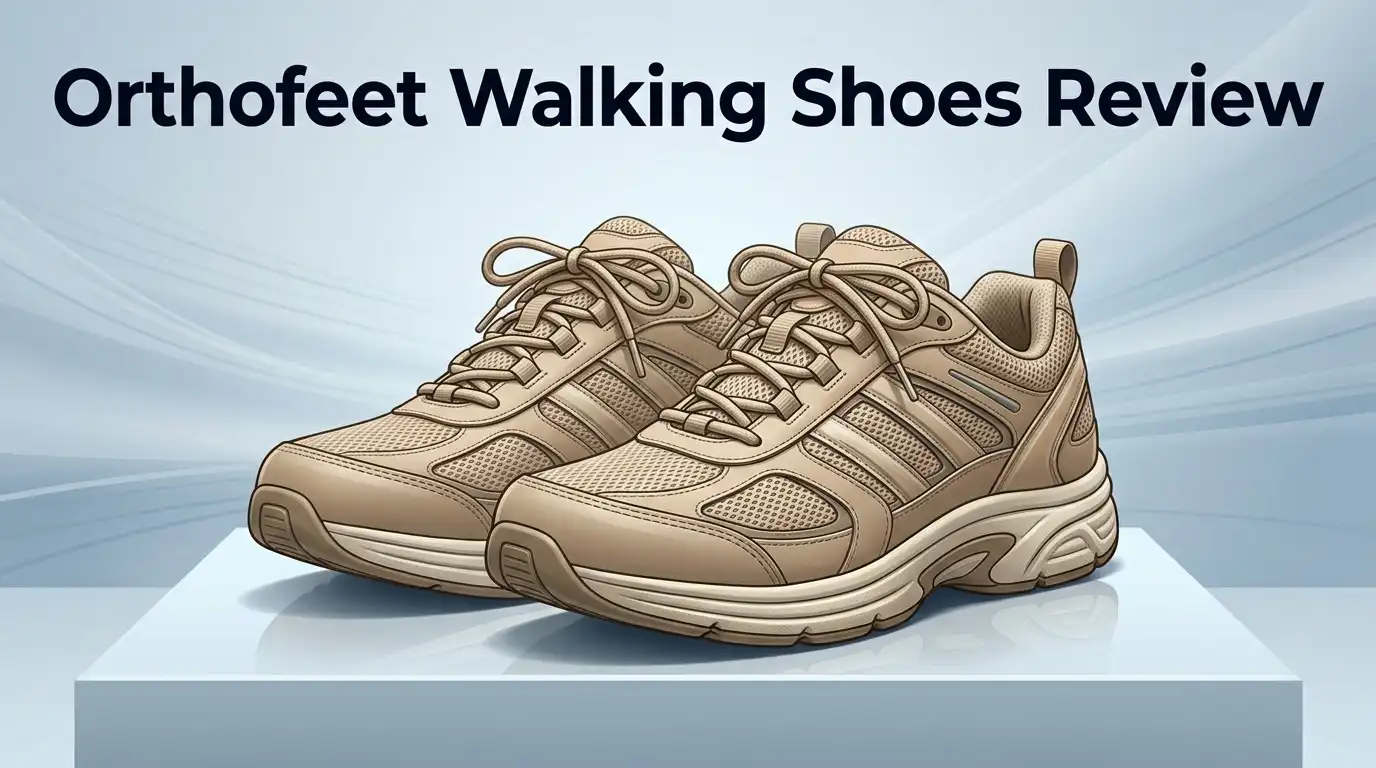
Orthofeet Walking Shoes Review 2026: Worth It?
Foot pain changes everything. It shortens your walks, ruins your errands, and makes a simple trip to the grocery store feel like a chore.
Orthofeet built its whole brand around fixing that problem. Two biomechanical engineer brothers started the company in 1985 with one goal: pain free walking for people whose feet hurt.
I spent weeks walking in Orthofeet shoes, reading through hundreds of owner reports, and comparing them against the big names like Brooks, Skechers, and Hoka.
In A Nutshell:
- Orthofeet builds medical grade comfort shoes, not fashion sneakers. The support is genuinely excellent. Every pair uses the Ortho Cushion system, which combines a contoured orthotic insole, a deep heel cup, anatomical arch support, and a mild rocker sole. Your foot rolls forward instead of slapping down.
- The customization kit is the standout feature. Each pair ships with removable insoles, two fitting spacers of different thickness, and small plastic arch boosters. You adjust the internal volume and arch height yourself. No other mainstream brand includes this much tuning hardware.
- Sizing runs generous and inconsistent between models. The shoes are built for swelling, orthotics, and foot deformities. Narrow feet often swim inside them. Expect to try two sizes or widths before you find your match.
- Durability is the weak spot. Owners regularly report the outsole and upper wearing faster than a Brooks or New Balance walking shoe at a similar price. High mileage walkers notice it first.
- The 60 day wear test removes most of the risk. Orthofeet lets you wear the shoes outdoors and still return them for a full refund within 60 days. That policy is more generous than almost any competitor.
- Best for daily walkers with foot conditions. Skip Orthofeet if you run, hike rough trails, or want a slim profile shoe.
What Are Orthofeet Walking Shoes?

- Breathable Stretch Knit Upper: Lightweight fabric flexes and moves with your foot's natural shape...
- Seam-Free Interior Comfort: Smooth, padded inner lining eliminates friction and pressure points...
- Designed for Relief: Cushioning and arch support help ease plantar fasciitis, diabetes, bunions...
Last update on 2026-09-01 / Affiliate links / Images from Amazon Product Advertising API Some of the links on this website are affiliate links, which means that at no additional cost to you, I earn a commission if you click through and make a purchase. I only recommend products and services that I believe will add value to my readers. Thank you for your support!
Orthofeet makes therapeutic footwear for people whose feet hurt. The company sits in a narrow space between medical supply shoes and regular athletic sneakers. It leans much closer to the medical side.
Every walking shoe in the lineup shares the same design skeleton. You get an anatomical arch support molded into a removable orthotic insole. You get a deep heel cup that cradles the fat pad under your heel bone. You get a dual density midsole that absorbs shock from heel to toe. You get a mild rocker sole that pushes your foot into the next step.
The uppers matter just as much. Orthofeet uses seam free interiors with soft padded linings. This detail sounds minor until you have diabetes, neuropathy, or thin skin. Seams create friction. Friction creates blisters. Blisters on a neuropathic foot become a medical emergency.
The toe boxes run wide and deep. Bunions, hammertoes, and swollen forefeet get room instead of pressure. Most styles come in medium, wide, and extra wide.
The brand splits its walking shoes into laced models, hands free slip on models, and stretch knit models. Popular names include the Coral and Kita for women and the Edgewater and Sprint for men. Prices typically land between 100 and 160 dollars depending on the model and any active promotion.
Orthofeet Coral Orthopedic Women Sneakers
The Coral is the women’s model most people land on first, and for good reason. It sells thousands of pairs a month and shows up in podiatrist recommendation lists over and over.
The upper uses a water repellent stretch knit. It flexes around bunions and bony spots instead of pressing on them. Orthofeet calls this pressure free curve technology, which is marketing language for a simple idea: the fabric moves with your foot shape rather than forcing your foot into a fixed mold. The knit breathes well in warm weather and sheds light rain without soaking through.
Weight in a size 7 medium sits around 9.7 ounces. That is not featherlight, but it is far lighter than the clunky orthopedic shoes of the past.
The heel to toe drop measures roughly 15.7mm. This is a high drop by modern standards. Runners and anyone used to low drop shoes will feel the forward tilt immediately. Walkers with Achilles tightness or plantar fasciitis often love it, because the raised heel takes tension off the plantar fascia.


Last update on 2026-04-11 / Affiliate links / Images from Amazon Product Advertising API Some of the links on this website are affiliate links, which means that at no additional cost to you, I earn a commission if you click through and make a purchase. I only recommend products and services that I believe will add value to my readers. Thank you for your support!
The Coral includes the arch booster inserts and fitting spacers in the box. Owners with wider feet praise the room. Owners with narrow heels report slipping and need the spacers to fill the gap.
Cushioning is soft and forgiving underfoot. Long shifts on hard floors feel noticeably better than in a flat soled sneaker.
Orthofeet Edgewater Orthopedic Men Walking Shoes

- Breathable Stretch Knit Upper: Lightweight fabric flexes with your foot for a relaxed, pressure-free...
- Cover More Miles with Less Pain: Advanced cushioning system supports every step, plus extra depth...
- Designed for Relief: Cushioning and arch support help ease plantar fasciitis, diabetes, bunions...
Last update on 2026-09-01 / Affiliate links / Images from Amazon Product Advertising API Some of the links on this website are affiliate links, which means that at no additional cost to you, I earn a commission if you click through and make a purchase. I only recommend products and services that I believe will add value to my readers. Thank you for your support!
The Edgewater is the men’s counterpart and the model I recommend most for guys new to the brand.
It uses a stretchable, breathable knit upper over the same Ortho Cushion platform. The lacing runs traditional, so you can dial in tension across the midfoot. Men with high insteps appreciate that control. The Edgewater accepts custom orthotics without cramming your toes forward, which is a common failure point in ordinary sneakers.


Last update on 2026-04-11 / Affiliate links / Images from Amazon Product Advertising API Some of the links on this website are affiliate links, which means that at no additional cost to you, I earn a commission if you click through and make a purchase. I only recommend products and services that I believe will add value to my readers. Thank you for your support!
The interior is padded and seam free. The heel counter is firm enough to stop your rearfoot from rolling inward, which helps overpronators and people with flat arches. The rocker sole does real work here. You feel a gentle push through toe off rather than a dead flat landing.
Sizing runs true to length for most men but wide through the midfoot and forefoot. If you normally wear a narrow shoe, order the medium width and plan on using both fitting spacers.
The outsole grips dry pavement, tile, and short grass well. It performs less confidently on wet metal or polished floors.
Style is the honest weak point. The Edgewater looks like a comfort walking shoe, not a lifestyle sneaker. It pairs fine with jeans and khakis. It looks out of place with anything dressy. Buyers who want quiet, unbranded comfort will be happy. Buyers chasing looks will not.
Top 3 Alternative for Orthofeet Walking Shoes

- THIS WOMEN’S SHOE IS FOR: Designed for long days on your feet, this lace-up walking shoe offers...
- RESPONSIVE CUSHIONING: BioMoGo DNA cushioning adapts to your weight, speed, and stride—absorbing...
- ENHANCED STABILITY & ALIGNMENT: The Extended Progressive Diagonal Rollbar (PDRB) provides full-body...
Last update on 2026-09-01 / Affiliate links / Images from Amazon Product Advertising API Some of the links on this website are affiliate links, which means that at no additional cost to you, I earn a commission if you click through and make a purchase. I only recommend products and services that I believe will add value to my readers. Thank you for your support!
Brooks Addiction Walker 2

- PODIATRIST-CERTIFIED SUPPORT: Arch Fit insole system provides exceptional arch support, developed...
- EASY SLIP-ON DESIGN: These slip on sneakers for women feature a convenient No Tie Fit design with...
- PREMIUM COMFORT FEATURES: Removable insole molds to your foot while the lightweight cushioned...

Last update on 2026-09-01 / Affiliate links / Images from Amazon Product Advertising API Some of the links on this website are affiliate links, which means that at no additional cost to you, I earn a commission if you click through and make a purchase. I only recommend products and services that I believe will add value to my readers. Thank you for your support!
Skechers Arch Fit Arcade Meet Ya There

- ENGINEERED MESH
- Lining Textile
Last update on 2026-09-01 / Affiliate links / Images from Amazon Product Advertising API Some of the links on this website are affiliate links, which means that at no additional cost to you, I earn a commission if you click through and make a purchase. I only recommend products and services that I believe will add value to my readers. Thank you for your support!
Hoka Bondi 9
The Unboxing Experience: What Actually Arrives
Opening an Orthofeet box feels different from opening a Nike box. You get more stuff, and the stuff has a purpose.
The shoes arrive wrapped in tissue inside a plain brown or navy box. There is no flashy graphic packaging. Underneath the shoes sits a small accessory pouch, and this is where Orthofeet separates itself.
Inside that pouch you find two fitting spacers. One is thin. One is thicker. They sit under the removable insole and reduce the internal volume of the shoe. If the pair feels roomy, you add a spacer. If you wear a bulky custom orthotic, you remove both and gain depth.
You also find a pair of small plastic arch boosters. These clip under the insole beneath the arch and raise the support height. I tried them and felt the difference on the first step. Some people love the extra lift. Others find it too aggressive and pull them right back out. That choice is the point.
The insoles themselves lift out easily and have a firm, contoured feel with a genuine heel cup.
A short instruction card explains the spacer and booster system in plain language. Read it. Most people who complain about fit never opened the pouch.
The whole setup takes about five minutes. It turns one shoe into roughly six different fit configurations.
How The Ortho Cushion System Works
The Ortho Cushion system is the engine behind every Orthofeet walking shoe. It has four parts working together.
The first part is the orthotic insole. It is contoured, not flat. The arch shape supports your medial arch through the whole gait cycle. The deep heel cup keeps your natural heel fat pad centered under the bone instead of spreading sideways. That single feature does a lot of the heel pain relief people report.
The second part is the dual density midsole. A softer layer sits near the foot for comfort. A firmer layer sits below for stability and shock control. Soft alone feels nice for ten minutes and terrible for three hours. The dual approach avoids that trap.
The third part is the ergonomic rocker sole. The toe area curves upward. As your weight passes over the forefoot, the shoe rolls you forward. This reduces bending stress at the big toe joint. People with arthritis, hallux rigidus, or forefoot pain feel this benefit strongly.
The fourth part is the extra depth construction. The shoe is built taller inside than a normal sneaker. That depth is what lets you stack orthotics, spacers, and boosters without crowding your toes.
Together the four parts reduce pressure spikes under the heel and ball of the foot.
Fit And Sizing: Read This Before You Order
Sizing is where most Orthofeet returns come from, so pay attention here.
Start with length. Orthofeet generally runs true to length in your standard US size. If you wear a 9 in New Balance, order a 9. Half sizes are available in most models.
Width is the tricky part. The shoes are built roomy on purpose. Medium width in Orthofeet often feels like a wide in another brand. People with narrow feet report the shoe feeling loose and sloppy straight out of the box. The fix is the fitting spacers, and they work, but they do not fix a truly narrow heel.
If you have a narrow heel and a wide forefoot, which is very common, expect trial and error. Try your normal size first. Add both spacers. Lace the shoe with a heel lock lacing pattern.
If you have bunions, hammertoes, or swelling, order your normal length in wide or extra wide. The stretch knit models forgive a lot.
If you wear custom orthotics, remove the factory insole and both spacers before judging the fit.
Fit also varies between models. The Coral fits differently than the Kita. Do not assume your size carries across the whole line.
Comfort Test: Eight Hours On Concrete
Specs mean nothing until you stand on them all day. I wore the shoes through full days on hard floors, sidewalks, and store aisles.
The first thirty minutes feel unusual. The arch support presses higher than most sneakers, and the rocker sole tips you forward. Give it three or four days before you form an opinion. Feet that have gone unsupported for years need time to adapt.
After the break in, the difference shows up in a specific way. My heels stopped aching at hour six. The burning under the ball of the foot that usually arrives after long standing did not appear. Arch fatigue was minimal.
The shoes do not make your feet feel like nothing. They make your feet feel held. That is a different sensation, and it is the one people with plantar fasciitis are chasing.
Step count matters too. Casual walkers of two to five thousand steps a day will feel great immediately. Heavy walkers at fifteen thousand steps will notice the shoe is slightly heavy and slightly warm.
Breathability in the knit models is good but not exceptional. Hot summer afternoons produce some sweat. The water repellent coating that keeps rain out also slows moisture from escaping.
Overall comfort scores very high. Comfort is the reason to buy this brand.
Who Should Buy Orthofeet Walking Shoes
Some feet benefit enormously from these shoes. Others gain nothing.
Buy Orthofeet if you have plantar fasciitis. The deep heel cup, high drop, and firm arch reduce tension on the fascia. This is the single most common success story owners report.
Buy them if you have bunions or hammertoes. The stretch uppers and wide toe boxes remove pressure from the exact spots that hurt.
Buy them if you have diabetes or peripheral neuropathy. Seam free interiors and soft linings reduce friction injuries. Many models qualify under diabetic footwear programs.
Buy them if you have flat feet or overpronate. The firm heel counter and arch support control inward roll.
Buy them if you stand all day at work. Nurses, teachers, retail staff, and factory workers report real relief.
Buy them if you wear custom orthotics. The extra depth is rare and valuable.
Skip Orthofeet if you run regularly. The high drop and weight are wrong for running, and even the brand’s own supporters hesitate here.
Skip them if you hike technical terrain. The outsoles are built for pavement.
Skip them if style is your top priority. These are not sleek shoes.
Skip them if you have very narrow feet and hate fiddling with inserts.
What Orthofeet Does Not Do Well
Honest reviews list failures, so here are the real ones.
Durability disappoints at this price. Owners frequently report outsole wear, midsole compression, and upper fraying sooner than expected. A 140 dollar Orthofeet does not reliably outlast a 140 dollar New Balance walking shoe. High mileage walkers see the difference within months.
Style is limited. The designs read as comfort footwear. Colorways are conservative. You will not get compliments on these shoes.
Weight is above average. The support structure adds bulk. After ten thousand steps you feel it.
Fit consistency is uneven across models. A size that works in one style may not work in another. That forces returns and slows down the buying process.
Narrow feet are underserved. The roomy build is a feature for swollen feet and a bug for slim ones. The spacers help but do not solve narrow heels.
The hands free models are only partly hands free. The elastic laces loosen over time and need retying.
Breathability lags behind mesh running shoes, especially in the water repellent knits.
Shipping delays and customer service slowdowns appear in a noticeable share of owner reports.
Finally, the arch support is polarizing. Some people find it too high and never adapt.
Durability And Long Term Wear
Let us talk about how these shoes age, because this is the most common complaint.
Walking shoes generally last 300 to 500 miles before the midsole loses its cushioning. Orthofeet sits at the lower end of that range in real world use. Casual walkers get roughly a year. Daily high mileage walkers often get six to eight months.
The first place wear shows is the outsole rubber under the heel and the outer forefoot. Heel strikers see a flat spot develop.
The second place is the removable insole. The foam compresses and the arch flattens. This is actually good news, because you can replace just the insole. Orthofeet sells replacement orthotic insoles separately, and swapping them restores most of the original feel for a fraction of a new pair.
The third place is the knit upper. Stretch fabrics eventually relax around bunion areas and stress points.
Leather models tend to outlast knit models. If longevity matters more than breathability, choose leather.
Rotating two pairs extends life significantly. Foam needs 24 hours to rebound between wears.
Machine washing is possible on many models but shortens the life of the adhesives. Spot cleaning is safer.
Set your expectations at one year of regular use and you will not feel cheated.
Orthofeet vs Brooks vs Skechers vs Hoka
Each of these brands solves a different problem.
Brooks Addiction Walker 2 is the durability king. It uses a leather upper, a stable rollbar, and a sole that survives long shifts and years of use. It accepts orthotics well. It is heavier and stiffer than Orthofeet, and it lacks the spacer and booster customization. Choose Brooks when longevity beats plushness.
Skechers Arch Fit is the budget option. It costs far less, weighs less, and offers podiatrist developed arch support. The support is milder than Orthofeet. The toe box is narrower. Durability is average. Choose Skechers if your foot pain is mild and your budget is tight.
Hoka Bondi 9 delivers maximum cushioning with a modern look. The thick midsole absorbs impact beautifully and the meta rocker rolls you forward. Hoka has room for orthotics but no customization kit and no seam free medical interior. Choose Hoka if you want soft cushioning and current styling.
Orthofeet wins on medical features. Nothing else in this group offers extra depth, spacers, arch boosters, seam free linings, and a 60 day outdoor wear test in one package.
Choose Orthofeet when you have a diagnosed foot condition. Choose the others when you simply want a comfortable shoe.
Pros And Cons
Here is the balanced summary.
Pros
- Genuine orthopedic support with a contoured insole, deep heel cup, and anatomical arch that relieves plantar fasciitis and heel pain for most wearers.
- Customization kit included with two fitting spacers and arch boosters, letting you adjust volume and arch height without buying accessories.
- Wide and deep toe boxes in medium, wide, and extra wide, which protects bunions, hammertoes, and swollen forefeet.
- Seam free padded interiors that reduce friction, making the shoes suitable for diabetes and neuropathy.
- Extra depth accepts custom orthotics without crowding your toes, which most retail sneakers cannot manage.
- Rocker sole reduces forefoot bending stress, helping arthritis and big toe joint pain.
- 60 day wear test allows outdoor use and full refunds, removing most purchase risk.
Cons
- Durability trails competitors at the same price, with outsole and midsole wear showing within months for heavy walkers.
- Conservative styling that looks orthopedic rather than athletic or fashionable.
- Heavier than average walking shoes, noticeable on very long days.
- Sizing varies between models, often requiring exchanges before you find your fit.
- Poor match for narrow feet, since the roomy build causes heel slippage.
- Not suitable for running due to the high heel to toe drop and weight.
- Hands free models need periodic lace adjustment, so they are not fully hands free.
Price, Warranty, And The 60 Day Wear Test
Orthofeet walking shoes typically sell between 100 and 160 dollars. Sales run often, and Amazon pricing sometimes dips below the brand site.
The 60 day wear test is the strongest part of the buying experience. You may wear the shoes outdoors, walk in them for weeks, and still return or exchange them for a full refund within 60 days of purchase. Most brands void returns the moment you step outside.
That policy exists because therapeutic footwear needs a real trial. Foot pain relief cannot be judged on carpet in a living room. Use the full window. Wear the shoes on your normal routes, at your normal pace, for your normal hours.
Exchanges are the smarter first move if the pair feels close but not perfect. Try a different width before abandoning the model entirely.
Shipping and returns are free through the brand site in the United States. Amazon purchases follow Amazon return rules instead, which are shorter, so the brand site is the safer place to experiment with sizing.
Is the price fair? For a healthy foot, no. A 90 dollar sneaker does the same job. For a painful foot, yes. The support features cost less than a single copay for a custom orthotic.
Care And Cleaning Tips
A few habits stretch the life of these shoes considerably.
Rotate two pairs if you walk daily. Midsole foam needs a full day to decompress and recover. Rotation can add several months of usable cushioning.
Spot clean the uppers with mild soap, cool water, and a soft brush. Work in small circles. Rinse with a damp cloth.
Some models are machine washable, but frequent washing weakens adhesives. Use the gentle cycle with cold water, and only when spot cleaning fails.
Never put these shoes in a dryer. Heat destroys foam and glue. Air dry them away from direct sun and radiators. Stuff them loosely with paper towels to hold their shape and pull moisture out.
Remove the insoles after wet or sweaty days. Let them dry separately. This prevents odor and keeps the arch shape intact.
Replace the insoles when the arch flattens. Orthofeet sells replacements, and a fresh insole revives an aging pair cheaply.
Loosen the laces before putting the shoes on. Yanking a tight shoe onto your foot breaks down the heel counter fast.
Store them flat, not crushed at the bottom of a closet.
Check the outsole tread monthly. When the pattern under your heel smooths out, traction and shock absorption are both gone.
Final Verdict: Are Orthofeet Walking Shoes Worth Buying In 2026?
Orthofeet earns a clear recommendation for one specific group of people.
If your feet hurt, these shoes help. The support system is real, not marketing. The deep heel cup, firm arch, rocker sole, and extra depth work together to reduce pressure and pain. Plantar fasciitis sufferers report the strongest results. Bunion, arthritis, neuropathy, and flat foot owners report solid results too.
The customization kit is genuinely useful and no major competitor matches it. The 60 day outdoor wear test makes trying them nearly risk free.
The weaknesses are equally real. Durability lags the price. Styling is plain. The shoes are heavy. Sizing takes patience, and narrow feet often struggle.
My honest scoring looks like this. Comfort and support score nine out of ten. Fit customization scores nine. Value scores seven. Durability scores six. Style scores five.
If you want one great everyday walking shoe and your feet are healthy, buy a Brooks or a Hoka instead and save the hassle.
If you have a diagnosed foot condition and ordinary sneakers have stopped working, order a pair, use every spacer and booster in the box, and give them the full 60 days.
For the right feet, Orthofeet is worth it in 2026.
Frequently Asked Questions
Do Orthofeet shoes run big or small?
Orthofeet runs true to length in most models but generous in width and internal volume. Order your normal length. If you have narrow feet, add both fitting spacers from the accessory pouch. If you have wide feet, bunions, or swelling, order the wide or extra wide version in your usual length. Fit varies between styles, so do not assume one size carries across the whole line.
Are Orthofeet shoes good for plantar fasciitis?
Yes, this is their strongest use case. The deep heel cup, firm anatomical arch support, cushioned heel, and high heel to toe drop all reduce tension on the plantar fascia. Most owners with plantar fasciitis report noticeable relief within one to two weeks. Results are not universal, so use the 60 day wear test to confirm on your own feet.
Can I use my custom orthotics in Orthofeet shoes?
Yes. The shoes are built with extra depth for exactly this purpose. Remove the factory insole and both fitting spacers, then drop your custom orthotic in. You keep full toe room instead of crowding your forefoot, which is the usual problem with retail sneakers.
How long do Orthofeet walking shoes last?
Expect around one year of casual daily use, or six to eight months for high mileage walkers. Durability is the brand’s weakest area. Rotating two pairs and replacing the insoles when the arch flattens both extend usable life significantly.
Can you run in Orthofeet shoes?
The brand says some models allow running, but most podiatrists advise against it. The heel to toe drop sits near 15mm, which is far higher than typical running shoes. The shoes are also heavier than running models. Use them for walking and standing instead.
Are Orthofeet shoes covered by insurance or Medicare?
Certain diabetic models qualify under Medicare’s therapeutic shoe benefit when prescribed by a physician and fitted through an approved supplier. Coverage depends on your plan, your diagnosis, and your provider. Check with your insurer and podiatrist before assuming coverage, since retail purchases usually do not qualify.
Is the 60 day wear test really free?
Yes. Orthofeet allows outdoor wear and still accepts returns or exchanges for a full refund within 60 days of purchase through its own site, with free shipping both ways in the United States. Purchases made through Amazon follow Amazon’s shorter return policy instead.

Mia Smith is the founder of Shoe Storyteller, a blog that celebrates the art and stories behind shoes. With a passion for fashion and a flair for storytelling, Mia brings a unique perspective to the world of footwear.