Adidas Duramo SL 2 Review 2026: Still Worth It?
Budget running shoes usually force a choice. You either get comfort or you get durability. Rarely both. The Adidas Duramo SL 2 tries to break that rule at a price most runners can accept without flinching.
This shoe sits at the entry point of the Adidas running line. It costs around $70 at full price and often drops much lower during sales. Thousands of buyers have rated it, and the average score stays high. But ratings only tell part of the story.
I spent weeks putting this shoe through easy runs, gym sessions, dog walks, and one very long day at an airport.
In a Nutshell:
- Price beats performance expectations. The Duramo SL 2 retails near $70 and frequently sells for less. At that price, the cushioning quality feels genuinely surprising. Most shoes in this bracket use flat, lifeless foam. This one does not.
- Comfort works better than speed. The Lightmotion midsole delivers soft landings for easy runs and long walks. It does not give you energy return. Do not expect a fast, springy ride.
- Sizing runs true. Order your normal size. The fit is standard through the midfoot with a slightly roomy toe box. Wide versions exist for runners who need extra space.
- Weight sits at 10.3 ounces in a men’s size 9, with a 9mm drop built from a 33mm heel and 24mm forefoot. That is heavier than dedicated trainers but acceptable for daily use.
- Durability is the weak spot. The outsole rubber shows wear faster than premium models. Expect roughly 250 to 350 miles before the cushioning flattens noticeably.
- Best for beginners and casual runners. If you run 3 to 8 kilometers a few times per week, this shoe covers you. Serious marathon training deserves a better tool.
Adidas Duramo SL 2 Overview

- Regular fit
- Laces
- Synthetic and textile mesh upper
Last update on 2026-08-28 / Affiliate links / Images from Amazon Product Advertising API Some of the links on this website are affiliate links, which means that at no additional cost to you, I earn a commission if you click through and make a purchase. I only recommend products and services that I believe will add value to my readers. Thank you for your support!
The Duramo SL 2 replaced the original Duramo SL in the Adidas running lineup. Adidas positions it as an everyday trainer for new runners and casual athletes. The name gives away the intent. Duramo comes from durability. SL stands for super light.
The shoe uses a full length Lightmotion midsole. This foam is lighter than standard EVA and softer underfoot. The upper combines engineered mesh with synthetic overlays for structure. A rubber outsole covers the high wear zones under the heel and forefoot.
Adidas sells the Duramo SL 2 in men’s, women’s, and wide widths. Color options range from plain black to bright coral and blue. Most versions include recycled content in the upper, which Adidas highlights as part of its sustainability push.
Here is the honest framing. This is not a technical performance shoe. It has no carbon plate. It has no Boost foam. It has no rocker geometry. Adidas built it to be affordable, comfortable, and reliable for people who run a few times per week.
That focus actually helps the shoe. Instead of trying to compete with $180 super trainers, the Duramo SL 2 does one job. It gives you soft, easy miles at a low cost. Understanding that intent is the key to being happy with it.
Unboxing the Adidas Duramo SL 2
The box arrived in standard Adidas packaging. Plain cardboard with the three stripes logo and a size label on the end. Nothing fancy. No tissue paper, no extra laces, no shoe bag. That matches the price point, and I did not expect otherwise.
Inside, the shoes sat wrapped in a single thin plastic sleeve. Cardboard stuffing filled the toe boxes to hold shape during shipping. I pulled everything out in about twenty seconds.
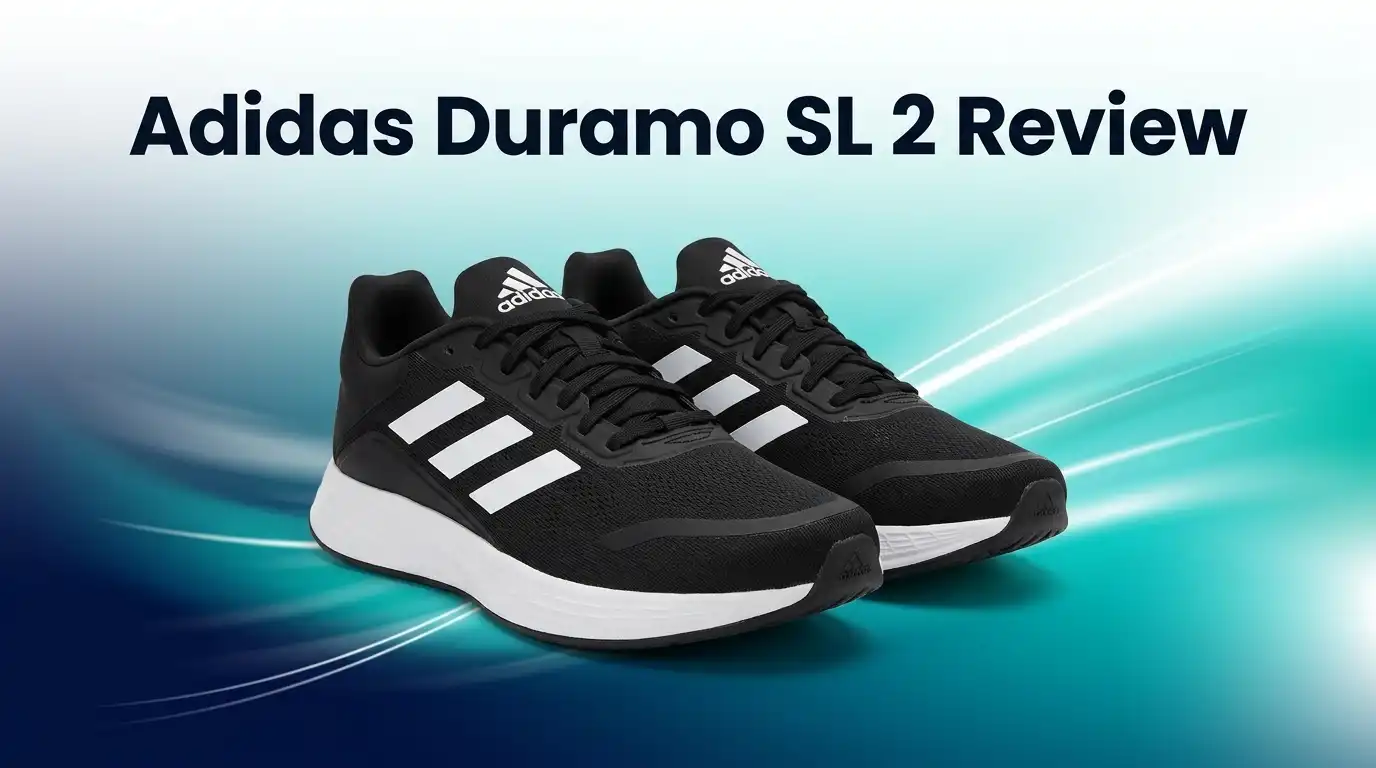
First impression: they look better in person than in photos. The mesh has a subtle texture that catches light. The three stripes sit as fused overlays rather than stitched panels, which gives the side profile a clean look. The heel counter feels firm when you squeeze it.
The smell test came back neutral. No harsh glue odor, which is common with cheap footwear. I did notice a few small glue marks near the midsole edge on one shoe. Minor, but visible if you look closely. Quality control at this price is not perfect.


Last update on 2026-04-11 / Affiliate links / Images from Amazon Product Advertising API Some of the links on this website are affiliate links, which means that at no additional cost to you, I earn a commission if you click through and make a purchase. I only recommend products and services that I believe will add value to my readers. Thank you for your support!
Weight in hand felt moderate. Not featherlight, not heavy. The insole pulled out easily, which matters if you use custom orthotics.
I slipped them on immediately without socks just to check the interior finish. No sharp seams. The tongue is thin but padded enough. The step in feel was soft and welcoming, which set a good tone for the first run.
Design and Build Quality
The Duramo SL 2 keeps the design simple. That works in its favor. The silhouette looks like a normal running shoe, so it pairs fine with jeans, shorts, or gym wear.
The upper uses engineered mesh with larger open pores across the forefoot and tighter weave near the heel. This targeted construction helps airflow where your foot sweats most. Synthetic overlays wrap the midfoot and connect to the lacing system.
The heel counter is internal and semi rigid. It holds your rearfoot in place without digging into the Achilles. Padding around the collar is moderate. Enough to feel soft, not so much that it adds bulk.


Last update on 2026-04-11 / Affiliate links / Images from Amazon Product Advertising API Some of the links on this website are affiliate links, which means that at no additional cost to you, I earn a commission if you click through and make a purchase. I only recommend products and services that I believe will add value to my readers. Thank you for your support!
The tongue is a gusseted design on most colorways, which stops it from sliding sideways. Laces are flat and hold knots well. I never had to retie mid run.
Build quality sits at fair to good. The stitching is clean in most places. I found one loose thread near the tongue after two weeks. The mesh itself has held up without tears or fraying.
Where the build shows its price is in the finishing details. The midsole sidewall paint scuffs easily. Small marks appeared within the first week. The glue lines are not perfectly hidden.
None of this affects performance. It just reminds you that this is a $70 shoe, not a $150 one. For most buyers, that tradeoff makes sense.
Top 3 Alternative for Adidas Duramo SL 2

- Style#: FB2207-103
- There’s a little more room in the forefoot compared to the 6, as well, so your toes don’t feel...
- soft cushioning
Last update on 2026-08-28 / Affiliate links / Images from Amazon Product Advertising API Some of the links on this website are affiliate links, which means that at no additional cost to you, I earn a commission if you click through and make a purchase. I only recommend products and services that I believe will add value to my readers. Thank you for your support!
Nike Revolution 7 Men’s Road Running Shoes
No products found.
adidas Women’s Run Falcon 5 Running Shoes

- Cushioning level: medium
- Lace closure
- Heel to toe drop: 10mm
Last update on 2026-08-28 / Affiliate links / Images from Amazon Product Advertising API Some of the links on this website are affiliate links, which means that at no additional cost to you, I earn a commission if you click through and make a purchase. I only recommend products and services that I believe will add value to my readers. Thank you for your support!
PUMA Velocity Nitro 3 Running Shoes
Cushioning and Midsole Performance
The Lightmotion midsole is the heart of this shoe. It is a compression molded EVA blend, lighter than traditional EVA but not as advanced as supercritical foams found in premium trainers.
Underfoot, the feel is soft and slightly plush. Landings absorb well. Your heel sinks in a little on impact, then the foam pushes back gently. There is no snap or bounce. Just cushioning.
Stack height measures 33mm at the heel and 24mm at the forefoot. That 9mm drop suits heel strikers. If you land on your midfoot or forefoot, the ride feels a bit flat because most of the foam sits behind you.
Here is what I noticed over distance. The cushioning holds up well for the first 8 kilometers. Past that, the foam starts to feel compressed and you begin to feel the road. This is a shoe for shorter and moderate runs.
Stability is decent thanks to the moderate stack and wide platform. The foam does not feel wobbly. Runners with mild overpronation reported acceptable support in community feedback, though this is a neutral shoe with no medial post.
The foam does soften over time. After roughly 200 miles in my pair, the cushioning felt noticeably less responsive than day one. That is normal for EVA at this price, but worth knowing before you buy.
Fit and Sizing Guide
Adidas lists the Duramo SL 2 as true to size, and my testing agrees. I wear a US 10 in most running shoes and the US 10 fit correctly with about a thumb width of space at the toe.
The toe box is moderately wide. Not spacious like Altra, but not cramped either. Runners with average width feet will feel comfortable. Those with wide feet should order the wide version, which Adidas offers in men’s and women’s sizes.
The midfoot wraps snugly. The gusseted tongue and overlays pull tight when you cinch the laces. Some runners with high insteps mentioned pressure across the top of the foot. If that describes you, try skipping one eyelet.
Heel lockdown deserves attention. The original Duramo SL had complaints about heel slip. The SL 2 improved this with a firmer counter and better collar padding. I experienced no slipping during runs, but I did use the last eyelet for a runner’s loop on longer efforts.
Sock thickness matters here. With thick winter socks, the fit felt tight. With thin running socks, it felt correct. Plan around your usual sock choice.
Women’s sizing follows the same pattern. True to size, with a slightly narrower last than the men’s version. Half sizes are available across the range.
Running Performance on Road
On pavement, the Duramo SL 2 behaves exactly as its price suggests. Comfortable, predictable, and unremarkable in the best way.
Easy runs are where this shoe shines. At a relaxed pace of 6 to 7 minutes per kilometer, the cushioning feels appropriate. Landings are soft. Your legs stay fresh. Nothing distracts you.
Push the pace and the shoe starts to complain. At tempo speeds, the foam feels mushy and slow. The 10.3 ounce weight becomes noticeable. There is no plate, no rocker, and no propulsion to help you turn over faster.
I tried a set of 400 meter repeats to test this. The shoe survived, but it fought me. Transitions felt sluggish. I would not choose it for speed work again.
Flexibility is good. The forefoot bends easily at the ball of the foot, which helps toe off feel natural. There is no harsh stiffness anywhere in the platform.
Ride quality stays consistent across surfaces. Concrete, asphalt, and treadmill all felt similar. On light gravel paths the shoe handled fine, though the outsole tread is shallow and not built for dirt.
Distance ceiling sits around 10 kilometers for most runners. Beyond that, the foam bottoms out and impact starts reaching your joints. Some users report completing half marathons in it. That is possible, but not comfortable for everyone.
Gym, Walking and Everyday Use
Here is where the Duramo SL 2 quietly earns its money. Many buyers never run in it at all, and that is fine.
For walking, the shoe is excellent. The soft midsole handles slow, repeated impact well. I wore them for a nine hour travel day covering roughly 15,000 steps. My feet felt fine at the end. That is a real endorsement.
In the gym, performance is mixed. Treadmill work, elliptical sessions, and light circuit training all work well. The flat outsole grips rubber flooring reliably.
Heavy lifting is a different story. The soft, tall midsole compresses under load. Squats and deadlifts feel unstable. If lifting is your main activity, buy a flat soled trainer instead.
For standing jobs, the cushioning helps. Nurses, retail workers, and teachers have praised this type of shoe for long shifts. The soft foam reduces fatigue compared to flat sneakers.
Casual wear works too. The clean design and neutral color options make it easy to pair with everyday clothes. It does not scream athletic shoe.
One practical note. Adidas lists many versions as machine washable. I washed mine on a cold gentle cycle and air dried them. They came out clean with no glue separation. That is genuinely useful for a shoe you wear daily.
Breathability and Upper Comfort
The engineered mesh upper handles airflow better than expected. In summer heat around 30 degrees Celsius, my feet stayed reasonably cool during 45 minute runs.
The forefoot mesh has the largest perforations. Hold the shoe up to a light and you can see through it clearly. This is where most heat escapes. The midfoot and heel use denser material for structure, so those areas breathe less.
Moisture management is average. The mesh dries fairly quickly after washing or rain, usually overnight. But during heavy sweating, the interior does get damp. There is no moisture wicking lining to speed things up.
In cold weather, the breathability becomes a drawback. Wind cuts straight through the forefoot. Below 5 degrees Celsius, my toes felt cold within the first kilometer. Thicker socks help, but they also tighten the fit.
Interior comfort is strong. No hot spots developed over multiple sessions. The seams sit flat and none rubbed against my skin. I ran sockless once as a test and finished 3 kilometers without blisters, which speaks well of the internal finish.
The removable OrthoLite style insole adds a thin layer of step in softness. You can swap it for orthotics without changing the fit dramatically. That flexibility matters for runners who need arch support beyond what the stock setup provides.
Outsole Grip and Durability
The rubber outsole covers the heel and forefoot with exposed foam in the midfoot. This saves weight and cost but reduces overall coverage compared to premium trainers.
Dry grip is solid. On clean pavement, sidewalks, and gym floors, traction never failed me. The shallow tread pattern provides enough bite for normal running.
Wet grip drops noticeably. On rain soaked painted road markings and smooth tile, I felt slippage. Nothing dangerous, but enough that I shortened my stride on wet mornings. This is a common weakness in budget rubber compounds.
Durability is the shoe’s biggest question mark. After roughly 200 miles, my pair showed visible wear on the outer heel edge and under the big toe. The rubber thinned but had not worn through.
Community feedback matches this. Most runners report 250 to 400 miles before the shoe feels finished. Heavier runners and heel strikers land at the lower end. Walkers get considerably more mileage.
The exposed midsole foam in the arch area collects small stones and shows scuffing. It is cosmetic, not structural.
Value math still works. At $70 for 300 miles, your cost per mile lands around 23 cents. A $160 trainer lasting 500 miles costs 32 cents per mile. The Duramo SL 2 wins on pure economics, even with shorter lifespan.
What the Duramo SL 2 Does Not Do Well
Honest reviews name the flaws. Here are the real ones.
It is not a fast shoe. The foam gives you cushioning but no return. Every time you push the pace, you feel like you are running through sand. Tempo runs, intervals, and race day all deserve something else.
Long distance comfort fades. The cushioning feels great for the first hour. Past 10 kilometers, the foam packs down and impact starts reaching your knees. Marathon training in this shoe would be a mistake for most people.
Wet weather traction disappoints. The rubber compound is basic. On slick surfaces, confidence drops. If you run in rainy climates year round, factor this in.
Weight is above average. At 10.3 ounces, it sits heavier than many competitors in the same price range. You notice it on longer efforts and faster paces.
Cold weather performance is poor because the mesh is so open. Wind passes straight through.
Heavy runners over 200 pounds report the foam bottoming out faster. The midsole simply does not have the density to handle high load repeatedly.
Finally, build finishing is inconsistent. Glue marks, occasional loose threads, and easily scuffed midsole paint all appear. These are cosmetic issues, but they exist.
None of this makes the shoe bad. It makes the shoe specific. Buy it for what it is.
Pros and Cons
Here is the balanced summary after weeks of testing.
Pros
- Excellent price point at around $70, with frequent discounts pushing it below $50 during sales events
- Soft, comfortable cushioning that suits easy runs, walking, and long hours on your feet
- True to size fit with wide options available for runners who need extra room
- Breathable forefoot mesh that keeps feet cool during warm weather sessions
- Machine washable construction makes cleaning simple and extends the shoe’s usable life
- Clean, versatile design that works for both training and casual everyday wear
- Good dry traction on pavement, gym floors, and treadmills
- Removable insole allows easy swapping for custom orthotics
Cons
- No energy return from the Lightmotion foam, making faster paces feel sluggish
- Cushioning flattens past 10 kilometers, limiting long run comfort
- Wet traction is weak on slick surfaces and painted road markings
- Heavier than rivals at 10.3 ounces in a men’s size 9
- Outsole wears faster than premium trainers, typically lasting 250 to 400 miles
- Cold weather performance suffers because the open mesh lets wind through
- Minor build inconsistencies including glue marks and easily scuffed midsole paint
- Not suited for heavy lifting due to the soft, compressible midsole
Price and Value for Money

- Regular fit
- Laces
- Synthetic and textile mesh upper
Last update on 2026-08-28 / Affiliate links / Images from Amazon Product Advertising API Some of the links on this website are affiliate links, which means that at no additional cost to you, I earn a commission if you click through and make a purchase. I only recommend products and services that I believe will add value to my readers. Thank you for your support!
The Duramo SL 2 lists at $70 on the Adidas website. On Amazon, prices fluctuate between $40 and $70 depending on color, size, and current promotions. Off season colorways drop lowest.
At $70, the shoe offers fair value. At $45, it becomes one of the best deals in running footwear. That price gap matters more than any feature comparison.
Compare it to the alternatives. The Nike Revolution 7 costs similar but uses firmer foam. The Adidas Run Falcon 5 sits slightly cheaper with less cushioning. Premium trainers from Brooks or Hoka start around $140, double the price for maybe 40 percent better performance.
Cost per mile favors the Duramo SL 2. Even accepting a shorter 300 mile lifespan, you spend less per kilometer than with an expensive trainer. For runners covering 20 kilometers per week, one pair lasts roughly six months.
Value depends entirely on your use case. A casual runner doing three easy sessions per week gets outstanding value. A serious runner logging 60 kilometers weekly will burn through this shoe quickly and feel frustrated by the ride.
My advice is simple. Wait for a sale, buy at $50 or below, and treat it as your easy run and walking shoe. Pair it with a faster shoe if you race. At that price, keeping two pairs in rotation still costs less than one premium trainer.
Who Should Buy the Adidas Duramo SL 2
This shoe fits specific people very well. Here is who should consider it.
New runners belong at the top of this list. If you just started running and cover 3 to 5 kilometers a few times per week, the Duramo SL 2 gives you everything you need. Soft cushioning, reliable fit, low cost. You will not outgrow it for months.
Walkers and everyday wearers get strong value. The plush foam handles slow repeated impact perfectly. Long shifts, city walking, travel days, and errands all suit this shoe.
Budget conscious runners who need a second pair for easy days should look here. Rotating shoes extends the life of both pairs. Using an expensive trainer for every run wastes money.
Gym users doing cardio focused sessions will be happy. Treadmill, elliptical, light circuits, and warm ups all work fine.
Now the people who should skip it. Competitive runners need responsiveness this shoe cannot deliver. Marathon trainers logging high weekly mileage will destroy the foam too fast. Heavy lifters need a stable, flat platform instead. Runners over 200 pounds may find the cushioning inadequate for regular use.
Trail runners should also look elsewhere. The shallow outsole tread offers no real grip on loose dirt or mud.
Match the shoe to your actual habits, not your aspirations. That single decision determines whether you love or regret this purchase.
Final Verdict
The Adidas Duramo SL 2 succeeds because it knows what it is. An affordable, comfortable shoe for people who run and walk moderate distances. It does not pretend to be a performance trainer.
My overall rating sits at 4 out of 5 for its intended purpose. Comfort is genuinely good. Fit is reliable. Price is hard to beat. Those three factors cover what most casual runners actually need.
The flaws are real and worth repeating. The foam offers no energy return. Long runs expose the cushioning limits. Wet grip disappoints. Durability trails premium options.
But none of those flaws surprise you at $70. Every shoe in this price bracket makes similar compromises. The Duramo SL 2 simply makes better choices about where to compromise.
If you run three times per week, walk a lot, or need a comfortable everyday shoe, buy it. Wait for a sale, order your normal size, and expect around 300 miles of good use.
If you train seriously, race often, or log high mileage, spend more. This shoe will frustrate you within weeks.
The Duramo SL 2 remains one of the smartest budget buys in running footwear for 2026. Not because it is exceptional, but because it is honest about what it delivers at a price that respects your wallet.
Frequently Asked Questions
Is the Adidas Duramo SL 2 true to size?
Yes. Order your normal size. The fit runs standard through the midfoot with a moderately roomy toe box. Runners with wide feet should choose the wide version, which Adidas offers in both men’s and women’s sizing.
How long does the Adidas Duramo SL 2 last?
Most runners get 250 to 400 miles before the cushioning flattens and the outsole wears thin. Walkers typically get considerably more. Heavier runners and heel strikers land at the lower end of that range.
Can you run a marathon in the Duramo SL 2?
It is possible but not recommended. The foam compresses past 10 kilometers and impact protection drops. Choose a shoe with more durable cushioning for marathon distance.
Is the Adidas Duramo SL 2 good for flat feet?
It is a neutral shoe with no medial support post. Runners with mild overpronation manage fine. Those needing real stability should look at supportive models or add custom orthotics, since the insole removes easily.
Can you wash the Adidas Duramo SL 2 in a machine?
Yes. Adidas lists most versions as machine washable. Use a cold gentle cycle, remove the insoles first, and air dry away from direct heat. Never put them in a dryer.
What is the weight and drop of the Duramo SL 2?
The shoe weighs 10.3 ounces in a men’s size 9. It has a 9mm drop, built from a 33mm heel stack and a 24mm forefoot stack.
Is the Duramo SL 2 good for gym workouts?
For cardio and light training, yes. For heavy lifting, no. The soft midsole compresses under load and reduces stability during squats and deadlifts.

Mia Smith is the founder of Shoe Storyteller, a blog that celebrates the art and stories behind shoes. With a passion for fashion and a flair for storytelling, Mia brings a unique perspective to the world of footwear.