Birkenstock Bend Low Review 2026: Worth Buying?
Your feet hurt by lunchtime. Your cute sneakers look great and feel terrible. You want one pair that handles a long travel day, a coffee run, and a casual office without punishing you. That is the exact promise of the Birkenstock Bend Low, and it is also the reason this shoe keeps selling out in popular colors.
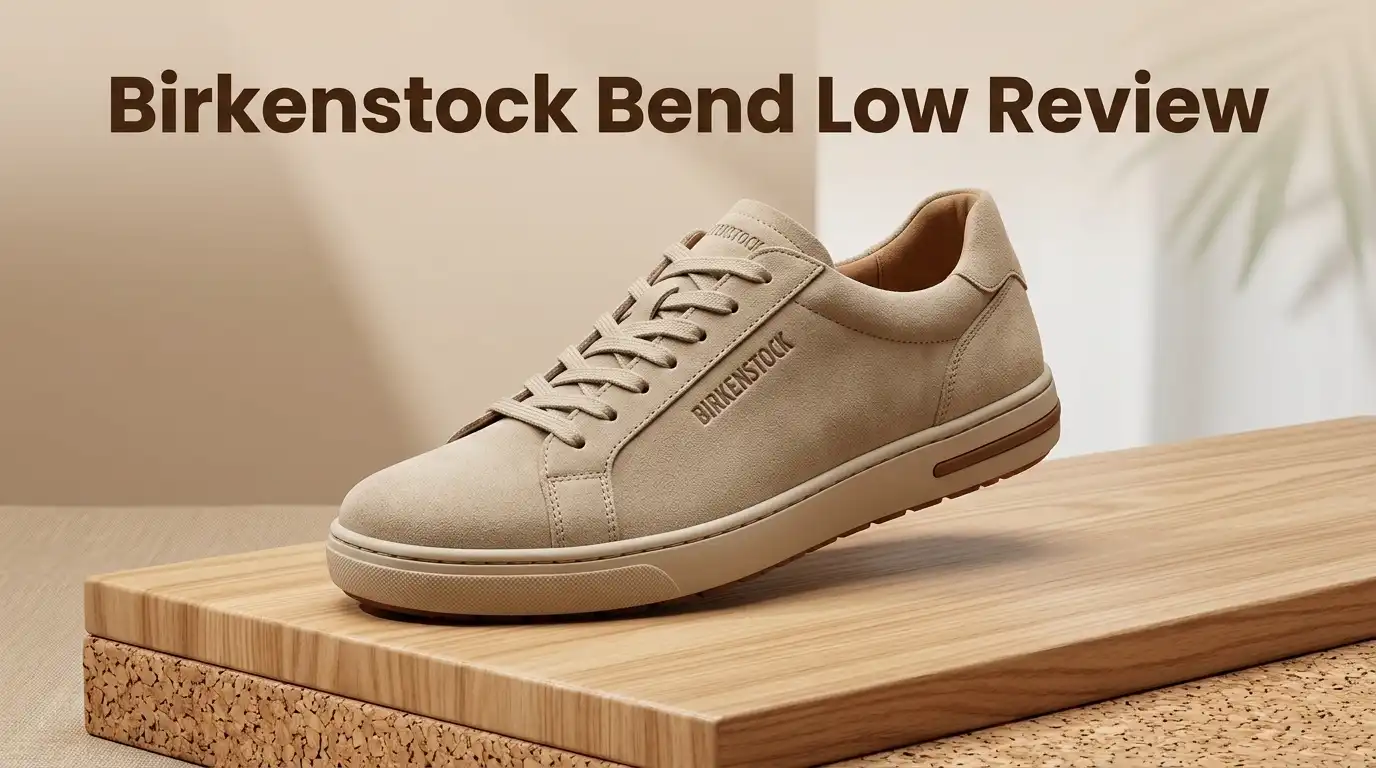
The Bend Low takes the famous cork footbed from Birkenstock sandals and wraps it inside a clean leather sneaker. No loud logos. No chunky mess. Just a quiet shoe with serious arch support underneath.
But comfort claims are cheap. Does this sneaker actually survive real miles? Does it fit wide feet? Does the sole wear out fast? This review answers all of it, including the parts the brand does not advertise.
In a Nutshell:
- The footbed is the whole story. The Bend Low uses a removable cork latex footbed with a deep heel cup, inner and outer arch support, and a transverse arch pad. Testers walked nine miles on day one with no foot fatigue.
- The toe box is very wide. People with bunions, flat feet, or splayed toes usually love it. Narrow feet will swim in it, and that is the single biggest fit warning in this review.
- Sizing does not follow normal US logic. Birkenstock runs on EU sizing, so a US 6 to 6.5 lands at EU 37. Most wearers stay true to size, but try before buying if possible.
- Durability is the real weak point. The rubber outsole heel shows wear quickly under heavy city walking. Smooth leather also creases and scuffs, and white soles yellow over time.
- It costs around 165 dollars. That sits above Vans, Converse, and most canvas sneakers, but far below the physical therapy bill from bad shoes.
- Stiffness appears early. The tongue and the collar near the Achilles can rub during the first few wears. Thicker socks fix it fast.
What Is the Birkenstock Bend Low?

- Regular accommodates Regular to Wide Widths.
- The Birkenstock Bend Sneaker- Leather boasts a simple design which can be worn with almost anything...
- Removable, anatomically shaped cork-latex footbed.
Last update on 2026-09-18 / Affiliate links / Images from Amazon Product Advertising API Some of the links on this website are affiliate links, which means that at no additional cost to you, I earn a commission if you click through and make a purchase. I only recommend products and services that I believe will add value to my readers. Thank you for your support!
The Bend Low is Birkenstock’s low top lifestyle sneaker. Yes, the sandal brand makes sneakers now, and this is the model that pushed the line into the mainstream.
The shoe uses a smooth leather or suede upper, a microfiber lining, a PU and cork midsole, and a rubber outsole stamped with the same tread pattern found on Birkenstock sandals. That thin strip of visible cork along the sole is the signature detail.
Inside sits the star component. Birkenstock dropped its original anatomical footbed straight into a closed shoe. The deep heel cup holds your heel in a neutral position. The arch supports cradle the tarsal bones. A transverse pad supports the metatarsals.
It is a unisex design. Sizing runs from roughly US women’s 4 to 12 and US men’s 6 to 17, with six core colorways plus seasonal drops. The footbed lifts out completely, which matters if you wear custom orthotics.
Unboxing the Birkenstock Bend Low
The box is plain and sturdy, with the Birkenstock name in that familiar serif type. Inside, each shoe sits in thin tissue paper with a small paper stuffer in the toe. No extra laces. No dust bag. No fuss.
The first reaction almost everybody has is the same: these look wider than expected. One tester pulled them out and called them junior clown shoes before wearing them for a month straight and changing her mind completely.
The leather smells like real leather, not glue. The stitching is even and tight, and the cork strip looks sealed rather than crumbly. Weight is moderate, heavier than a canvas sneaker, lighter than a hiking shoe.
Press your thumb into the footbed and it barely moves. That firmness surprises people used to squishy foam. This is support, not cushioning, and the difference becomes obvious around mile four.
Design and Materials Breakdown
The Bend Low keeps decoration close to zero, and that restraint is why it styles so easily.


Last update on 2026-04-11 / Affiliate links / Images from Amazon Product Advertising API Some of the links on this website are affiliate links, which means that at no additional cost to you, I earn a commission if you click through and make a purchase. I only recommend products and services that I believe will add value to my readers. Thank you for your support!
The upper has no visible branding except the embossed Birkenstock name on the tongue and a small stamp on the heel. The top lace holes get silver grommets. Tonal stitching separates the lightly padded collar. That is the entire design language.
Layer by layer, here is what you stand on. Footbed: cork and latex, anatomically shaped, removable. Midsole: PU blended with cork for shock absorption. Outsole: rubber with the classic Birkenstock tread.
The cork midsole is the quiet hero. It absorbs impact from concrete, gravel, and cobblestone rather than transferring it into your knees and lower back.
The white version confuses shoppers because retailer photos vary wildly. Owners confirm it is a winter white, not bright white and not cream. The laces and soles match. In person it reads more expensive than plain optic white.
Top 3 Alternative for Birkenstock Bend Low

- Shoe width: normal
- Genuine leather
- Standard lacing
Last update on 2026-09-18 / Affiliate links / Images from Amazon Product Advertising API Some of the links on this website are affiliate links, which means that at no additional cost to you, I earn a commission if you click through and make a purchase. I only recommend products and services that I believe will add value to my readers. Thank you for your support!


Last update on 2026-04-11 / Affiliate links / Images from Amazon Product Advertising API Some of the links on this website are affiliate links, which means that at no additional cost to you, I earn a commission if you click through and make a purchase. I only recommend products and services that I believe will add value to my readers. Thank you for your support!
Birkenstock Bend Mid
No products found.
Vionic Winny Sneaker
No products found.
ECCO Soft 7 Sneaker
Comfort and the Cork Footbed
This is where the Bend Low earns its price. Reviewers who normally live in ballet flats or running shoes report the same thing: the foot fatigue simply does not show up.
One tester walked nine miles across New York City on the very first wear. Her feet did not feel tired that night. Another owner logged more than a year of wear across gravel paths, asphalt, and cobblestone, and now finds the Bend more comfortable than her own Arizona sandals for long standing days.
The mechanism is simple. Weight spreads evenly across the whole foot instead of loading the ball and heel. The heel cup blocks pronation. The arch supports stop your arch from collapsing inward.
People with plantar fasciitis and flat feet often notice relief within days. Several long term wearers report that their cushioned athletic sneakers now feel worse by comparison.
Fair warning: firm support feels strange at first if you have spent years in soft foam. Give it a week.
Sizing and Fit Guide
Birkenstock sizing follows EU numbers, and that trips up almost everyone.
A size US 6 to 6.5 equals EU 37. A US women’s 8 to 8.5 equals EU 39. If you normally wear an EU 36, the chart may still point you to a 37. Follow the brand chart, not your usual EU number.
Most testers found the Bend Low true to size in sneakers. The common advice among owners is different though: if you are between sizes, or if you size down in Birkenstock sandals, go up one size in the Bend.
Width has changed over the years. Birkenstock has moved the Bend toward the Narrow and Medium width only. Retailers label it inconsistently as narrow, narrow medium, or medium. In practice, Medium behaves like the unisex or men’s fit and Narrow behaves like the women’s fit.
Buy from a retailer with free returns. Order two sizes if you can.
Does It Work for Wide Feet and Bunions?
For wide feet, this is one of the best closed shoes on the market. The toe box mirrors the sandal shape, so toes spread naturally instead of getting squeezed into a point.
One reviewer with bunions walked over twenty miles in hers and reported zero chafing and zero blisters on her toes or bunions. Another wide footed tester called it comfortable straight out of the box.
Now the honest caveat. Some bunion sufferers have a real problem with this shoe. The stitching where the eyelets attach to the upper sits right over the bunion area on certain feet. Combined with stiff leather, that seam can rub.
If you have a prominent bunion, try the shoe in person or order from a retailer with a generous return window.
Narrow feet should probably skip it. The roominess that helps wide feet becomes heel slip and sloppy fit on a slim foot. A Vionic Winny or ECCO Soft 7 serves narrow feet better.
First Wears: Stiffness and Hot Spots
Birkenstock markets the Bend as ready to wear immediately. That is mostly true, with two specific exceptions worth knowing.
The tongue is stiff. One tester finished her first nine mile day with two small red dots on her ankles. Not blisters, but noticeable. Thicker socks would have prevented it entirely.
The collar can poke the Achilles. A second tester felt the back of the shoe pressing into her Achilles tendon on and off during early wears. Her fix was simple: anything taller than a no show sock.
So the shoe has no break in period for your arches and a short break in period for your ankles. The leather softens within a couple of weeks.
If you hate socks, take note. This is not a barefoot friendly sneaker in week one. Some owners prefer the suede Decon version because it skips the puffy heel padding and uses soft nubuck instead.
Durability After Real Miles
Here is the section most reviews skip, and it matters.
One city based tester noticed visible heel wear on the rubber outsole after only one month, though she walks as her main transport and logged far more miles than an average wearer. She scored durability 15 out of 20 for that reason.
A second long term owner reached a full year of wear at roughly three times per week and her pair still held up well, though she spot cleaned regularly and had the leather polished once.
The pattern is clear. Heavy daily walkers will reach the cobbler sooner than expected. Casual wearers will get years.
Good news on repairability. The footbed lifts out, so you can replace a worn insole and keep the shoe going. A cobbler can also add a rubber heel cap cheaply.
Build quality itself is high. The leather is real, the construction is clean, and nothing falls apart structurally.
Pros and Cons of the Birkenstock Bend Low

- Regular accommodates Regular to Wide Widths.
- The Birkenstock Bend Sneaker- Leather boasts a simple design which can be worn with almost anything...
- Removable, anatomically shaped cork-latex footbed.
Last update on 2026-09-18 / Affiliate links / Images from Amazon Product Advertising API Some of the links on this website are affiliate links, which means that at no additional cost to you, I earn a commission if you click through and make a purchase. I only recommend products and services that I believe will add value to my readers. Thank you for your support!
Pros
- True all day comfort. Nine miles on day one with no foot fatigue is a rare result for any lifestyle sneaker.
- Genuine arch support. Deep heel cup, dual arch supports, and a metatarsal pad do real anatomical work.
- Removable footbed. Custom orthotics fit, and worn insoles can be replaced.
- Very wide toe box. Bunions, flat feet, and splayed toes get room to breathe.
- Quiet, expensive looking design. No visible logos, so it reads like a designer leather sneaker.
- Unisex with a huge size range and six plus colorways.
- Cork midsole absorbs shock on concrete and cobblestone better than flat rubber soles.
Cons
- Outsole heel wears fast under heavy walking.
- Stiff tongue and collar cause early rubbing on bare ankles.
- Eyelet stitching can irritate bunions on some feet.
- Wrong choice for narrow feet. Expect heel slip.
- Smooth leather creases and scuffs quickly.
- White soles yellow with sun and wear.
- Confusing sizing and inconsistent width labels across retailers.
- Not an athletic shoe. No good for running or strenuous hiking.
What the Bend Low Does Not Do Well
An honest review needs a clear list of failures. Here are the Bend Low’s.
It is not a hiking shoe. Owners who tried long strenuous trail walks found the support inadequate compared to proper hiking footwear. The tread is shallow and the ankle gets no help.
It is not a running shoe. The footbed is firm and supportive, not responsive or springy. Running in it feels wrong.
It does not stay pretty. Smooth leather shows every crease across the toe box within weeks. If you need shoes that look new for a year, this is not your pair.
It does not suit narrow feet. Repeat warning, because it is the most common return reason.
It does not always avoid blisters. Some buyers report significant blistering from the stiffness, particularly across the top of the foot and near the heel.
The Bend Low is a comfortable walking and standing shoe with good looks. Push it outside that lane and it disappoints.
Price and Value in 2026
The Bend Low sits around 165 dollars at full price. That is more than Vans, Converse, or most canvas sneakers, and slightly more than many mainstream leather sneakers.
Is that fair? It depends on your feet. If you can walk five miles in a 70 dollar sneaker without pain, save your money. If your back or arches complain after two miles, the footbed alone justifies the cost.
Testers who compared directly could not cover the same distance in cheaper shoes. One replaced her beloved cushioned running sneakers for travel days entirely.
Value math works like this. A shoe you wear three times per week for two years costs pennies per wear. A shoe you abandon after one painful trip costs everything.
Look for sales at authorized sellers. Prices tend to match across major retailers, so pick the one with the best return policy rather than hunting for a discount.
Care and Cleaning Tips
A little maintenance doubles the life of this shoe.
For smooth leather: wipe dust off with a damp cloth, then use a matching cream polish every few months. One owner had her white pair polished with white shoe polish and it restored the finish well.
For the white soles: a Magic Eraser brightens them noticeably. Yellowing still creeps in over time from sun exposure. Owners report that a baking soda and hydrogen peroxide paste helps, though most decide the slight contrast looks fine.
For suede versions: brush dry, use a suede eraser on marks, and spray a protector before the first wear.
For the footbed: lift it out and let it air dry after sweaty days. Never soak cork. Replace it when the contours flatten rather than replacing the whole shoe.
For laces: hand wash them separately. White laces grey faster than the leather does.
Who Should Buy It and Who Should Skip It
Buy the Bend Low if you have wide feet, flat feet, bunions, or plantar fasciitis. Buy it if you travel and need one sneaker for long sightseeing days. Buy it if you stand on hard floors for hours. Buy it if you want arch support without looking like you are wearing medical footwear.
It also works well for casual office dress codes. Testers styled it with wide leg trousers, straight jeans, midi skirts, dresses, and Bermuda shorts without looking sloppy.
Skip the Bend Low if your feet are narrow. Skip it if you want soft foam cushioning. Skip it if you need a running or hiking shoe. Skip it if pristine leather matters to you.
One more honest note from long term owners: once your feet adapt to this footbed, other shoes feel worse. Several wearers say they can no longer tolerate their old sneakers or dress shoes. Consider that a warning or a feature.
Final Verdict
The Birkenstock Bend Low is the rare shoe that delivers on a big comfort claim. Independent testers scored it 90 out of 100, with a perfect comfort score and a lower mark only for durability.
The formula works because Birkenstock did not invent anything new. It took a footbed with fifty years of proven support and put a clean leather sneaker around it.
The weak spots are real and specific. Outsole heels wear quickly under heavy mileage. Early stiffness needs socks. Narrow feet should look elsewhere. Smooth leather creases fast.
None of those problems touch the core function. Your feet stay comfortable, your arches stay supported, and your back stops complaining after long days.
Verdict: worth the money if your feet are medium to wide and you walk a lot. Order from a retailer with free returns, follow the EU size chart carefully, and wear real socks for the first week.
Frequently Asked Questions
Do Birkenstock Bend Low sneakers run true to size?
Mostly yes. Testers found them true to size in sneakers. The catch is that Birkenstock uses EU sizing that does not match your usual EU number, so a US 6 to 6.5 becomes EU 37. If you are between sizes or you size down in Birkenstock sandals, go up one size here.
Is there a break in period for the Bend Low?
The footbed needs no break in at all. The upper does. The stiff tongue and the collar near the Achilles can rub for the first few wears. Socks taller than a no show style solve it, and the leather softens within two weeks.
Can I put my own orthotics in the Bend Low?
Yes. The cork latex footbed lifts out completely. Testers swapped in aftermarket insoles and the fit stayed secure with no heel slip. That also means you can replace a worn footbed instead of buying a new pair.
Are the Bend Low sneakers good for wide feet?
Very good. The toe box copies the generous sandal shape and gives toes real room. Multiple wide footed reviewers reported no blisters or chafing over twenty plus miles. Narrow feet, however, will find the shoe loose.
How long do Birkenstock Bend Low sneakers last?
That depends on mileage. A heavy city walker saw heel wear on the outsole within one month. A three times per week wearer got a full year and counting with regular cleaning. Expect two to four years of casual use, plus a possible cobbler visit for the heels.
Is the Bend Low good for walking all day?
Yes, this is its best use case. One tester walked nine miles on the first wear with no foot fatigue. Another prefers it over her Arizona sandals and her cushioned running shoes for long standing days and travel.
Does the Bend Low work for plantar fasciitis?
Many wearers report relief. The arch support and deep heel cup address the same mechanics that podiatrists target for plantar fasciitis. Results vary by person, so treat it as a promising option rather than a guaranteed fix, and check with your podiatrist for your specific case.
Should I choose the Bend Low or the Bend Mid?
Pick the Low for warm weather, skirts, and a lighter look. Pick the Mid for cooler months and a little extra ankle coverage. Both use the same footbed, so comfort is nearly identical.

Mia Smith is the founder of Shoe Storyteller, a blog that celebrates the art and stories behind shoes. With a passion for fashion and a flair for storytelling, Mia brings a unique perspective to the world of footwear.