Birkenstock Dundee Review 2026: Worth Buying?
The Birkenstock Dundee looks like a desert boot but feels like your favorite sandal. That combination sounds odd until you slide your foot into one. Then it makes complete sense.
I bought a pair to find out if this boot deserves the hype and the price tag. I wore them to work, on long city walks, through damp mornings, and on a few light trails. This review covers everything I learned, including the parts Birkenstock will never print on the box.
If you have wide feet, sore arches, or a job that keeps you standing for ten hours, keep reading. The Dundee might be the boot you have been searching for. Or it might frustrate you within five minutes. I will explain exactly which camp you fall into.
In a Nutshell:
- The footbed is the whole point. The Dundee uses the classic cork and latex footbed that made Birkenstock famous. It supports your arch, cradles your heel, and spreads pressure across your whole foot. People with plantar fasciitis consistently report relief.
- There is a real design quirk. A small suede flap sits where the front and back panels meet near the rivet. It folds inward as you push your foot in. Most owners fix it with one finger in three seconds. A few owners return the boot over it.
- Sizing runs generous. Roughly 80 percent of buyers say the Dundee feels true to size, but the toe box is famously wide. Order your normal Birkenstock size. Consider the narrow width if you have slim feet.
- It needs a break in period. The first two or three wears feel stiff and strange. The footbed then molds to your foot shape and the fit improves dramatically.
- It is not a winter boot. The EVA sole has shallow tread and slips on ice. The suede handles drizzle but soaks through in heavy rain.
- Price sits around $180 at full retail. That is a lot for a casual boot, though resoling keeps it alive for years.
What Is the Birkenstock Dundee?

Last update on 2026-10-05 / Affiliate links / Images from Amazon Product Advertising API Some of the links on this website are affiliate links, which means that at no additional cost to you, I earn a commission if you click through and make a purchase. I only recommend products and services that I believe will add value to my readers. Thank you for your support!
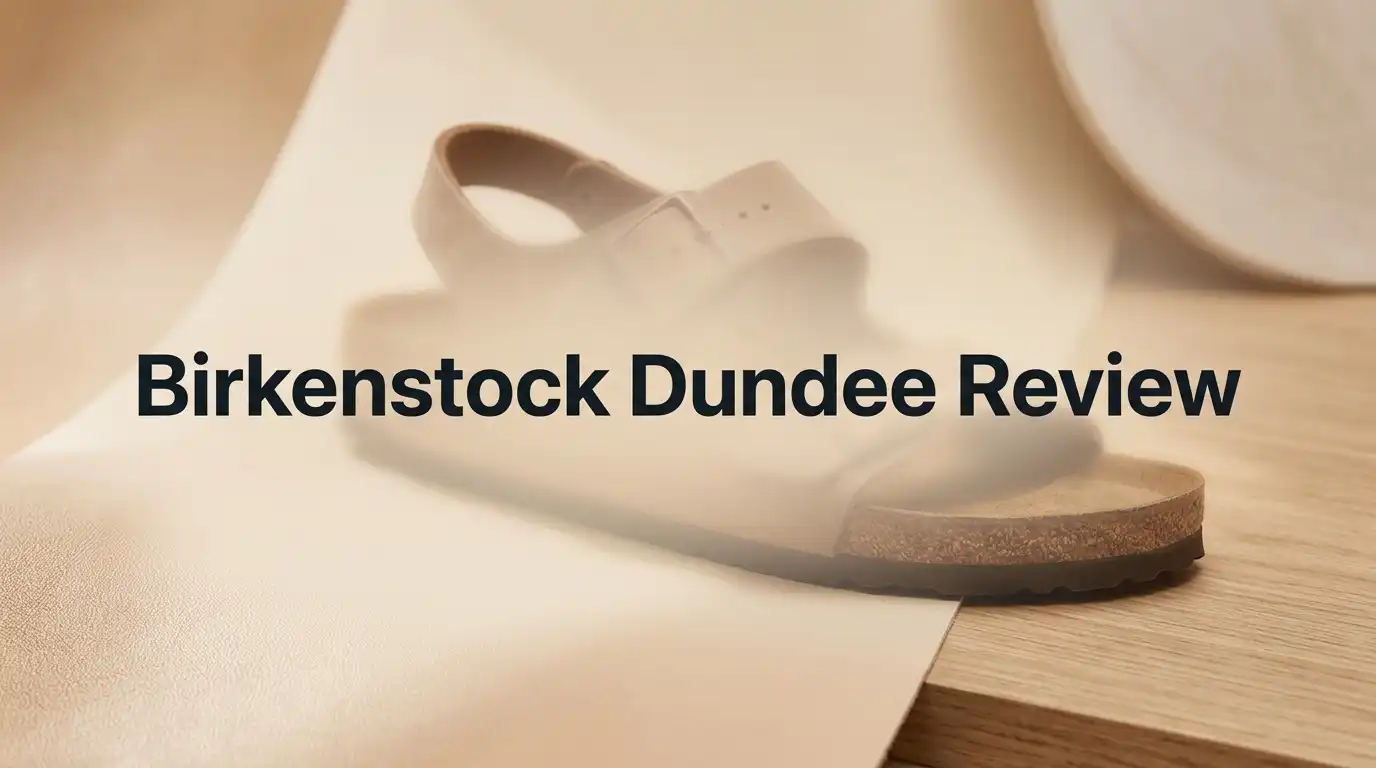
The Dundee is a four hole lace up ankle boot built on the standard Birkenstock footbed. Think chukka boot silhouette with orthopedic guts inside.
The upper comes in soft suede, usually taupe, black, or mocha. Birkenstock describes it as a rustic style, and that fits. The suede has a matte nap and a slightly rough texture that hides scuffs well. Cotton laces run through four eyelets and reach just above the ankle.
Inside you get an anatomically shaped cork and latex footbed with a suede lining. The outsole is EVA foam, which keeps the whole boot surprisingly light. A pair in size 42 weighs less than most leather sneakers. The footbed is made in Germany, which Birkenstock still prints on the product page as a quality marker.
The Unboxing Experience
My pair arrived in the familiar blue and white Birkenstock box with the gold foil logo. No tissue paper explosion, no booklet of marketing copy. Just the boots, a small care card, and a desiccant packet.
The first thing I noticed was the smell. Fresh cork and suede together produce a warm, earthy scent that honestly made me smile. The second thing I noticed was the shape. The toe box looks wide. Wider than you expect. My partner called them duck shoes before I even laced them.
Then came the struggle. I loosened the laces, pushed my foot in, and got stuck halfway. I loosened the laces much more than felt reasonable and finally slid in. This is normal. Nearly every owner describes the same awkward first entry.
Build Quality and Materials
Birkenstock uses suede split leather for the Dundee upper. The brand lists leather thickness between 2.8 and 3.2 millimeters on its sturdier uppers, and the Dundee feels substantial in hand without feeling stiff.
The stitching on my pair was even and tight. Two metal rivets anchor the point where the front and rear panels overlap. Those rivets are functional, not decorative, and they carry stress away from the seam.
The cork footbed shows visible cork grain, which is a good sign. Cork comes from the bark of the cork oak, regrows naturally, and insulates your feet from cold ground. It also cushions well and does not pack down flat the way cheap foam does.


Last update on 2026-04-11 / Affiliate links / Images from Amazon Product Advertising API Some of the links on this website are affiliate links, which means that at no additional cost to you, I earn a commission if you click through and make a purchase. I only recommend products and services that I believe will add value to my readers. Thank you for your support!
One honest note: suede varies from hide to hide. My left boot held its shape better than my right. Birkenstock openly states this is not a defect.
The Cork Footbed Explained
This is the part people misunderstand. The Birkenstock footbed does not feel plush. It feels firm and contoured.
Four zones do the work. A raised arch supports your medial arch. A deep heel cup locks your heel in place. A toe bar encourages your toes to grip slightly as you walk. Raised edges keep your foot from sliding sideways.
The footbed uses your body heat and weight to mold itself to your foot over the first two weeks. After that, it becomes a custom impression of your sole. One Dundee owner described the sensation as yoga for your feet, and that description stuck with me.
If you expect sneaker softness, you will be disappointed. If you want structural support that reduces fatigue over long hours, this footbed delivers. Standing twelve hour shifts became genuinely tolerable in mine.


Last update on 2026-04-11 / Affiliate links / Images from Amazon Product Advertising API Some of the links on this website are affiliate links, which means that at no additional cost to you, I earn a commission if you click through and make a purchase. I only recommend products and services that I believe will add value to my readers. Thank you for your support!
Top 3 Alternative for Birkenstock Dundee

- Premium full grain leather upper
- Soft suede leather lining for comfort
- Removable anatomically correct, suede lined, natural cork latex footbed
Last update on 2026-10-05 / Affiliate links / Images from Amazon Product Advertising API Some of the links on this website are affiliate links, which means that at no additional cost to you, I earn a commission if you click through and make a purchase. I only recommend products and services that I believe will add value to my readers. Thank you for your support!
Birkenstock Bryson Leather Boot

Last update on 2026-10-05 / Affiliate links / Images from Amazon Product Advertising API Some of the links on this website are affiliate links, which means that at no additional cost to you, I earn a commission if you click through and make a purchase. I only recommend products and services that I believe will add value to my readers. Thank you for your support!
Birkenstock Gary Suede Shoe

- Understanding Widths: Narrow accommodates Narrow to Regular widths. Regular accommodates Regular to...
- The most sought-after clogs, the Birkenstock Boston Clog Soft Footbed - Suede lend a fashion-forward...
- Leather lining and insole.
Last update on 2026-10-05 / Affiliate links / Images from Amazon Product Advertising API Some of the links on this website are affiliate links, which means that at no additional cost to you, I earn a commission if you click through and make a purchase. I only recommend products and services that I believe will add value to my readers. Thank you for your support!
Birkenstock Boston Soft Footbed Clog
Sizing and Fit Guide
Birkenstock uses European sizing with its own quirks, so guessing rarely works. Measure your foot in centimeters and check the official chart before ordering.
Zappos fit data on the Dundee shows 80 percent of buyers felt it was true to size and 81 percent felt it was true to width. That is strong consistency for a boot with such a distinctive shape.
The practical advice from long term owners is simple. If you already own Birkenstocks, order the exact same size. Do not size up because the Dundee is closed toe. Several reviewers tried that and ended up with boots that swam on their feet.
Regular width runs wide. Narrow width exists and transforms the look, making the boot appear far more conventional. One reviewer said narrow Dundees stop looking cartoony and start looking like normal shoes.
Comfort After the Break In Period
Days one through three felt strange. The arch pressed up into my foot and the sole grabbed at my sole in an unfamiliar way. I questioned my purchase.
By day five, something shifted. The cork had softened under my arch and the suede had relaxed around the laces. Getting the boot on took seconds instead of minutes.
By week three, these became the boots I reached for without thinking. I walked roughly five miles in them with zero hot spots and no heel rub. The ankle height sits just high enough to feel secure without restricting movement.
Patience matters here. People who return Birkenstocks in the first week almost always return them before the footbed has done its job. Wear them one or two hours at a time at first.
The Flap Issue Nobody Warns You About
Here is the Dundee’s most discussed flaw. A small piece of suede sits on the inside of the boot where the front panel overlaps the rear panel, just below the rivet on the outer side of your foot.
When you force your foot in with tight laces, that flap folds forward. It then presses into the side of your foot and creates a nagging rub that worsens over hours.
Some owners call it a design flaw. Others call it a two second fix. Both are right. You slide a finger down the inner seam while the boot is on and flip the flap flat. Problem solved. Over time the suede learns to lie flat on its own.
But if you have highly sensitive feet, this detail may bother you permanently. Two Zappos reviewers returned their pairs specifically because of it. Know this before you buy.
Style and Everyday Versatility
The Dundee reads as a chukka or desert boot from across a room. Most people will not identify it as a Birkenstock until they notice the wide toe.
It pairs well with straight leg jeans, chinos, corduroys, and wool trousers. The taupe suede plays nicely with earth tones and denim. Black works for casual offices and looks tidier with the laces pulled snug.
It is not a dress shoe. The sole is too chunky and the toe too broad for a suit. Treat it as elevated casual footwear.
I received more compliments on these than on any other comfort shoe I own. One reviewer summed it up well by calling it the rare Birkenstock that looks first rate stylish. The narrow width looks noticeably sleeker in photos and in person.
Weather Performance and Traction
Let me be direct. The Dundee is a three season boot at best.
Suede handles light drizzle fine. Water beads briefly, then absorbs. The upper dries overnight without stiffening or staining badly, which impressed me. Heavier rain soaks straight through. There is no membrane and no waterproofing.
The bigger issue is grip. The EVA outsole has a shallow tread pattern optimized for cushioning, not traction. On wet pavement it performs acceptably. On packed snow or ice it slides. One owner who walks through a restaurant kitchen reported no slipping on greasy floors, so the rubber compound is not useless. Ice is simply beyond its ability.
Cork insulates well, so your feet stay warm in cold air. The roomy fit also accepts thick wool socks, which extends the season. Just do not trust the sole in winter conditions.
Durability Over Time
The upper holds up well. Suede develops a soft patina rather than cracking, and the stitching on my pair shows no loosening after months of heavy use.
The sole is the weak point. EVA foam wears faster than rubber, especially at the outer heel. One long term owner reported the heel wearing out quickly and sent the pair for resoling. That is the good news here. Birkenstock boots can be resoled and refooted, and authorized repair services replace both the sole and the cork footbed.
Laces also wear. Cotton laces fray and snap eventually, and they loosen during the day unless you double knot them. Replacements cost almost nothing.
Treat the Dundee as a repairable boot, not a disposable one. With one resole, a pair can easily reach five years of regular wear.
What the Dundee Does Not Do Well
Honest reviews name the weaknesses, so here they are plainly.
It does not provide plush cushioning. The footbed is firm by design, and people who want soft foam under their heel should look at the Soft Footbed models instead.
It does not grip ice. It does not keep heavy rain out. It does not look sleek in regular width, and the toe box genuinely resembles duck feet from certain angles.
It does not feel good on day one. The break in period is real and some people never push through it.
It does not slip on easily. You must loosen the laces properly every single time, which annoys people with arthritis or limited hand mobility.
It is also not cheap. At around $180, the Dundee costs more than many full leather boots with Goodyear welted soles.
Pros and Cons
Pros
- The cork and latex footbed delivers genuine arch support and molds to your foot shape over time.
- The wide toe box suits flat, wide, and bunion prone feet better than almost any other boot in this price range.
- Very light weight for an ankle boot, which reduces leg fatigue on long walks.
- Suede upper looks good, hides scuffs, and dries quickly after light rain.
- Resoleable and refootable, so the boot can last years instead of seasons.
- Ankle height feels secure and helps people managing plantar fasciitis or tendinitis.
- Narrow width option exists for slimmer feet and looks considerably sleeker.
Cons
- The internal suede flap near the rivet folds inward and causes rubbing until you adjust it.
- Difficult to put on until the boot breaks in, which frustrates anyone with hand pain.
- EVA outsole offers poor traction on ice and wears down at the heel fairly fast.
- Not waterproof and offers no weather membrane.
- Firm footbed disappoints shoppers expecting soft cushioning.
- Regular width looks bulky and draws comments.
- Cotton laces come untied unless double knotted.
Care and Cleaning Tips
Suede needs dry maintenance. Use a suede brush to lift the nap after every few wears and knock dust out of the grain.
Treat the upper with a suede protector spray before the first wear. Reapply every couple of months. This will not make the boot waterproof, but it slows water absorption noticeably.
Never put Birkenstocks near direct heat. Cork shrinks and cracks when it dries too fast. If the boots get soaked, stuff them with paper and let them dry at room temperature.
The footbed will darken and compress where your foot sits. That is normal. You can brush the suede lining gently and sprinkle a little baking soda inside overnight to manage odor.
Replace the laces before they snap. Cotton laces are cheap and a fresh pair makes the whole boot look newer.
Price and Value in 2026
Birkenstock lists the Dundee around $180 at full retail. Suede versions and limited colors sometimes run slightly higher.
That price stings. You can buy a Goodyear welted leather chukka for the same money. So what are you actually paying for?
You are paying for the footbed. No other mainstream boot combines this level of arch support with this much toe room. If standing all day currently causes you pain, the Dundee solves a problem that cheaper boots cannot touch.
Watch for seasonal discounts. Older colorways drop to the $120 range at outlet retailers and on clearance pages. Buying discontinued colors is the smartest way to own this boot.
Factor in one resole at roughly $70 to $100 and the cost per year becomes reasonable.
Who Should Buy the Birkenstock Dundee?
Last update on 2026-10-05 / Affiliate links / Images from Amazon Product Advertising API Some of the links on this website are affiliate links, which means that at no additional cost to you, I earn a commission if you click through and make a purchase. I only recommend products and services that I believe will add value to my readers. Thank you for your support!
Buy it if you stand or walk for a living. Servers, nurses, teachers, retail staff, and dog walkers get the most value from this boot.
Buy it if you have wide feet, flat arches, bunions, plantar fasciitis, or tendinitis. The combination of a deep heel cup and generous toe room relieves pressure that normal boots create.
Buy it if you already love Birkenstock sandals and want the same feel in cold weather. Many owners describe the Dundee as the natural winter replacement for their Arizonas.
Skip it if you need waterproof boots, serious winter traction, or soft cushioning. Skip it if you cannot tolerate a break in period. Skip it if a small internal seam detail would drive you crazy, because for a minority of people it absolutely will.
Final Verdict
The Birkenstock Dundee is a specialist boot wearing a generalist disguise. It looks like a simple desert boot and performs like an orthopedic device.
I rate it highly with clear caveats. The comfort after break in is genuinely excellent, the support is better than anything else at this price, and the resoleable construction justifies the cost over years. Zappos ratings sit at roughly 84 percent four stars or higher, and the negative reviews cluster almost entirely around the flap and the difficult entry.
Those complaints are legitimate but manageable. Learn to loosen the laces fully, learn the finger trick for the flap, and give the cork two weeks to mold.
If your feet hurt and you want a boot that looks normal while fixing that, the Dundee earns its place in your closet.
FAQs
Does the Birkenstock Dundee run true to size?
Yes for most buyers. About 80 percent of Dundee owners report true to size fit. Order the same size as your other Birkenstocks rather than sizing up.
How long is the break in period?
Expect two to three weeks of regular wear. Most people notice a clear improvement by day five. Wear them one or two hours at a time at first.
Is the Birkenstock Dundee waterproof?
No. The suede upper handles light drizzle and dries quickly, but it soaks through in heavy rain. There is no waterproof membrane inside.
What is the suede flap problem everyone mentions?
A small piece of suede at the panel overlap folds inward when you force your foot in. Slide a finger along the inner seam and flip it flat. It stops happening once the boot breaks in.
Can the Dundee be resoled?
Yes. Birkenstock and authorized repair shops replace both the outsole and the cork footbed. One resole typically doubles the useful life of the boot.
Is the Dundee good for plantar fasciitis?
Many owners say yes. The firm arch support and deep heel cup reduce strain on the plantar fascia. Results vary, so consult a podiatrist about your specific condition.
Does the Dundee work in snow?
Not well. Cork insulates against cold, but the EVA sole lacks tread depth and slips on ice and packed snow. Choose a lugged winter boot for those conditions.

Mia Smith is the founder of Shoe Storyteller, a blog that celebrates the art and stories behind shoes. With a passion for fashion and a flair for storytelling, Mia brings a unique perspective to the world of footwear.