Clarks Wallabee Review 2026: Still Worth It?
The Clarks Wallabee has survived nearly sixty years of fashion cycles. Rappers wore it. Chemistry teachers turned drug lords wore it. Your uncle probably owns a pair in beeswax leather. In 2026 the shoe still sits on shelves at full price, and people still argue about it online every single week.
So here is the honest question. Does the Wallabee deserve your money today, or has Clarks coasted on reputation for too long? I bought a pair, wore them through rain, office days, airport terminals, and one very regrettable hike. I also cut through the marketing language to look at what actually changed in the sole construction.
This review covers the unboxing, the sizing chaos, the comfort claims, and the parts nobody in a sponsored video will mention. I will tell you exactly where this shoe fails. You will also get three solid alternatives if the Wallabee turns out to be wrong for your feet.
In a Nutshell:
- The Wallabee still looks unmatched. No other shoe gives you that soft moccasin silhouette on a thick crepe wedge. It reads casual, slightly odd, and confident all at once. The silhouette is the entire reason to buy.
- Comfort depends heavily on your feet. Flat feet and light walkers love it. High arches and heavy heel strikers often complain of aching soles after two hours on concrete.
- The sole construction changed. Current pairs use a foam wedge wrapped in crepe rubber instead of solid crepe throughout. The shoe feels stiffer, and the insole is no longer removable on most models.
- Sizing runs strange. Most buyers go half a size down from their sneaker size. Some go a full size down. Try before you commit, or order two sizes and return one.
- Repair options are poor. Clarks offers no official resoling, and many cobblers refuse crepe work. Expect two to four years of regular wear, not a decade.
- Price sits near $190 to $210. That feels steep for the current build quality, so patience for a sale pays off.
What Is the Clarks Wallabee?

- Clarks Mens Originals Icon Shoes, Wallabee, Champagne Int, 11 (Men)
- Clarks
- Shoes
Last update on 2026-09-12 / Affiliate links / Images from Amazon Product Advertising API Some of the links on this website are affiliate links, which means that at no additional cost to you, I earn a commission if you click through and make a purchase. I only recommend products and services that I believe will add value to my readers. Thank you for your support!
The Wallabee is a moccasin style shoe built by Clarks Originals. It launched in 1967. Clarks did not invent the shape. An Irish maker called Padmore and Barnes produced the early versions, and a German shoe called the Sioux Grasshopper inspired the whole idea.
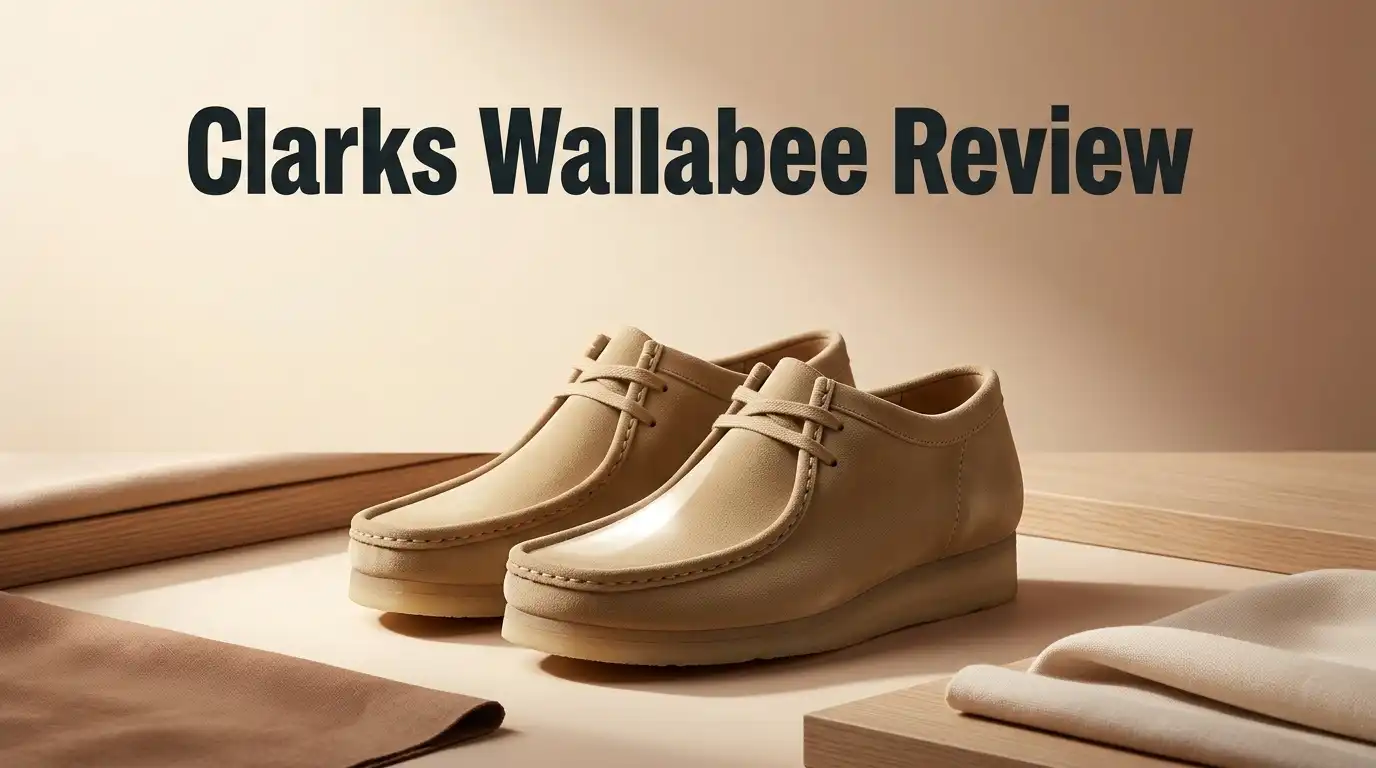
The construction is simple. A single piece of leather or suede wraps the foot. A stitched apron seam runs across the top. Two eyelets hold the laces. A thick crepe rubber wedge sits underneath. Two small fob tags hang from the side, one reading Clarks Originals and one reading Wallabees.
That is it. No stiff heel counter in the traditional sense. No fancy cushioning system. No branding across the whole upper.
The shoe feels closer to a slipper than a boot. Your foot sits inside soft material rather than on top of a rigid platform. That explains why people describe the fit as hugging or wrapping.
The line now includes several versions. The low Wallabee, the Wallabee Boot, the Wallabee Cup with a cupsole, and cheaper cousins like the Shacre and the Bushacre. Only the Originals line carries the true crepe wedge and the leather lining.
Colours rotate constantly. Maple suede and beeswax leather stay in stock year round. Black, dark olive, cola, and grey suede appear and disappear. Collaboration pairs sell out in hours and resell for double.
Unboxing Experience: What Arrives at Your Door
The box arrived without much ceremony. A plain navy and white Clarks Originals shoebox sat inside the shipping carton, slightly dented on one corner. No dust bags. No spare laces. No care card.
Lift the lid and you get tissue paper, thin and crinkly, wrapped loosely around each shoe. Cardboard stuffing sits in the toe of each pair to hold the shape. The presentation feels budget for a shoe near two hundred dollars. Brands at half the price often include a cotton bag.
The first thing I noticed was the smell. Real suede has a warm, slightly dusty scent, and my maple pair delivered it immediately. That small detail told me the material was genuine and not corrected split leather with a coating.


Last update on 2026-04-11 / Affiliate links / Images from Amazon Product Advertising API Some of the links on this website are affiliate links, which means that at no additional cost to you, I earn a commission if you click through and make a purchase. I only recommend products and services that I believe will add value to my readers. Thank you for your support!
Then I picked one up. The shoe weighs less than expected. The crepe wedge looks heavy but feels light and slightly tacky to the touch, almost like soft caramel.
I checked the interior next. Leather lining covered the heel and sides, which felt smooth and cool. The footbed showed the new Clarks branding stamped directly into the shoe. I tried to lift the insole out. It did not budge, which confirmed the reports about glued footbeds on current pairs.
Stitching looked clean across the apron seam. I found one loose thread near the left tongue, nothing serious. Overall the pair looked handmade in a good way, with tiny irregularities between left and right.
Design and Build Quality in 2026
Clarks still builds the Wallabee with real materials, and that matters. The suede on my pair is thick, nappy, and forgiving. The beeswax leather version has a waxy pull up finish that scuffs and then buffs back with a thumb rub.
The apron stitching is the star detail. Workers stitch it by hand on Originals pairs, and you can see slight variation in the spacing. That variation is a feature, not a flaw. It proves a person touched the shoe.


Last update on 2026-04-11 / Affiliate links / Images from Amazon Product Advertising API Some of the links on this website are affiliate links, which means that at no additional cost to you, I earn a commission if you click through and make a purchase. I only recommend products and services that I believe will add value to my readers. Thank you for your support!
Now the harder truth. Build quality has slipped compared to pairs from ten or fifteen years ago. Long term owners report this constantly, and my pair supports the claim.
Three changes stand out. First, the sole now contains a foam wedge covered by a crepe rubber shell rather than solid crepe. Second, the footbed is glued in place, so you cannot swap in an orthotic easily. Third, the whole shoe feels stiffer out of the box, as if extra structure was added underfoot.
Clarks likely made these changes to control cost, since natural crepe rubber prices climbed sharply. The visual result stays identical. The feel does not.
Lace quality is average. The flat cotton laces fray at the tips within a few months. The metal eyelets hold up fine.
My verdict here is mixed. The upper deserves praise. The sole deserves scrutiny.
Top 3 Alternative for Clarks Wallabee

- Wallabee with two-eyelet lacing featuring rolled moc-toe stitching and crepe sole
- Cushioned insole
Last update on 2026-09-12 / Affiliate links / Images from Amazon Product Advertising API Some of the links on this website are affiliate links, which means that at no additional cost to you, I earn a commission if you click through and make a purchase. I only recommend products and services that I believe will add value to my readers. Thank you for your support!
Clarks Originals Men’s Desert Boot

- Inspired by our iconic Wallabee, archival styling creates casual Shacre Boot
- Removable Ortholite Footbed
- Smooth Textile Linings
Last update on 2026-09-12 / Affiliate links / Images from Amazon Product Advertising API Some of the links on this website are affiliate links, which means that at no additional cost to you, I earn a commission if you click through and make a purchase. I only recommend products and services that I believe will add value to my readers. Thank you for your support!
Clarks Men’s Shacre Boot

- Upper Material: nubuck leather
- Lining: sheepskin
- Closure: lace
Last update on 2026-09-12 / Affiliate links / Images from Amazon Product Advertising API Some of the links on this website are affiliate links, which means that at no additional cost to you, I earn a commission if you click through and make a purchase. I only recommend products and services that I believe will add value to my readers. Thank you for your support!
Clarks Wallabee Cup
Comfort and the Crepe Sole Debate
Here is where opinions split violently. Some owners call the Wallabee the most comfortable shoe they have ever worn. Others say their feet ache after a single afternoon.
Both groups are telling the truth, and your foot shape decides which group you join.
The crepe wedge has zero arch support. The footbed is essentially flat. If you have naturally low arches or you prefer a flat, wide platform, this feels wonderful. Your toes spread out in the roomy box and nothing pinches.
If you have high arches, the flatness collapses under your midfoot and your plantar fascia takes the strain. No amount of break in fixes that. Since the insole is glued down on current pairs, adding your own support is difficult.
Hard surfaces expose the second issue. Crepe rubber compresses and then stops absorbing shock. On pavement I felt the impact of each heel strike after roughly ninety minutes of walking. On grass, carpet, or wooden floors the shoe felt superb.
Break in takes about two weeks of short wears. Suede versions soften faster than leather. The heel area moulds to your foot and stops slipping after five or six wears.
Temperature matters too. Crepe grips warm pavement and gets slightly sticky in heat. In cold weather it hardens and feels like walking on a plank.
My honest summary: this is a great shoe for standing, driving, and moderate walking. It is a poor shoe for city days over ten thousand steps.
Sizing and Fit: How Do Wallabees Run?
Sizing is the single biggest reason people return this shoe.
The general rule is to go half a size down from your regular sneaker size. If you wear a 10 in Nike or New Balance, order a 9.5 in Wallabees. Plenty of owners go a full size down and feel fine.
The reason is the soft upper. Unlined suede stretches and relaxes with wear, so a snug first fit becomes a perfect fit after two weeks. A roomy first fit becomes sloppy.
Width is generous. The toe box is wide and tall, which suits square feet and bunions. Narrow feet may swim inside and feel the heel lift with each step.
Half sizes at Clarks feel like large jumps. Several buyers report that a 7.5 fits well while an 8 feels cavernous. That inconsistency makes online ordering risky.
A few practical tips from my own testing. Try shoes in the afternoon when feet swell. Wear the sock thickness you plan to use daily. Lace the shoe fully before judging heel hold, since the two eyelet setup needs proper tension.
Leather versions stretch less than suede. Size those closer to true to size if you sit between sizes.
Women’s Wallabee sizing follows the same pattern. Half a size down works for most buyers.
If the heel slips slightly after break in, a suede heel grip solves it cheaply. If the toe pinches, no fix exists. Return and resize.
Leather vs Suede: Which Version Wins?
Clarks sells the Wallabee in both materials, and they behave differently enough to matter.
Suede is the comfort winner. The maple, ash, and olive suede pairs feel soft from day one. The nap forgives foot shape irregularities and stretches where you need it. Break in takes days rather than weeks.
Suede also hides scuffs well. A quick brush revives the surface. The downside is water. Rain leaves dark patches, and salt stains ruin light colours. Suede protector spray is not optional in wet climates.
Leather is the durability winner. The beeswax finish develops a patina with wear, darkening at the flex points and lightening on the toes. It wipes clean with a damp cloth and handles light rain without drama.
The trade off is stiffness. Leather pairs feel firm across the instep for the first two weeks. Some owners describe the leather versions as inconsistent, with certain pairs staying rigid permanently.
Colour choice shapes how formal the shoe looks. Black leather reads closest to smart casual and works with dark trousers. Maple suede reads purely casual and pairs with jeans and chinos. Cola and dark tan sit in the middle.
For a first pair I recommend maple suede. It is the classic look, the most comfortable option, and the easiest to style.
For an only pair in a rainy city, choose black or beeswax leather and accept the longer break in.
Durability: How Long Will They Last?
Let’s talk honestly about lifespan, because this is where the Wallabee frustrates people most.
The upper outlasts everything else. Suede and leather uppers on these shoes routinely look good after five years of regular wear. Owners describe them as softening into something better than new.
The sole is the weak point. Crepe rubber wears quickly on abrasive surfaces. Expect visible wear at the heel and outer edge within six months of heavy use. Expect to reach the wear line somewhere between two and four years depending on your walking habits and pavement type.
Crepe also picks up grit. Small stones embed in the surface, and the sole gums up with dirt and gum residue. You will spend time picking debris out with a pick or brush.
Heat destroys crepe. Leave them near a radiator or in a hot car and the sole distorts permanently.
The repair situation is poor. Clarks offers no official resoling programme. Many cobblers refuse crepe work because sourcing the material is difficult and the process is messy. Specialist repairers exist and charge a premium, often over one hundred dollars.
Some owners have their Wallabees resoled with Vibram instead. That change extends life dramatically and adds support, though it removes the original look and feel.
Plan for roughly three years of regular wear. That works out to reasonable cost per wear at sale prices and poor value at full retail.
What the Clarks Wallabee Does Not Do Well
Every honest review needs this section. Here is where the Wallabee genuinely disappoints.
It fails on long walking days. Ten thousand steps on concrete leave your feet sore. The crepe compresses, the flat footbed offers nothing, and you feel every impact. Choose different shoes for travel days.
It has no traction in wet conditions. Smooth crepe on wet tile or polished floors is slippery. I nearly went down in a supermarket entrance. Rain also darkens suede unevenly.
It offers no ankle support in the low version. The soft upper collapses around the sides, so uneven ground feels unstable. Never wear these on trails.
It is not a formal shoe. The thick wedge and rounded toe kill any attempt at smart dressing. Suits look wrong with Wallabees unless you are deliberately breaking rules.
The glued insole removes customisation. Orthotic users lose their main option. This is a real regression from older pairs.
The price feels high for the current build. At $190 to $210 you compete with welted boots that last a decade and can be resoled endlessly.
One more small annoyance. The fob tags swing and slap against the shoe as you walk. Some owners cut them off. Others love them. Be aware.
Warm weather brings sweat too. The leather lining traps heat, and suede versions with no lining absorb moisture. Cedar shoe trees help between wears.
Pros and Cons of the Clarks Wallabee
Here is the full balance sheet after months of wear.
Pros
- The silhouette is iconic and instantly recognisable. Nothing else looks like a Wallabee, which makes even a plain outfit look considered.
- The toe box is wide and tall. Broad feet, bunions, and spreading toes all get room to move without pressure points.
- Materials are genuine. Real suede and real pull up leather age into something better rather than peeling or cracking.
- Hand stitched apron detailing gives each pair small imperfections that feel handmade instead of factory generic.
- The shoe slips on and off easily. Two eyelets and a soft upper mean you rarely need to unlace fully.
- Styling range is wide. Jeans, chinos, cords, shorts, and workwear trousers all work with this shoe.
- The upper lasts for years and develops character rather than looking tired.
Cons
- No arch support at all. High arch feet suffer, and the glued insole blocks orthotic swaps on current pairs.
- The sole construction changed to a foam wedge wrapped in crepe, which feels stiffer and less cushioned than older pairs.
- Crepe wears fast on pavement and gums up with dirt, gum, and small stones.
- Resoling is difficult and expensive. Clarks provides no official repair service.
- Wet weather performance is weak. Suede stains and crepe slips on smooth wet surfaces.
- Sizing is inconsistent between models and half sizes, so online ordering carries return risk.
- Full retail price feels high relative to the current quality level.
Styling the Wallabee: Outfit Ideas That Work
The Wallabee looks odd on its own and excellent in context. The trick is balance.
Straight or slightly wide leg trousers work best. The shoe has visual weight at the bottom, so skinny jeans create a lollipop effect. Aim for a trouser opening that just touches the top of the shoe.
For everyday casual, pair maple suede Wallabees with mid blue straight jeans, a white tee, and an overshirt. This is the default outfit and it never looks wrong.
For smart casual, try black leather Wallabees with charcoal wool trousers and a fine knit polo. The dark colour reduces the bulk and the crepe adds an interesting texture against the wool.
Workwear fans get the best results. Olive or cola suede with cream chinos, a chore jacket, and a beanie looks deliberate and seasonal.
Socks matter more than you expect. Ribbed cotton socks in cream, grey, or forest green suit the shoe. Thin dress socks look wrong. Invisible socks make the shoe look like a slipper.
Cuffing helps. Turn jeans up once to show the ankle break and let the shoe stand out.
The Wallabee Boot version changes the equation. It reads more rugged and pairs well with heavier denim and winter layers.
Avoid athletic wear entirely. The shoe fights gym clothes and loses.
Colour rule of thumb: match the shoe to your belt or bag tone for a pulled together look.
Care and Cleaning: Keeping Them Looking Good
Wallabees need maintenance, and the crepe sole needs more attention than the upper.
Start with protection before the first wear. Spray suede pairs with a quality suede and nubuck protector. Repeat every month or so. Leather pairs benefit from a light wax or cream conditioner every few months.
For suede cleaning, use a brass or rubber suede brush. Brush in one direction to lift the nap. Use a suede eraser on shiny or flattened spots. Never soak suede in water.
Salt stains need a diluted white vinegar solution applied lightly with a cloth, then brushing once dry.
For the crepe sole, a stiff brush and a rubber crepe brush remove most grime. Embedded stones come out with a small pick or an old screwdriver. Avoid solvents and harsh cleaners, since they dissolve crepe.
Gum on the sole responds to ice. Freeze the residue and chip it away gently.
Store the shoes away from heat and direct sunlight. A radiator will warp the wedge permanently. Cedar shoe trees absorb moisture and hold the shape.
Rotate your wear. Giving the shoes a full day to dry between wears extends the life of the upper significantly.
If the sole edges start separating, take them to a cobbler early. Small separations are fixable. Large ones are not.
Price and Value: Is the Wallabee Worth It?

- Our legendary Wallabee returns in classic beeswax - right in time for new-season wear
Last update on 2026-09-12 / Affiliate links / Images from Amazon Product Advertising API Some of the links on this website are affiliate links, which means that at no additional cost to you, I earn a commission if you click through and make a purchase. I only recommend products and services that I believe will add value to my readers. Thank you for your support!
Current retail sits around $190 for the low Wallabee and slightly higher for the boot and collaboration versions. Sales drop that to $130 or lower, and outlet stock goes cheaper still.
At $190 the value argument gets difficult. That money buys a welted boot from several heritage makers that will last ten years with resoles. The Wallabee gives you three years and no repair path.
At $130 or below the maths improves. Three years of regular wear at that price works out to strong cost per wear, especially for a shoe you will actually reach for daily.
Watch out for the cheaper cousins. The Shacre and Bushacre look similar and cost far less, often under $70. They use different soles, narrower toe boxes, and thinner linings. They are decent shoes and poor substitutes for the Originals feel.
Outlet Wallabee style shoes exist with fully rubber soles. They are not the same product despite similar branding.
Secondhand buying makes real sense here. Older pairs with solid crepe soles appear regularly on resale sites at half retail. If you want the original comfort, hunt vintage.
My recommendation is simple. Wait for a sale, or buy used. Pay full retail only if you have wanted this specific shoe for years and nothing else will satisfy you.
Free returns matter more than price given the sizing uncertainty.
Who Should Buy the Clarks Wallabee?
Let’s match the shoe to the person.
Buy the Wallabee if you have wide or flat feet. The roomy toe box and flat footbed suit your foot shape better than almost anything else on the market.
Buy it if you want a distinctive casual shoe. Nothing else delivers this silhouette. If you are tired of white sneakers, this is the answer.
Buy it if your days involve moderate movement. Office work, driving, coffee runs, and social evenings all suit the Wallabee perfectly.
Buy it if you appreciate design history. This shoe carries genuine cultural weight across hip hop, Jamaican style, British subculture, and quiet menswear circles.
Now the other side.
Skip it if you have high arches or plantar fasciitis. The flat footbed and glued insole will cause pain, and you cannot fix it.
Skip it if you walk many miles daily on concrete. Your feet will hurt and the sole will wear through quickly.
Skip it if you need one shoe for everything. It is not waterproof, not formal, and not suited to rough ground.
Skip it if you want a buy it for life shoe. The repair situation kills that ambition.
For high arch buyers who love the look, the Wallabee Cup version offers an EVA midsole and more structure. That is the smarter pick.
Final Verdict: Should You Buy It in 2026?
After months of wear my answer is a qualified yes.
The Clarks Wallabee remains one of the best looking casual shoes available. The wide toe box, the soft upper, and that unmistakable crepe wedge create something no competitor matches. Wearing them still feels good, and strangers still ask about them.
But this is a weaker version of a great shoe. The foam wrapped sole, the glued footbed, and the added stiffness all move the Wallabee away from what made it special. Long time owners are right to complain.
The value equation decides everything. At full retail the shoe asks too much for what it delivers. On sale it becomes an easy recommendation.
Match the shoe to your feet first. Flat and wide feet will love it. High arches will regret it. No styling advice changes that basic fact.
My practical advice: order two sizes with free returns, wear them indoors for an hour, and keep the pair that feels snug rather than comfortable. Suede will relax into place.
Then protect the suede, brush the sole, and keep them away from heat.
The Wallabee is not a perfect shoe. It never was. It is a strange, soft, characterful shoe that a lot of people fall in love with anyway. Just go in knowing exactly what you are getting.
Frequently Asked Questions
Do Clarks Wallabees run big or small?
Most buyers size half a size down from their sneaker size. The soft upper stretches during break in, so a snug initial fit becomes correct within two weeks. Some owners go a full size down. Half size jumps at Clarks feel large, so ordering two sizes with free returns is the safest approach.
Are Wallabees good for walking all day?
Not really. The crepe sole compresses and the footbed is flat with no arch support. Walking on concrete for more than about two hours causes soreness for many wearers. The shoe performs well for standing, driving, and moderate daily movement.
Can Clarks Wallabees be resoled?
Technically yes, practically it is difficult. Clarks offers no official resoling service. Many cobblers decline crepe work because the material is hard to source. Specialist repairers charge over one hundred dollars. Some owners switch to a Vibram sole instead, which lasts longer but changes the look.
Did Clarks change the Wallabee sole?
Yes. Current pairs use a foam wedge wrapped in a crepe rubber outer layer rather than solid crepe throughout. Most pairs also have a glued in footbed instead of a removable insole. The result feels stiffer and less cushioned than older versions.
Are Wallabees waterproof?
No. Suede versions stain in rain and salt. Leather versions handle light moisture better but are still not waterproof. The smooth crepe sole also becomes slippery on wet tile and polished floors. Use a protector spray and keep a second pair for wet days.
What is the difference between the Wallabee and the Shacre?
The Wallabee sits in the Clarks Originals line with a crepe wedge, leather lining, and a wide rounded toe box. The Shacre is a cheaper alternative with a squarer narrower toe, no leather lining, and a different sole. The Shacre costs far less and feels noticeably less refined.
How long do Clarks Wallabees last?
The upper often looks good after five years. The sole is the limit. Expect two to four years of regular wear before the crepe reaches the wear line, depending on your walking surfaces and step count.
Are Wallabees still in style in 2026?
Yes. The silhouette continues to appear in streetwear, workwear, and quiet menswear looks. Collaboration releases still sell out quickly. The shoe has outlasted enough trend cycles that it now reads as a classic rather than a fashion item.

Mia Smith is the founder of Shoe Storyteller, a blog that celebrates the art and stories behind shoes. With a passion for fashion and a flair for storytelling, Mia brings a unique perspective to the world of footwear.