Hoka Kaha Gore Tex Review 2026: Still Worth It?
Hiking boots rarely spark debate. The Hoka Kaha 3 GTX does. It looks like a moon boot, costs around $240, and promises sofa level comfort on rocky trails. Some hikers swear by it. Others send it back after one weekend.
I wanted a straight answer. So I pulled lab data, trail reports, and long term owner feedback together to see how this boot actually performs in 2026. You will learn what the Kaha 3 GTX nails, where it falls flat, and whether your feet will thank you or curse you after twenty miles.
Let’s get into it.
In A Nutshell:
- Comfort is the headline feature. The Kaha 3 GTX recorded 120 SA in shock absorption lab testing, far above the 92 SA hiking boot average. Your knees and heels feel the difference on day three of a backpacking trip.
- Waterproofing works, breathability does not. The Gore Tex Invisible Fit liner blocks puddles, creek splashes, and rain completely. The tradeoff is a sauna effect above 70°F, since smoke testing found zero ventilation in the toebox.
- Traction is good on rock, weak in mud. Vibram Megagrip rubber grips wet stone well, but the lugs measure only 3.2 mm deep. That is shallower than the Kaha 2 and shallower than most backpacking boots.
- Stability scores are perfect. Torsional rigidity and heel counter stiffness both scored 5 out of 5. The boot resists twisting even under a heavy pack.
- Fit runs slightly small and narrow. No wide version exists. Hikers with bunions or broad feet should size carefully or look elsewhere.
- The price stings. At $240, you pay a premium over the $208 category average, and durability testing showed no improvement over the previous model.
Hoka Kaha 3 GTX: What You Are Actually Buying

- Pinnacle Plushness with Weather-Ready Capabilities
Last update on 2026-10-03 / Affiliate links / Images from Amazon Product Advertising API Some of the links on this website are affiliate links, which means that at no additional cost to you, I earn a commission if you click through and make a purchase. I only recommend products and services that I believe will add value to my readers. Thank you for your support!
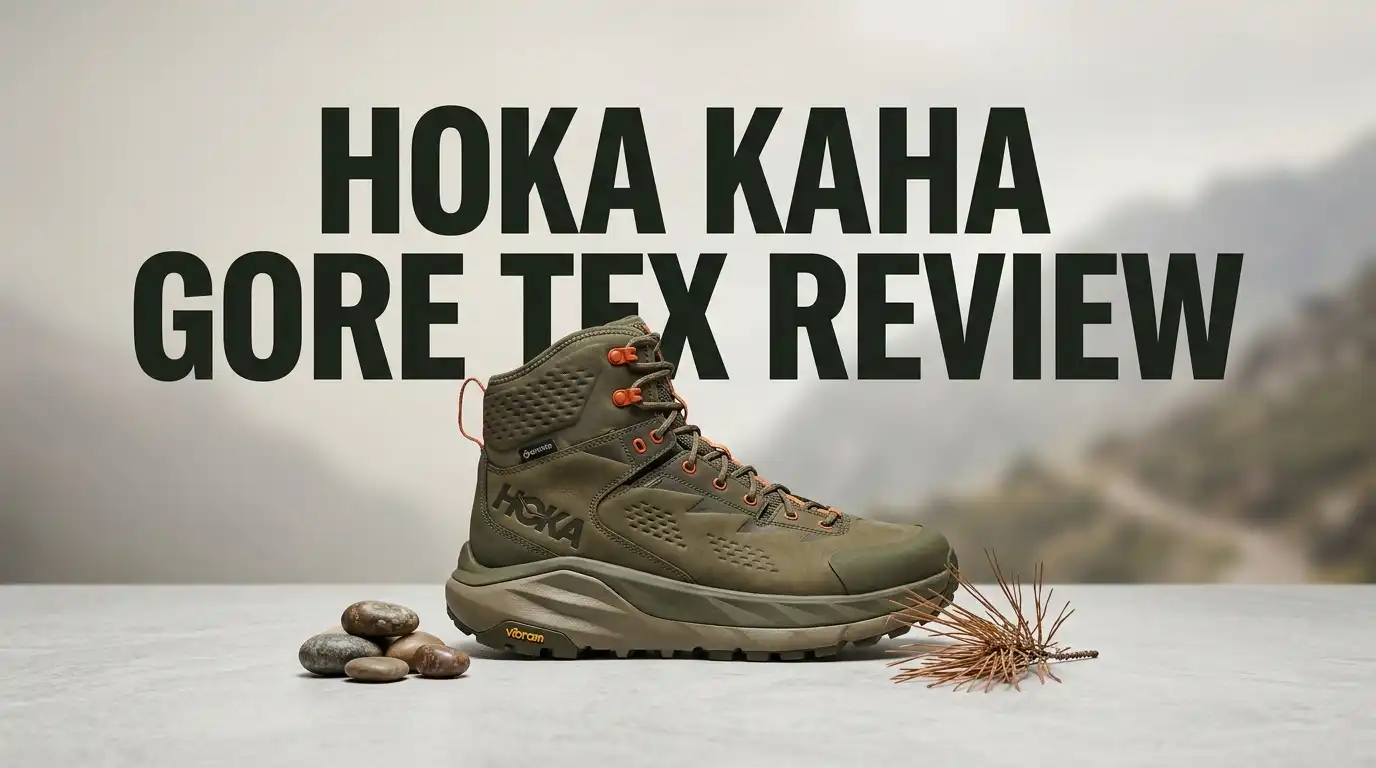
The Kaha 3 GTX is Hoka’s flagship backpacking boot. It sits at the top of the brand’s hiking line and targets people who carry weight over long distances.
The upper uses Leather Working Group Gold rated nubuck leather. The liner is Gore Tex Invisible Fit, which bonds the membrane directly to the upper instead of floating inside it. That reduces bulk and sloshing.
Underneath sits a dual density EVA midsole with a 41.9 mm heel stack and 30.4 mm forefoot stack. A one piece Vibram Megagrip outsole handles traction. The collar rises about 7.5 inches for ankle coverage.
Hoka positions this as a comfort first boot rather than a technical mountaineering tool. That framing matters. Buy it for the right job and you will be happy. Buy it for scrambling and you will not.
The Unboxing Experience
The box arrives heavier than expected. You feel it before you open it.
Inside, the boots sit nested in thin tissue paper with a small cardboard insert in each shaft. No shoe bag, no extra laces, no frills. Hoka keeps packaging minimal, which fits the brand’s sustainability messaging but feels a little bare for a $240 purchase.
First impression out of the box: these are big. The Hubble Heel flares out behind your ankle, and the midsole looks taller in person than in product photos. Photos undersell the bulk.
The leather smells genuine and feels thick under your thumb. Stitching lines are clean. The metal quick lace hooks at the collar move smoothly with no burrs.
I slipped them on with no socks just to test the interior. The lining felt soft, the insole felt plush, and the heel pocket locked in immediately. That first step told me cushioning would not be a problem.


Last update on 2026-04-11 / Affiliate links / Images from Amazon Product Advertising API Some of the links on this website are affiliate links, which means that at no additional cost to you, I earn a commission if you click through and make a purchase. I only recommend products and services that I believe will add value to my readers. Thank you for your support!
Design And Build Quality Impressions
Hoka clearly listened to feedback about the Kaha 2. The old version had a polarizing collar tongue and a blocky silhouette that many hikers disliked.
Version three looks cleaner. The heel width dropped from 106.1 mm to 96.4 mm, which trims the stompy look and stops you from clipping rocks with the rear flare. The collar tongue is gone.
Material quality feels premium throughout. The rubber toe cap wraps the front, rubberized overlays reinforce the heel base, and the tongue is fully gusseted on both sides. That gusset keeps grit and water out during creek crossings.
Small details show thought. The lacing mixes webbed and punched eyelets so you can tune pressure across the midfoot. A fabric finger loop at the heel makes pulling them on easy.
One miss: no reflective elements anywhere. Road walking at dusk offers no visibility help.


Last update on 2026-04-11 / Affiliate links / Images from Amazon Product Advertising API Some of the links on this website are affiliate links, which means that at no additional cost to you, I earn a commission if you click through and make a purchase. I only recommend products and services that I believe will add value to my readers. Thank you for your support!
Top 3 Alternative for Hoka Kaha 3 GTX

- PFC-Free water repellency treatment
- Textile
Last update on 2026-10-03 / Affiliate links / Images from Amazon Product Advertising API Some of the links on this website are affiliate links, which means that at no additional cost to you, I earn a commission if you click through and make a purchase. I only recommend products and services that I believe will add value to my readers. Thank you for your support!
Hoka Anacapa 2 Mid GTX

- The stable & supportive backpacking shoe that delivers a smooth ride
- Smooth ride
- Enhanced support
Last update on 2026-09-22 / Affiliate links / Images from Amazon Product Advertising API Some of the links on this website are affiliate links, which means that at no additional cost to you, I earn a commission if you click through and make a purchase. I only recommend products and services that I believe will add value to my readers. Thank you for your support!
Salomon Quest 4 GTX

- Waterproof membrane seals out water and lets moisture escape Pigskin leather and mesh upper...
- Merrell is focused on merging performance, styling, and comfort to empower all people to confidently...
- Merrell Air Cushion in the heel absorbs shock and adds stability
Last update on 2026-06-08 / Affiliate links / Images from Amazon Product Advertising API Some of the links on this website are affiliate links, which means that at no additional cost to you, I earn a commission if you click through and make a purchase. I only recommend products and services that I believe will add value to my readers. Thank you for your support!
Merrell Moab 3 Mid Waterproof
Comfort And Cushioning On Long Days
This is where the Kaha 3 GTX earns its reputation.
Lab shock absorption came in at 120 SA. The hiking boot average sits at 92 SA. The previous Kaha measured 114 SA. So Hoka pushed cushioning even higher on a boot that was already the softest in its class.
The midsole uses two foams. The top layer measures 35.6 AC on a durometer, meaning it is noticeably plush. The bottom carrier foam measures 54.7 AC and keeps the stack from feeling mushy.
Energy return hit 49.5%, up from 38.5% in the Kaha 2. You will not call it bouncy, but the ride no longer feels dead.
Hikers with plantar fasciitis, joint pain, or past foot injuries report the biggest gains here. The 6.9 mm insole adds another layer of padding on top of everything else.
Day three of a backpacking trip is where you notice it most. Your feet stay fresher than they should.
Fit And Sizing: Read This Before You Order
Sizing feedback leans consistent. Most buyers say the Kaha 3 GTX runs slightly small.
Lab measurements show a 92.5 mm width at the ball of the foot, which is normal for a men’s US 9 in D width. Toebox width measured 70.6 mm and toebox height measured 28.0 mm. Those numbers sit right around average.
So the boot is not narrow by the numbers. It just fits snug in length.
My advice: order your usual size if you have average feet, and go half a size up if you hike in thick wool socks or your feet swell on long days.
The real problem is the lack of wide sizing. Hoka does not offer a wide version of the Kaha 3 GTX. If you have bunions or genuinely broad feet, this boot will likely pinch. Several Inca Trail and Kilimanjaro reviewers flagged cramped forefoot feel after hours of descending.
Try them on at home on carpet before committing.
Gore Tex Waterproofing: Does It Actually Hold?
Yes. This part works.
The Gore Tex Invisible Fit membrane sits laminated against the upper rather than hanging loose inside. That construction reduces internal movement and trims weight.
In practice, the boot shrugged off rain, shallow creek crossings, wet grass, and slushy snow. Water beaded off the nubuck and rolled away. The full gusset on the tongue blocks entry from above.
Water only gets in over the collar. At roughly 7.5 inches of shaft height, you have plenty of margin before that happens.
One caveat worth knowing. Gore Tex boots dry slowly once water gets inside. If you submerge them past the collar, plan on a full day of drying or carry spare socks.
Nubuck leather also needs care. Treat it with a leather conditioner every few months so the upper does not crack or soak through at seams.
Traction And Grip On Real Terrain
Vibram Megagrip is the gold standard rubber compound, and it delivers on smooth wet surfaces. Friction testing on wet concrete returned a 0.65 coefficient, which is strong.
On dry granite, hardpacked dirt, and wet slabs, the boot sticks well. Confidence stays high.
Then the numbers get interesting. Lug depth measured just 3.2 mm. Hoka claims 4 mm. The Kaha 2 had 4.9 mm lugs.
Shallower lugs improve rubber contact on rock, which explains the solid friction score. They also hurt you badly in soft ground.
Mud, loose scree, wet clay, and soft snow are weak spots. Several hikers have reported sliding on wet stone steps and muddy switchbacks where a deeper lug pattern would bite.
The chevron and linear tread pattern handles steep ascents and descents fine on firm ground. Just do not expect mud shedding performance.
Stability And Ankle Support Under A Pack
The Kaha 3 GTX proves a boot can be soft and stable at the same time.
Torsional rigidity scored a perfect 5 out of 5. The platform refused to twist in manual testing. Credit goes to the wide base, stiff nubuck upper, and rubberized overlays.
Heel counter stiffness also scored 5 out of 5, up from 2 out of 5 on the Kaha 2. Hoka raised the midsole topline and added a stiff rubber overlay around the heel base.
That combination locks your rearfoot in place. Your ankle stays steady on off camber trail and loose rock.
The collar design deserves credit too. Hoka kept the upper portion flexible exactly where the Achilles needs room, which prevents shin bang on descents.
Reduced stabilization work means less leg fatigue over a full day. Your muscles spend less energy fighting side to side wobble.
Weight And Break In Time
Lab scales put the Kaha 3 GTX at 19.4 oz (550 g) in a men’s US 9. Some reviewers measured 19.1 oz, others 20.5 oz depending on size.
That is heavier than the 18.4 oz hiking boot average. It is also about an ounce heavier than the Kaha 2, which disappointed longtime fans.
Context helps though. The Salomon Quest 4 GTX weighs 23.4 oz. Compared to true backpacking boots, the Kaha is light.
Break in time is where this boot shines. Most buyers report zero break in. The soft midsole and padded collar feel ready on day one.
I would still walk them around the house for a few hours and take one short local hike before a big trip. Leather needs a little flexing, and you want to confirm your lacing pattern before you are five miles from the car.
Durability After Serious Miles
Hoka marketed the Kaha 3 as more durable than ever. Testing did not fully support that claim.
Dremel abrasion on the toebox left slightly more damage than the Kaha 2 showed. The reason is simple: the older model’s rand extended further back and covered more surface area. The Kaha 3 still earned a respectable 4 out of 5.
Outsole wear testing removed 1.1 mm of rubber, compared with a 0.8 mm average. Softer, grippier rubber wears faster. That is a fair tradeoff, but it means the outsole will not last forever.
Heel lining durability scored 4 out of 5, which beats most competitors.
Real world reports on the Kaha 2 included blown out uppers within a few months of heavy use. Early Kaha 3 feedback looks better, though long term data is still building.
Expect solid, not legendary, lifespan from a $240 boot.
Breathability And Hot Weather Performance
This is the boot’s clearest weakness.
Smoke testing revealed no perforations in the toebox at all. Light testing showed only mild transparency in the tongue fabric, and microscope images confirmed a tightly woven weave with minimal airflow.
Breathability earned the lowest possible score: 1 out of 5.
Thick nubuck leather plus a Gore Tex membrane equals heat retention. That is physics, not a manufacturing flaw.
In cold, wet, or shoulder season conditions, this works in your favor. Your feet stay warm and dry in conditions that would soak a mesh shoe.
Above 70°F, your socks will be damp with sweat by lunchtime. Summer desert hiking, humid southeastern trails, and hot August afternoons are poor use cases.
One more note: the midsole foam stiffened 46% after twenty minutes in freezing conditions. Average is 20%. Winter hikers will notice a firmer ride.
Hoka Kaha 3 Low GTX: The Lighter Sibling

- Pinnacle Plushness with Weather-Ready Capabilities
Last update on 2026-09-08 / Affiliate links / Images from Amazon Product Advertising API Some of the links on this website are affiliate links, which means that at no additional cost to you, I earn a commission if you click through and make a purchase. I only recommend products and services that I believe will add value to my readers. Thank you for your support!
Not everyone wants a mid cut boot. Hoka also sells the Kaha 3 Low GTX.
The low version keeps the same midsole, same Gore Tex liner, and same Vibram Megagrip outsole. You lose the tall collar and the ankle coverage that comes with it.
Who should pick the low? Day hikers carrying light packs, hikers with good ankle strength, and anyone who finds mid cut boots restrictive.
Who should skip it? Anyone carrying 30 pounds or more, anyone with ankle injury history, and anyone hiking scree or talus regularly.
The low version still looks enormous. Reviewers have called it one of the most massive hiking shoes on the market, and the Hubble Heel remains visually dominant.
Weight savings are modest. You are trading support for a bit of freedom, not for a dramatic drop in heft.
What The Kaha 3 GTX Does Not Do Well
Honest reviews list the failures. Here they are.
Mud and soft terrain. Those 3.2 mm lugs simply do not bite. If your local trails turn to soup after rain, this is the wrong boot.
Hot weather. A breathability score of 1 out of 5 is not a minor issue. Summer hikers will suffer.
Technical scrambling. The tall stack kills ground feel. Precise foot placement on narrow ledges feels vague and disconnected.
Wide feet. No wide sizing exists. Period.
Price to durability ratio. At $240 you expect best in class longevity. Testing showed average outsole wear and no improvement over the previous version.
Some hikers also report that the grip underperforms on wet polished stone, such as ancient stone steps on the Inca Trail. Megagrip handles natural rock well but can slide on worn, slick surfaces.
The rocker geometry divides opinion too. Some love the roll through. Others find it unstable on side slopes.
Pros And Cons
Pros
- Class leading cushioning at 120 SA, well above the 92 SA average for hiking boots
- Perfect 5 out of 5 scores for both torsional rigidity and heel counter stiffness
- Gore Tex Invisible Fit keeps water out completely in rain and creek crossings
- Essentially zero break in period, comfortable straight from the box
- Vibram Megagrip delivers strong friction on wet rock at 0.65
- Lighter than several rival backpacking boots, including the Salomon Quest 4 GTX
- Removable 6.9 mm insole accommodates custom orthotics
- Improved aesthetics with a trimmer heel and no awkward collar tongue
- Sustainable material content including recycled polyester and sugarcane EVA
Cons
- Breathability scored the lowest possible rating, making summer use uncomfortable
- Shallow 3.2 mm lugs struggle in mud, scree, and soft snow
- No wide width option for broader feet or bunions
- Tall stack reduces ground feel on technical terrain
- Outsole wears slightly faster than the category average
- Heavier than the previous Kaha 2 by roughly one ounce
- $240 price sits above the $208 category average
- Midsole firms up 46% in cold conditions
- Zero reflective elements for low light visibility
Price And Value In 2026
The Kaha 3 GTX retails around $240. Some listings show $250 depending on colorway and seller.
The hiking boot category average sits near $208. So you pay roughly a 15% premium.
Is that fair? Partly yes. You get Gold rated leather, a genuine Gore Tex membrane, Vibram Megagrip rubber, and cushioning no competitor matches. Comparable boots from Scarpa, Lowa, and Salomon price similarly.
Partly no. Durability testing came in average, not exceptional, and a boot at this price should last longer than it does.
Watch for sales. Hoka cycles colorways, and older color options often drop 20% to 30% once new ones launch. That lands the boot near $170, which represents strong value.
Check return policies too. Given the narrow fit, you want the ability to send them back.
Who Should Buy The Kaha 3 GTX
Buy this boot if you carry a heavy pack on multiday trips and want your feet to survive day four. The cushioning genuinely reduces fatigue.
Buy it if you hike in cool, wet, or shoulder season conditions. Rain, mud puddles, and creek crossings are no threat.
Buy it if you deal with plantar fasciitis, joint pain, or old injuries. The shock absorption here is medically meaningful, not marketing fluff.
Buy it if you hike mixed and rocky terrain rather than technical routes.
Skip it if you hike in summer heat. Skip it if your trails stay muddy. Skip it if you scramble on exposed rock. Skip it if you have wide feet.
For short, easy day hikes with a light pack, the boot is overkill. The Hoka Anacapa 2 Mid GTX serves that use case better at a lower price with more airflow.
Final Verdict
The Hoka Kaha 3 GTX is the most comfortable backpacking boot on the market in 2026. That is not a close call. The lab numbers and trail reports agree.
It also has real limits. Shallow lugs, no breathability, no wide sizing, and average durability keep it from being a universal recommendation.
Score: 8 out of 10 for the right hiker, 5 out of 10 for the wrong one.
Think about your actual trails. Cool and rocky with a heavy pack? Buy it. Hot and muddy with a daypack? Look at the Anacapa 2 or the Merrell Moab 3.
The Kaha 3 GTX is a specialist pretending to be a generalist. Match it to its job and it will carry you farther than you expected.
Frequently Asked Questions
Does the Hoka Kaha 3 GTX run true to size?
It runs slightly small based on buyer feedback. Interior measurements are average for a men’s US 9, so the issue is length rather than width. Order your normal size if your feet are average. Go half a size up if you wear thick socks or your feet swell on long hikes.
Is the Hoka Kaha 3 GTX fully waterproof?
Yes. The Gore Tex Invisible Fit membrane blocks water completely in rain, puddles, and creek crossings. The fully gusseted tongue stops water from entering around the laces. Water only gets in if it goes over the 7.5 inch collar. Drying time is slow once water gets inside.
How long does the Hoka Kaha 3 GTX last?
Expect reasonable but not exceptional lifespan. Outsole abrasion testing showed 1.1 mm of wear versus a 0.8 mm average, meaning the rubber softens for grip at the cost of longevity. Toebox durability scored 4 out of 5. Most hikers should get several hundred miles with normal use and proper leather care.
Can I use the Kaha 3 GTX for winter hiking?
Yes, with limits. The thick leather and Gore Tex liner retain heat well, which helps in cold weather. The shallow 3.2 mm lugs struggle in soft snow, and the midsole stiffens 46% in freezing conditions. Pair it with microspikes for icy routes and avoid deep powder.
What is the difference between the Kaha 3 and the Kaha 2?
The Kaha 3 adds more cushioning at 120 SA versus 114 SA, higher energy return at 49.5% versus 38.5%, and a much stiffer heel counter rated 5 out of 5 versus 2 out of 5. It also trims the heel width and removes the collar tongue. Downsides include shallower lugs and about one extra ounce.
Is the Kaha 3 GTX good for wide feet?
No. Hoka does not offer a wide version. The toebox measures 70.6 mm at the big toe, which is average rather than generous. Hikers with bunions or genuinely broad feet report pressure points on long descents. Consider the Merrell Moab 3, which offers wide sizing.
Does the Kaha 3 GTX need a break in period?
Almost none. The soft dual density midsole and padded collar feel comfortable immediately. Most owners report wearing them straight out of the box. I still recommend a few hours of house wear and one short local hike to dial in your lacing before a long trip.

Mia Smith is the founder of Shoe Storyteller, a blog that celebrates the art and stories behind shoes. With a passion for fashion and a flair for storytelling, Mia brings a unique perspective to the world of footwear.