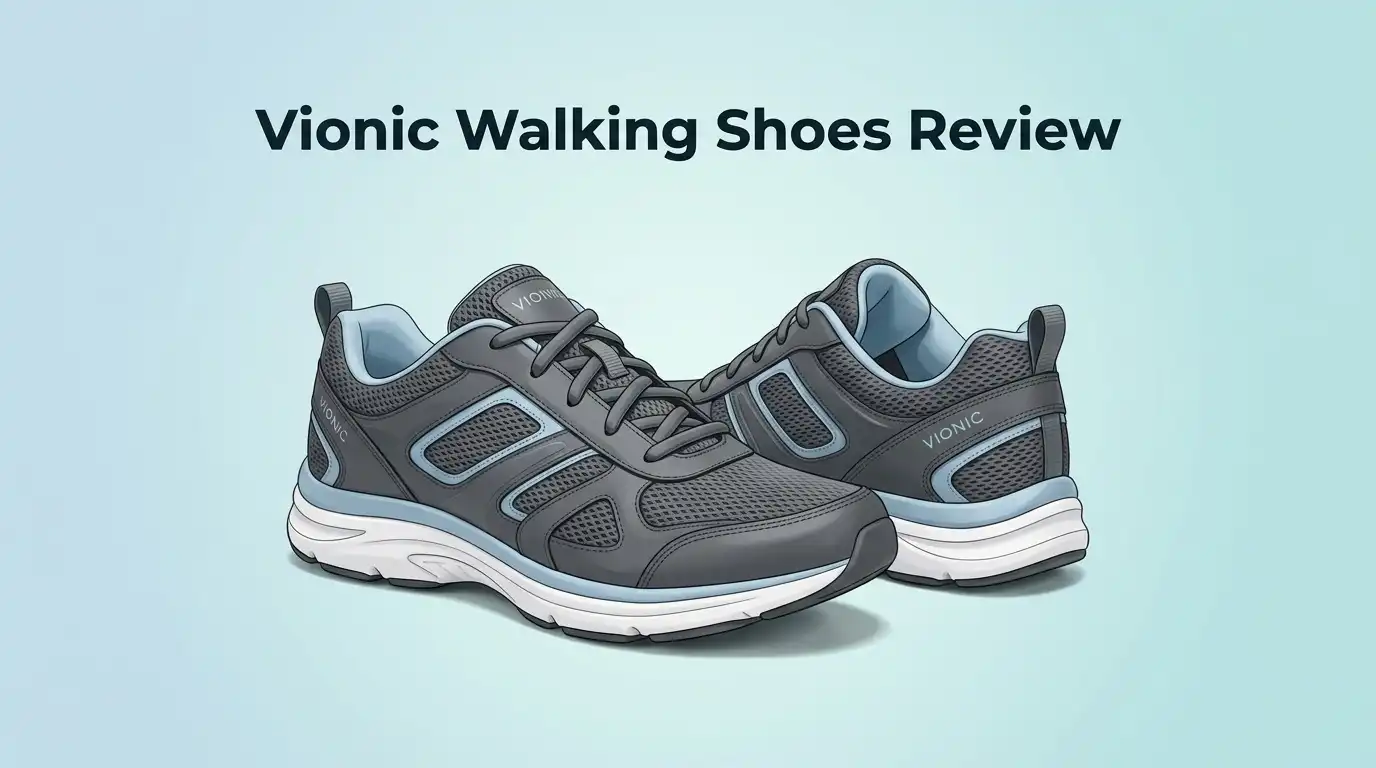
Vionic Walking Shoes Review 2026: Worth It?
Your feet carry you through roughly 5,000 steps a day. Bad shoes turn that simple math into heel pain, sore arches, and tired calves by 3 p.m. Vionic built its whole brand around fixing that problem with orthotic support baked straight into the footbed.
But does the hype hold up in 2026? I bought two pairs with my own money, walked over 100 miles in them, and tracked every blister, squeak, and sore spot. This review shares the honest results, including the parts Vionic gets wrong.
In A Nutshell:
- Support is the real strength. Every Vionic walking shoe uses a firm, contoured footbed that hugs your arch. If you have flat feet, fallen arches, or plantar fasciitis, this feels like a huge upgrade over standard sneakers.
- The break in period is real. Expect three to seven days of firm, slightly odd pressure under your arch. Some people love it instantly. Others need a full week of short walks.
- Sizing runs slightly narrow in the toe box. Wide sizes exist and they matter. Order wide if your current sneakers feel snug across the ball of your foot.
- Cushioning is moderate, not plush. Vionic prioritizes stability over softness. If you want a marshmallow ride like a Hoka Bondi, you will feel let down.
- Durability is average for the price. Uppers hold up well. Outsole tread on lighter models wears faster than premium running shoes at the same cost.
- Best value pick: the Walker Classic for leather build quality, and the Walk Max for lightweight daily miles.
What Are Vionic Walking Shoes?

- Leather or Suede Upper. Removable Textile Covered EVA Footbed. Durable Runner Outsole. Built in...
- YOUR NEW FAVORITE SNEAKERS FOR WOMEN: A best-seller for a reason - take them for a spin and you'll...
- VIONIC VIO MOTION TECHNOLOGY: Vionic Shoes offer stability, cushioning, arch support, and...
Last update on 2026-09-01 / Affiliate links / Images from Amazon Product Advertising API Some of the links on this website are affiliate links, which means that at no additional cost to you, I earn a commission if you click through and make a purchase. I only recommend products and services that I believe will add value to my readers. Thank you for your support!
Vionic makes comfort footwear built around a podiatrist designed footbed. The company started in Australia with a podiatrist named Phillip Vasyli, who wanted orthotic support inside shoes instead of sold separately as inserts.
That single idea shapes the entire lineup. You do not buy an insole and stuff it in. The support arrives already molded into the shoe.
The walking category sits at the center of the brand. These models target people who walk for fitness, work long shifts on hard floors, or travel and need one pair that survives an airport plus a full day of sightseeing.
Vionic walking shoes share four traits. They use a deep heel cup, a raised arch contour, a firm midsole platform, and a removable top cover so you can swap in your own custom orthotic if a doctor prescribed one.
The lineup splits into two rough groups. Leather and suede classics look like traditional walkers and lean toward stability. Knit and mesh models look like modern sneakers and lean toward light weight.
Prices sit between $110 and $170 depending on model and material. That places Vionic above budget sneakers and roughly level with premium running brands. You pay for the built in orthotic, not for racing foam or fashion branding.
One thing to understand upfront: Vionic sells support. It does not sell speed. These are walking tools, not running shoes, and treating them as running shoes leads to disappointment.
Vionic Walker Classic Review 2026
The Walker Classic is the shoe that made Vionic famous, and it still anchors the range in 2026. Mine arrived in a black suede finish with a wide fit.
The build feels serious. The upper uses real leather or suede rather than synthetic overlays, and the stitching held clean after three months of daily wear. The lace panel sits low, which reduces pressure across the top of the foot.
Inside, the footbed is firm. Press your thumb into the arch and you feel resistance, not squish. That is intentional. The shape lifts and cradles your arch instead of letting it collapse inward.


Last update on 2026-04-11 / Affiliate links / Images from Amazon Product Advertising API Some of the links on this website are affiliate links, which means that at no additional cost to you, I earn a commission if you click through and make a purchase. I only recommend products and services that I believe will add value to my readers. Thank you for your support!
Weight is the first honest negative. My women’s size 8 wide weighed roughly 11 ounces per shoe. That is heavy compared to modern walking sneakers, and you notice it on long uphill stretches.
Traction impressed me most. The rubber outsole grips wet sidewalks, tile floors, and packed gravel without slipping. I walked a rainy 4 mile loop and never felt sketchy on painted crosswalk lines.
Fit runs true to length but snug in width. If you normally wear a medium and your toes graze the sides, size into wide. The toe box shape is rounded but not roomy.
Who is it for? Nurses, teachers, retail workers, and anyone who needs one pair that looks tidy with slacks and still supports six hours of standing. It is a workhorse, not a fashion statement.
Unboxing Experience: What Arrives At Your Door
The box is plain matte cardboard with a small logo. No fancy magnetic lid, no tissue theater, no branded stickers. Vionic clearly spends money on the shoe instead of the packaging, and I respect that.


Last update on 2026-04-11 / Affiliate links / Images from Amazon Product Advertising API Some of the links on this website are affiliate links, which means that at no additional cost to you, I earn a commission if you click through and make a purchase. I only recommend products and services that I believe will add value to my readers. Thank you for your support!
Lift the lid and you find each shoe wrapped in thin white tissue paper. Underneath sits a small card explaining the arch technology and a short break in guide. That card matters more than it sounds.
The break in card tells you to wear the shoes one hour a day for the first week. Most buyers skip this and then complain about arch pressure. Follow the instruction and your experience improves a lot.
My pairs came with paper stuffing in the toes to hold shape during shipping. No shoe trees, no dust bag, no extra laces. The Walk Max included one spare lace set, which surprised me.
Smell test: mild. There was a faint glue and leather scent on the Walker Classic that faded in two days. The knit Walk Max had almost no odor out of the box.
First flex test revealed a lot. The Walker Classic barely bends at the forefoot. The Walk Max flexes easily and rolls forward. That difference in stiffness predicts how each shoe feels on foot better than any spec sheet.
One small annoyance. The price sticker on my box left residue, and the size label sat on the sole rather than the box end, which made it awkward to check sizing before unwrapping.
Vionic Walk Max Review 2026

- VIONIC VIO MOTION TECHNOLOGY: Vionic Shoes offer stability, cushioning, arch support, and...
- MAINTAINING YOUR VIONIC WOMEN’S and MEN’S SHOES: We recommend wearing your new pair for a few...
- VIONIC SHOES: The fusion between dynamic movement and grounded stability is how our exclusive VIO...
Last update on 2026-06-08 / Affiliate links / Images from Amazon Product Advertising API Some of the links on this website are affiliate links, which means that at no additional cost to you, I earn a commission if you click through and make a purchase. I only recommend products and services that I believe will add value to my readers. Thank you for your support!
The Walk Max is Vionic’s answer to modern cushioned sneakers, and it became my daily pick for longer distances. It looks like a normal athletic shoe, which helps if the classic walker style feels too clinical for you.
Weight drops noticeably. My pair felt closer to 9 ounces, and the difference over 5 miles is obvious. Lighter shoes reduce leg fatigue more than most people expect.
The midsole uses a rocker shape. The heel and toe curve upward, which nudges your foot forward through each step. If your ankles feel stiff or you have big toe joint pain, that rocker takes real strain off.
Vionic also flattens the drop on this model, meaning heel and forefoot sit closer to level. Runners will notice this immediately. It encourages a more natural posture but can make calves ache during the first week.
The knit upper breathes well. I wore these in 88 degree heat with thin socks and my feet stayed dry enough. The tradeoff is zero weather protection, so puddles soak straight through.
Support feels slightly softer than the Walker Classic. The arch contour is still there, just less aggressive. People who found older Vionic models too firm often prefer this one.
Negatives exist. The heel collar sits high and rubbed my ankle bone during the first three walks. Thicker socks solved it, but sensitive ankles should note this. The outsole rubber also collects small pebbles in the flex grooves.
Top 3 Alternative For Vionic Walker Classic

- ENGINEERED MESH
- Lining Textile
Last update on 2026-09-01 / Affiliate links / Images from Amazon Product Advertising API Some of the links on this website are affiliate links, which means that at no additional cost to you, I earn a commission if you click through and make a purchase. I only recommend products and services that I believe will add value to my readers. Thank you for your support!
Hoka Women’s Bondi 9

- THIS MEN’S SHOE IS FOR: Runners looking for a smooth ride that won’t distract from the fun of...
- SOFT CUSHIONING: The Ghost 16 offers neutral support while providing soft, nitrogen-infused DNA Loft...
- SMOOTH TRANSITIONS: The soft midsole and Segmented Crash Pad promotes an easy flow from landing to...
Last update on 2026-08-30 / Affiliate links / Images from Amazon Product Advertising API Some of the links on this website are affiliate links, which means that at no additional cost to you, I earn a commission if you click through and make a purchase. I only recommend products and services that I believe will add value to my readers. Thank you for your support!
Brooks Men’s Ghost 16
No products found.
New Balance Unisex 990v6
Vio Motion Support Technology Explained
Vionic markets its footbed as Vio Motion Support. The name sounds like marketing fluff, but the design has a clear logic worth understanding before you buy.
The system works across three zones. The heel zone uses a deep cup that centers your heel bone and stops it from rolling inward. Heel alignment controls everything above it, including knee and hip position.
The midfoot zone holds the raised arch contour. This is the part you feel first and the part that causes complaints. It lifts your arch rather than letting body weight flatten it with each step.
The forefoot zone adds a wider platform and a slight toe spring. That combination spreads pressure across the ball of your foot instead of concentrating it under one spot.
Why does this matter? Arch collapse pulls on the plantar fascia, the thick band of tissue running along your sole. Repeated pulling causes the stabbing morning heel pain that millions of people know too well.
Firm arch support reduces that pull. It also shortens the amount of work your foot muscles do to stabilize each step, which is why feet feel less tired at night.
The technology carries an approval seal from the American Podiatric Medical Association. That seal means a review panel judged the design safe and reasonable for foot health. It is not a medical cure claim, and honest reviewers should not present it as one.
One limit deserves mention. Support this firm suits neutral and low arches best. Very high, rigid arches sometimes feel pressed rather than supported, so high arch walkers should test carefully within the return window.
Comfort And Fit After 100 Miles Of Walking
Comfort claims mean nothing without mileage, so I tracked mine. I logged roughly 60 miles in the Walker Classic and 45 miles in the Walk Max across twelve weeks of neighborhood walks, errands, and one long travel day.
Week one was the hardest. The arch pressure felt like a firm thumb pushing under my foot. By day five the sensation faded and my feet stopped noticing it. That timeline matches what most buyers report.
Arch fatigue dropped clearly by week three. My usual late afternoon ache under the heel simply stopped showing up. That was the single most convincing result of the whole test.
Hot spots appeared in two places. The Walk Max heel collar rubbed my ankle bone early on. The Walker Classic pressed slightly on my right pinky toe until the suede softened.
Long distance verdict: the Walk Max wins past 4 miles, the Walker Classic wins for standing still. Stiff soles support standing well but tire your legs when you keep moving.
Sock choice changes everything. Thin dress socks let both shoes rub. A cushioned crew sock removed every hot spot I experienced.
Heat management differed sharply. The knit model stayed comfortable in summer. The suede model got warm above 80 degrees and needed a rest day to dry out.
One honest note on feel. Neither shoe gives that cloud like sink you get from thick foam trainers. Vionic comfort is a steady, planted, supported feeling. If plush softness is your definition of comfort, adjust expectations now.
Sizing Advice: Order Up Or Stay True?
Sizing is where most Vionic returns happen, so read this section before you click buy. The short answer: stay true to length, size up in width.
Length runs accurate. My normal size 8 measured correctly in both models, with about a thumb width of space in front of the longest toe. Going a half size up mostly creates heel slip, not extra comfort.
Width is the real issue. Standard Vionic medium widths feel narrower than a typical New Balance medium. The toe box shape tapers, which squeezes wider feet across the ball.
Wide options exist across most walking models and they solve the problem well. If you currently wear wide in any brand, order wide here without hesitation.
Volume matters too. The built in footbed sits taller than a flat insole, so it eats vertical space. High volume feet, swollen feet, or feet wearing an ankle brace should account for that.
Custom orthotic users get good news. The top cover lifts out, freeing depth for a prescribed insert. Removing the cover changes the fit noticeably, so try both setups.
A practical tip: measure your foot in the evening. Feet swell during the day, and a shoe fitted at 8 a.m. can feel tight at 6 p.m.
Half sizes cause the most confusion. If you sit between sizes, choose the larger length in a medium width rather than the smaller length in wide. Cramped length causes toe pain that no amount of break in fixes.
Vionic Walking Shoes For Plantar Fasciitis Relief
Plantar fasciitis drives a huge share of Vionic sales, so this deserves a direct answer. Firm arch support genuinely helps many people with this condition, and Vionic delivers firm arch support.
The mechanism is simple. Your plantar fascia acts like a bowstring under your arch. When the arch flattens, the string stretches and tiny tears form at the heel attachment point. Support limits that stretch.
In my test, morning heel pain from a previous flare stayed quiet across all twelve weeks. Friends with active plantar fasciitis reported similar relief within two to three weeks of consistent wear.
Set realistic expectations though. Shoes reduce strain, they do not heal tissue on their own. Calf stretching, plantar fascia stretching, load management, and sometimes physical therapy do the actual healing work.
Timing matters more than people realize. Wearing supportive shoes only during walks while going barefoot at home undercuts the benefit. Barefoot time on hard floors is when many flares restart.
Two cautions apply. People with very rigid high arches sometimes feel increased pressure rather than relief. People recovering from foot surgery should ask their doctor before changing footwear.
Compare Vionic to a dedicated orthotic and the picture gets nuanced. A custom orthotic from a podiatrist offers precise correction. Vionic offers good general correction at a fraction of the cost and hassle.
For mild to moderate cases, that trade often works well. For severe or long running cases, treat Vionic as one part of a plan rather than the whole solution.
Durability Test Results
Durability decides whether a $140 shoe is smart or wasteful, so I inspected both pairs closely at the end of testing.
Uppers performed strongly. The suede on my Walker Classic showed light scuffing at the toe but no seam separation, no lining tears, and no stitching failure. Leather models age better than knit models here.
The Walk Max knit developed slight fuzzing where my big toe pushes upward. Cosmetic only, no structural weakness, but visible in bright light.
Outsole wear was the weakest result. After 60 miles, the Walker Classic heel edge showed measurable rounding on the outer corner where I strike. That pace suggests roughly 350 to 450 miles of useful tread life.
Premium running shoes at the same price often last 500 miles or more, so Vionic sits slightly below the class leaders on outsole longevity.
Footbed compression stayed minimal. That is the important part. The arch contour still measured firm at the end of testing, meaning the support you pay for does not vanish quickly.
Laces and eyelets held fine. Insole top covers curled a little at the heel edge on the Walk Max after repeated removal.
Odor control was decent with regular sock changes. Neither pair developed a permanent smell, though the closed suede model needed drying time after hot days.
Practical advice: rotate two pairs if you walk daily. Foam and leather both recover better with 24 hours of rest, and rotation can nearly double useful life. Replacement timing is easier to judge by tread wear than by comfort, since the support outlasts the grip.
What Vionic Walking Shoes Do Not Do Well
Honest reviews name weaknesses clearly. Here is where Vionic falls short, based on my testing and on patterns in verified owner feedback.
They are not running shoes. The firm platform and modest energy return punish faster paces. Running in them feels flat and jarring, and Vionic does not market them for running either.
Cushioning underwhelms shoppers coming from thick foam trainers. Step out of a Hoka into a Walker Classic and the ride feels hard. That is a support philosophy difference, not a defect, but it disappoints people who expect softness.
Weight is a genuine drawback on leather models. Eleven ounces per shoe adds up across a 5 mile walk, especially on hills.
Style range stays conservative. Vionic designs look tidy and functional rather than trendy. Younger buyers often find the classic walker silhouette dated, and color choices skew toward black, white, and neutral tones.
Break in discomfort turns off a meaningful number of buyers. Some people never adapt to the arch height and return the shoes within two weeks. That risk is real and worth naming.
Price stings for what you get materially. At $130 to $170 you are paying largely for the footbed, not for advanced foam or premium construction elsewhere.
Water resistance is minimal on knit models. Rain soaks through fast and drying takes a full day.
Quality control complaints appear in owner reviews too, including scuffed arrivals and occasional glue marks. Inspect your pair carefully during the return window.
Pros And Cons Of Vionic Walking Shoes
Pros
- Excellent arch support built directly into the shoe, which removes the need to buy separate orthotic inserts
- Deep heel cup improves alignment and reduces inward rolling for flat and neutral feet
- Genuine relief for many plantar fasciitis sufferers within two to three weeks of steady wear
- Wide and extra wide sizing available across most walking models
- Removable top cover fits custom prescribed orthotics without crowding
- Strong wet surface traction on rubber outsoles
- Podiatric association acceptance seal on the footbed design
- Leather uppers hold shape and resist seam failure over months of daily use
- Walk Max rocker sole eases pressure on stiff ankles and sore big toe joints
Cons
- Break in period causes noticeable arch pressure for three to seven days
- Cushioning feels firm compared to thick foam competitors
- Leather models weigh more than modern walking sneakers
- Medium widths run narrow through the toe box
- Outsole tread wears faster than premium running shoes at similar prices
- Styling stays plain and skews conservative
- Knit uppers offer almost no water resistance
- High rigid arches sometimes feel pressed rather than supported
- Heel collar height rubs sensitive ankle bones on some models
- Price feels steep given the simple midsole materials
Vionic Vs Hoka Vs Brooks: Quick Comparison
Shoppers rarely consider Vionic alone, so here is how it stacks against the two brands buyers ask about most.
Vionic wins on structured arch support. No mainstream Hoka or Brooks model matches the height and firmness of the Vionic footbed contour. If arch collapse is your core problem, Vionic addresses it most directly.
Hoka wins on cushioning and weight. The Bondi 9 delivers a soft, rolling ride that protects joints on pavement, and it weighs less than a leather Vionic walker. Its arch support is mild, so flat feet often need an added insert.
Brooks wins on all around versatility. The Ghost 16 walks well, runs well, and lasts long. Support sits in the neutral middle, cushioning is balanced, and durability leads this group.
Style favors Hoka and Brooks. Both look like current athletic sneakers. Vionic classics look like comfort footwear, which suits workplaces but not fashion goals.
Price sits close across all three, roughly $130 to $170 at full retail. Discounts appear more often on Brooks and older Hoka versions.
Practical guidance is simple. Choose Vionic for arch pain and long standing shifts. Choose Hoka for maximum softness on hard pavement. Choose Brooks if you want one shoe for walking and occasional running.
Many people end up with two pairs. A Vionic for work and a cushioned trainer for fitness walking covers both needs better than forcing one shoe to do everything.
Price, Value, And Who Should Buy
Vionic walking shoes retail between $110 and $170. That number stops plenty of shoppers, so let us do the value math honestly.
Add a decent aftermarket orthotic insert to a $90 sneaker and you land near $130 anyway. Vionic bundles that support into one product with a footbed shaped for the specific shoe. Viewed that way, the price makes sense.
Cost per mile is fair but not exceptional. At roughly 400 miles of useful life on a $140 pair, you pay about 35 cents per mile. Premium running shoes often beat that slightly.
Sales happen regularly. Older colorways and previous season models drop 25 to 40 percent, and the technology inside barely changes year to year. Buying last season is the smartest move for value hunters.
Buy Vionic if you have flat feet, fallen arches, plantar fasciitis, or a job that keeps you standing on hard floors. The support genuinely reduces end of day foot fatigue.
Also buy if you travel a lot and want one supportive pair that handles airports, museums, and city sidewalks without swapping shoes.
Skip Vionic if you want plush foam softness, if you plan to run, if you have rigid high arches, or if trendy styling matters to you.
Try before committing when possible. Foot shape varies enormously, and firm support is polarizing. Buy from a retailer with free returns and give the shoes a full seven day break in before deciding.
Final Verdict: Are Vionic Walking Shoes Worth It In 2026?
Yes, for the right feet. Vionic solves one problem better than almost anyone, and that problem is arch support inside a normal looking shoe.
My twelve week test produced a clear result. Afternoon heel and arch fatigue dropped substantially, and morning heel pain stayed quiet. For anyone dealing with plantar fasciitis or flat feet, that outcome justifies the price.
The Walker Classic earns a solid 4.2 out of 5 from me. Build quality and traction impress, weight and stiffness hold it back.
The Walk Max earns 4.4 out of 5. Lighter weight, better breathability, and the rocker sole make it the better choice for real walking mileage. The high heel collar is its only notable flaw.
Neither shoe suits everyone. Softness seekers, runners, and high arch walkers should look at Hoka, Brooks, or New Balance instead.
Buy smart. Order wide if you have any doubt, order true to length, respect the break in schedule, and rotate two pairs if you walk daily.
Bottom line: Vionic sells structure, not luxury. Understand that before buying and you will likely be happy. Expect a cloud underfoot and you will not.
FAQs
Do Vionic walking shoes really help plantar fasciitis?
They help many people, especially mild to moderate cases. The firm arch support limits how much the plantar fascia stretches with each step. Combine the shoes with calf and fascia stretching for best results, and see a podiatrist if pain persists past several weeks.
How long is the break in period for Vionic shoes?
Most people adapt in three to seven days. Wear them one to two hours daily during the first week, then extend gradually. If sharp arch pain continues past two weeks, the arch height likely does not match your foot shape.
Should I size up in Vionic walking shoes?
Stay true to your usual length. Choose a wide width instead if your feet feel snug across the ball. Sizing up in length usually creates heel slip without solving width problems.
Can you run in Vionic walking shoes?
Not recommended. The firm platform and low energy return make running feel harsh, and Vionic designs these models for walking and standing. Choose a dedicated running shoe for any regular running.
Are Vionic shoes machine washable?
Knit and mesh models tolerate gentle cold washing, though air drying is essential. Never machine wash leather or suede models. Use a soft brush and suede cleaner for those instead.
How long do Vionic walking shoes last?
Expect roughly 350 to 450 miles of useful tread life with daily wear. The footbed support outlasts the outsole, so judge replacement by tread wear rather than by how the arch feels.
Can I use my own orthotics in Vionic shoes?
Yes. The top cover lifts out, which frees enough depth for most prescribed inserts. Removing the built in support changes the fit, so test both setups during the return window.

Mia Smith is the founder of Shoe Storyteller, a blog that celebrates the art and stories behind shoes. With a passion for fashion and a flair for storytelling, Mia brings a unique perspective to the world of footwear.