Joomra Barefoot Shoes Review 2026: Worth Buying?
Barefoot shoes cost a lot of money in 2026. A premium pair sits near $140. Joomra sits near $20 to $40. That price gap raises one simple question. Can a cheap shoe give you a real barefoot feel, or does it just borrow the label?
I wore Joomra barefoot shoes on sidewalks, gym floors, gravel paths and long grocery runs. I checked the sole with a level. I traced my foot and measured the toe box. I also read hundreds of buyer complaints so you do not have to.
This review covers the good parts and the weak parts. Joomra does some things surprisingly well for the money. It also fails in ways that matter, and I will name each one.
In a Nutshell:
- Price is the main selling point. Joomra barefoot shoes usually cost $19 to $40. That makes them the cheapest honest entry point into zero drop footwear on Amazon.
- The barefoot basics check out. The sole measures flat from heel to toe, folds in half easily, and the toe box gives your toes more room than a standard sneaker.
- The toe box is wider, not widest. Joomra beats a normal trainer by a clear margin. It still loses to brands built around a true foot shape, so very wide feet may feel pinched at the little toe.
- Durability is the biggest weakness. Expect months of light use, not years. The tread thins out and the knit upper frays under daily heavy wear.
- Sizing drifts between batches. Measure your foot in centimetres and read recent reviews. Many buyers order two sizes and return one.
- Best use case is a trial pair. Buy Joomra to learn if you like barefoot shoes. Buy a premium pair later if you fall in love with the feel.
What Are Joomra Barefoot Shoes?

- Rubber outsoles offer the optimal balance of traction and durability, with a responsive feel on...
- Removable insoles support the feet’s arches and not cause too much pressure and transfer weight...
- Thicker topline wrapped perfectly around feet, which make shoes not fall off during exercise
Last update on 2026-09-01 / Affiliate links / Images from Amazon Product Advertising API Some of the links on this website are affiliate links, which means that at no additional cost to you, I earn a commission if you click through and make a purchase. I only recommend products and services that I believe will add value to my readers. Thank you for your support!
Joomra is an Amazon first footwear brand. It sells minimalist sneakers, trail shoes, water shoes and sandals at budget prices. The barefoot line is the range people search for most.
A barefoot shoe follows three rules. The sole sits flat, so your heel and forefoot rest at the same height. The toe box widens at the front, so your toes spread naturally. The sole bends freely, so your foot moves like it does on bare ground.
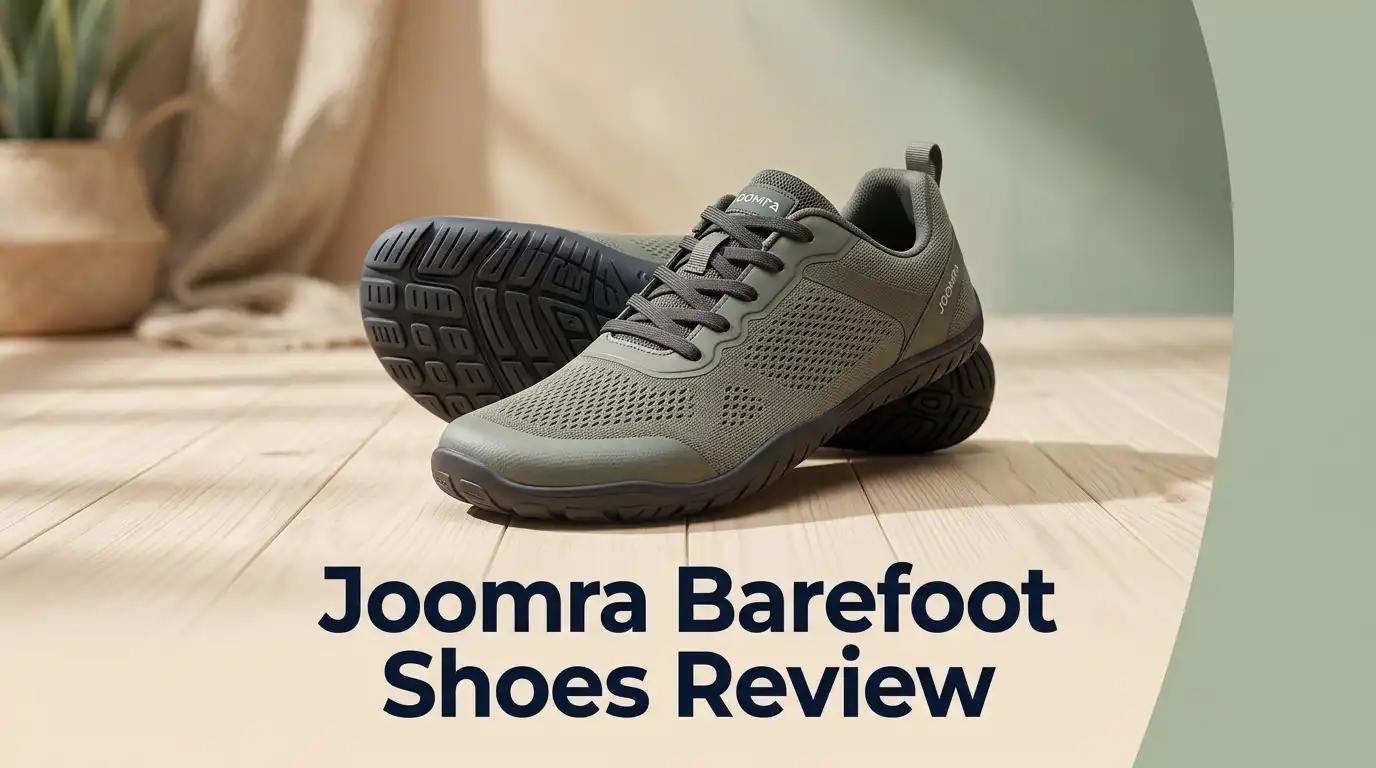
Joomra follows all three rules. The platform measures zero drop on a digital level. The outsole is thin rubber that twists and folds with light hand pressure. The upper is a stretchy knit that hugs the foot like a thick sock.
The brand shares a factory look with several other Amazon names. Hobibear, Whitin and Joomra models often share soles, lasts and even lace styles. That is normal for this price bracket. It also means quality control varies from batch to batch.
Joomra is not a heritage barefoot brand. It does not run a research lab or sponsor ultra runners. It builds a simple flat shoe, ships it cheap, and sells volume. For many first time buyers, that trade is fair.
Unboxing Experience: What Arrives in the Box
The box arrives thin and light. Mine came in a plain cardboard sleeve with a printed brand logo and no tissue paper. There is no premium reveal moment here, and the packaging tells you the money went into the shoe rather than the presentation.
Inside you get the pair, a stuffed paper wad in each toe box, and a small size sticker on the sole. Some models include a spare set of laces. There is no dust bag, no insole tray and no printed transition guide.
The first thing I noticed was the weight. Each shoe felt close to nothing in my hand, around six ounces. Picking them up after a cushioned running shoe feels like holding an empty sock.
The smell was mild. Many cheap knit shoes arrive with a strong glue odour. Mine had a faint factory scent that faded in one day near an open window.


Last update on 2026-04-11 / Affiliate links / Images from Amazon Product Advertising API Some of the links on this website are affiliate links, which means that at no additional cost to you, I earn a commission if you click through and make a purchase. I only recommend products and services that I believe will add value to my readers. Thank you for your support!
The stitching looked tidy along the toe cap. The heel counter felt stiffer and cheaper than the rest of the shoe, which matched the reviews I had read. Bend the heel and toe firmly before your first wear. If anything separates or crackles, start a return that same day rather than after a month.
Joomra Women’s Trail Running Barefoot Shoes
This is the model most people mean when they search for Joomra barefoot shoes. It sells as a trail runner, but it works better as an everyday minimalist sneaker.
The upper uses a breathable knit with a lace closure and a pull tab at the heel. It slides on fast. Air moves through the mesh well in warm weather, and the same mesh gives you nothing in cold or wet conditions.
The sole is flat rubber with a shallow tread pattern. Grip on dry pavement, gym rubber and indoor tile is dependable. Grip on wet grass and mud is poor because the lugs are too shallow to bite.
Ground feel sits at a moderate level. You feel surface changes underfoot, so you notice the switch from carpet to concrete. You do not feel every pebble, because the foam layer is thin but dense.


Last update on 2026-04-11 / Affiliate links / Images from Amazon Product Advertising API Some of the links on this website are affiliate links, which means that at no additional cost to you, I earn a commission if you click through and make a purchase. I only recommend products and services that I believe will add value to my readers. Thank you for your support!
Sizing runs small for many women. Several testers found they needed to go up half a size or a full size. Measure your foot in centimetres before ordering.
The heel counter is the weak spot. It rubs during break in for some wearers. Thick socks in week one solve it in most cases.
Joomra Whitin Men’s Running Shoes
No products found.
Joomra and Whitin share listings on Amazon, and this model shows why. It carries both names, and the build sits a step above the plain minimalist trainer.
The knit upper feels slightly structured. That gives the midfoot more hold during lateral moves, which helps in the gym. Lacing is standard, and the tongue stays put without a gusset.
The outsole is rubber with a light traction pattern. It gripped well on gym flooring and dry sidewalks in my testing. It is not a trail sole, so keep it on hard and even surfaces.
Cushioning is thin by design. Some versions include a removable insole, which is a genuinely useful feature. Leave the insole in for a softer landing during your first weeks. Pull it out later for more ground feel and a wider interior.
Men often report better sizing accuracy than women with this brand. Most men found their normal size worked, though width still varies by batch.
The shoe handled short runs of one to three miles without complaint. Longer distances exposed the thin foam, which compresses and loses spring fast. Treat it as a walking, lifting and light training shoe rather than a mileage machine.
Top 3 Alternative for Joomra Barefoot Shoes

- Minimalist Sneaker Styling – Canvas uppers deliver a clean, timeless look that pairs easily with...
- Wide Toe Box Design – Provides ample space for your toes to spread naturally, keeping your feet...
- Barefoot-Inspired Everyday Comfort – Combines casual style with the benefits of barefoot footwear...
Last update on 2026-09-01 / Affiliate links / Images from Amazon Product Advertising API Some of the links on this website are affiliate links, which means that at no additional cost to you, I earn a commission if you click through and make a purchase. I only recommend products and services that I believe will add value to my readers. Thank you for your support!
WHITIN Men’s Wide Toe Box Barefoot Shoes

- Breathable Barefoot Shoes:Made with lightweight breathable mesh, these barefoot shoes keep your feet...
- Wide Toe Box for Natural Movement:Designed with a wide toe box that allows your toes to spread...
- Zero Drop Flexible Sole:The zero-drop sole keeps your heel and forefoot at the same level to support...
Last update on 2026-09-01 / Affiliate links / Images from Amazon Product Advertising API Some of the links on this website are affiliate links, which means that at no additional cost to you, I earn a commission if you click through and make a purchase. I only recommend products and services that I believe will add value to my readers. Thank you for your support!
SAGUARO Unisex Barefoot Trail Running Shoes

- Natural Movement Design: Barefoot + minimalist principles with a wide toe box for natural splay...
- Lightweight Performance: Our icon that started it all; multi-purpose athletic shoe
- True to size. Supportive Fit: Breathable mesh upper with moisture-wicking lining
Last update on 2026-09-01 / Affiliate links / Images from Amazon Product Advertising API Some of the links on this website are affiliate links, which means that at no additional cost to you, I earn a commission if you click through and make a purchase. I only recommend products and services that I believe will add value to my readers. Thank you for your support!
Xero Shoes Men’s Prio Suede Barefoot Athletic Sneaker
Key Specifications Explained in Plain Words
Manufacturer spec sheets use vague language. Here is what the numbers actually mean on your foot.
Drop: zero millimetres. Your heel sits level with your toes. Your calves and Achilles work harder than they do in a cushioned shoe, so build up slowly.
Stack height: roughly five to eight millimetres. That is the total material under your foot. A standard running shoe often measures thirty millimetres or more at the heel. Joomra sits close to the ground.
Weight: around six ounces per shoe in most sizes. You stop noticing the shoe within minutes. Lighter shoes also reduce leg fatigue on long walking days.
Upper: engineered knit mesh with a synthetic toe cap. It breathes, it stretches, and it dries fast after light rain. It offers no insulation and no waterproofing.
Outsole: flexible rubber with a shallow tread. It folds in half with one hand. Great for foot movement, weak for mud.
Insole: removable in several models. Take it out for more room and more feel.
Machine washing is possible on a cold cycle in a laundry bag. Air dry only, because heat warps the thin rubber. Skip the dryer completely if you want the pair to survive the season.
Comfort and Ground Feel on Real Surfaces
The first hour felt strange. My toes spread wide, my arch got no lift, and my feet reported every surface change. That is the point of the shoe.
Walking on concrete felt firm but fine. Walking on gravel felt sharp for the first week. After ten days my feet adapted and the same gravel felt manageable. Your feet get stronger, and that process takes weeks, not days.
Indoor floors are where Joomra shines. Tile, wood and gym rubber all felt secure and quiet. The wide front let my toes splay during squats, which gave me a stable base.
Long standing days revealed the limit. After six hours on hard floors my heels ached in a way they do not in cushioned shoes. That is honest zero drop behaviour rather than a defect.
Breathability was strong. My feet stayed cool at eighty degrees and stayed cold at forty degrees. The knit works in one direction only.
Sock choice matters more than expected. Thin socks give more feel and more heel rub. Medium cushioned socks give better comfort in week one. I settled on thin socks after the break in period ended.
Sizing Guide: How to Avoid a Return
Sizing causes most Joomra complaints. The labelled size means very little, and batches vary. Use this order and you cut the guesswork.
Step one: work in centimetres. Search the reviews for the letters cm and read what buyers with measured feet received.
Step two: trace your foot. Stand on paper with your weight even. Hold a pencil straight up and draw around the whole foot.
Step three: add a buffer. Measure the tracing at the longest point, then add half a centimetre to one full centimetre. Your toes need space to spread.
Step four: order two sizes. Use your calculated size and the next size up. Return the loser. This costs nothing on eligible listings and saves two weeks of waiting.
Step five: check width, not just length. Slide your foot in and look at the little toe. If the knit bulges outward, the shoe is too narrow for you.
Women should expect to size up more often than men. Several testers went up a full size in the women’s trail model. Men usually kept their normal number, though a half size up helped wide feet.
Performance for Walking, Gym and Light Trails
Joomra handles some jobs well and others badly. Matching the shoe to the task decides whether you love it.
Daily walking is the best fit. Errands, dog walks, city streets and office floors all suit the flat sole and wide front. Two to five miles a day felt comfortable once my feet adapted.
Gym work is the second best fit. The flat platform helps deadlifts, squats and kettlebell work. Your foot spreads and grips the floor. Rope climbs and heavy sled pushes wear the thin sole down fast, so save those for tougher shoes.
Short running works, long running does not. One to three miles felt fine. Expect the foam to flatten near the hundred mile mark. After that, the shoe feels dead underfoot.
Light trails are borderline. Packed dirt and grass are fine. Loose rock, roots and mud beat the shallow tread. A dedicated trail model from another brand grips far better.
Wet weather is a clear no. The knit soaks through in minutes, and the smooth sole slides on wet mud. Keep these shoes on dry ground and hard floors.
Hiking with a pack is also a poor use. Thin protection plus heavy load equals sore feet by mile three.
Durability After Months of Wear
Durability is where the low price shows up hardest, and buyers deserve a straight answer here.
Under light daily wear of one to two hours, my pair looked healthy after four months. The tread showed shine at the ball of the foot. The knit held together with no holes.
Under heavy wear of six or more hours a day, the story changes. Reports and my own second pair point to visible tread wear at three to four months. The forefoot rubber thins first, usually under the big toe.
The upper outlasts the sole in most cases. Fraying appears at the lace holes and along the heel collar. Once the heel collar tears, the fit loosens and the shoe slides.
Glue failure happens in a minority of pairs. The toe cap lifts away from the sole edge. That is a batch quality issue rather than normal wear, so return it quickly if it happens early.
Here is the honest maths. A $25 shoe lasting 120 wears costs about twenty one cents per wear. A $140 shoe lasting 700 wears costs about twenty cents per wear. Cheap shoes are not actually cheaper over time. They are still the smart first purchase, because a small spend answers a big question.
What Joomra Barefoot Shoes Do Not Do Well
Every honest review needs this section. Here are the clear failures.
They do not last long under hard use. Restaurant shifts, warehouse floors and daily runs shorten their life to a single season.
They do not offer a true foot shaped toe box. The front is wider than a normal sneaker and narrower than a purpose built barefoot brand. People with very wide feet feel pressure on the little toe.
They do not handle wet or cold weather. The knit soaks water instantly and blocks no wind. There is no waterproof version worth buying.
They do not grip mud or loose rock. The tread is too shallow. The trail label on the listing overpromises.
They do not deliver top tier ground feel. The sole is thin but dense, so feedback stays moderate. Purists chasing maximum feel will find it muted.
They do not arrive with consistent quality. Sizing drifts, glue quality varies, and a few buyers receive returned items in fresh boxes.
They do not support long standing days. Six hours on concrete left my heels sore. That will not change with more wear time.
They do not come with guidance. No transition instructions arrive in the box, and new barefoot wearers need that information most.
Pros and Cons of Joomra Barefoot Shoes
Pros
- Very low price. Most models cost $19 to $40, which is the lowest real entry point into zero drop shoes.
- Genuine zero drop platform. The sole measures level on a digital level rather than only in the listing copy.
- Truly flexible sole. It folds in half with one hand and lets your foot move naturally.
- Roomy front compared with normal sneakers. Toes spread instead of squeezing together.
- Very light on foot. Around six ounces per shoe, so leg fatigue drops on long walking days.
- Strong breathability. The knit mesh keeps feet cool in warm weather.
- Removable insole on several models. Choose between light protection and more ground feel.
- Machine washable on a cold cycle. Air drying keeps them fresh through summer.
Cons
- Short lifespan under heavy use. Tread wear appears at three to four months for daily wearers.
- Toe box is not the widest available. Very wide feet may still feel pinched.
- Stiff heel counter. It rubs during the break in period for some wearers.
- Inconsistent sizing between batches. Returns are common without careful measuring.
- Weak wet weather and mud performance. The knit soaks and the sole slides.
- Moderate ground feel only. Purists will want a thinner sole.
- No transition guidance included. Beginners must research the adaptation process alone.
Joomra Compared With Whitin, Saguaro and Xero
Comparison makes the value clear, so here is how Joomra sits against three common rivals.
Joomra versus Whitin. Whitin costs roughly $40 to $45 and gives you a removable insole, more colour choices and a slightly better shaped front. Whitin also carries the same quality control lottery. Joomra wins on price, Whitin wins on features.
Joomra versus Saguaro. Saguaro’s trail model runs $40 to $45 and uses real lugs. That makes it the better pick for gravel, dirt and grass. Saguaro runs small, so order half a size up. Joomra stays the better indoor and city shoe.
Joomra versus Xero Prio. The Prio costs three to four times more. You get a better foot shape, tougher materials, a proper heel counter and a lifespan measured in years. If you already know you love barefoot shoes, the Prio is the smarter spend.
The pattern is simple. Joomra answers the question cheaply. The others answer it well.
My own routine now uses two pairs. One good premium shoe handles the miles. One cheap pair handles mud, water and dirty jobs. Joomra fits the second role perfectly and costs almost nothing to replace.
Who Should Buy and Who Should Skip
Buy Joomra barefoot shoes if you are curious and cautious. Spending $25 to learn that you dislike zero drop beats spending $140 on the same lesson.
Buy them if you need a beater pair. Yard work, travel, beach trips and messy chores all suit a shoe you can wash or replace without regret.
Buy them if your budget is tight right now. A real zero drop shoe at $25 does more for your feet than a cushioned shoe at the same price.
Buy them for gym floors and casual walking. The flat base and light weight shine in both settings.
Skip them if you have very wide feet. A narrow little toe area ruins the experience fast.
Skip them if you stand on hard floors for eight hours. The thin sole will not carry you through the shift.
Skip them if you run more than five miles a week. The foam flattens quickly and offers no rebound.
Skip them if you need one pair to last two years. That is not what this shoe is built to do.
Skip them if you walk in rain, snow or mud often. Buy a covered leather or trail option instead.
Final Verdict: Are They Worth Your Money in 2026?
Joomra barefoot shoes earn a cautious yes for the right buyer. They are a good trial pair and a poor forever pair.
The strengths are real. The zero drop sole is honest, the flexibility is genuine, and the weight is tiny. Your toes get more room than they have had in years. That combination is what your feet need at the start of a barefoot switch.
The weaknesses are also real. Durability tops out near a season of daily use. The toe box widens but never truly matches a foot shape. Sizing needs homework. Wet ground defeats them completely.
My rating sits at three and a half stars out of five, and price carries most of that score. At $80 this shoe would deserve two stars. At $25 it makes sense.
Here is my honest advice. Order Joomra with two sizes, wear them for three weeks on easy surfaces, and pay attention to how your feet respond. If your arches and calves adapt and you enjoy the feel, upgrade to a premium pair with a proper foot shape.
If you feel worse after a fair adaptation period, you have lost only the price of two coffees per week. That is a fair deal for a clear answer.
Frequently Asked Questions
Are Joomra shoes real barefoot shoes?
Yes, on the core measures. The sole tests flat from heel to toe, the outsole bends easily, and the front is wider than a standard sneaker. The toe box is not as anatomical as dedicated barefoot brands, so strict purists disagree with the label.
Do Joomra barefoot shoes run small?
Often yes, especially in women’s models. Many buyers go up half a size to a full size. Measure your foot in centimetres, add half a centimetre for toe space, and read recent reviews for batch changes.
How long do Joomra barefoot shoes last?
Light wearers get four to eight months. Heavy daily wearers see visible tread wear at three to four months. The upper usually outlives the sole.
Can you run in Joomra barefoot shoes?
Short runs of one to three miles work fine. The thin foam compresses near the hundred mile mark and then feels dead. Buy a purpose built minimalist runner for regular mileage.
Are they good for plantar fasciitis or flat feet?
Some people improve with zero drop shoes because their foot muscles get stronger. Others get worse. Progress slowly, and speak with a podiatrist before switching if you have ongoing foot pain.
Can you machine wash Joomra shoes?
Yes. Use a cold cycle inside a laundry bag, then air dry away from heat. Dryers warp the thin rubber sole.
How long does the barefoot transition take?
Start with fifteen to twenty minutes a day and add time each week. Most people adapt within four to eight weeks. Sore calves are normal, sharp pain is not.

Mia Smith is the founder of Shoe Storyteller, a blog that celebrates the art and stories behind shoes. With a passion for fashion and a flair for storytelling, Mia brings a unique perspective to the world of footwear.