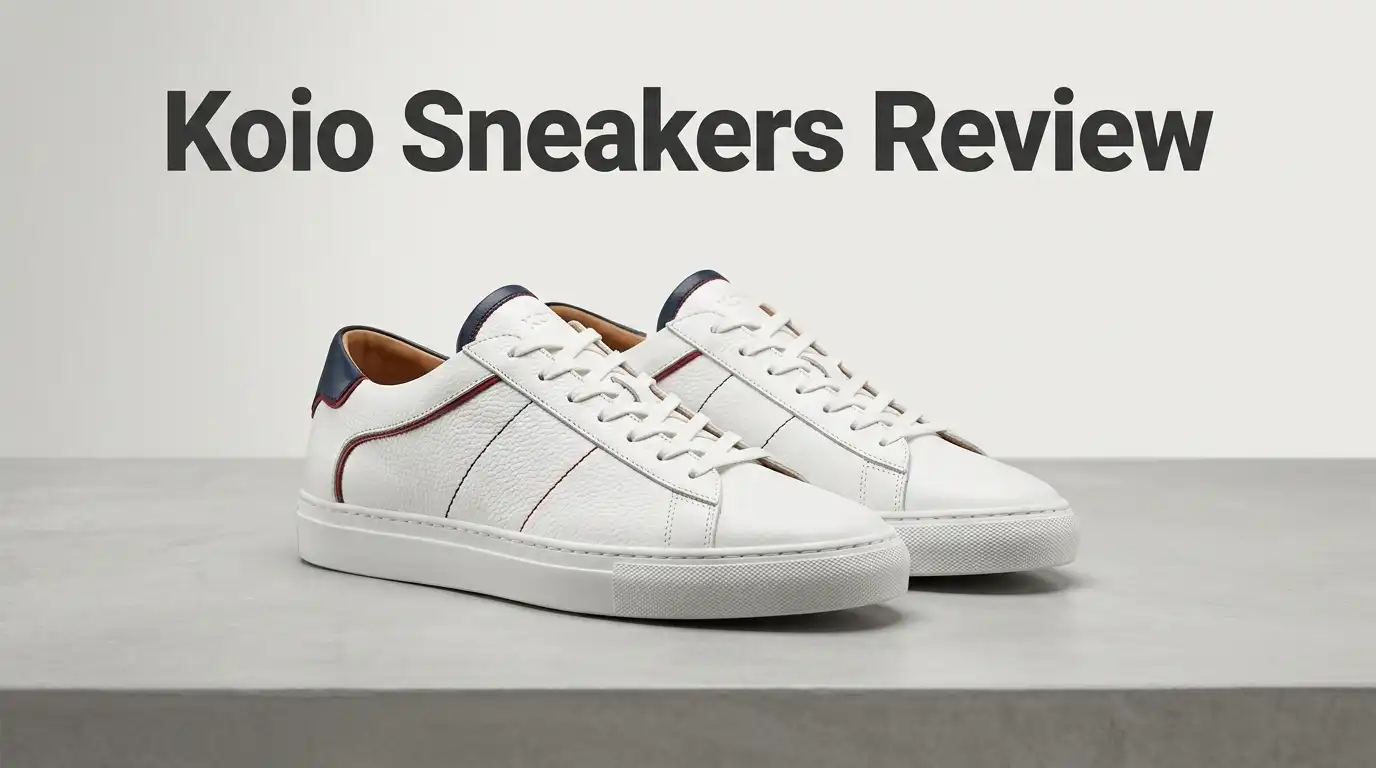
Koio Sneakers Review 2026: Worth It?
White leather sneakers all look the same in photos. They do not feel the same on your feet. Koio built its whole business on that gap. The brand promises Italian craftsmanship at half the price of the famous $400 names, and thousands of buyers have taken the bet.
I wanted to know if that promise still holds in 2026. So I dug into the materials, the sizing quirks, the real durability reports, and the complaints people quietly leave in forums. Koio has genuine strengths. It also has flaws the marketing pages never mention.
This review covers the Capri, the newer Monza and Parma lines, the unboxing, the break in period, and the honest downsides. Read it before you spend $265.
In A Nutshell:
- Koio sneakers are handmade in Italy, and that claim checks out. Each pair passes through roughly 42 pairs of hands at a factory in Tuscany. The leather is LWG Gold certified Italian calf leather, and the sole uses 50% natural FSC certified rubber plus 40% recycled rubber.
- The Capri is the flagship, and it now sells for about $265. That sits roughly 40% below Common Projects, which uses the same class of materials and comes from the same corner of Italy.
- Sizing is the biggest headache. Koio only makes full sizes. The brand tells half size buyers to size down. Several reviewers report that advice backfires, so ordering two sizes is smart.
- Comfort is good but not plush. The removable OrthoLite Hybrid insole gives bounce rather than pillow softness. Expect a short break in of roughly five miles.
- The white colorways scuff. You will spend extra on protectant spray, white shoe cream, and cedar shoe trees. Budget another $40 to $60.
- Resoling is not realistic. The upper is stitched and glued to a Margom style sole, so these are wear them out shoes, not lifetime shoes.
What Is Koio And Who Is Behind It?

- Crafted in Tuscany, Italy: Handmade
- Made from Premium Italian Calf Leather
- Lined with High-Quality Italian Calf Leather
Last update on 2026-09-12 / Affiliate links / Images from Amazon Product Advertising API Some of the links on this website are affiliate links, which means that at no additional cost to you, I earn a commission if you click through and make a purchase. I only recommend products and services that I believe will add value to my readers. Thank you for your support!
Koio launched in 2015. Two founders, Chris Wichert and Johannes Quodt, visited more than thirty Italian manufacturers before choosing a partner. The name comes from cuoio, the Italian word for leather.
The business model is simple. Koio sells straight to customers online and skips department stores. That removes the retail markup, which usually doubles the wholesale price. The brand argues this is how a $600 shoe reaches you for $265.
Every pair is made in Italy from start to finish. The leather comes from Italian tanneries. The laces are waxed cotton sourced locally. Even the box is produced there. Nothing gets shipped overseas for assembly, which is unusual at this price.
Labor cost is the honest reason these shoes cost more. Koio states its labor bill runs roughly fifteen times higher than production in lower wage countries. You are paying for wages and for hand finishing, not for a logo.
The company took outside investment, including money from Acton Capital Partners and Winklevoss Capital. Some shoppers prefer small independent makers and find venture funding off putting. That is a values question, not a quality question.
Koio now sells far more than the Capri. The lineup includes the Monza, Parma, Carrara, Portofino, and Vegan 01 sneakers, plus Chelsea boots and loafers. The brand has moved from one hit product to a full footwear catalog.
Koio Capri Leather Sneaker Review
The Capri is the shoe that made Koio famous. It is a low profile lace up sneaker with a clean upper, no visible branding on the outside, and a slim silhouette that leans dressy.
The upper uses Italian calf leather with a very tight grain. That tight grain matters more than most buyers realize. Tight grain leather creases in soft horizontal lines instead of cracking into deep gashes. One reviewer tracked his pair over two months and reported gentle creasing across the toe box, which is exactly what you want on a white shoe.
Inside, the shoe is fully lined with leather. The heel area gets suede lining, which grips your sock and cuts down heel slip. A removable OrthoLite Hybrid insole handles cushioning. The sole is 100% rubber, roughly 3mm thick, with a slight contour at the toe.


Last update on 2026-04-11 / Affiliate links / Images from Amazon Product Advertising API Some of the links on this website are affiliate links, which means that at no additional cost to you, I earn a commission if you click through and make a purchase. I only recommend products and services that I believe will add value to my readers. Thank you for your support!
The upper is stitched to the sole, not only glued. That stitching runs around the perimeter and reinforces the toe break, the spot where cheap sneakers usually split first. Koio also layers several leather pieces around the heel seam to stop it from tearing open.
Construction quality is the strongest part of this shoe. The edges are hand painted. The stitch lines are even. The tongue sits flat and does not slide sideways after a few wears. For $265, the build genuinely competes with shoes selling at twice the price.
The Unboxing Experience
Koio takes packaging seriously, and the first ninety seconds feel expensive.
The outer shipping box is plain. Inside sits a matte shoe box with the Koio wordmark. Lift the lid and you find a sheet of branded tissue paper folded over the shoes. Under the tissue, each shoe sits in its own dust bag. Two bags, not one, which is a small detail that budget brands skip.
The shoes arrive stuffed with paper to hold their shape. Nothing in the box rattles around or looks crushed. The laces come already threaded, tied in a neat bow, and they are genuinely waxed cotton rather than cheap round cord.


Last update on 2026-04-11 / Affiliate links / Images from Amazon Product Advertising API Some of the links on this website are affiliate links, which means that at no additional cost to you, I earn a commission if you click through and make a purchase. I only recommend products and services that I believe will add value to my readers. Thank you for your support!
You also get a printed care card. It lists the steps Koio recommends: spray with a protectant before the first wear, clean with a leather spot cleaner, and condition monthly. The card doubles as a nudge to buy the brand care products, which is fair enough.
The smell is the part nobody writes about. Real chrome tanned Italian leather has a rich, slightly sweet scent. Synthetic uppers smell like glue. Open a Koio box and the difference is immediate.
One mild disappointment: there is no spare set of laces. At this price, a second pair in a contrast color would cost Koio very little and would feel generous. Small miss, but a miss.
Top 3 Alternative for Koio Capri Sneaker

- STYLE: Iconic low-top silhouette hand crafted. Coupled with buttery Italian calfskin leather and...
- OUTSOLE: Rubber & EVA outsole composite for durability and maximum comfort.
- LINING: Organic Italian textile lining for all day comfort.
Last update on 2026-09-12 / Affiliate links / Images from Amazon Product Advertising API Some of the links on this website are affiliate links, which means that at no additional cost to you, I earn a commission if you click through and make a purchase. I only recommend products and services that I believe will add value to my readers. Thank you for your support!
Oliver Cabell Low 1 Sneaker

- THE PERFECT FIT - We recommend ordering the same size you normally wear in athletic sneakers...
- THE PREMIER LOW TOP - We set out to make the highest quality sneakers with a minimalist Heritage...
- UNPARALLELED WORKMANSHIP - The Premier low tops feature leathers from the finest tanneries that...
Last update on 2026-09-12 / Affiliate links / Images from Amazon Product Advertising API Some of the links on this website are affiliate links, which means that at no additional cost to you, I earn a commission if you click through and make a purchase. I only recommend products and services that I believe will add value to my readers. Thank you for your support!
Thursday Boot Company Premier Low Top Sneaker
No products found.
Cole Haan Grand Crosscourt II Sneaker
Leather Quality And Materials Explained
Koio calls its main material Vitello calf leather. The name needs a footnote.
Vitello leather is not actually from calves. The hide comes from fully matured cows raised in the European Union. Koio confirmed this directly to one reviewer and explained that “calf” describes the characteristics of the leather, meaning the soft hand and the fine grain, not the age of the animal.
The brand avoids real calfskin on ethical grounds, which many buyers will respect. Calling mature cowhide “calf leather” is still misleading language, and it is worth knowing before you order.
The leather measures roughly 1.44mm thick and is chrome tanned in Italy. Chrome tanning produces leather that stays supple and holds dye well. That is why Koio can offer colors like Nero, Sandstone, Limestone, Onyx, Tundra, and Mocha without the finish looking painted on.
All hides carry LWG Gold certification. The Leather Working Group audits tanneries for water use, energy use, emissions, and waste handling. Gold is the top tier. That certification is a real third party check rather than a vague sustainability slogan.
The sole breakdown is 50% natural FSC certified rubber, 40% recycled rubber, and 10% conventional rubber. The insole uses recycled foam and rubber from earlier production runs.
Compared with Common Projects, the Koio leather feels slightly firmer. Some people prefer the softer Napa on the Achilles. Others find the firmer Koio hide feels less fragile in daily use.
Comfort And The Break In Period
Koio sneakers are comfortable, but let us be precise about what kind of comfortable.
The footbed uses open cell polyurethane in the OrthoLite Hybrid insole. That material resists compression, so it springs back instead of flattening. The result feels bouncy rather than cushy. If you expect running shoe softness, you will be disappointed.
There is a break in period. Most reviewers describe it as the first five miles or so. During that window the leather footbed has not yet molded to your arch, and the upper has not creased where your foot flexes. It is mild discomfort, not pain.
The heel counter deserves credit. Koio pads the collar generously and lines the heel with suede. Heel slip is uncommon once the laces are tied properly. Buyers who tuck their laces for a cleaner look do report slipping, which is a lacing problem rather than a shoe problem.
The Capri toe box is roomier than the Common Projects Achilles. That matters. Plenty of people find the Achilles too narrow across the forefoot. Koio runs a slightly more forgiving last, so the shoe suits more foot shapes.
For all day city walking, the Capri handles five or six miles without complaint. It is not a travel day shoe for airport marathons. The sole is thin and firm, so long concrete days will still tire your feet.
Sizing And Fit: Read This Before You Order
Sizing is where most Koio orders go wrong, so slow down here.
Koio only sells full sizes. The official guidance says half size buyers should size down to the nearest whole size. The Capri is listed as true to size with a standard D width.
That advice does not work for everyone. One reviewer who measures 11.5 on a Brannock device followed the instruction, ordered an 11, and found it too tight. He exchanged for a 12 and got a perfect fit. Sizing down can leave you cramped, especially if you have any width to your foot.
The safer approach is measuring your foot. Stand on paper with your heel against a wall and measure to your longest toe. Koio publishes maximum foot length per size. A US 11 fits up to 29cm, and a US 12 fits up to 29.8cm. If your measurement lands near the top of a bracket, take the larger size.
Koio now offers a Wide Fit Capri in E width. Same length, more room across the forefoot. If you wear EE or wider, even the Wide Fit may be too narrow.
Returns cost $14 unless you add Checkout Plus for $7.98 at purchase, which waives return and exchange fees. Given the sizing risk, that $7.98 is money well spent. The return window is 14 days for unworn pairs.
Koio Capri Pros And Cons
Here is the balanced summary after weighing owner reports, hands on reviews, and the spec sheet.
Pros
- Genuine Italian manufacturing from a Tuscan factory that also produces for major luxury labels, with 42 craftspeople touching each pair.
- Roughly $135 less than Common Projects while using comparable leather, comparable sole construction, and stitched rather than only glued assembly.
- LWG Gold certified leather and a sole with 90% natural or recycled rubber, so the sustainability claims have third party backing.
- Padded suede lined heel prevents slipping, and the roomier toe box suits more foot shapes than slimmer competitors.
- Excellent creasing behavior. The tight grain produces soft lines instead of cracks, so white pairs age gracefully.
- Free shipping over $100, easy exchanges, a six month warranty, and a Try Before You Buy option on the Koio site.
Cons
- No half sizes at all, and the official size down advice misfires for plenty of buyers.
- The footbed is firmer than Common Projects. Bouncy, yes. Plush, no.
- Care products are effectively mandatory. Protectant spray, white cream, and shoe trees push your real cost past $300.
- These cannot be resoled. Once the Margom style sole wears through, the shoe is finished.
- White colorways show scuffs quickly, and toe scuffs need cream to hide.
- Amazon stock is inconsistent. Listings appear and vanish, so the Koio site is often the only reliable source.
Koio Capri In Sandstone And Other Colorways

- Crafted in Tuscany, Italy: Handmade with care
- Crafted from LWG-certified Italian calf leather: Premium material construction
- Lined with LWG-certified Italian calf leather: Comfortable and durable interior
Last update on 2026-09-12 / Affiliate links / Images from Amazon Product Advertising API Some of the links on this website are affiliate links, which means that at no additional cost to you, I earn a commission if you click through and make a purchase. I only recommend products and services that I believe will add value to my readers. Thank you for your support!
Triple White gets the attention, but the colored Capris solve the biggest ownership problem.
Sandstone is the smartest pick for people who hate babysitting shoes. It is a soft grey beige with smooth leather at the ankle, a tonal rubber sole, and waxed cotton laces. Scuffs disappear into the color instead of announcing themselves. Buyers on the Koio site consistently praise both the comfort from the first wear and the leather quality.
Limestone is a pale stone grey and works as a white sneaker substitute for anyone who wants something quieter. Pebble sits in similar territory. Nero is full black and reads closer to a dress shoe, which makes it the best option for offices with a stricter code.
Tundra and Mocha bring warmer brown tones. Space and Onyx cover the darker end. Suede options like Moonlight exist too, though suede demands its own brush and protectant routine.
The Capri in Triple White Rose Anvil is a collaboration version, priced around $245, and it is available in wide fit.
Beyond the Capri, Koio now sells the Monza in leather and suede, the newer Parma, the Carrara suede line, the Portofino, and the Vegan 01 made from apple leather. The Vegan 01 lands near $150 and uses recycled rubber, cork, and natural latex. Vegan leather will not last as long as hide, so treat it as a seasonal shoe.
Durability After A Year Of Real Wear
Short term reviews tell you about packaging. Long term owners tell you about value.
Owner reports are genuinely positive. One buyer who bought off white Koios in 2019 said the pair held up well across years of rotation. A frequent comment across forums is how much abuse the leather absorbs. The upper takes scrapes that would gouge thinner hide and shrugs them off.
The stitching around the sole is the quiet hero. Glued sneakers separate at the toe first. The stitch line here keeps the upper anchored, so sole separation is rare even after heavy wear.
The sole is the part that eventually ends the shoe. Heel edges wear down from normal walking. Koio pairs cannot be resoled in practice, because the leather upper will not survive the process. Plan on two to four years of regular wear, longer if you rotate.
Creasing settles into a pattern within a few months and then stays stable. Owners describe horizontal lines across the toe that never deepen into cracks.
The heel counter holds its shape well thanks to the extra leather panels Koio adds there. Toe caps show scuffs. On white pairs those scuffs need white shoe cream every few weeks to stay invisible.
Koio backs pairs with a six month warranty. That covers manufacturing defects, not wear, so it is a modest safety net rather than a guarantee.
What Koio Does Not Do Well
Honest reviews name the weak spots, so here they are without softening.
The sizing system is the clearest failure. Refusing to make half sizes in 2026 is a choice, not a limitation. Competing Italian made brands manage it. Telling half size customers to round down pushes the fit problem onto the buyer, and returns cost $14 unless you prepaid for the fee waiver.
Width options remain thin. The Wide Fit Capri only covers E width, and only some colorways offer it. Anyone at EE or wider is out of luck entirely.
The ongoing cost annoys people more than the sticker price. Koio recommends conditioning monthly and treating the leather before the first wear. Following that advice means spray, cream, conditioner, and shoe trees. Skipping it means faster scuffing on light colors.
Comfort has a ceiling. The Capri is fine for a day of errands and meetings. It is not the shoe for a ten mile sightseeing day. The sole is thin and the insole is firm.
The “calf leather” naming is misleading, since the hides come from mature cows.
Amazon availability is genuinely frustrating. Koio listings go out of stock or vanish without warning, which makes price comparison difficult. Buying direct is usually the only dependable route.
Koio vs Common Projects vs Oliver Cabell
This is the comparison that decides most purchases, so let us keep it factual.
Common Projects Achilles costs roughly $400 or more. It uses the same style of Italian sole construction, the same stitched assembly, and comes from the same region of Italy. The leather is Napa, which is softer than Koio Vitello. The footbed is softer. The tongue is thicker and more pliable.
Where Koio wins: price, ankle padding, and toe room. The Achilles runs narrow and many buyers cannot wear it comfortably. Koio gives you a more forgiving last and more heel cushioning for well over $100 less. Where Common Projects wins: the leather feels more luxurious, the profile is slightly slimmer, and the gold serial numbers carry recognition value.
Oliver Cabell Low 1 sits between them at roughly $180 to $200. It is also Italian made with Italian calfskin. The Low 1 sole is thinner than the Capri sole by about half a centimeter, and its toe box is wider by about a centimeter, which gives it a chunkier shape. Reviewers who own both generally call the Capri more comfortable and better proportioned.
Thursday Boot Premier Low Top lands near $135 and offers solid value, though buyers frequently complain it runs narrow.
If budget rules, Thursday. If value rules, Oliver Cabell. If you want near luxury quality without luxury pricing, Koio is the sensible middle.
Care Tips That Actually Keep Them Looking New
Leather sneakers reward small habits. Here is the routine that works.
Treat the shoes before the first wear. A leather protectant spray adds a stain and water resistant layer. This single step prevents most of the damage that ruins white pairs in the first month.
Wipe the uppers after every few wears with a dry cloth. Dust turns into grime once it mixes with moisture. Regular wiping does more for appearance than occasional deep cleaning.
For marks, use a leather spot cleaner. Apply it to a cloth, not directly to the shoe, and work in small circles. Let the leather dry naturally away from heat.
White shoe cream is the trick nobody mentions. Scuffs on white leather are not damage, they are missing finish. A dab of white cream fills them in and the shoe looks new again. Saphir is the premium option and Kelly’s does the job for less.
Use cedar shoe trees between wears. They pull moisture out of the lining, hold the shape, and slow creasing. Ideally give each pair a full day of rest in trees.
Condition the leather a few times a year. Koio suggests monthly, which is more than most shoes need. Two to four times a year keeps the hide supple without over softening it.
Never machine wash them. Never dry them near a radiator.
Who Should Buy Koio Sneakers
Koio suits a specific buyer, and it is worth checking whether that is you.
Buy Koio if you want luxury construction without luxury pricing. You get Italian hand finishing, certified leather, and stitched construction for $265. That combination is genuinely hard to find elsewhere.
Buy Koio if your wardrobe leans clean and modern. The Capri pairs with cuffed denim and a tee on weekends, and it works with trousers and a blazer in business casual offices. It replaces two shoes.
Buy Koio if you care about supply chain ethics. LWG Gold leather, FSC certified rubber, recycled soles, and Italian labor standards are all verifiable.
Skip Koio if you wear a half size and hate exchanges. The full size only policy creates real friction.
Skip it if you need wide or extra wide fitting. Skip it if you want a shoe you can resole and keep for a decade. Skip it if you walk ten miles a day and need serious cushioning.
Skip it if you will not maintain the shoes. A neglected white Capri looks rough within three months, and that is a waste of $265.
My overall verdict: Koio delivers on the quality promise and stumbles on fit logistics. Measure your foot carefully, pay the $7.98 fee waiver, pick a forgiving colorway like Sandstone, and you will be happy for years.
Frequently Asked Questions
Are Koio sneakers worth the money in 2026?
Yes, for the right buyer. At roughly $265 you get Italian hand finished construction, LWG Gold certified leather, and a stitched sole. Comparable shoes from luxury labels sell for $400 to $600. The value case is strong as long as the fit works for you.
Where are Koio shoes made?
Koio shoes are handmade in Italy, in the Le Marche and Tuscany areas. The leather, laces, soles, and even the boxes are sourced locally. Nothing is assembled overseas, and roughly 42 craftspeople work on each pair.
Do Koio sneakers run true to size?
The Capri fits true to size for whole size feet. Koio only makes full sizes, and it tells half size buyers to round down. Several reviewers found rounding down too tight and sized up instead. Measure your foot length and compare it to the Koio chart.
Are Koio sneakers the same as Common Projects?
They are not the same shoe, but they share a lot. Both come from the same region of Italy, use similar sole construction, and use stitched assembly. Common Projects has softer leather and a slimmer profile. Koio has more heel padding, more toe room, and a much lower price.
Can Koio sneakers be resoled?
Not realistically. The upper is glued and stitched to the sole, and the leather will not survive a resole. Treat them as multiyear shoes rather than lifetime shoes.
How long do Koio sneakers last?
Owners report two to four years of regular wear, and longer with rotation and care. One buyer reported a 2019 pair still holding up. The sole heel wears out first, and the leather upper typically outlives it.
Does Koio offer wide sizes?
Yes, but the range is limited. The Capri Wide Fit comes in E width and is the same length as the regular fit. If you wear EE or wider, the Wide Fit will likely still feel narrow.
What is the return policy?
Koio accepts returns and exchanges on unworn items within 14 days of delivery. A $14 fee applies unless you add Checkout Plus for $7.98 at checkout, which waives return and exchange fees. International returns carry a $25 label fee.

Mia Smith is the founder of Shoe Storyteller, a blog that celebrates the art and stories behind shoes. With a passion for fashion and a flair for storytelling, Mia brings a unique perspective to the world of footwear.