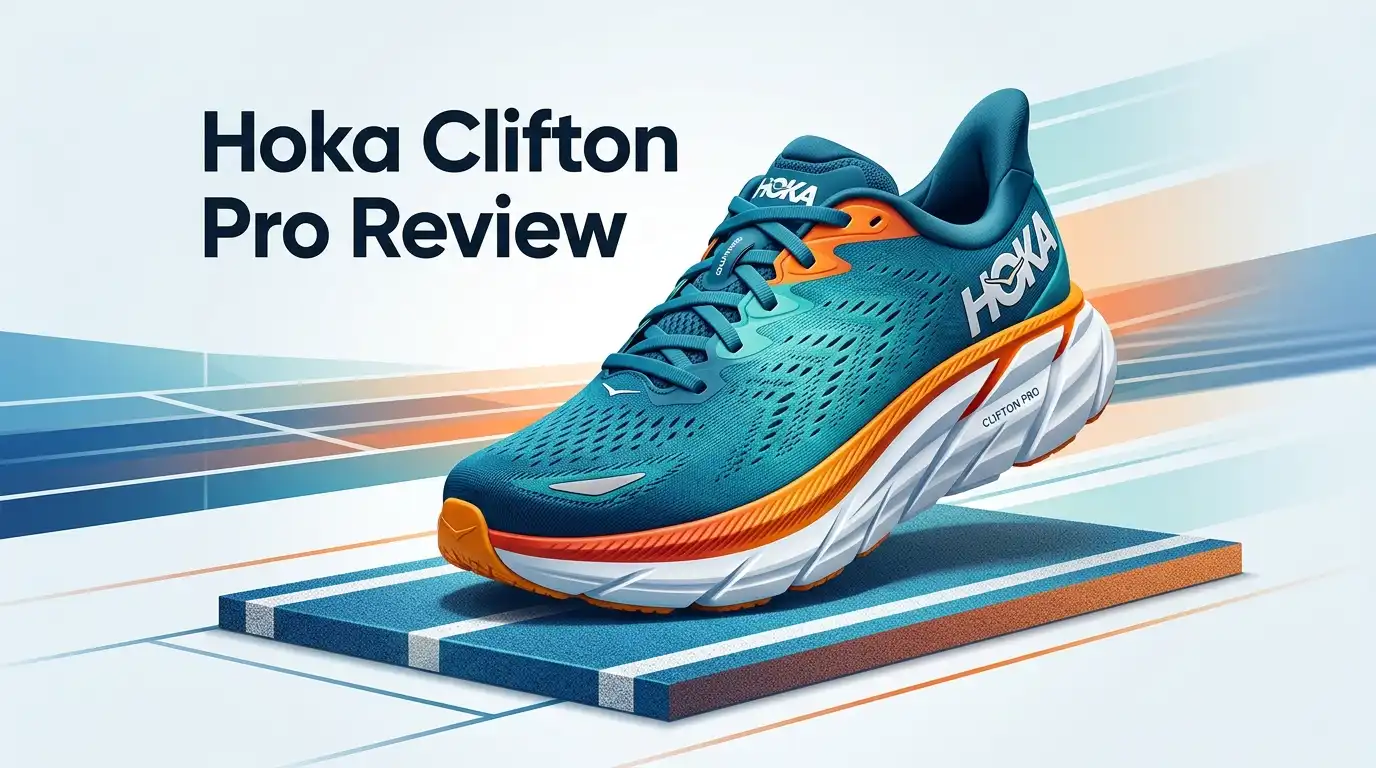
Hoka Clifton Pro Review 2026: Worth It?
The Clifton name carries weight. Runners have trusted it for over a decade. So when Hoka added a “Pro” badge to its most popular trainer, the running community paid attention fast.
I have logged serious miles in this shoe since it landed in July 2026. I have run easy days, tempo days, and long Sunday grinds in it. I have also walked around town in it, because that is what most Clifton buyers actually do.
This review covers the good parts and the frustrating parts. The Clifton Pro gets several things right. It also misses a few marks that matter at the $165 price. You deserve both sides before you spend the money.
In a Nutshell:
- The ProGlide+ midsole is the headline upgrade. Hoka finally moved to a supercritical EVA foam and gave it a real name. The ride feels livelier than the standard Clifton. Lab data still puts energy return near 58 percent in the forefoot, which sits below the current market average.
- The rocker does most of the work. Hoka sharpened the heel bevel and steepened the forefoot rocker. Transitions feel smooth and almost automatic. Heel strikers gain the most here.
- Breathability is excellent. The engineered mesh upper scored among the top performers in ventilation testing. Hot weather runners will notice this immediately.
- The name oversells the shoe. There is no carbon plate and no elite racing foam. Treat the Clifton Pro as a premium daily trainer, not a race day weapon.
- Two real weaknesses exist. Wet traction measures below par, and the toebox mesh showed weak abrasion resistance in durability testing. Runners with wide feet may also find the toe area pointy.
- Value sits in a fair spot. At $165, you pay only $10 more than the Clifton 11 for a clear performance step up. That math works.
Hoka Clifton Pro

Last update on 2026-09-21 / Affiliate links / Images from Amazon Product Advertising API Some of the links on this website are affiliate links, which means that at no additional cost to you, I earn a commission if you click through and make a purchase. I only recommend products and services that I believe will add value to my readers. Thank you for your support!
The Clifton Pro launched on July 9, 2026 at $165. Hoka positioned it beside the Clifton 11 rather than replacing it. Both shoes share a family look. Only one shares the new foam.
The spec sheet reads well. Hoka lists a 42mm heel and 34mm forefoot stack for men, with 38mm and 30mm for women. Both versions carry an 8mm drop. Independent lab testing measured the drop closer to 10.4mm, so heel strikers get even more ramp than the box claims.
Men’s weight lands near 9.3 ounces or 264 grams in a size 9. Women’s weight sits around 7.5 to 8.1 ounces. That is respectable for a shoe carrying this much foam.
The build list includes an engineered mesh upper, a semi gusseted tongue, flat stretch laces, reflective details, and a Super Abrasion Rubber outsole. Hoka built the Pro on the same last as the Clifton 10, so returning buyers get a familiar shape.
Unboxing Experience and First Impressions
The box arrives in standard Hoka packaging. Nothing fancy, no extra laces, no dust bag, no printed guide. You get the shoes, thin tissue paper, and a folded shoe form inside each pair.
Pull the first shoe out and the sidewall branding hits you. The oversized Hoka logo is loud. The launch colorway leans bright, with neon accents that feel unusual for the Clifton family. This shoe looks like a running shoe, not a nursing shoe.
Squeeze the midsole and you feel the difference right away. The ProGlide+ foam presses in softly and springs back with real energy. The old Clifton foam never did that.
Step in feel deserves praise. The collar padding wraps the ankle. The tongue sits flat and stays centered thanks to the gusset. The laces cinch evenly without hot spots.
My first walk around the block felt bouncy and fun. That first impression sets a high bar. Whether the run matches it is the real question.


Last update on 2026-04-11 / Affiliate links / Images from Amazon Product Advertising API Some of the links on this website are affiliate links, which means that at no additional cost to you, I earn a commission if you click through and make a purchase. I only recommend products and services that I believe will add value to my readers. Thank you for your support!
Design, Build Quality, and Everyday Looks
Hoka clearly aimed this shoe at runners first. The silhouette looks leaner through the midfoot than the standard Clifton. The foam sidewalls rise slightly around the heel and cradle the foot without pinching.
Stitching is clean. Glue lines are tidy. The heel counter feels balanced, firm enough to hold the foot but soft enough for sensitive Achilles tendons. Testing rated the heel counter stiffness at a moderate three out of five.
The semi gusseted tongue is my favorite construction change. It prevents tongue slide during long runs. I never once stopped to straighten it. Hoka should bring this feature to the entire Clifton line.
Reflective details appear on the heel and forefoot. Hoka includes these on almost every model, and early morning runners benefit from that habit.
Style wise, the Clifton Pro works for casual wear. It looks athletic without looking clinical. You can wear these to the grocery store and to your run club on the same day.


Last update on 2026-04-11 / Affiliate links / Images from Amazon Product Advertising API Some of the links on this website are affiliate links, which means that at no additional cost to you, I earn a commission if you click through and make a purchase. I only recommend products and services that I believe will add value to my readers. Thank you for your support!
Top 3 Alternative for Hoka Clifton Pro

- Smooth MetaRocker, Engineered Mesh Upper
- Inherently Durable Abrasion Rubber Outsole
- Rearfoot-Focused Active Foot Frame
Last update on 2026-09-20 / Affiliate links / Images from Amazon Product Advertising API Some of the links on this website are affiliate links, which means that at no additional cost to you, I earn a commission if you click through and make a purchase. I only recommend products and services that I believe will add value to my readers. Thank you for your support!
Hoka Clifton 11

- JACQUARD KNIT UPPER
- Lining Textile
Last update on 2026-09-20 / Affiliate links / Images from Amazon Product Advertising API Some of the links on this website are affiliate links, which means that at no additional cost to you, I earn a commission if you click through and make a purchase. I only recommend products and services that I believe will add value to my readers. Thank you for your support!
Hoka Mach 6

Last update on 2026-06-09 / Affiliate links / Images from Amazon Product Advertising API Some of the links on this website are affiliate links, which means that at no additional cost to you, I earn a commission if you click through and make a purchase. I only recommend products and services that I believe will add value to my readers. Thank you for your support!
Hoka Bondi 9
The ProGlide+ Midsole Explained
ProGlide+ is a supercritical EVA foam. Hoka injects gas into the foam under high pressure, which creates a lighter and springier structure than standard compression molded EVA.
This matters because Hoka spent years using generic EVA without even naming it. ProGlide+ marks the first time Hoka gave a mainstream Clifton foam a real identity. That signals confidence.
On foot, the foam threads a strange needle. It is not squishy soft. It is not firm either. Durometer testing put it at 37 on the Asker C scale, almost exactly average. The result feels balanced and forgiving.
Shock absorption is strong. The forefoot improved noticeably over the Clifton 11, jumping to a 128 score compared to 117.
Energy return is the weak spot. Lab numbers came in at 53.6 percent in the heel and 58.5 percent in the forefoot. The market average sits near 61.4 percent. For a shoe wearing a Pro badge, that number disappoints.
How the Clifton Pro Feels on the Run
Easy runs feel great. The rocker rolls you forward with almost no effort. I found myself hitting faster splits without pushing harder, which is always a good sign.
The aggressive heel bevel shines for heel strikers. Landings feel smooth rather than jarring. Midfoot strikers still get a clean transition thanks to the forefoot rocker.
Tempo efforts are where opinions split. The shoe handles moderate pace pickups fine. Push past that and the foam stops giving back. The bounce flattens out and the shoe starts to feel heavy.
One tester in the running community described the sensation perfectly. Early miles bounce. Later miles simply squish.
Long runs work well if you keep the pace honest. I ran 12 miles in these at conversational effort and finished comfortable.
The ride is smooth, stable, and predictable. It is not exciting. Think reliable workhorse rather than speed machine.
Fit and Sizing Guide
The Clifton Pro fits true to size for most runners. Order your normal Hoka size and your normal size in most major brands.
Internal length measured at 270.9mm, almost exactly average across tested running shoes. Nothing unusual there.
Overall width surprised me. The midfoot measured 97.1mm, which is roomier than typical Hoka models. Runners who found older Cliftons too narrow through the middle should retry this one.
The toebox tells a different story. It measured just 70.3mm against an average of 73.2mm. That is the classic pointy Hoka shape. Toes do not splay freely.
Toebox height sits at 26.5mm, which is average. Vertical room is fine. Horizontal room is not.
Wide sizes exist and I recommend them for anyone with broad forefeet. The standard width will frustrate you otherwise.
The lockdown is excellent. Flat laces hold tension through the run. My heel never slipped once across two months of testing.
Upper Material and Breathability
The engineered mesh upper is the most impressive part of this shoe. Airflow testing scored it at 106, placing it near the very top of all tested running shoes.
The average score is 75. The Clifton Pro nearly doubles it. You feel this during summer runs.
Moisture management is equally strong. Testing showed 63 percent liquid evaporation over a three hour period, well above the 53 percent average. Your shoes do not turn into sponges on humid days.
Padding levels feel right. The tongue measures 7.1mm thick, generous without being bulky. The collar cushions the ankle bones properly.
The insole is removable at 4.8mm thickness, so orthotic users have options.
There is a tradeoff to all that ventilation. The mesh is thin. Abrasion testing rated the toebox durability at just one out of five. Runners who drag their toes or scuff curbs will see wear early. This is the softest spot in the whole build.
Outsole Grip and Long Term Durability
Hoka uses a new Super Abrasion Rubber compound here, applied in modular pods with flex grooves between them.
Durability results are genuinely good. Abrasion testing left only a 0.7mm dent against an average of 1.1mm. Outsole thickness measured 2.9mm, which is adequate. This rubber should outlast the foam.
That matters because coverage is not generous. Exposed midsole appears in several zones. Thin coverage plus weak rubber would have been a problem. Thin coverage plus tough rubber works.
Grip is the disappointment. Traction testing returned a score of 0.52, which sits right at average but far below the 0.70 scores modern competitors post.
Dry roads feel fine. Wet roads feel sketchy. Painted crosswalks and metal grates demand caution. Runners in rainy climates should look elsewhere.
Flexibility measured 14.8N in a 30 degree bend test, slightly more flexible than average. That helps walking comfort considerably.
Hoka Clifton Pro vs Clifton 11
These two shoes launched together and confuse a lot of buyers. Here is the clean breakdown.
The Clifton 11 costs $155. The Clifton Pro costs $165. Ten dollars separates them.
Stack heights match almost exactly. Both use a 42mm heel and 34mm forefoot in men’s sizing with an 8mm drop. Weights are nearly identical too, with the Pro running a fraction heavier.
The midsole is the real divider. The Clifton 11 uses standard compression molded EVA. The Clifton Pro uses supercritical ProGlide+. The Pro delivers noticeably more pop and better forefoot cushioning.
Geometry differs as well. The Pro carries a more aggressive rocker and a steeper heel bevel. The 11 offers more midsole flex and a softer, simpler ride.
The Pro also adds the semi gusseted tongue.
My recommendation is simple. Spend the extra ten dollars and take the Pro. The Clifton 11 now belongs to walkers and people who stand all day.
What the Clifton Pro Does Not Do Well
Honest reviews name the flaws. This shoe has several.
It is not a race day shoe. No plate, no PEBA foam, no elite level energy return. The Pro badge writes checks the shoe cannot cash. Hoka should have called it the Clifton Plus or the Clifton Max.
The bounce fades. Several testers reported the same pattern. The foam feels lively for the first few miles, then goes flat. On hot days the shoe starts feeling heavy around mile eight.
Wet grip is below standard. The 0.52 traction score is not dangerous, but it is not confidence inspiring either.
The toebox mesh is fragile. A one out of five abrasion rating is poor. Treat these gently.
The toebox is narrow. Wide footed runners need the wide version or a different shoe entirely.
It does not lose weight. The switch to supercritical foam should have cut grams. It did not. At 9.3 ounces, it weighs the same as the shoe it improves on.
Pros and Cons of the Hoka Clifton Pro
Pros
- Excellent breathability with a ventilation score near the top of all tested running shoes, ideal for hot weather training.
- Smooth aggressive rocker that makes transitions feel effortless, especially for heel strikers who need help rolling forward.
- Strong outsole durability with minimal wear in abrasion testing despite modest rubber coverage.
- Semi gusseted tongue that stays centered through long runs, a genuine upgrade over the standard Clifton.
- Balanced cushioning that avoids both mushy softness and harsh firmness, making it work for a wide range of runners.
- Fair pricing at $165, only $10 above the Clifton 11 for a real foam and geometry upgrade.
- Roomier midfoot than past Hoka models, which solves a long standing complaint.
Cons
- Below average energy return at roughly 58 percent, which undercuts the Pro name badge.
- Weak wet traction with a 0.52 score that lags well behind modern competitors.
- Fragile toebox mesh that rated just one out of five in abrasion testing.
- Narrow toebox at 70.3mm, limiting natural toe splay for broader feet.
- No weight savings despite the supercritical foam switch.
- Misleading naming that sets expectations this shoe cannot meet.
Price and Value in 2026
At $165, the Clifton Pro lands in the premium daily trainer bracket. That is a crowded neighborhood.
The average price across tested running shoes sits near $157. The Pro carries a small premium over that.
Value depends on your comparison point. Against the Clifton 11 at $155, the Pro is an easy yes. You gain better foam, better geometry, and a better tongue for pocket change.
Against true supertrainers, the math changes. Shoes in the $180 to $200 range offer PEBA foams with far more energy return. If bounce is your priority, save up and buy one of those instead.
Against other $165 daily trainers, the Clifton Pro competes on comfort and breathability rather than responsiveness.
My honest take is this. Buy the Clifton Pro at full price if comfort and smoothness matter most to you. Wait for a discount if you want maximum performance per dollar. Retailers typically drop Hoka prices by 20 percent within six months of launch.
Who Should Buy the Hoka Clifton Pro
This shoe suits specific runners very well.
Clifton loyalists who always wanted more energy from their favorite trainer should buy immediately. This is the upgrade you asked for.
Heel strikers benefit enormously from the sharpened heel bevel and the effective 10mm drop. Landings feel dramatically smoother.
Hot climate runners will love the ventilation. Few daily trainers move air this well.
High mileage cruisers who log easy aerobic miles get a comfortable, stable, durable platform.
Walkers and people on their feet all day get plenty of cushion with better flexibility than most max stack shoes.
Skip this shoe if you fall into these groups. Lightweight runners who want ground feel should look at the Hoka Mach 7 instead. Runners chasing real bounce should consider a PEBA based trainer. Runners who need stability features will find the support here insufficient, since this is a neutral shoe despite its wide base.
Wide footed runners should order the wide version, not the standard.
Care Tips and Expected Mileage
Proper care extends the life of this shoe significantly.
Never machine wash it. The heat and agitation break down midsole foam and loosen adhesives. Hand clean the upper with mild soap and a soft brush instead.
Air dry only. Keep the shoes away from radiators, dryers, and direct sunlight. Stuff them with newspaper to absorb moisture and hold shape.
Rotate your shoes if you can. Foam needs 24 hours to fully decompress between runs. Rotation adds real mileage to both pairs.
Protect the toebox. Given the weak abrasion rating, avoid dragging your feet and skip technical terrain entirely. This is a road shoe.
Expected lifespan sits around 400 to 500 miles for most runners. The outsole will likely survive longer than the foam, which is a nice change from older Hoka models.
Watch for compression creases along the midsole sidewall. Deep wrinkles signal that the foam has lost its resilience and the shoe needs replacing.
Final Verdict on the Hoka Clifton Pro
The Hoka Clifton Pro is a good shoe with an overreaching name.
Strip away the branding and you get a comfortable, breathable, smooth riding daily trainer with genuinely improved foam and excellent outsole durability. That describes a solid purchase at $165.
The upgrades over the standard Clifton are real. ProGlide+ adds pop. The rocker adds flow. The gusseted tongue adds security. Anyone choosing between the two models should pick the Pro without hesitation.
The disappointments are also real. Energy return trails the market. Wet grip lags. The toebox mesh is delicate. The shoe gained nothing in weight savings.
My rating sits at 8 out of 10 for daily training and 5 out of 10 as a performance shoe.
Buy it if you want a dependable cushioned cruiser that handles everything from recovery jogs to long runs. Skip it if the word Pro made you expect race day magic. This shoe cruises beautifully. It just does not fly.
Frequently Asked Questions
Is the Hoka Clifton Pro true to size?
Yes. The Clifton Pro fits true to size for the large majority of runners. Internal length measured at 270.9mm, almost exactly average. Order your normal size. Runners with wide feet should choose the wide version, because the standard toebox measures only 70.3mm and restricts toe splay.
Does the Hoka Clifton Pro have a carbon plate?
No. The Clifton Pro contains no plate of any kind. The Pro name refers to the upgraded ProGlide+ supercritical EVA midsole and the more aggressive rocker geometry. Runners expecting race day propulsion will feel let down. Look at plated models if you want that snap.
How long does the Hoka Clifton Pro last?
Most runners should expect 400 to 500 miles. The Super Abrasion Rubber outsole performed very well in durability testing with only a 0.7mm dent. The midsole foam will likely wear out before the rubber does. The toebox mesh is the weakest link and may show wear sooner.
Is the Clifton Pro good for walking and standing all day?
Yes. The shoe flexes more easily than most max stack trainers, scoring 14.8N in bend testing. That flexibility plus the heavy cushioning makes it comfortable for long hours on your feet. Nurses, teachers, and retail workers will find it very comfortable.
Can you race in the Hoka Clifton Pro?
You can, but it is not the right tool. The shoe handles moderate tempo work acceptably. Energy return sits below the market average at roughly 58 percent, and the bounce fades during longer hard efforts. Use it for training volume and choose a dedicated race shoe for your goal event.
Is the Clifton Pro a stability shoe?
No. The Clifton Pro is a neutral shoe. The wide midfoot base and mild sidewalls create good inherent stability for neutral runners. Runners who genuinely overpronate need a dedicated support shoe such as the Hoka Arahi line instead.
Does the Clifton Pro work in the rain?
It handles light rain adequately but wet traction is a real weakness. Testing returned a 0.52 grip score, below the 0.70 scores many rivals achieve. Take extra care on painted lines, metal covers, and smooth wet pavement. The upper is not water resistant either.

Mia Smith is the founder of Shoe Storyteller, a blog that celebrates the art and stories behind shoes. With a passion for fashion and a flair for storytelling, Mia brings a unique perspective to the world of footwear.