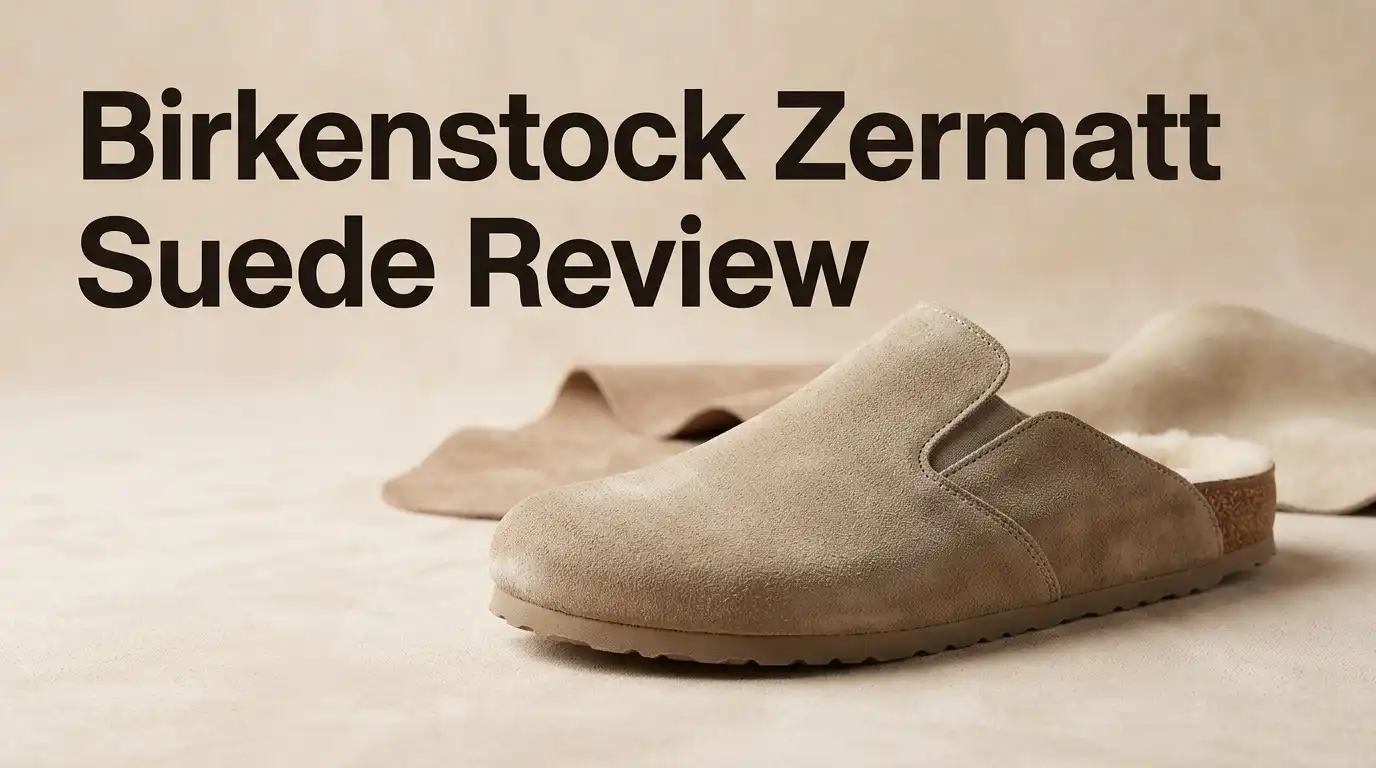
Birkenstock Zermatt Suede Review 2026: Worth It?
Slippers rarely get this much attention. The Birkenstock Zermatt does, because it sits in a strange middle ground between a house shoe and a real clog. People buy it hoping for the famous cork footbed in a cozy format. Some get exactly that. Others send it straight back.
I spent weeks with a pair of Zermatt Premium suede clogs, wore them on hardwood, tile, carpet, and a few quick trips to the mailbox. I also read through hundreds of owner reviews from Zappos, Reddit, and retail sites to see where my experience matched the crowd and where it did not.
This review covers the unboxing, the fit quirks, the arch support, the warmth, and the real weak spots nobody mentions in the product listing. If you want a short answer before you scroll, the Zermatt is a great slipper for people with sore feet and a poor slipper for people who want pillow softness.
In A Nutshell:
- The footbed is the whole selling point. The Zermatt uses the same contoured cork and latex footbed found in Birkenstock sandals. The arch support is high, firm, and very pronounced. Owners with plantar fasciitis repeatedly call it the only slipper that helped them. People who want a soft cloud underfoot usually dislike it within a week.
- Sizing runs narrow and short in practice. Most versions ship in Narrow width only. Reviewers with medium feet often fit fine, but wide feet and high insteps struggle. Several buyers recommend sizing up one if you plan to wear thick socks. Measure your foot in centimeters and compare it to the official size chart before ordering.
- Suede versions beat shearling versions on durability. The shearling footbed lining is plush at first, then compresses and wears through. Multiple owners reported holes within one year. The plain suede lined models hold up far longer and cost less.
- It is heavier than you expect. The rubber and cork blend outsole adds real weight compared to the EVA sole on the Boston. That sole is sturdy and grippy outdoors, but it makes the Zermatt feel like a shoe rather than a slipper.
- Break in time is real. Expect seven to fourteen days before the footbed softens and the suede relaxes. The first few days feel stiff and oddly hard under the arch.
- Price sits around 130 to 190 dollars in 2026, depending on the version and the sale. That is premium slipper money, so the fit needs to be right.
Birkenstock Zermatt Suede Clog: First Impressions

- Footbed lining: suede
- Details: clog with extended shaft; decorative stitching; decorative rivet
- The arch supports that run alongside the sides of the footbed surround the tarsal bones inside and...
Last update on 2026-10-05 / Affiliate links / Images from Amazon Product Advertising API Some of the links on this website are affiliate links, which means that at no additional cost to you, I earn a commission if you click through and make a purchase. I only recommend products and services that I believe will add value to my readers. Thank you for your support!
The Zermatt arrived in the standard Birkenstock box, blue lid, no extra packaging drama. Inside sat two clogs stuffed with paper and a small care leaflet. The suede smelled faintly of leather and glue, which faded after two days of airing out.
My first reaction was weight. These feel substantial in hand. The rubber outsole carries noticeable mass compared to any fabric slipper. The second reaction was the shape. The toe box is round and generous, with plenty of width across the ball of the foot.
The stitching detail runs on an angle along the outer side, which gives the Zermatt a cleaner look than the buckled Boston. A small metal rivet carries the Birkenstock logo. The suede nap is even, soft, and slightly brushed.
Slipping them on felt tight at first, then correct. The heel cup is deep. Nothing slid around.
Materials And Construction Explained
Birkenstock keeps the recipe simple. The upper uses soft suede leather. The footbed uses cork mixed with natural latex, shaped by hand and layered over a jute fiber base. The lining depends on the model you choose: suede on the Premium and 365 versions, genuine shearling on the cozy winter versions.
The suede lining is the underrated choice. It feels smooth against bare skin, breathes well, and does not flatten the way shearling does. Shearling feels warmer on day one and thinner by month six.
The outsole is where the 2026 models improved. Birkenstock now uses a rubber and cork blend with a visible speckled texture. It grips hardwood better than the older latex soles, which several early owners described as slippery on freshly cleaned floors.
The footbed is removable on most Zermatt versions. That matters if you use custom orthotics.
Sizing Guide: How The Zermatt Fits
Sizing confuses most first time buyers, so here is the practical summary. Birkenstock uses European numbers only. A 38 equals a women’s 7 to 7.5. A 43 equals a men’s 10 to 10.5. The chart on the listing is accurate, so trust it over your sneaker size.


Last update on 2026-04-11 / Affiliate links / Images from Amazon Product Advertising API Some of the links on this website are affiliate links, which means that at no additional cost to you, I earn a commission if you click through and make a purchase. I only recommend products and services that I believe will add value to my readers. Thank you for your support!
Width is the real trap. Many Zermatt models come in Narrow only. Narrow in Birkenstock terms still fits a medium foot comfortably. One longtime owner noted that her 38 Narrow fit better than a 39 Boston Shearling, with a roomier toe box.
Wide feet and high insteps are the problem cases. Reviewers with flat wide feet in size 42 reported they simply could not get the shoe on.
My advice: order your normal Birkenstock size for bare feet. Size up one if you live in thick wool socks all winter.
Top 3 Alternatives For Birkenstock Zermatt Suede

- Narrow accommodates Narrow to Regular widths.
- The Birkenstock Boston Shearling - Suede clogs are made cozy for the colder months. Their classic...
- The shearling-lined, anatomically-formed, cork and latex footbed will mold to the shape of your...
Last update on 2026-10-05 / Affiliate links / Images from Amazon Product Advertising API Some of the links on this website are affiliate links, which means that at no additional cost to you, I earn a commission if you click through and make a purchase. I only recommend products and services that I believe will add value to my readers. Thank you for your support!
Birkenstock Boston Shearling Clog


Last update on 2026-04-11 / Affiliate links / Images from Amazon Product Advertising API Some of the links on this website are affiliate links, which means that at no additional cost to you, I earn a commission if you click through and make a purchase. I only recommend products and services that I believe will add value to my readers. Thank you for your support!

- Haflinger Snowbird Chestnut 45
Last update on 2026-10-05 / Affiliate links / Images from Amazon Product Advertising API Some of the links on this website are affiliate links, which means that at no additional cost to you, I earn a commission if you click through and make a purchase. I only recommend products and services that I believe will add value to my readers. Thank you for your support!
Haflinger Snowbird Shearling Clog
No products found.
UGG Women’s Tasman II Slipper
Comfort And Arch Support Performance
This is the Zermatt’s strongest category. The arch support is tall, firm, and positioned under the midfoot with a defined toe bar at the front. If you already love Birkenstock sandals, your feet will recognize the shape immediately.
Owners with foot pain are the loudest fans. One reviewer tried two dozen slippers before buying the Zermatt and called it the only one with real arch support. Another with plantar fasciitis described a clear reduction in morning heel pain after a few weeks of wear.
The flip side is honest and important. The support sits forward enough that some feet feel the ball resting on the arch rather than behind it. A handful of experienced Birkenstock owners reported exactly this problem and returned the shoes.
Break in matters. Days one through five feel rigid. By week two the cork molds to your print.
Warmth, Breathability, And Sock Compatibility
The suede lined Zermatt is warm without being hot. Cork insulates naturally, and the enclosed upper traps heat around the foot. My feet stayed comfortable on cold tile in a 62 degree house with bare feet.
Breathability is the standout benefit over synthetic slippers. Several owners specifically mentioned that their feet stop sweating in these, which is rare for an enclosed house shoe. Suede moves moisture better than fleece or faux fur.
If you want serious winter heat, pick the shearling version instead. The wool felt and shearling models run noticeably warmer and suit cold climates better.
Socks fit fine in a properly sized pair. Thin socks are easy. Thick wool socks need either a half size up or a broken in shoe. Going barefoot works too, though the suede will absorb foot oils over time.
Indoor And Outdoor Use: How Far Can You Go?
The Zermatt handles more than carpet. The rubber and cork outsole is genuinely durable and gives decent traction on concrete and dry pavement. Trash runs, mail checks, letting the dog out, and quick driveway trips are all fine.
It is not a winter boot. The upper offers no water resistance. Wet grass soaks into suede fast, and salt stains leave permanent marks. Snow is a hard no.
Owners in Minnesota and Michigan report wearing these as everyday fall and spring shoes, paired with jeans, and nobody mistakes them for slippers. The clean stitching helps.
One pleasant surprise: they are quiet. Multiple reviewers described the sole as nearly silent on hardwood, which is useful in a house with sleeping kids or early mornings.
Zermatt Shearling Versus Zermatt Premium Suede

- Anatomically shaped cork/latex footbed lined with shearling
- Wool felt upper
- Shearling footbed lining
Last update on 2026-10-05 / Affiliate links / Images from Amazon Product Advertising API Some of the links on this website are affiliate links, which means that at no additional cost to you, I earn a commission if you click through and make a purchase. I only recommend products and services that I believe will add value to my readers. Thank you for your support!
These two versions confuse shoppers constantly, so here is the clear split. The Zermatt Shearling uses a wool felt upper with genuine shearling lining the footbed. The Zermatt Premium uses a suede leather upper with either suede or shearling lining and a heavier rubber sole.
The Premium is the more versatile shoe. It looks like real footwear, survives outdoor use, and cleans up better. It also costs more, usually 180 dollars or so at full price.
The Shearling is warmer and lighter but less durable. The most common complaint across review sites is the shearling footbed wearing thin or developing holes inside twelve months. One owner put it bluntly: the shearling footbeds wear through quickly and cost double.
Pick Premium suede for longevity and year round wear. Pick Shearling only if maximum warmth beats everything else.
What The Zermatt Does Not Do Well
Honest reviews need this section. Here is where the Zermatt disappoints people.
It is not cozy in the traditional slipper sense. One owner summarized it perfectly: comfy like Birkenstocks, not comfy like slippers. If you want to sink your foot into softness after a long day, this will feel like a punishment.
The toe box tapers steeply at the front. Owners whose second toe matches or exceeds their big toe reported bumping and rubbing. The front of the shoe is firm and unforgiving when your foot slides forward.
Lighter colors stain easily and resist cleaning. Felt uppers attract pet hair like a magnet. The suede darkens where your foot sweats.
And the price stings. Paying 180 dollars for something that develops a lining hole in year one frustrates buyers, and that complaint appears often enough to take seriously.
Pros And Cons Of The Birkenstock Zermatt Suede
Pros
- Genuine cork and latex footbed delivers arch support no fabric slipper can match
- Suede upper breathes well and keeps feet dry without overheating
- Rubber and cork outsole handles short outdoor trips and grips hardwood safely
- Removable footbed on most models allows custom orthotics or easy airing out
- Wide, roomy toe box suits people who hate cramped slippers
- Quiet sole makes early mornings easier on everyone else in the house
- Looks like a real shoe, so you can answer the door without embarrassment
Cons
- Firm footbed feels hard and unwelcoming during the break in period
- Narrow width only on most versions, which excludes wide feet and high insteps
- Shearling lined models compress and wear through faster than the price justifies
- Heavier than EVA soled Birkenstocks because of the rubber outsole
- Steep toe taper causes toe bumping for some foot shapes
- Suede and felt uppers stain easily and clean poorly
- Premium price for a house shoe
Care And Cleaning Tips That Actually Work
Suede needs dry care. Let mud or spills dry completely, then brush with a suede brush in one direction. A suede eraser lifts shiny spots and scuffs. Never soak these in water and never put them in a washing machine.
Treat new pairs with a suede protector spray before the first wear. This single step prevents most permanent staining and takes three minutes.
The footbed needs attention too. Pull out the removable insole every few weeks and let it air dry fully. Sweat breaks down cork over time, and trapped moisture causes odor.
For the shearling versions, a soft brush restores loft. Compressed wool will not fully recover, so rotate between two pairs if you wear slippers daily.
Store them away from radiators. Direct heat dries cork and cracks it, which ends the shoe faster than any amount of walking.
Price And Value In 2026
The Zermatt family spans roughly 100 to 190 dollars depending on version and sale timing. The wool felt shearling sits lower, the Premium suede sits higher, and Birkenstock runs discounts of 30 percent or more on older colorways.
Value depends entirely on how you use them. Wear them two hours a night and the math looks bad. Wear them eight hours a day as a work from home shoe and they beat buying three cheap pairs a year.
Longevity reports split sharply by model. Suede lined pairs regularly last three to five years. Shearling lined pairs draw one year complaints with uncomfortable frequency.
Buy during seasonal sales if you can wait. Avoid unknown third party sellers, since Birkenstock counterfeits circulate widely online. Check for the stamped logo on the footbed and even, clean stitching.
Who Should Buy The Zermatt And Who Should Skip It
Buy the Zermatt if you stand on hard floors all day, work from home, or have arch pain that cheap slippers ignore. Buy it if you already own Birkenstock sandals and know you like the footbed shape. Buy it if you want one shoe that works indoors and for quick outdoor errands.
Skip the Zermatt if you have wide feet, a high instep, or a long second toe. Skip it if your definition of a slipper involves plush softness and zero structure. Skip it if you only wear slippers for twenty minutes before bed, because the price makes no sense at that usage level.
Also skip the shearling lined version if durability matters more than warmth. The suede lined Premium is the smarter long term purchase for most people.
Final Verdict: Is The Zermatt Worth Buying?
The Birkenstock Zermatt suede is a supportive house shoe wearing a slipper costume. It does one thing exceptionally well, and that thing is holding your arch in a comfortable position for hours. Nothing else in the slipper category comes close.
It is not soft, not cheap, and not forgiving of unusual foot shapes. Those are real limitations, not nitpicks, and they explain most of the negative reviews floating around.
My rating sits at 4.2 out of 5. The Premium suede version earns that score. The shearling lined version drops to roughly 3.5 because of durability complaints.
If your feet hurt at the end of the day and your current slippers offer nothing but padding, the Zermatt is a genuine upgrade. Order your correct Birkenstock size, give it two weeks, and judge it then.
Frequently Asked Questions
Does the Birkenstock Zermatt run true to size?
Yes for length, with a caveat for width. Use the European size chart rather than guessing from your sneaker size. The shoe comes mostly in Narrow width, which fits medium feet acceptably. Size up one if you wear thick socks daily or have a wide foot.
Can I wear the Zermatt outside?
Short trips, yes. The rubber and cork outsole grips dry pavement well and survives concrete. The suede upper offers no water protection, so avoid rain, snow, and salted sidewalks. Treat it as an indoor shoe with outdoor privileges.
How long does the Zermatt take to break in?
Most owners report seven to fourteen days. The cork footbed softens and molds to your foot print during that window. The suede upper also relaxes slightly. Wear them in short sessions at first if the arch feels sharp.
Is the shearling version worth the extra cost?
Usually not. The shearling adds warmth but compresses within months, and lining holes appear in year one for many owners. The suede lined Premium costs less and lasts significantly longer.
Zermatt or Boston, which should I pick?
Pick the Zermatt for a cleaner look, roomier toe box, sturdier rubber sole, and a removable footbed. Pick the Boston for lighter weight, adjustable buckle fit, and wide width availability. The Boston also costs less.
Can I machine wash the Zermatt?
No. Water damages the cork footbed and ruins suede texture. Brush dirt off when dry, use a suede eraser on marks, and apply protector spray before wearing. Air dry the removable insole separately.

Mia Smith is the founder of Shoe Storyteller, a blog that celebrates the art and stories behind shoes. With a passion for fashion and a flair for storytelling, Mia brings a unique perspective to the world of footwear.