Birkenstock Mayari Sandal Review 2026: Still Worth It?
Sandals come and go. The Birkenstock Mayari keeps showing up. You see it at airports, farmers markets, coffee shops, and on the feet of nurses who stand for ten hours a day.
That kind of staying power makes people curious. It also makes people suspicious. A sandal with two thin straps and a cork sole costs over a hundred dollars, and that number deserves a straight answer.
I wore the Mayari for a full season. I walked city blocks in it. I wore it to a wedding reception. I got it wet, dusty, and scuffed. This review covers the good parts, the annoying parts, and the parts nobody mentions in the product photos.
Key Takeaways
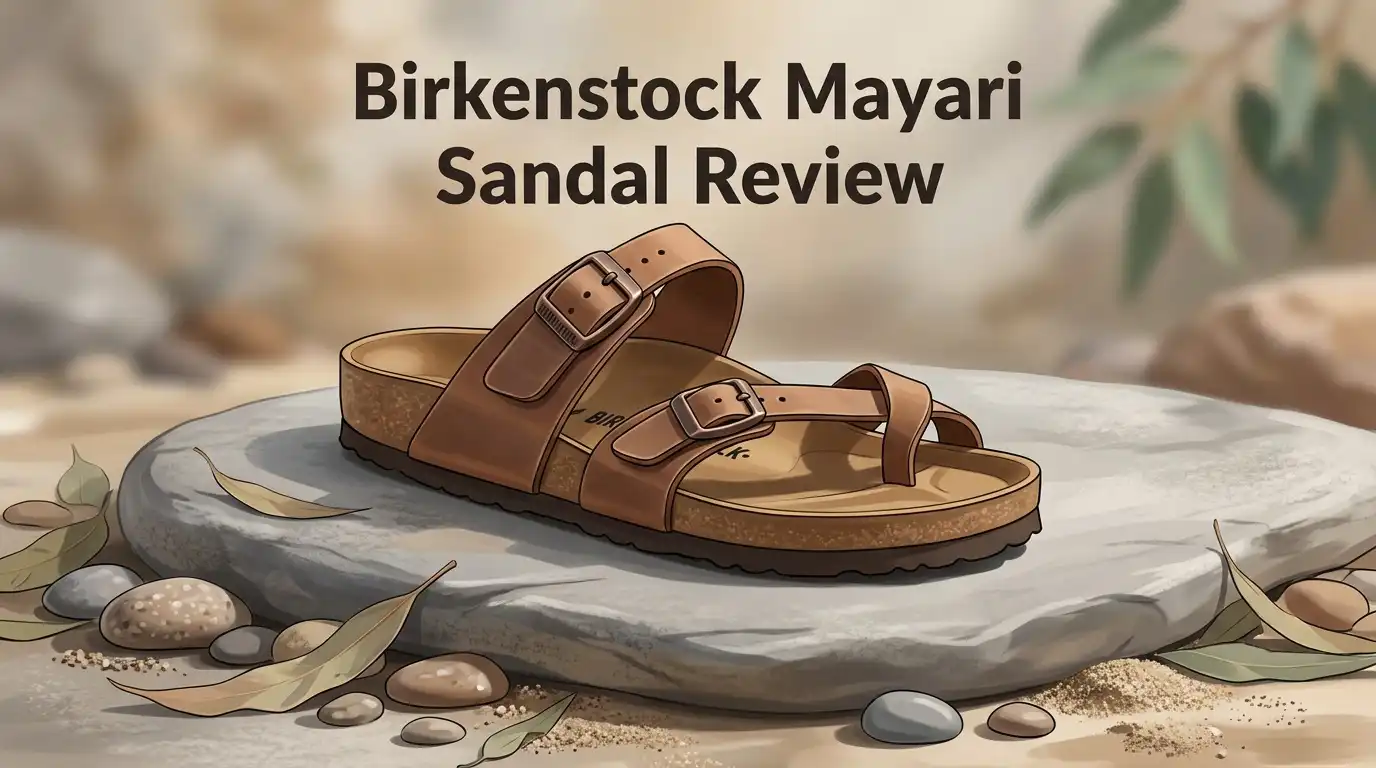
- The Mayari is the narrower, dressier cousin of the Arizona. It uses two crossing straps and a toe loop instead of two wide buckle straps. The look reads softer and more feminine, and it slides under wide leg jeans without bulk.
- The cork and latex footbed is the whole point. It has a raised arch, a deep heel cup, and a toe grip ridge. The cork softens with body heat and pressure, then holds the shape of your foot. This is why owners keep pairs for five years or longer.
- Break in is real, and it takes one to three weeks. The first few wears feel stiff and strangely firm. Some people feel pressure under the arch. Most of that fades. Some of it does not, and I will be honest about who should walk away.
- Sizing trips up first time buyers. Birkenstock uses European sizing with Regular and Narrow widths. Narrow fits most women. The Mayari already runs slimmer than the Arizona, so narrow footed buyers often need the Narrow last.
- The toe loop is the dealbreaker for some feet. If you have a long second toe, a bunion, or sensitive skin between your toes, the loop can rub. A few owners describe it as a noose. That complaint is common enough to take seriously.
- Price sits around $99 to $130 depending on material. Birko Flor costs the least. Oiled leather and suede cost more and usually feel better against skin.
Unboxing the Birkenstock Mayari

- Anatomically shaped cork-latex footbed
- Upper: Birko-Flor nubuck
- Footbed lining: suede
Last update on 2026-09-25 / Affiliate links / Images from Amazon Product Advertising API Some of the links on this website are affiliate links, which means that at no additional cost to you, I earn a commission if you click through and make a purchase. I only recommend products and services that I believe will add value to my readers. Thank you for your support!
The box arrives plain. Brown cardboard, a simple logo, a sticker with the size and width code on the end. No tissue paper theater, no branded dust bag, no little thank you card. Birkenstock does not spend money on packaging, and honestly that feels right for a company this old.
Inside, the sandals sit back to back in a thin paper wrap. The first thing you notice is the smell. Cork and natural latex have a warm, slightly sweet scent that fills the room for a minute. The footbed looks almost chalky. Run a finger across it and you feel a fine suede texture.
The soles are stiff. You can press the footbed with your thumb and it barely gives. That firmness scares new buyers, and it should not. The cork compresses slowly over weeks, not seconds. The jute layer underneath adds the flex later.
What the Footbed Actually Does
The Birkenstock footbed is four layers. A suede lining sits on top. Below that is the cork and latex core. Then two layers of jute fabric add strength and moisture control. An EVA outsole caps the bottom and absorbs shock.
The shape matters more than the materials. The arch sits high and far forward. The heel drops into a cup that keeps your foot from sliding sideways. A raised ridge at the front gives your toes something to grip. Your foot stops gripping with muscles and starts resting on structure.
That is why people with plantar fasciitis keep recommending these. The arch takes load off the plantar fascia. It does not cure anything, but it reduces strain. If your arches have collapsed from years in flat shoes, the first week will feel like a workout. That sensation is normal and it fades.
Materials Explained: Birko Flor, Birkibuc, and Leather
Birkenstock sells the Mayari in several uppers, and the choice changes the experience.
Birko Flor is a synthetic. It looks like smooth leather and feels like firm plastic with a soft fabric backing. It is vegan, easy to wipe clean, and cheapest. It also gets sticky against bare skin in heat.
Birkibuc mimics nubuck. It has a brushed, matte surface. It breathes slightly better than Birko Flor and hides scuffs well.


Last update on 2026-04-11 / Affiliate links / Images from Amazon Product Advertising API Some of the links on this website are affiliate links, which means that at no additional cost to you, I earn a commission if you click through and make a purchase. I only recommend products and services that I believe will add value to my readers. Thank you for your support!
Oiled leather and suede cost the most. They soften fastest, mold to your foot, and feel the best after two weeks. They also stain, so rain is a problem.
My honest take: pay the extra twenty dollars for leather or suede if you plan to wear these barefoot often. The synthetic versions create friction against the toe loop, and friction is where blisters start.
Top 3 Alternatives for Birkenstock Mayari

- Understanding Widths: Narrow accommodates Narrow to Regular widths. Regular accommodates Regular to...
- An icon of timeless design and legendary comfort, the Arizona sandal by Birkenstock has been...
- Made from acrylic and polyamide felt fibers, this soft material features a smooth, leather-like...
Last update on 2026-10-07 / Affiliate links / Images from Amazon Product Advertising API Some of the links on this website are affiliate links, which means that at no additional cost to you, I earn a commission if you click through and make a purchase. I only recommend products and services that I believe will add value to my readers. Thank you for your support!
Birkenstock Arizona Sandal
No products found.


Last update on 2026-04-11 / Affiliate links / Images from Amazon Product Advertising API Some of the links on this website are affiliate links, which means that at no additional cost to you, I earn a commission if you click through and make a purchase. I only recommend products and services that I believe will add value to my readers. Thank you for your support!
Birkenstock Gizeh Sandal

- Leather, Leather, Leather, Synthetic, Buckle, Sandals
- Outer Material : Leather | Inner Material : Leather
- 1
Last update on 2026-10-07 / Affiliate links / Images from Amazon Product Advertising API Some of the links on this website are affiliate links, which means that at no additional cost to you, I earn a commission if you click through and make a purchase. I only recommend products and services that I believe will add value to my readers. Thank you for your support!
Birkenstock Yara Sandal
Sizing: Regular Versus Narrow
This is where most returns happen. Birkenstock uses European sizes only. A US women’s 8 maps to a 39. A US women’s 6 maps to a 36. Half sizes do not exist, so you round.
Width is the second decision. Birkenstock prints a footprint symbol on the sole. A narrow footprint means Narrow width. A wide footprint means Regular. The brand says Narrow fits most women’s feet, and that advice holds up.
The Mayari complicates things. Its strap layout already pulls the foot in, so it feels tighter than an Arizona in the same size. Owners who sit between widths usually do better in Regular with the Mayari.
Check length by standing on the footbed. Your heel should sit in the cup. Your longest toe should leave a few millimeters of space before the front ridge. No part of your foot should hang over the edge.
The Break In Period, Honestly
Nobody loves the first week. The cork is hard. The suede lining has no give. The straps sit exactly where the factory set them.
Wear them around the house for an hour at a time. Then two hours. By day five the arch stops announcing itself. By day ten the footbed shows faint dark marks where your heel and ball press down. Those marks are the cork accepting your foot shape.
A few people need no break in at all. Reviewers with high arches often report instant comfort. People coming from flat sneakers usually need longer.
What does not change: if the toe loop rubs on day one, it will probably still rub on day thirty. Strap width adjusts. Toe loop position does not. That is a design limit, not a break in issue.
All Day Wear Test
I walked about eight miles over one Saturday. Pavement, brick, grass, a few flights of stairs. The verdict was mixed in a predictable way.
Arch support stayed excellent. My feet did not ache at the end, which rarely happens in flat sandals. The heel cup kept my foot centered, so no sideways skidding on inclines.
The problems were friction and heat. The toe loop left a pink mark between my big toe and second toe by mile five. A thin bandage fixed it the following week. The suede footbed also held sweat, which made my feet slide slightly on downhills.
These sandals perform best for walking in stretches rather than marathon days. Errands, campus, light travel, restaurant shifts on softer floors. They are not hiking sandals, whatever the Amazon category says.
Pros and Cons
Pros
- The contoured cork footbed delivers genuine arch support that lasts all day.
- The slim strap design looks dressier than the Arizona and pairs with skirts and dresses.
- The toe loop holds your foot in place, so no slapping or clenching.
- The adjustable buckle lets you fine tune fit as your feet swell in heat.
- Cork footbeds and soles can be repaired or resoled, which extends life by years.
- Materials range from vegan synthetic to oiled leather, so vegans have real options.
- Resale value stays high, which softens the sticker price.
Cons
- The toe loop irritates many wearers, especially those with a long second toe or bunions.
- Break in takes one to three weeks and feels uncomfortable at the start.
- Birko Flor sticks to sweaty skin and can squeak.
- The suede footbed darkens and absorbs odor over time.
- No arch flexibility, so flat footed wearers may feel pressure that never resolves.
- Cork sidewalls crack if the sandals get soaked repeatedly.
- Sizing confusion leads to a high return rate for first time buyers.
What the Mayari Does Not Do Well
Authentic reviews name the weak spots, so here they are.
Water ruins cork. Not a splash, but repeated soaking. The sealant wears off, cork dries out, and small cracks appear along the edge. Do not wear these in the ocean or a pool.
Grip is average. The EVA outsole handles dry pavement fine. Wet tile and polished store floors are slippery.
The footbed stains. Sweat, sunscreen, and lotion darken the suede lining. After one summer mine had visible foot shaped shadows. A cork sealer and a cleaning kit help, but the marks never fully leave.
Narrow toe box pressure. The Mayari squeezes the forefoot more than the Arizona does. Wide footed buyers who order Regular still sometimes feel the strap edge press on the outer foot.
No cushioning. Support and cushioning are different things. If you want a soft, pillowy feel, the standard footbed will disappoint you. The Soft Footbed version exists for that reason.
Durability After One Full Season
After roughly four months of regular wear, here is the condition report.
The straps held. No stitching came loose, and the buckle still clicks firmly. Birko Flor showed a few surface scuffs that buffed out with a damp cloth.
The footbed suede darkened at the heel and ball. Expected. The cork sidewall stayed intact because I kept the sandals out of heavy rain.
The outsole showed moderate wear at the outer heel, matching my gait. Birkenstock authorized repair shops replace outsoles for a fraction of a new pair’s price. That option alone changes the value math.
Realistic lifespan sits around three to five years for regular wear, longer with resoling. Cheap sandals rarely clear two summers, so the cost per wear works out well.
Cleaning and Care Tips
Care takes five minutes a month. Brush the footbed with a dry suede brush to lift dirt. For deeper cleaning, use a small amount of Birkenstock cleaner or mild soap on a damp cloth, then let it air dry away from direct sun.
Never put them in a washing machine. Heat and water destroy the latex bond.
Treat the cork edges with cork sealer twice a season. Sealer keeps moisture out and prevents cracking. It costs about ten dollars and doubles the life of the sole.
For Birko Flor straps, a damp cloth handles almost everything. For leather and suede, use a matching protector spray before the first wear.
One extra tip: rotate pairs. Letting cork dry fully between wears prevents odor and slows compression.
Mayari Versus Arizona Versus Gizeh
All three share the same footbed, so comfort differences come from the straps.
The Arizona uses two wide buckle straps. It is the roomiest and the most adjustable. Best for wide feet and casual outfits.
The Gizeh is a thong. A single post sits between your toes with one strap across the foot. It looks sleek but the post creates the most complaints about toe pain.
The Mayari sits between them. Two thin crossing straps plus a soft toe loop. It holds the foot better than the Gizeh and looks dressier than the Arizona.
If your feet are wide, choose the Arizona. If you want the dressiest option and your toes tolerate a loop, choose the Mayari. The Gizeh suits people who already wear thong sandals without trouble.
Price and Value in 2026
Birko Flor Mayari sandals run roughly $99 to $113. Birkibuc sits near $113. Oiled leather and suede climb to about $125 to $150 depending on color and retailer.
Sale prices appear in late summer and around major shopping holidays. Discontinued colors drop fastest.
Compare that to a $35 sandal replaced every year. Over five years the Birkenstock costs less and supports your feet better.
The value case depends entirely on fit. A pair that rubs your toes is worth nothing, no matter how well built it is. Buy from a retailer with free returns and test them on carpet for two days before committing.
Who Should Buy and Who Should Skip
Buy the Mayari if you have medium to narrow feet, want arch support in a sandal that looks polished, stand for long stretches, and already wear toe loop styles comfortably.
Skip the Mayari if you have wide feet, bunions, a long second toe, or sensitive skin between your toes. Skip it also if you need soft cushioning rather than firm support.
People with diabetes or neuropathy should talk to a podiatrist first. Firm footbeds create pressure points that numb feet cannot detect.
My overall rating: 4.3 out of 5. The support, build quality, and repairability earn high marks. The toe loop and the break in period cost it a perfect score.
Frequently Asked Questions
Do Birkenstock Mayari sandals run big or small?
They run true to European size but feel narrow in the forefoot. Order your normal European size. Choose Narrow width if your feet are slim, and Regular if your feet are medium or wide.
How long does the break in period last?
Most wearers need one to three weeks of regular use. Start with short sessions at home. The cork softens with body heat and gradually molds to your foot shape.
Can you wear the Mayari in water?
Light splashes are fine. Repeated soaking damages cork and loosens the glue. Keep them away from pools, oceans, and heavy rain.
Is the Mayari good for plantar fasciitis?
Many wearers report relief because the high arch reduces strain on the plantar fascia. Results vary by foot type, so consult a podiatrist for persistent pain.
Does the toe loop hurt?
It depends on your foot. People with a long second toe or bunions often feel rubbing. A thin bandage during break in helps, but it does not solve every case.
Can the footbed be replaced?
Yes. Birkenstock authorized repair centers replace outsoles and refresh footbeds. The service costs far less than a new pair and extends life by years.

Mia Smith is the founder of Shoe Storyteller, a blog that celebrates the art and stories behind shoes. With a passion for fashion and a flair for storytelling, Mia brings a unique perspective to the world of footwear.