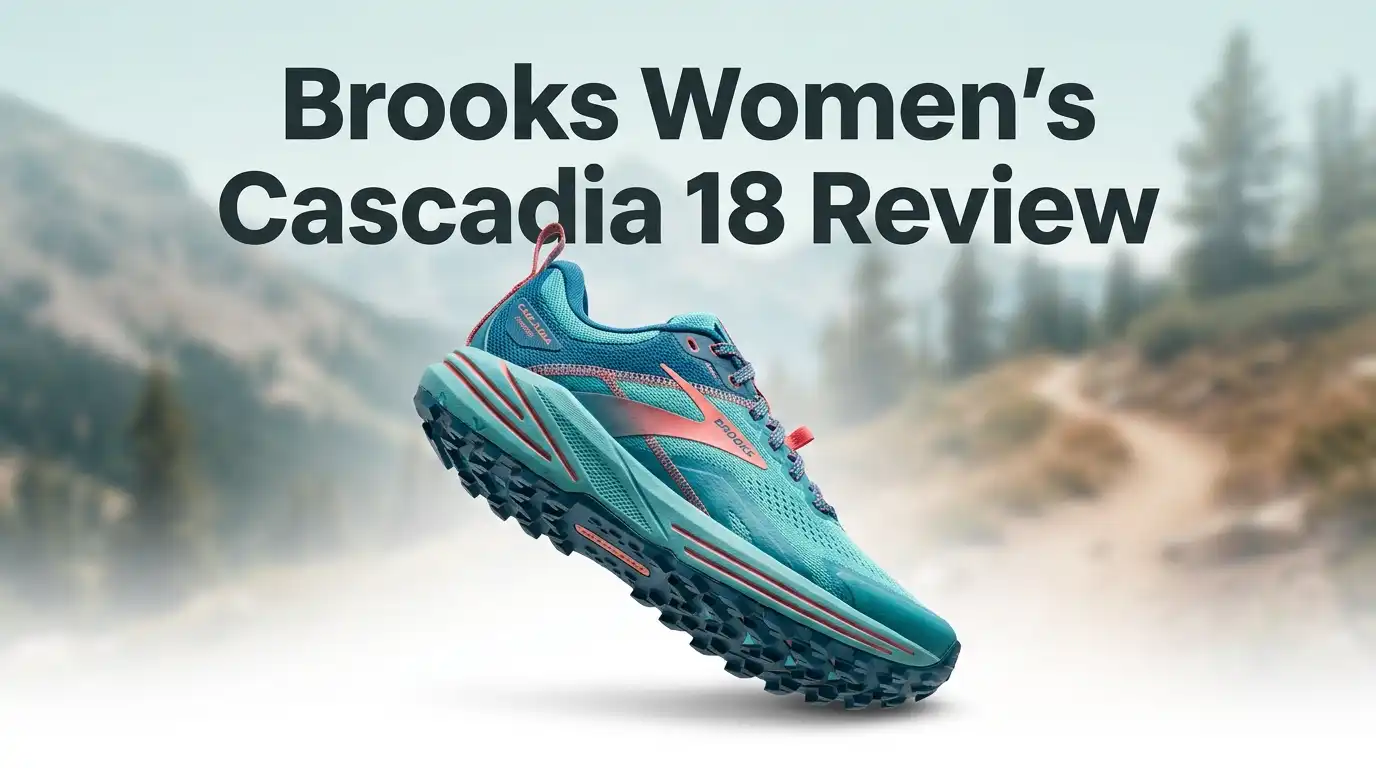
Brooks Women’s Cascadia 18 Review: Worth Buying?
If you’ve been eyeing a trail shoe that won’t roll your ankle on rocky descents, you’ve probably landed on the Cascadia name more than once.
I spent weeks on gravel, mud, and technical single track in these, and I want to tell you honestly what holds up and what doesn’t.
This isn’t a plush pillow for your feet. It’s a stable, protective workhorse built for heel strikers who value control over softness. If that sounds like you, keep reading.
In a Nutshell
- Best for heel strikers: The heel counter scored a perfect 5/5 in stiffness tests. If you land on your heel, this shoe locks you in like almost nothing else in its class.
- Firm, not plush: The DNA Loft v2 midsole is on the firm side. You get great ground feel and rock protection, but not a cushioned, bouncy ride.
- Excellent value at $140: Brooks held the price steady. That’s rare right now, and the build quality punches above its price tag.
- Reliable traction: The TrailTack Green outsole with 4mm lugs grips wet rock and dry gravel beautifully across mixed terrain.
- Watch the weight: At around 10.9 oz (women’s), these are heavier than modern rivals. Not a racing shoe.
- Thin toe mesh: The upper is breathable but durability is a concern in the toebox, so rough scrambling will show wear.
What Makes the Cascadia 18 Stand Out
Let me be direct. The thing that sets this shoe apart is stability. Brooks built a wide platform, 95.6mm at the heel and 112.6mm at the forefoot, and it shows on off-camber trails.

- THIS WOMEN’S SHOE IS FOR: The Cascadia 18 provides runners and mountain hikers with adaptable...
- COMFORT & SECURITY: DNA LOFT v2 provides soft cushioning over any terrain while the TrailTack Green...
- ADAPTABLE STABILITY: The Trail Adapt System utilizes an integrated midsole, with articulated...
Last update on 2026-07-13 / Affiliate links / Images from Amazon Product Advertising API Some of the links on this website are affiliate links, which means that at no additional cost to you, I earn a commission if you click through and make a purchase. I only recommend products and services that I believe will add value to my readers. Thank you for your support!
I ran these on loose descents where I’d normally feel my ankle wobble. It didn’t happen. The shoe felt planted and predictable the whole way down.
The other standout is the Trail Adapt system. Instead of a stiff full-length rock plate, Brooks uses a forked plastic plate that flexes while still shielding your foot.
You get protection from sharp rocks without the clunky, board-like feel. It’s a smart design choice, and it works well on rugged, uneven terrain.
Unboxing and First Impressions
The box is standard Brooks, nothing fancy, but the shoes inside felt substantial the moment I lifted them out. No loud chemical smell, which I appreciated.
The engineered mesh upper looked and felt breathable right away. My first thought was that these seemed more like a burly hiker than a nimble runner.
I slipped them on with no break-in drama. The gusseted tongue hugged my midfoot immediately, and the finger-loop heel tab made pulling them on genuinely easy.
How the Cascadia 18 Feels On Foot
The ride is firm and grounded. If you’re expecting a soft, marshmallow feel, this isn’t it. The DNA Loft v2 foam measured firmer than average on durometer tests.
What you get instead is feedback. I always knew what my foot was standing on, which builds confidence on technical ground.


Last update on 2026-04-11 / Affiliate links / Images from Amazon Product Advertising API Some of the links on this website are affiliate links, which means that at no additional cost to you, I earn a commission if you click through and make a purchase. I only recommend products and services that I believe will add value to my readers. Thank you for your support!
The subtle rocker helped smooth my stride on rolling terrain. It’s not aggressive, but it nudges you forward just enough without stealing stability.
Top 3 Alternatives for the Cascadia 18
If the Cascadia isn’t quite your match, these three are the ones I’d point you toward depending on what you’re missing.
No products found.
HOKA Speedgoat 6

- Our Energy Save midsole gives just the right balance of plush cushioning and adapted response.
- Developed using All Terrain Contagrip, for adhesion and confidence on the widest variety of...
- A lightweight, flexible, and durable 3D mesh upper provides optimized and comfortable foothold.

Last update on 2026-07-13 / Affiliate links / Images from Amazon Product Advertising API Some of the links on this website are affiliate links, which means that at no additional cost to you, I earn a commission if you click through and make a purchase. I only recommend products and services that I believe will add value to my readers. Thank you for your support!


Last update on 2026-04-11 / Affiliate links / Images from Amazon Product Advertising API Some of the links on this website are affiliate links, which means that at no additional cost to you, I earn a commission if you click through and make a purchase. I only recommend products and services that I believe will add value to my readers. Thank you for your support!
Salomon Sense Ride 5

- THIS WOMEN'S SHOE IS FOR: The Caldera 7 provides ultra-cushion for ultra-distances with added...
- SUPREME SOFTNESS: Super-soft nitrogen-infused DNA LOFT v3 cushioning, our softest cushioning is...
- RUGGED OUTSOLE: New outsole made from TrailTrack Green design provides superior traction and grip...
Last update on 2026-07-13 / Affiliate links / Images from Amazon Product Advertising API Some of the links on this website are affiliate links, which means that at no additional cost to you, I earn a commission if you click through and make a purchase. I only recommend products and services that I believe will add value to my readers. Thank you for your support!
Brooks Caldera 7
Traction and Grip on Real Trails
This is where the Cascadia quietly shines. The TrailTack Green rubber held its edge on wet granite and slick creek beds during my testing.
The lugs use a three-zone layout: braking lugs at the heel, mud-shedding pattern in the midfoot, and wedge-shaped climbing lugs up front. It’s thoughtful.
At 4mm deep, the lugs aren’t the most aggressive out there. On extremely loose scree I wanted more bite. But for mixed, moderate terrain, they’re excellent.
Fit and Sizing Notes
Good news here. These run true to size according to my experience and over 150 surveyed owners. I took my normal size and had no issues.
The toebox gives natural room without feeling sloppy. My toes could splay and swell on long descents without pressure points or hot spots.
If you have wide feet, Brooks offers a wide version in select markets. The standard width suits average and slightly wider feet comfortably.
The Cushioning Reality
I want to reset expectations here because this trips people up. The heel stack sits around 32.6mm with a 23.8mm forefoot, giving roughly an 8 to 9mm drop.
That drop makes it ideal for heel strikers and kind to tired calves and Achilles. Forefoot and midfoot runners may find it less natural.
Shock absorption tested in the medium-to-low range. Heavier runners and those who love plush foam should look elsewhere, honestly. This is protection over pillow.
Breathability and Weather Performance
The thin engineered mesh breathes genuinely well, scoring 4 out of 5 in ventilation tests. My feet stayed cool on warm afternoons.
Brooks even added a perforated insole for extra airflow, which is a premium touch at this price. It’s a small detail I didn’t expect.
The foam also resists cold. After freezer testing it firmed up only 13%, so cold-weather performance stays consistent. Just note the standard version is water-resistant, not waterproof.
Durability After Real Miles
Here’s where I have to be honest with you. The outsole and midsole are impressively durable. Testers logged 200 to 350 miles with minimal outsole wear and unchanged cushioning.
The weak link is the upper mesh. Lab abrasion tests scored the toebox a rough 1 out of 5. It’s thin, and rocky scrambles will scuff it.
The heel padding also compresses over time. None of this makes the shoe unusable, but the upper is the first thing to age.
Who Should Skip the Cascadia 18
Let me save you a return. Skip these if you want plush, maximum cushioning. The firm ride will frustrate you, and the Caldera 7 or a HOKA suits you better.
Skip them if you need an ultralight racer under 10 oz. These carry weight, and they’re built for reliability, not speed records.
Also skip them if you have sensitive Achilles tendons. That stiff 5/5 heel counter is fantastic for support but can feel clunky against a tender heel.
One more flaw worth naming: there are no reflective elements. If you run in low light, that’s a real safety gap you’ll want to address with a vest or clip light.
My Honest Verdict
After all these miles, my takeaway is simple. The Cascadia 18 is a dependable, stable, protective trail shoe that does everything well without being flashy.
It won’t win awards for softness or weight. But for heel strikers, hikers, and ultra-distance runners who want confidence on technical ground, it delivers real value at $140.
If you match that profile, yes, these are worth buying. If you crave plush cushioning or featherweight speed, look at the alternatives above instead.
Frequently Asked Questions
Are the Brooks Cascadia 18 good for beginners?
Yes, especially newer trail runners who want stability and protection while they build confidence. The wide, planted platform is forgiving on uneven ground, and the price is friendly for a first real trail shoe.
Is the Cascadia 18 waterproof?
The standard version is water-resistant, not waterproof. It sheds light moisture and dries reasonably fast. If you need full waterproofing, Brooks offers a GTX (Gore-Tex) version for around $30 more.
Do the Cascadia 18 run true to size?
They do. I took my usual size and so did the majority of surveyed owners. If you’re between sizes or want extra room for foot swell on long runs, consider the wide option where available.
Can I use the Cascadia 18 for hiking?
Absolutely. The stable platform, reliable TrailTack traction, and durable outsole make it a strong hiking shoe. Many thru-hikers pick the Cascadia line, though it offers no mid-ankle support like traditional boots.
How many miles will the Cascadia 18 last?
Expect roughly 200 to 350 miles before noticeable performance drop. The outsole and midsole hold up well. The thin upper mesh tends to show wear first, particularly around the toebox.
Is the Cascadia 18 too heavy for running?
At about 10.9 oz for women’s, it’s heavier than many rivals. It’s not a racing shoe. But the supportive design reduces fatigue on technical terrain, which offsets the extra weight for most trail and ultra efforts.
Disclosure: This content is part of an Amazon Creator Connections campaign, meaning I earn a commission from qualifying purchases. Using these links costs you nothing extra but directly supports my blog and future content.

Mia Smith is the founder of Shoe Storyteller, a blog that celebrates the art and stories behind shoes. With a passion for fashion and a flair for storytelling, Mia brings a unique perspective to the world of footwear.