Geox Shoes Review 2026: Actually Breathable?
Sweaty feet ruin good shoes. You buy leather sneakers for the look, then spend the afternoon peeling damp socks off your heels.
Geox built an entire company around that one problem, and the Nebula 2.0 is the model most people land on when they search for a shoe that vents heat without looking like a gym trainer.
I bought a pair, wore them through a hot commute season, and tracked what held up and what did not. This review covers the materials, the sole technology, real owner complaints from 2025 and 2026, and the specific feet these shoes suit badly.
In a Nutshell
- Real airflow, not marketing air. The perforated rubber outsole plus the breathable membrane moves warm vapour downward. My feet ran noticeably cooler than in standard rubber-soled leather sneakers, though the difference shows most in dry heat, not humidity.
- Best for narrow to medium feet. The last is slim and shallow. Owners with wide or high-volume feet consistently report pinching across the forefoot, and Geox offers almost no wide sizing in the US.
- Not waterproof unless it says ABX. Standard Nebula models breathe but let water in through the sole holes over time. This is the single largest source of angry reviews across Trustpilot and shoe forums.
- Light, flexible, easy on and off. Around 300g per shoe in a men’s 9, with a soft collar and a sole that bends at the ball of the foot from day one. Break-in is short.
- Durability is the weak link. Soles wear faster than the uppers. Several long-term owners get five plus years; others report separation or thin tread inside a year.
- Price sits high for what you get. Expect roughly $130 to $190 depending on colourway and retailer, which puts it against ECCO and premium Skechers comfort lines.
Geox Men’s U Nebula 2.0 F Sneaker

- Breathable
Last update on 2026-08-03 / Affiliate links / Images from Amazon Product Advertising API Some of the links on this website are affiliate links, which means that at no additional cost to you, I earn a commission if you click through and make a purchase. I only recommend products and services that I believe will add value to my readers. Thank you for your support!
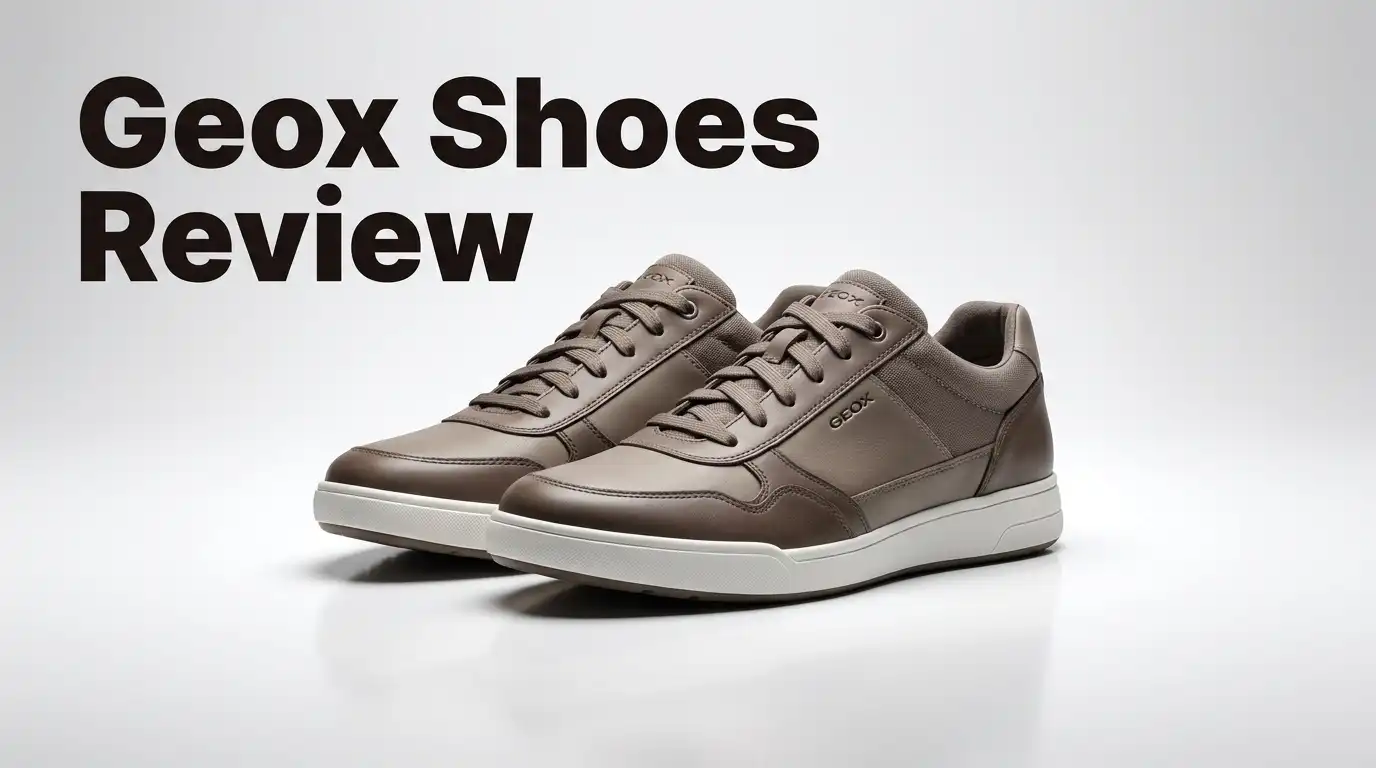
The Nebula 2.0 is the current version of the model that made Geox famous. It is a low-top sneaker with a suede and mesh upper, elastic laces on some colourways, and the full-length perforated outsole rather than the older front-only hole pattern.
Sizing runs in European numbers with US conversions on the box. Amazon listings mix UK and US sizing across sellers, which causes returns, so check the size chart on the exact listing rather than assuming.
The silhouette is quiet. It passes in a smart-casual office and does not read as an athletic shoe from three feet away. That is the main reason buyers pick it over a mesh running trainer.
Colour options are conservative: navy, dark grey, black, taupe, and a couple of off-white variants. The lighter shades show scuffing on the suede quickly.
Geox positions this as an all-day walking and travel shoe. That framing is fair. It is not a running shoe, not a trail shoe, and not a support shoe for anyone with serious pronation issues.
The Materials Breakdown
The upper on most Nebula 2.0 colourways is 60 percent bovine suede and 40 percent polyester mesh. The suede handles the overlays and toe box; the mesh fills the side panels and tongue.
The lining is textile, not leather, on the standard model. It wicks reasonably well but picks up odour faster than a leather-lined shoe would.
The outsole is perforated rubber bonded to a microporous polyurethane membrane. That membrane is the patented part. It has pores small enough to block liquid water molecules while letting vapour pass.
The midsole uses lightweight EVA foam. Cushioning is moderate, not plush. If you are used to a thick foam running shoe, these will feel firm underfoot for the first week.


Last update on 2026-04-11 / Affiliate links / Images from Amazon Product Advertising API Some of the links on this website are affiliate links, which means that at no additional cost to you, I earn a commission if you click through and make a purchase. I only recommend products and services that I believe will add value to my readers. Thank you for your support!
The footbed is a removable anatomic insole. Removing it gives you room for a thin orthotic, though a bulky custom orthotic will overfill the shoe and defeat the ventilation.
No leather sole, no cork, no welt. This is a cemented construction, which means resoling is not practical. When the outsole goes, the shoe goes.
How the Breathing System Actually Works
Geox drills holes through the rubber outsole under the areas where the foot has the densest sweat glands, mainly the ball and mid-forefoot. A membrane sits above those holes.
Water vapour from your foot passes through the insole and membrane, then exits through the perforations. Physics does the rest, since warm vapour moves toward cooler, drier air outside the shoe.
The company’s own demonstration puts a shoe over a heat source and catches condensation on a glass plate below. It is a real effect, and independent patent filings describe the same mechanism.


Last update on 2026-04-11 / Affiliate links / Images from Amazon Product Advertising API Some of the links on this website are affiliate links, which means that at no additional cost to you, I earn a commission if you click through and make a purchase. I only recommend products and services that I believe will add value to my readers. Thank you for your support!
What the demo does not show is the limit. The system depends on a vapour pressure difference between inside and outside. On a humid 90 percent day, that gradient shrinks and the venting slows down.
The newer Net Breathing System on some Nebula releases extends perforations across the whole footprint instead of the forefoot only. Owners who compared old and new pairs report the fuller pattern helps.
Bottom line: the technology works, but it manages moisture rather than eliminating it. Cooler feet, yes. Dry feet in August humidity, not entirely.
Top 3 Alternatives for the Geox Nebula 2.0
No products found.
ECCO Soft 7 City Sneaker
No products found.
Skechers Hands Free Slip-ins Go Walk Arch Fit 2.0

Last update on 2026-08-03 / Affiliate links / Images from Amazon Product Advertising API Some of the links on this website are affiliate links, which means that at no additional cost to you, I earn a commission if you click through and make a purchase. I only recommend products and services that I believe will add value to my readers. Thank you for your support!
Clarks Un Costa Lace Sneaker
Unboxing, Feel, and First Wear
The box is plain matte cardboard with the Geox logo debossed on the lid. No tissue theatre, no dust bag, no spare laces.
Inside, each shoe carries paper stuffing and a small card explaining the breathing system. The card is the only premium touch in the package.
First thing I noticed was weight. They are genuinely light, lighter than they look, because there is no dense rubber slab underfoot.
The suede has a dry, slightly powdery hand feel. It is not buttery nubuck, and the nap flattens where your foot creases.
Smell was mild. A faint adhesive note that faded in two days of airing, which is better than most cemented sneakers.
Slipping them on, the collar padding is soft and the heel counter is stiff enough to hold without gripping. No hot spots on my first two-hour walk.
The sole flexes immediately at the forefoot. There was no stiff plate to break in, which is a real advantage over comparably priced leather sneakers.
Underfoot the feeling is firm and flat rather than bouncy. If you want plush cushioning, this is not the shoe.
Sizing and Foot Shape Notes
Geox lasts run narrow and shallow. This is the most consistent complaint across Zappos, Amazon, and parenting and style forums going back a decade.
If you have a medium to narrow foot, take your usual size. Fit is true to length in that case.
If you have a wide forefoot, a high instep, or bunions, size up half and expect the length to feel sloppy. That trade rarely works well.
The toe box is tapered rather than foot-shaped. Anyone who has moved to wide toe box shoes will find these restrictive.
Half sizes are limited in US stock, and European whole sizes create gaps. A size 43 sits between a US 9.5 and 10 depending on the model.
The removable insole buys a few millimetres of depth. Pull it out if the shoe feels tight over the instep before you decide to return it.
Women’s Nebula and Spherica lines run similarly narrow. Do not assume the women’s last is roomier.
Breathability Under Real Heat

- Breathable
Last update on 2026-08-03 / Affiliate links / Images from Amazon Product Advertising API Some of the links on this website are affiliate links, which means that at no additional cost to you, I earn a commission if you click through and make a purchase. I only recommend products and services that I believe will add value to my readers. Thank you for your support!
I wore these on commutes hitting the high 20s Celsius, plus a full day of airport walking. Compare that to my usual leather sneakers with a solid rubber sole.
The difference was clear but not dramatic. My socks came off damp rather than soaked, and the inside of the shoe dried overnight instead of staying clammy.
Where the system shines is stop-start use: sitting at a desk, walking, sitting again. The shoe vents during the quiet periods.
Where it struggles is sustained exertion. A fast three-mile walk still produces more sweat than the membrane can move in real time.
Sock choice matters more than the marketing suggests. Cotton socks trap moisture before it reaches the membrane, so merino or a synthetic blend gets much better results.
Odour control was decent through six weeks. After that the textile lining started holding smell, and I began rotating pairs.
One owner comment I saw repeatedly online matches my experience: people with hyperhidrosis find these helpful but not curative. If sweating is a medical issue, treat the feet, not just the footwear.
Rain, Puddles, and the Waterproof Confusion
Here is the part Geox buyers get wrong. The standard Nebula is breathable, not waterproof.
The membrane is meant to resist water from outside while letting vapour out. In a light shower on pavement, it holds.
In practice, owners report leaks. Forum threads and complaint blogs going back years describe water entering through the sole perforations, usually after several months of wear.
The likely cause is membrane fatigue and grit. Flexing, abrasion, and trapped debris compromise the film, and once it fails the holes are simply holes.
If you need actual rain protection, buy a Geox model marked ABX. That line adds a waterproof membrane in the upper as well as the sole.
The suede on the standard Nebula is also unprotected. It stains and watermarks unless you treat it with a suede protector spray before first wear.
My honest read: treat these as dry-weather and light-drizzle shoes. Wearing them through slush will disappoint you and will shorten their life.
Durability After Three Months
The uppers held up well. Suede creased across the toe box, and the mesh showed no fraying or blown seams.
The outsole is where wear shows first. The rubber compound is soft, and the heel strike zone smoothed visibly within twelve weeks of daily use.
That soft compound is a design consequence. Perforating a hard-wearing rubber slab would compromise both grip and the hole pattern, so Geox uses a lighter formulation.
Long-term owner reports split sharply. Some people report eight to ten years across multiple pairs with no failures.
Others describe soles separating, crumbling polyurethane on shoes stored too long, or visible damage within months. Trustpilot ratings for the brand sit low, driven heavily by customer service and warranty complaints rather than the shoes alone.
Storage matters here. Polyurethane midsoles hydrolyse over time, so a pair sitting in a closet for four years can fail on first wear.
My recommendation: rotate them with a second pair and expect roughly eighteen months of regular use before the tread needs judging.
Pros and Cons
Pros
- Genuine ventilation through the perforated sole and membrane, with a measurable drop in end-of-day dampness compared to solid-soled leather sneakers.
- Very light for a leather-and-mesh shoe, which makes long airport and city days easier on the legs.
- Minimal break-in. The forefoot flexes from the first wear and the padded collar does not cause heel rub.
- Understated design that works with chinos, jeans, and business-casual dress codes without looking sporty.
- Removable insole accommodates thin orthotics and lets you air the shoe out properly between wears.
- Wide colour range and multiple sub-models, so you can match the silhouette to your wardrobe.
Cons
- Narrow, shallow last. Wide feet, high insteps, and bunions are poorly served, and US wide sizing is scarce.
- Soft outsole compound wears faster than the upper, and cemented construction means no resoling.
- Standard models are not waterproof, and sole leaks are a documented long-term failure.
- Firm, low-volume cushioning that will disappoint anyone coming from thick-foam walking shoes.
- Untreated suede marks and stains easily on lighter colourways.
- Price is high relative to the durability many owners report, and brand warranty service draws frequent criticism.
Who These Shoes Are Not For
Skip these if you have wide feet. The last will not stretch enough to fix it, and sizing up creates heel slip.
Skip them if you need serious arch support. The stock insole is flat and thin, and there is not enough depth for a chunky orthotic.
Skip them if you work outdoors in wet conditions. Sole perforations and standing water are a bad combination, and the ABX line exists for a reason.
Skip them if you want a buy-it-for-life shoe. Cemented soles and soft rubber put a ceiling on lifespan no matter how well you care for them.
Skip them if you run, hike, or do gym work in your sneakers. Lateral support is limited and the tread is shallow.
They also suit poorly anyone who wants maximum cushioning for concrete-heavy days on their feet. A Skechers Arch Fit or a Hoka will treat your joints better.
Who they do suit: someone with normal to narrow feet, a hot-footed commute, a smart-casual dress code, and a willingness to rotate pairs.
Frequently Asked Questions
Do Geox shoes really let your feet breathe?
Yes, to a real but limited degree. The perforated sole and microporous membrane move water vapour out of the shoe, and the effect is verifiable in the brand’s own condensation demonstration and in independent patent literature. You will notice cooler, less clammy feet compared with a solid rubber sole. You will not get bone-dry feet during heavy exertion or in high humidity.
Are Geox Nebula shoes waterproof?
No, unless the model carries the ABX designation. Standard Nebula shoes resist light moisture through the membrane but are not sealed. Owners regularly report water entering through the sole holes after several months of wear, and the suede upper absorbs water on its own. Treat them as dry-weather footwear.
Do Geox shoes run small or narrow?
They run true to length and narrow in width. The last is also shallow through the instep. Medium and narrow feet fit well in a normal size. Wide feet generally do not fit, and sizing up trades one problem for another.
How long do Geox shoes last?
Reports vary widely. With daily wear, expect the outsole tread to need attention around eighteen months. Rotating pairs and keeping them out of wet conditions extends that considerably. Some owners report many years across multiple pairs; others report failures inside twelve months.
Can you put orthotics in Geox shoes?
Thin orthotics, yes, since the stock insole lifts out. Bulky custom devices overfill the shoe, raise the foot too close to the collar, and block the airflow the membrane depends on. Try before committing.
Are Geox shoes worth the price?
That depends on your priority. If sweaty feet are your main complaint and you have narrow feet, the ventilation is a real benefit few competitors match. If you want durability per dollar, an ECCO Soft 7 or a resoleable leather sneaker gives you more shoe for similar money.
How do you clean Geox breathable soles?
Brush the perforations gently with a dry soft brush to clear grit, since debris packed in the holes reduces airflow and abrades the membrane. Clean the suede with a suede eraser and brush, never with water or soap. Air dry away from direct heat, which damages the polyurethane.

Mia Smith is the founder of Shoe Storyteller, a blog that celebrates the art and stories behind shoes. With a passion for fashion and a flair for storytelling, Mia brings a unique perspective to the world of footwear.