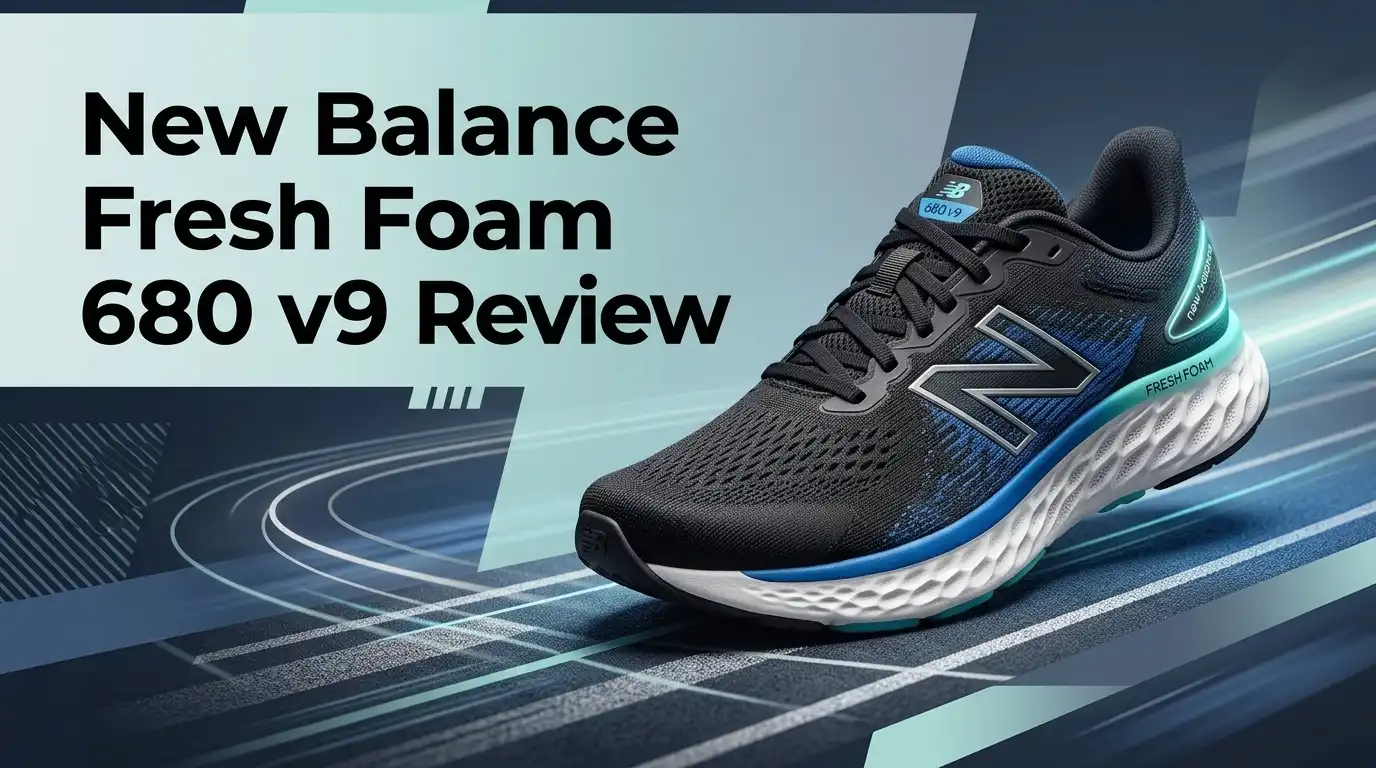
New Balance Fresh Foam 680 v9 Review 2026: Still Worth It?
Budget running shoes usually ask you to give something up. Cushioning, weight, grip, or plain durability. The New Balance Fresh Foam 680 v9 tries to keep all four and still land under $90. That is a bold promise for a shoe that most runners find on sale for even less.
I have laced this shoe for easy morning miles, long grocery walks, and a few treadmill sessions. It surprised me in some places and frustrated me in others.
This review covers the ride, the fit, the numbers, the flaws, and the runners who should skip it completely. No fluff, no marketing copy, just what the shoe actually does on the road.
In a Nutshell:
- The price is the headline. The Fresh Foam 680 v9 lists at $84.99 while the average daily trainer now sits near $157. You get a full running shoe, not a stripped down one.
- The ride is soft and simple. Lab testing puts the midsole at 29.5 AC on the Asker C scale, which makes it one of the softest budget trainers measured to date. It is noticeably plusher than the v8.
- It is lighter than expected. A men’s US 9 weighs about 9.1 oz or 258 g. That beats the category average and helps the shoe feel lively on easy runs.
- Grip and durability punch above the price. Traction measured 0.62 against a 0.52 average, and the outsole lost only 0.9 mm of rubber in abrasion testing.
- Stability is the weak spot. A soft foam, a flexible chassis, and a soft heel counter make this a neutral shoe only. Overpronators will want something else.
- Breathability lags behind. The mesh scored 64 BR versus a 74 average, so hot weather runners may notice damp feet.
What Is the New Balance Fresh Foam 680 v9?

- FRESH FOAM CUSHIONING — Experience incredibly soft and light underfoot comfort with New Balance's...
- DURABLE RUBBER OUTSOLE — Integrated rubber outsole delivers reliable traction on roads, sidewalks...
- BREATHABLE MESH UPPER — Lightweight textile upper with engineered mesh provides excellent...

Last update on 2026-08-30 / Affiliate links / Images from Amazon Product Advertising API Some of the links on this website are affiliate links, which means that at no additional cost to you, I earn a commission if you click through and make a purchase. I only recommend products and services that I believe will add value to my readers. Thank you for your support!
The Fresh Foam 680 v9 is New Balance’s entry level neutral road trainer. It sits below the 880 in the lineup and above the Arishi. New Balance built the 680 line for beginners, gym users, walkers, and runners who want a dependable shoe without a premium price tag.
The recipe is simple. A full length Fresh Foam midsole handles cushioning. An engineered mesh upper handles fit. A generous slab of rubber handles the road. There is no carbon plate, no super foam, and no aggressive rocker geometry. That simplicity is the entire point.
Stack height measures around 33.2 mm in the heel and 24.9 mm in the forefoot. The resulting drop lands at roughly 8.3 mm, which is remarkably close to the 8 mm New Balance advertises. Brands rarely nail their own specs that precisely.
The 680 sits in what I call the moderate stack zone. You feel the ground, but you never feel beaten up. Runners coming from tall max cushion shoes will notice the difference immediately. Runners coming from flat sneakers will feel spoiled.
New Balance also offers the shoe in multiple widths, which stays one of the brand’s best advantages. Availability changes by color and country, but standard, wide, and extra wide options exist for many versions. That alone makes the 680 v9 worth a look for anyone who struggles with narrow shoes from other brands.
Unboxing Experience and First Impressions
The box arrives plain. Standard New Balance grey and white cardboard, no tissue paper theatrics, no cardboard shoe trees. You open it, and both shoes sit nose to tail with a thin paper wrap. That is it. For a shoe under $90, I did not expect a luxury presentation, and I did not get one.
The first thing I noticed was the smell. Fresh glue and fresh foam, strong for about a day, then gone. The second thing I noticed was weight, or rather the lack of it. Picking up the pair, they feel lighter than the price suggests. Many budget shoes feel like bricks in hand. This one does not.
The finishing quality looks clean. Stitching lines run straight. The overlays sit flat. There were no glue smears on my pair, which is a common complaint in this price bracket. The laces feel flat and slightly waxy, and they hold a knot well.
Sliding my foot in, the collar padding felt generous and the tongue felt thin. The step in comfort is genuinely good. The insole is a basic 4.1 mm EVA sheet, nothing fancy, but it is fully removable if you use orthotics.


Last update on 2026-04-11 / Affiliate links / Images from Amazon Product Advertising API Some of the links on this website are affiliate links, which means that at no additional cost to you, I earn a commission if you click through and make a purchase. I only recommend products and services that I believe will add value to my readers. Thank you for your support!
My first walk around the house told me most of what I needed to know. Soft underfoot, flexible through the forefoot, and secure through the midfoot. No break in period required. I ran 5 miles the next morning with zero hot spots.
Fresh Foam Cushioning and How It Actually Rides
No products found.
Fresh Foam used to be New Balance’s flagship compound. Today it powers the value models while FuelCell and Fresh Foam X handle the premium shelves. In the 680 v9, that older foam still does honest work.
Shock absorption measured 128 SA in the heel and 102 SA in the forefoot. Those numbers sit just below average, which matches the moderate stack. Translation: this shoe protects you well for runs up to about an hour. Past that, your legs start to feel the road.
Energy return came in at 54.7% in the heel and 61.9% in the forefoot. Nobody will call that bouncy. Still, plenty of shoes costing twice as much return less. The 680 v9 does not spring you forward, but it never feels dead either.


Last update on 2026-04-11 / Affiliate links / Images from Amazon Product Advertising API Some of the links on this website are affiliate links, which means that at no additional cost to you, I earn a commission if you click through and make a purchase. I only recommend products and services that I believe will add value to my readers. Thank you for your support!
The best word for the ride is predictable. There is no rocker pushing you into your next step, no plate snapping under your arch, and no wobble from a soft top layer. You put your foot down, the foam gives a little, and you move on.
Easy pace feels lovely. Moderate pace feels fine. Fast pace feels like work, because the soft foam absorbs effort instead of returning it. I would not race in this shoe.
Softness deserves a note. At 29.5 AC, the v9 is markedly softer than the v8 at 36.5 AC. Runners who loved the firmer older model may find this version too plush. New Balance made a real change here, not a color update.
Top 3 Alternative for New Balance Fresh Foam 680 v9

- Hit the road with reliable fresh foam midsole that cushions every stride.
- The mesh running sneakers design maximizes breathability during your workout.
- No-sew overlays keep weight down while staying durable through miles of running.
Last update on 2026-08-30 / Affiliate links / Images from Amazon Product Advertising API Some of the links on this website are affiliate links, which means that at no additional cost to you, I earn a commission if you click through and make a purchase. I only recommend products and services that I believe will add value to my readers. Thank you for your support!
New Balance Fresh Foam Arishi v4

- THIS MEN’S SHOE IS FOR: Runners looking for a smooth ride that won’t distract from the fun of...
- SOFT CUSHIONING: The Ghost 16 offers neutral support while providing soft, nitrogen-infused DNA Loft...
- SMOOTH TRANSITIONS: The soft midsole and Segmented Crash Pad promotes an easy flow from landing to...
Last update on 2026-08-30 / Affiliate links / Images from Amazon Product Advertising API Some of the links on this website are affiliate links, which means that at no additional cost to you, I earn a commission if you click through and make a purchase. I only recommend products and services that I believe will add value to my readers. Thank you for your support!
Brooks Ghost 16

- Air Winflo 12
Last update on 2026-08-28 / Affiliate links / Images from Amazon Product Advertising API Some of the links on this website are affiliate links, which means that at no additional cost to you, I earn a commission if you click through and make a purchase. I only recommend products and services that I believe will add value to my readers. Thank you for your support!
Nike Winflo 12
Fit, Sizing, and Width Options
The Fresh Foam 680 v9 fits true to size for the large majority of wearers. Voting data from runners supports this, and my own pair matched my usual size exactly. If you sit between sizes, size up rather than down, because the soft upper does not stretch much.
Internal length measured 270.0 mm in a men’s US 9, right at the category average. Widest point of the platform measured 93.7 mm, which is a touch narrower than average. Runners with broad feet should order the wide version instead of gambling on standard.
The toebox measured 73.1 mm across and 26.4 mm tall. Both figures sit almost exactly at average. Your toes will not feel squeezed, but you will not get the anatomical splay of a wide toebox shoe either. It is a conventional fit, and conventional fits work for most people.
Midfoot lockdown feels secure thanks to a reinforced lacing setup. The tongue is not gusseted, which is normal under $100, and it does slide slightly on longer runs. A tongue loop keeps it from wandering badly, which I appreciated.
The heel holds well despite a soft heel counter. New Balance widened the heel platform to 94.3 mm, wider than the 91.1 mm average, and that extra base compensates nicely.
One practical note for walkers and workers. Because the shoe flexes easily and the collar is well padded, it doubles as a comfortable standing shoe. Several reviews from people on their feet all day back this up.
Upper Construction, Breathability, and Comfort
The engineered mesh upper looks tidy and feels soft against the skin. There are no sharp seams, no plastic cages, and no stiff overlays digging into the foot. New Balance kept the design plain, and plain works.
Comfort is high. The collar padding wraps the ankle without pressure. The tongue measures 5.6 mm thick, thinner than average, which keeps weight down while still cushioning the laces. I never felt lace bite, even when cinching down hard.
Breathability is where the upper stumbles. Airflow testing returned 64 BR against a 74 average. That is not terrible, but it is below par. On a warm afternoon run my socks were damper than they would be in a lighter mesh shoe.
Drying potential also disappointed slightly. After three hours, the shoe released 48% of absorbed moisture compared to a 53% average. If you run in rain or wash your shoes often, expect a slower turnaround.
Durability of the upper looks solid. Abrasion testing scored the toebox at 3 out of 5 and the heel padding at 4 out of 5. Both pass comfortably, and both matter more in a budget shoe than in a race shoe.
One clear omission: there are no reflective elements anywhere. Shine a light at these shoes at night and nothing bounces back. Early morning and evening runners should add a reflective vest or a clip light.
Outsole Grip and Long Term Durability
This is the part of the shoe that quietly earns its keep. Traction measured 0.62 on the coefficient of friction test, well above the 0.52 average. In real terms, that means confident footing on dry pavement and reliable footing on wet pavement.
I ran through a light rain shower and never thought about slipping. On painted crosswalk lines and metal drain covers, the rubber held better than I expected. For a shoe at this price, the grip is genuinely impressive.
The outsole layout uses two rubber pads in the heel and one large forefoot section. Coverage is generous, and the rubber measures 3.0 mm thick. New Balance clearly prioritized longevity over shaving grams here, and that is the correct call for a value trainer.
Abrasion testing backs it up. The outsole lost just 0.9 mm of material under a Dremel at 10,000 RPM, better than the 1.1 mm average. Expect this shoe to reach 400 miles or more before the tread looks worn out.
There is one tradeoff. Exposed midsole foam between the rubber pads will compress and crease over time, and that foam will lose bounce before the rubber wears through. Most runners retire the 680 v9 because the cushioning goes flat, not because the outsole dies.
For gym use, treadmill running, and casual wear, the durability picture is even better. This shoe holds up.
Weight, Flexibility, and Everyday Feel
At 9.1 oz or 258 g in a men’s US 9, the Fresh Foam 680 v9 comes in lighter than the 9.2 oz average across hundreds of tested trainers. Cheap shoes usually carry extra weight from dense foam and heavy rubber. This one does not.
Flexibility is the standout trait. In a 30 degree bend test, the shoe needed only 10.8N of force compared to a 15.5N average. It bends easily right where your foot bends. That makes toe off feel natural rather than mechanical.
Torsional rigidity measured 7.3 Nm, an exceptionally low figure. The shoe twists with almost no resistance. For comfort and walking, that is a benefit. For support, it is a drawback, and I will cover that shortly.
On the run, the combination of low weight and high flexibility creates a nimble feel. You can change pace, hop a curb, and cut a corner without fighting the shoe. Beginners in particular benefit from this, because a flexible shoe teaches your foot to work rather than doing the work for it.
Off the run, this shoe is a genuinely good all day option. It slips on easily, flexes with each step, and does not tire your feet during errands or travel. I wore mine through an airport day with zero complaints.
Runners who like a stiff, rolling, plated feel will find this shoe far too soft and floppy. Know which camp you belong to before buying.
Stability and Support: Read This Before Buying
The Fresh Foam 680 v9 is a neutral shoe, and it is a fairly unsupportive neutral shoe. That deserves a clear warning rather than a footnote.
Three measurements tell the story. Torsional rigidity is very low at 7.3 Nm. The heel counter scored only 2 out of 5 for stiffness. The forefoot platform measures 113.1 mm, slightly narrower than the 115.1 mm average. Combine those with a very soft midsole and you get a shoe that lets your foot move freely.
For neutral runners with strong feet, this is comfortable and fine. For overpronators, this is a problem. If your ankles collapse inward, the soft foam will let them, and you may feel it in your arches or shins after a few weeks.
New Balance did add a countermeasure. The heel platform widened to 94.3 mm, which gives a broader landing base and helps offset the soft counter. In practice, heel strikers land more securely than the counter stiffness alone would suggest.
My honest take: this shoe is stable enough for easy running, and not stable enough for tired legs at the end of a long effort. Fatigue exposes weak support, and this shoe has weak support.
If you need structure, look at a dedicated stability trainer instead. Many are available near this price. There is no shame in needing more shoe than the 680 v9 offers.
What the Fresh Foam 680 v9 Does Not Do Well
Every review should name the flaws plainly. Here are mine after real mileage.
Long runs expose the cushioning ceiling. Past roughly 10 miles, the moderate stack stops protecting adequately and your legs start absorbing more impact. This is a one hour shoe, not a marathon shoe.
Fast paces feel muted. Soft foam with 54.7% energy return does not reward hard effort. Try a tempo session and the shoe swallows your push rather than returning it.
Hot weather runs feel sticky. Below average airflow at 64 BR and below average drying at 48% mean sweaty feet in summer. Thin socks help, but the upper is the limiting factor.
There is no reflectivity at all. Zero. For a shoe aimed at beginners who often run before work or after dinner, that omission is disappointing.
The tongue is not gusseted and shifts slightly. The tongue loop reduces it, but does not eliminate it. You will occasionally straighten the tongue mid run.
No heel pull tab. Getting into the shoe quickly is slightly harder than it should be, especially with stiff new laces.
None of these are dealbreakers at $85. All of them would be dealbreakers at $160. Price context matters enormously in how you judge this shoe.
Pros and Cons of the New Balance Fresh Foam 680 v9
Pros
- Outstanding price to performance ratio. At $84.99 list, and often less on sale, the shoe delivers features usually found in far pricier trainers.
- Soft, comfortable ride from step one. At 29.5 AC, the midsole ranks among the softest budget foams tested, with no break in period needed.
- Light for the category. 9.1 oz in a men’s US 9 undercuts the average daily trainer weight.
- Excellent grip in dry and wet conditions. A 0.62 traction score sits well above the 0.52 average.
- Strong durability across the board. Only 0.9 mm of outsole wear, plus solid toebox and heel padding abrasion scores.
- Multiple width options. Standard, wide, and extra wide availability makes this one of the more accommodating budget shoes.
- Very flexible and natural feeling. A 10.8N bend force makes the shoe pleasant for both running and all day wear.
- Accurate specifications. Measured 8.3 mm drop against a claimed 8 mm, which is unusually honest.
Cons
- Weak stability. Low torsional rigidity, a soft heel counter, and a narrow forefoot make this unsuitable for overpronators.
- Below average breathability. 64 BR airflow leaves feet warm in summer conditions.
- Slow drying upper. Only 48% moisture released in three hours.
- Limited long run comfort. The moderate stack starts to feel thin past the one hour mark.
- No reflective details anywhere. A real safety gap for low light runners.
- No gusseted tongue and no heel tab. Small conveniences left out to hit the price.
- Modest energy return. The shoe cushions well but gives little back at speed.
Fresh Foam 680 v9 vs 680 v8: What Actually Changed
If you own the v8, the upgrade question is fair. The two shoes share a family resemblance, but the v9 is not a repaint.
The biggest change is softness. The v8 measured 36.5 AC on the durometer. The v9 measures 29.5 AC. That is a large jump toward plushness, and it changes the personality of the shoe. The v8 felt firm and controlled. The v9 feels cushioned and forgiving.
Weight barely moved. The v8 sat near 9.2 oz and the v9 sits at 9.1 oz. You will not notice the difference on foot.
The upper received a cleaner, more modern look with tidier overlays. Comfort improved slightly, though airflow did not. Both versions run warm compared to premium mesh uppers.
Outsole coverage remains generous on both, and both score well for durability. New Balance did not fix what already worked.
My recommendation is simple. If your v8 still has life, keep running it. If you found the v8 too firm, the v9 solves exactly that complaint. If you loved the firmness of the v8, you may actually prefer hunting down remaining pairs of the older model.
For new buyers with no history in the line, the v9 is the better shoe. It is more comfortable out of the box and equally durable.
Who Should Buy It and Who Should Skip It
Buy the Fresh Foam 680 v9 if you are a beginner. A flexible, moderate stack shoe teaches better running mechanics than a tall, rigid, max cushion shoe. Starting here is a smart choice, and the low price removes the risk.
Buy it if you run three to five times a week at easy pace. The cushioning, weight, and durability all fit that pattern perfectly.
Buy it if you need a value rotation shoe. Experienced marathoners often want a cheap trainer for recovery miles. This is that shoe.
Buy it if you need width options. Few budget trainers offer this many fit choices.
Buy it if you want one shoe for running, walking, and standing. The flexibility makes it genuinely comfortable all day.
Skip it if you overpronate. The support simply is not there. Choose a stability trainer instead.
Skip it if you want maximum cushioning. The moderate stack will feel thin to anyone used to tall foam.
Skip it if you race or run fast workouts. The soft foam absorbs effort rather than returning it.
Skip it if you run in heat constantly. The upper runs warm and dries slowly.
Match the shoe to the job, and this one performs well above its price. Force it into the wrong role and it disappoints quickly.
Price and Value in 2026
The list price is $84.99. Across hundreds of tested running shoes, the average price now sits near $157. That gap is the entire argument for this shoe.
Sales are common. Older colorways regularly drop below $70, and outlet listings sometimes go lower. At $60 to $70, the value becomes hard to argue with.
Consider what you get for that money. Real rubber coverage. Accurate specs. Multiple widths. A verified low weight. Grip that beats the average. Durability scores that beat the average. Most budget shoes fail at least two of those tests.
Consider also what you give up. No reflectivity. No gusset. Average breathability. Modest energy return. Weak stability. Every one of those omissions is a cost saving decision, and New Balance made sensible choices about where to save.
Cost per mile matters more than sticker price. If the shoe lasts 400 miles at $85, you spend about 21 cents per mile. A $180 super trainer lasting 350 miles costs about 51 cents per mile. For everyday running, the math strongly favors the 680 v9.
Value does not mean the best shoe. It means the most shoe for the money. On that measure, the Fresh Foam 680 v9 stands near the top of the budget category in 2026.
Final Verdict
The New Balance Fresh Foam 680 v9 is a very good cheap running shoe and an average running shoe overall. Both statements are true, and both matter.
What it does well, it does convincingly. The ride is soft and comfortable. The weight is low. The grip is better than average. The durability is better than average. The fit works for a wide range of feet, including broad ones. The specifications are honest.
What it does poorly, it does clearly. It offers little support, it breathes below average, it dries slowly, and it gives back little energy at speed. It also skips reflective details entirely, which I consider the most fixable flaw on the list.
My score would land around 8 out of 10 for value and 6.5 out of 10 as a pure running shoe. That combination suits beginners, casual runners, walkers, and anyone building a rotation without spending heavily.
If you want one dependable shoe for easy miles and daily life, buy it with confidence. If you need stability, long run protection, or race day speed, spend more elsewhere and come back to the 680 for recovery days.
Bottom line: the Fresh Foam 680 v9 is one of the smartest running shoe purchases available under $90 in 2026.
Frequently Asked Questions
Does the New Balance Fresh Foam 680 v9 run true to size?
Yes. The large majority of wearers report a true to size fit, and internal length measures 270.0 mm in a men’s US 9, right at average. If you sit between sizes, choose the larger option. If you have broad feet, order the wide version rather than sizing up.
Is the Fresh Foam 680 v9 good for flat feet or overpronation?
No. This is a neutral shoe with low torsional rigidity, a soft heel counter, and a soft midsole. Runners who overpronate need more structure than this shoe provides. A dedicated stability trainer is the better path.
How many miles will the Fresh Foam 680 v9 last?
Most runners should reach 350 to 450 miles. Outsole abrasion testing showed only 0.9 mm of wear, so the rubber usually outlives the foam. You will likely retire the shoe when the cushioning flattens rather than when the tread wears through.
Can I use the 680 v9 for walking and standing all day?
Yes, and it is one of the shoe’s strengths. The high flexibility, soft foam, and padded collar make it comfortable for long hours on your feet. Many buyers use it for work and errands more than for running.
Is the Fresh Foam 680 v9 waterproof?
No. The standard model uses an open engineered mesh upper with no waterproof membrane. New Balance sells separate waterproof versions in the 680 family if you need wet weather protection.
How does the 680 v9 compare to the 880?
The 880 sits a tier above with more cushioning, better foam, and a more refined upper, at roughly double the price. The 680 v9 is essentially a simpler, lighter, and cheaper version of the same idea. For easy daily miles, the difference is smaller than the price gap suggests.
Is the 680 v9 good for beginners?
Yes, and this is the audience it serves best. The moderate stack, natural flexibility, low weight, and low price make it an excellent first running shoe. Beginners learn better mechanics in a flexible shoe than in a tall, rigid one.

Mia Smith is the founder of Shoe Storyteller, a blog that celebrates the art and stories behind shoes. With a passion for fashion and a flair for storytelling, Mia brings a unique perspective to the world of footwear.