OluKai Leather Flip Flops Review 2026: Worth The Price?
Leather flip flops sound like a contradiction. Flip flops belong at the beach. Leather hates water. Yet OluKai keeps selling them by the truckload, and people keep swearing they are the best sandals they have ever owned.
I wanted to know why. So I spent a full season living in OluKai leather sandals. I wore them on hot pavement, on wooden decks, through airports, and on a few long walks that had no business happening in flip flops. I also watched what happened when they got wet, because that is where leather sandals usually fall apart.
This review covers the Mea Ola, the Tuahine, and the wider OluKai leather lineup as it stands in 2026. You will get the unboxing details, the break in reality, the sizing traps, and the honest failures.
In A Nutshell:
- OluKai leather flip flops are comfort first, water second. The full grain leather models feel excellent on dry ground. They are not swim sandals. Repeated soaking pulls oils out of the leather and leaves it stiff and dry.
- The break in period is real. Expect one to three weeks before the footbed and strap mold to your foot. The first few days can feel firm and slightly awkward. Most complaints come from people who judged the sandal on day one.
- Arch support is the main selling point. The anatomical footbed with a cupped heel supports the foot far better than a flat rubber flip flop. Many buyers with plantar fasciitis report relief after the break in.
- Sizing runs narrow and slightly small. Wide feet struggle with the Mea Ola. Size up if you fall between sizes, and consider the Tuahine or Ohana for a roomier fit.
- Price is the biggest weakness. At $130 to $140, these cost three to four times a basic flip flop. The value works only if you wear them constantly for years.
- The Tuahine is the smart pick for most people. It uses waterproof leather, costs around $100, and needs less babying than the dressier models.
OluKai Mea Ola: The Flagship Leather Flip Flop

- A CLASSIC LEATHER SANDAL: The Mea Ola sandal draws inspiration from the heritage of Polynesian...
- KEY FEATURES: Includes octopus-inspired laser-etched artwork on the footbed, canoe lash...
- SIZE & FIT: The Mea Ola flip flops run small, with a narrow fit and high arch support.The...
Last update on 2026-08-27 / Affiliate links / Images from Amazon Product Advertising API Some of the links on this website are affiliate links, which means that at no additional cost to you, I earn a commission if you click through and make a purchase. I only recommend products and services that I believe will add value to my readers. Thank you for your support!
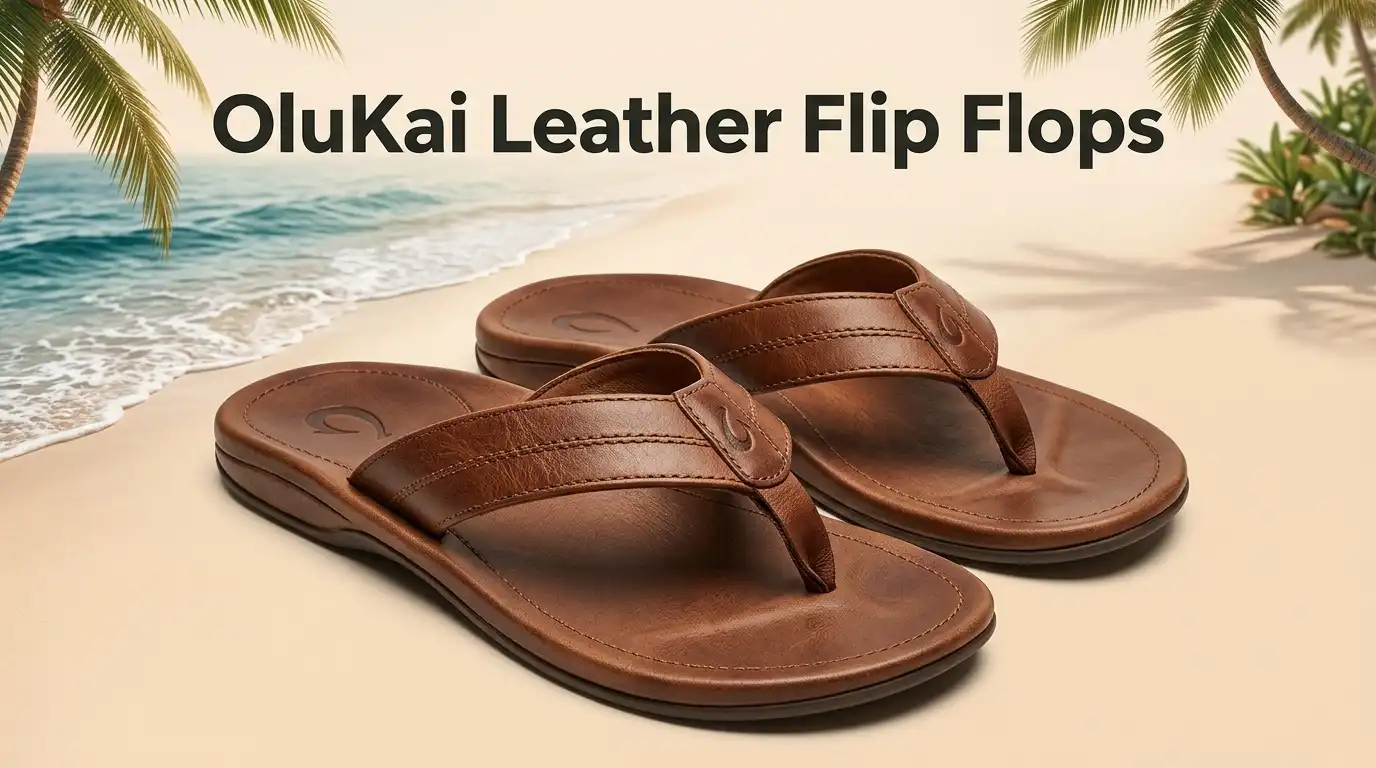
The Mea Ola is the sandal that built OluKai’s leather reputation. It sits at the top of the lineup and it looks the part.
The build uses full grain leather across the strap, the footbed, and the wrapped outsole. Canoe lash whipstitching runs along the toe post. Laser etched artwork sits under your foot where nobody sees it, which is a strange kind of luxury that I somehow appreciate.
The footbed is sculpted with a raised outer edge. Your foot sits in the sandal rather than on it. That single design choice changes everything about long walks. My foot never slid off the side, even on cambered sidewalks.
Arch height lands in the middle of OluKai’s range. It is supportive without feeling like a medical device. Testers who found other OluKai models too aggressive under the arch usually get along with this one.
Weight comes in around 17 ounces per pair in a size 9. That is heavy for a flip flop. You feel it on your foot, though the weight reads as substance rather than burden.
Amazon buyers rate it 4.6 stars across roughly 3,500 reviews. The praise clusters around appearance and craftsmanship. The complaints cluster around fit and price.
My honest read: this is the best looking flip flop I have worn, and it is the one I reach for when I need to look presentable. It is also the one I worry about in the rain, which tells you something about a $140 sandal.
The Unboxing Experience And First Impressions
OluKai ships in a plain brown box with the logo stamped on top. No tissue paper theater. No branded dust bag. The packaging is quiet, and that fits the brand.
The first thing that hits you is the smell. Real leather has a smell, and this box has plenty of it. If you have only owned rubber flip flops, this alone signals you bought something different.


Last update on 2026-04-11 / Affiliate links / Images from Amazon Product Advertising API Some of the links on this website are affiliate links, which means that at no additional cost to you, I earn a commission if you click through and make a purchase. I only recommend products and services that I believe will add value to my readers. Thank you for your support!
The sandals sit nested together with a small paper insert about the Hawaiian names and the design story. OluKai names each model after something local, and the Mea Ola translates roughly to a treasured possession. Marketing, sure, but pleasant marketing.
Pick them up and the weight surprises you. They feel like small shoes. The leather footbed is smooth and slightly cool to the touch. There is no plastic sheen anywhere.
Now the first wear. Slide your foot in and the arch feels higher than expected. The toe post feels stiff. The footbed feels firm, almost hard.
This is the moment where people panic and start writing returns requests. Do not judge the sandal here. The leather has not moved yet, and the compression midsole has not taken your shape.
I walked around the house for twenty minutes and the toe post already softened a little. By day three the stiffness had faded noticeably. The first impression and the two week impression are two completely different sandals.


Last update on 2026-04-11 / Affiliate links / Images from Amazon Product Advertising API Some of the links on this website are affiliate links, which means that at no additional cost to you, I earn a commission if you click through and make a purchase. I only recommend products and services that I believe will add value to my readers. Thank you for your support!
OluKai Tuahine: The Waterproof Leather Option

Last update on 2026-08-27 / Affiliate links / Images from Amazon Product Advertising API Some of the links on this website are affiliate links, which means that at no additional cost to you, I earn a commission if you click through and make a purchase. I only recommend products and services that I believe will add value to my readers. Thank you for your support!
The Tuahine solves the biggest problem with leather flip flops. It uses waterproof full grain leather, so you can walk into the ocean without ruining a $140 purchase.
Price sits near $100, which undercuts the Mea Ola by a meaningful amount. Amazon shows a 4.5 star rating across roughly 1,800 reviews, and it moves close to a thousand units a month during summer.
The strap has a soft stretch mesh lining underneath. That lining matters more than it sounds. It cuts down the rubbing that leather straps cause on bare skin, especially around the toe post during the first week.
Underfoot you get an anatomical EVA footbed with a molded arch and a rubber outsole with wet grip traction. The arch is present but gentler than the Mea Ola. People who want a flatter feel usually prefer this model.
The look is simpler. No whipstitching, no laser etching, no dressy flourish. It reads as a clean, well made beach sandal rather than a leather accessory.
Here is my honest take. The Tuahine is the model I recommend to most first time OluKai buyers. It costs less, it handles water, it breaks in faster, and it fits a wider range of feet.
The tradeoff is character. The Mea Ola turns heads. The Tuahine just quietly works. If you only buy one pair, buy the one you will not baby.
Top 3 Alternative For OluKai Leather Flip Flops

- Luxury Leather
- 1" Strap
- Double Layer Arch
Last update on 2026-08-27 / Affiliate links / Images from Amazon Product Advertising API Some of the links on this website are affiliate links, which means that at no additional cost to you, I earn a commission if you click through and make a purchase. I only recommend products and services that I believe will add value to my readers. Thank you for your support!
Rainbow Sandals Men’s Double Layer Leather with Arch Support

- A CLASSIC LEATHER SANDAL: The Hiapo is constructed from naturally tumbled or marbled full-grain...
- KEY FEATURES: Features handsewn whipstitching and moko tattoo artwork on the footbed. These flip...
- SIZE & FIT: The Hiapo runs small, with a narrow fit and standard arch support. We recommend ordering...
Last update on 2026-08-27 / Affiliate links / Images from Amazon Product Advertising API Some of the links on this website are affiliate links, which means that at no additional cost to you, I earn a commission if you click through and make a purchase. I only recommend products and services that I believe will add value to my readers. Thank you for your support!
OluKai Hiapo Men’s Leather Beach Sandal

- Mens Beach Flip Flops:Mens flip flops wide strap is spliced by casting leather and delicate...
- Orthotic Arch Support:Mens Athletic flip flops incorporate corrective arch support and deep heel...
- Yoga Mat Insole:Mens orthotic thong sandals' footbed is made of yoga mat, which can provide...
Last update on 2026-08-27 / Affiliate links / Images from Amazon Product Advertising API Some of the links on this website are affiliate links, which means that at no additional cost to you, I earn a commission if you click through and make a purchase. I only recommend products and services that I believe will add value to my readers. Thank you for your support!
KuaiLu Men’s Leather Flip Flops with Arch Support
Break In Period: What Actually Happens
Every OluKai leather review mentions break in. Few explain what changes and when. Here is the timeline from my own pairs.
Days one to three. The footbed feels firm. The arch feels tall. The toe post presses against the skin between your toes. Wear them for two hours at a time, indoors, on carpet.
Days four to ten. The leather strap begins to stretch and relax. The toe post stops announcing itself. The compression EVA under the leather starts taking a shallow impression of your heel and forefoot.
Week two to week three. This is where it clicks. The footbed now has faint darkened patches where your foot sits. The arch no longer feels like a bump. The sandal stops being a product and starts being yours.
The Mea Ola takes the longest, roughly two weeks or more. The Tuahine and the water friendly models take days. The Hiapo sits somewhere in the middle and demands real commitment.
A trick that works: wear thin socks with them around the house for an hour. It sounds ridiculous. It also stretches the strap evenly without shredding the skin on your foot.
Do not soak them to speed things up. Water breaks in leather quickly and then wrecks it later. Time and body heat do the job properly.
If you are still uncomfortable at week four, the sandal is the wrong size or the wrong shape for your foot. That is a fit problem, not a break in problem, and no amount of patience fixes it.
Comfort And Arch Support Explained
Most flip flops are a flat slab with a thong. Your arch gets nothing. Your heel slides around. After two hours your feet ache and you blame the walking.
OluKai builds a different structure. The footbed is anatomically shaped with a defined arch, a cupped heel, and raised outer edges. Your foot sits inside a shallow bowl.
The cupped heel does the quiet heavy lifting. It keeps the heel pad centered under the bone, which spreads impact instead of concentrating it. This is why people with heel pain often notice a difference within a week or two.
Under the leather surface sits a compression molded EVA midsole. It absorbs shock and gradually takes your foot’s impression. The leather on top wicks a little moisture and stops the sweaty slide you get with plastic footbeds.
Arch height varies by model. The Mea Ola is moderate. The Hiapo and some Hokule’a models run higher. The Tuahine and Ohana are gentler.
Here is the honest limit. This is arch support, not orthotic correction. If you have severe overpronation or a prescribed insert, a flip flop cannot replace it. OluKai helps, but it does not treat.
I walked roughly six miles in the Mea Ola on a hot day. My feet were tired, but the specific ache from unsupported flip flops never showed up. That is the practical difference.
Comfort also depends on strap tension. Leather straps that stay slightly loose cause toe gripping, which creates its own fatigue. Sizing correctly matters more than most buyers realize.
Sizing And Fit: Read This Before Ordering
Sizing is where most OluKai returns come from. The brand runs narrow through the forefoot and slightly small overall.
If you wear a half size, round up. OluKai does not offer half sizes on most flip flops, and the leather strap stretches during break in but the footbed length never changes.
Wide feet need care. The Mea Ola in particular sits narrow, and the raised footbed edges make the platform feel even tighter. Buyers with 2E and wider feet often report their toes hanging over the side.
The Ohana is the friendliest option for wide feet. Several wide footed reviewers say it is the only flip flop that accommodates them. The Tuahine also runs a touch more generous than the dressy leather models.
Your heel should sit inside the cupped area with a small margin behind it. Your longest toe should stop roughly a quarter inch before the front edge. Overhang at the back is a bigger problem than overhang at the front.
The strap should feel snug but not tight on day one. It will relax. A strap that feels perfect out of the box will feel loose in two weeks.
One more note. Leather footbeds do not stretch sideways. Only the strap moves. So width problems never resolve themselves no matter how long you wait.
Order from a retailer with easy returns for your first pair. Once you know your OluKai size, every future purchase becomes simple.
Traction, Outsole And Wet Grip
OluKai uses non marking rubber traction pads rather than a full rubber sole on the leather models. On the Mea Ola, leather wraps the outsole and rubber pods sit at the contact points.
On dry surfaces this works well. Wooden decks, tile, concrete, and smooth stone all felt secure. The rubber compound grips without squeaking.
Wet smooth surfaces are fine too, within reason. I walked a damp pool deck and a rainy sidewalk with no slipping. The pods are shaped to channel water away.
Gravel is a different story. On loose gravel and chunky trail, the leather portions of the outsole touch down and slide. On any real incline with loose surface, these sandals lose confidence fast.
Do not treat leather flip flops as hiking footwear. They handle a flat trail, a campground, and a walk to the beach. They do not handle scrambling.
The Tuahine performs better here because it uses a fuller rubber outsole with a proper wet grip pattern. If your days involve boat decks and wet rock, that model is the safer purchase.
Durability of the outsole is strong. The rubber pods on my pair showed light wear after a full season of near daily use. The leather wrap scuffs long before the rubber wears through.
One practical warning. Wet leather footbeds get slippery under a bare foot. Your sole can slide on the leather surface itself, which is separate from the ground grip. Dry them before serious walking.
Water Exposure: What Leather Can And Cannot Handle
This section matters more than any other for a leather flip flop buyer.
Full grain leather contains natural oils. Water bonds to those oils and carries them out as the leather dries. Repeat that cycle and the leather turns dry, stiff, and eventually cracks.
The Mea Ola, Hiapo, Hikianalia, and Mekila all fall into this category. They tolerate splashes, rain, and a quick step into a wave. They do not tolerate swimming, kayaking, or a day of ocean use.
OluKai markets some of these as beach sandals. I think that framing oversells them. They work for walking on a beach. They do not work for being in the water.
The Tuahine is the exception. Its leather is treated to be waterproof, and it is built for water sports. Soak it, rinse it, and it comes back fine.
The Ohana and Ki’i use synthetic water resistant materials instead of leather. Those handle everything wet without complaint, though they lose the leather look and feel.
If your leather pair does get soaked, dry it slowly at room temperature. Keep it away from direct sun, heaters, and car dashboards. Fast heat is what cracks leather, not the water itself.
Follow up with a leather conditioner once the sandal is fully dry. This puts back some of what the water removed and buys you extra years.
Salt water is worse than fresh water. Rinse with clean water first, then dry, then condition.
Durability After A Season Of Daily Wear
Reddit is full of people claiming six years of daily OluKai wear. I cannot verify six years, but I can report what a season looks like.
The stitching held perfectly. No loose threads, no separation at the toe post, no lifting at the strap anchors. Construction quality is genuinely high.
The leather footbed darkened where my foot sits. Some people hate this. I think it looks good, and it is the same patina you get on a good leather bag.
The strap stretched about as much as expected and then stopped. It did not keep loosening into sloppiness.
The rubber traction pods showed light rounding at the heel edge. Nothing close to failure.
Now the counterpoint, because Amazon reviews are not universally glowing. A visible group of buyers report their pairs not lasting past two years. The common failure points are the footbed compressing flat and the leather cracking after water exposure.
That split makes sense to me. Owners who keep them dry and condition them get many years. Owners who treat them as ocean sandals get two.
Value depends entirely on which owner you are. A $140 sandal that lasts six years costs less per year than a $30 pair replaced every summer. A $140 sandal that dies in eighteen months is simply an expensive mistake.
OluKai does not offer resoling. Once the footbed flattens, the sandal is finished.
What OluKai Leather Flip Flops Do Not Do Well
Every review should have this section, so here is mine without softening.
They are not water sandals. Except for the Tuahine, water exposure shortens their life significantly. The beach marketing oversells what the material can take.
They are heavy. At nearly 17 ounces per pair, the Mea Ola weighs more than double a basic rubber flip flop. Packing two pairs for travel eats real luggage weight.
They run narrow. Wide footed buyers are frequently disappointed, and the raised footbed edges make the problem worse rather than better.
The break in is long enough to annoy people. Two weeks of mild discomfort is a genuine cost, and nobody enjoys it.
Traction fails on loose gravel. The leather wrapped outsole slides where a full rubber sole would hold.
The price is hard to defend on paper. You can buy four decent flip flops for the cost of one Mea Ola. The math only works with heavy long term use.
They are not machine washable. Cleaning takes a damp cloth, patience, and conditioner. Throwing them in a wash cycle destroys them.
Leather absorbs odor over time. Bare feet plus leather plus heat eventually produces a smell that does not fully rinse out.
None of this makes them bad sandals. It makes them specific sandals. Buy them for the right reasons and they deliver. Buy them expecting a durable ocean flip flop and you will feel cheated.
Pros And Cons
Pros
- Excellent arch support and a cupped heel that keep feet comfortable across long walks and full travel days.
- Full grain leather construction that molds to the foot and looks better with age instead of worse.
- Sculpted footbed with raised edges that stops the foot from sliding off on uneven ground.
- Dressy enough for real occasions, since the Mea Ola pairs with slacks in a way no rubber flip flop manages.
- Strong stitching and build quality, with canoe lash whipstitching that holds up through seasons of use.
- Non marking rubber traction pods that grip well on decks, tile, and wet smooth surfaces.
- Long lifespan with proper care, with many owners reporting several years of daily wear.
- A waterproof leather option exists in the Tuahine for buyers who need water tolerance.
Cons
- High price, with most leather models sitting between $130 and $140.
- Water damages the non waterproof models, causing dry, stiff, cracked leather over time.
- Break in takes one to three weeks, and the first few days feel stiff.
- Narrow fit that frustrates buyers with wide feet, especially in the Mea Ola.
- Heavy for a flip flop at roughly 17 ounces per pair.
- Poor traction on loose gravel where the leather outsole makes contact.
- No resoling or repair option once the footbed compresses.
- Mixed durability reports, with a real subset of owners seeing failure inside two years.
Price And Value: Are They Worth $140?
Let us do the arithmetic honestly.
The Mea Ola runs about $139.99. The Hiapo and Hikianalia sit at similar levels. The ‘Ilikai lands near $130. The Tuahine drops to around $100, and the synthetic Ohana sits near $80.
A generic drugstore flip flop costs $15 and lasts one summer. A mid tier sandal costs $40 and lasts two. The OluKai bet is that leather plus a real footbed buys you five or more years.
If that bet pays off, your cost per year is under $30. That beats the cheap option outright, and your feet feel better the whole time.
If the bet fails, you spent $140 for two summers. That is a bad outcome and it happens to people who use them in water.
So the value question really becomes a usage question. Daily dry wear plus basic conditioning equals good value. Occasional beach use with ocean swimming equals poor value.
There is also the intangible. These look like real footwear. Wearing them to a casual restaurant does not feel like a compromise, and that flexibility has worth that a spreadsheet cannot capture.
My recommendation on price: buy the Tuahine at $100 for your first pair. It carries most of the comfort, tolerates water, and lowers your risk. Upgrade to the Mea Ola later if you fall in love with the fit.
Watch for sales. OluKai discounts run during Prime Day and end of season, sometimes reaching 40 percent off on the Ohana and other popular models.
Care And Cleaning Tips That Extend Their Life
Good care roughly doubles the life of a leather flip flop. None of it is complicated.
Wipe them down weekly. A damp cloth removes salt, sand, and skin oils before those things dry the leather out. Let them air dry afterward.
Condition the leather every two or three months. Any quality leather conditioner works. Apply a thin coat to the strap and the footbed, let it absorb, and buff off the excess.
Dry them slowly after any soaking. Room temperature, out of the sun, away from heaters. Stuff a little paper inside if they are badly wet.
Store them flat. Leaving them in a hot car warps the footbed and bakes the leather. A closet shelf is fine.
Rotate pairs if you can. Leather needs time to release moisture. Wearing the same pair every single day accelerates footbed compression and odor buildup.
Treat odor early. A light wipe with diluted white vinegar, followed by full drying and conditioning, handles most smells. Once the odor sets deep into the footbed it does not leave.
Never machine wash. The heat and agitation ruin the adhesive bonds and the leather at the same time.
One extra tip from experience. Sand acts as sandpaper between your foot and the leather footbed. Rinse your feet before putting them back on after the beach and the footbed surface lasts noticeably longer.
Who Should Buy And Who Should Skip
Buy OluKai leather flip flops if you walk a lot in sandals, if your feet ache in flat flip flops, or if you want footwear that looks decent beyond the pool.
They suit travelers who need one sandal that works for the hotel, the street, and dinner. They suit anyone with mild arch or heel discomfort who still wants an open shoe.
They suit people who keep things for years and take care of them. The patina rewards that personality.
Skip them if your sandal life happens in water. Surfers, kayakers, and daily ocean swimmers should buy the Tuahine or a synthetic model instead of full leather.
Skip them if you have wide feet and cannot try before buying. The narrow last defeats a lot of buyers.
Skip them if you lose sandals often, leave them at friends’ houses, or forget them at the beach. A $140 sandal is a bad match for a casual relationship with your footwear.
Skip them if you need hiking traction. Buy a proper sport sandal with straps and a lugged sole.
For most readers, the answer sits in the middle. Get the Tuahine if you want one versatile leather flip flop. Get the Mea Ola if you want the best looking one and you can keep it dry. Both are good sandals. Neither is magic.
Frequently Asked Questions
Do OluKai leather flip flops need to be broken in?
Yes. Most leather models need one to three weeks. The Mea Ola takes the longest at roughly two weeks or more. The Tuahine and water friendly models break in within a few days. Wear them for short periods at first and let the leather warm and stretch naturally.
Can OluKai leather flip flops get wet?
The Tuahine uses waterproof leather and handles full water exposure. Other full grain leather models tolerate splashes and rain but suffer from soaking. Water pulls the natural oils out of leather and leaves it stiff and prone to cracking. Dry them slowly and condition them afterward.
Do OluKai sandals run true to size?
They run slightly small and narrow. Size up if you fall between sizes. Wide footed buyers should look at the Ohana or Tuahine rather than the Mea Ola. Your heel should sit fully inside the cupped heel area with a small margin behind it.
How long do OluKai leather flip flops last?
Owners who keep them dry and condition them regularly report three to six years of regular wear. Owners who use them in salt water frequently report closer to two years. Footbed compression and leather cracking are the two failure points.
Are OluKai flip flops good for plantar fasciitis?
Many buyers report relief thanks to the molded arch and cupped heel, which reduce strain on the plantar fascia. They are supportive sandals rather than medical devices though. Anyone with a diagnosed condition should check with a podiatrist before relying on them.
Which OluKai leather flip flop is the best value?
The Tuahine at roughly $100 offers the strongest balance. It costs less than the flagship models, uses waterproof leather, breaks in quickly, and fits a wider range of feet. The Mea Ola wins on looks, and the Ohana wins on price if you can live without leather.
Can you resole or repair OluKai sandals?
No. OluKai does not offer a resoling service, and the bonded footbed construction makes repair impractical. Once the midsole compresses flat or the leather cracks through, replacement is the only option. This makes preventive care especially worthwhile.

Mia Smith is the founder of Shoe Storyteller, a blog that celebrates the art and stories behind shoes. With a passion for fashion and a flair for storytelling, Mia brings a unique perspective to the world of footwear.