Hoka Challenger ATR 7 Review 2026: Still Worth It?
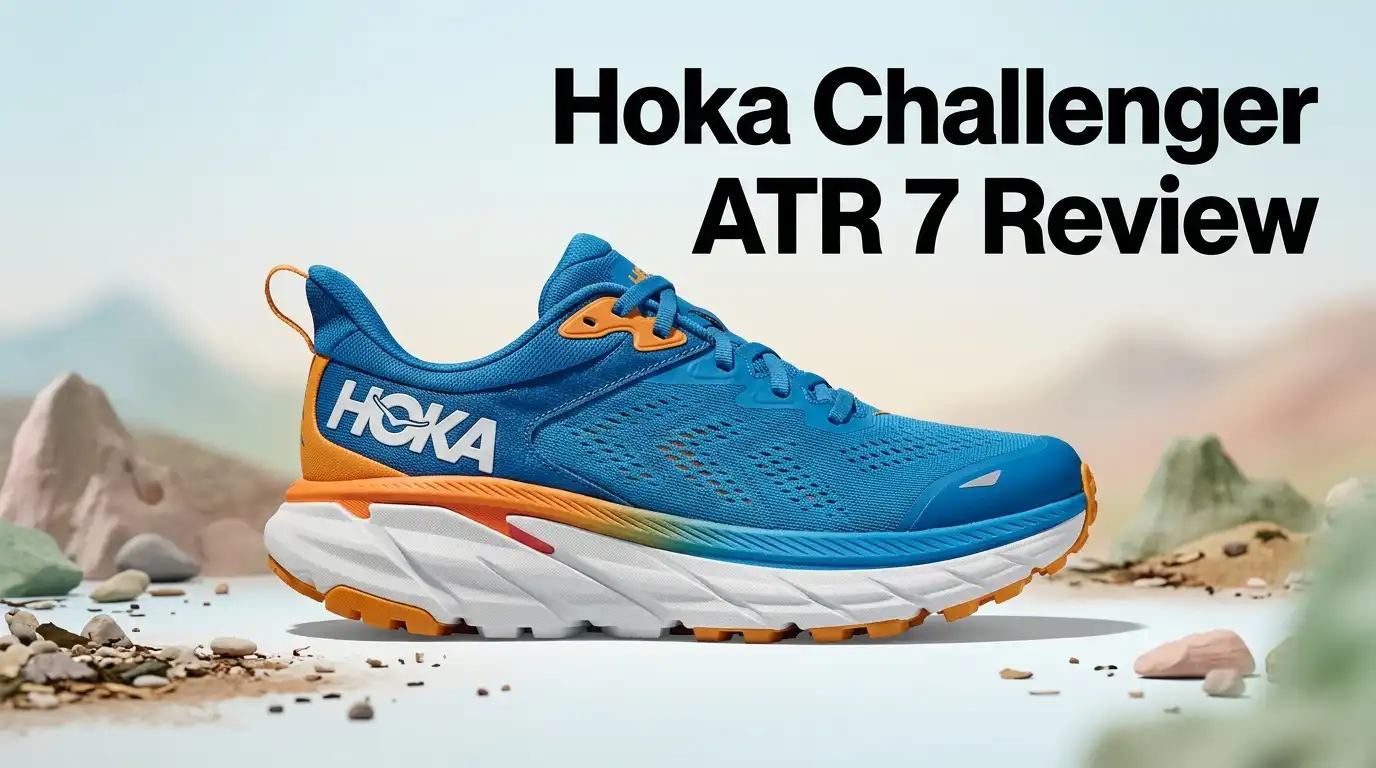
The Hoka Challenger ATR 7 sits in a strange and wonderful spot. It is soft enough for pavement, grippy enough for dirt, and light enough that you forget it is on your foot. Runners keep buying it years after launch, and the price keeps dropping. That combination makes it one of the smartest trail buys available in 2026.
I ran roads, fire roads, muddy singletrack, and gravel bike paths in this shoe. I also walked airports, dog parks, and grocery store aisles in it.
This review covers the good parts, the weak parts, and the parts Hoka’s marketing copy quietly skips. If you want honest detail before you spend your money, keep reading.
Key Takeaways
- The Challenger ATR 7 is a hybrid shoe first. It handles a mix of road and light trail better than almost anything at this price. Pure mountain runners will want something more aggressive.
- Cushioning is plush and protective. Lab testing measured the foam around 46 percent softer than a typical trail shoe, with a wide 114mm forefoot platform that keeps the ride stable instead of wobbly.
- Weight is the headline feature. At roughly 8.8 to 9 ounces for a men’s size 9, this shoe weighs far less than the 10.5 ounce trail average while still carrying a thick, protective midsole.
- Breathability is the biggest weakness. The multilayer mesh upper scores very low on airflow. Hot summer runners will notice sweaty feet within two miles.
- The toe box runs narrow. Measurements show the forefoot about 3mm narrower than average and the big toe area 6.5mm narrower. Wide feet need the wide version, no exceptions.
- Value in 2026 is excellent. Because the Challenger 8 replaced it, the ATR 7 now sells at heavy discounts, often well under its original 145 dollar price.
Hoka Challenger ATR 7 Overview
No products found.
The Challenger ATR 7 is Hoka’s road to trail running shoe. ATR stands for all terrain. Hoka built this model for runners who start on sidewalks, cross a park, hit dirt, and then come home the same way. It uses a compression molded EVA midsole, an engineered mesh upper, and a Durabrasion rubber outsole with 4mm lugs.
Hoka lists the stack at 31mm heel and 26mm forefoot, giving a claimed 5mm drop. Independent lab testing came back different, closer to 34mm and 25mm with roughly an 8.8mm drop. That discrepancy matters if you track drop closely. The shoe feels lower than the numbers suggest because the sidewall rubber makes the midsole look taller than it is.
Weight lands near 9 ounces for a men’s size 9. That is impressively light given how much padding sits inside the collar and tongue. There is no rock plate, no carbon plate, and no premium foam. This is a simple, comfortable shoe built for high mileage rather than race day fireworks.
Unboxing Experience And First Impressions
The box arrives in the usual Hoka style. Plain cardboard, tissue paper, and the shoes nested toe to heel. There is no extra lace set, no bonus insole, and no swing tag full of tech jargon. Hoka keeps packaging modest, which I respect.
The first thing you notice is weight. You lift the shoe expecting bulk because the midsole looks enormous. It feels like an empty box instead. That gap between how the shoe looks and how it weighs is genuinely fun the first time.
Next you notice the heel. Hoka calls it an extended heel pull. It is a small fin of foam and fabric that sticks up behind your Achilles. It helps you slide your foot in without a finger loop.
I wore them straight out of the box for a 6 mile mixed surface run with zero break in. No hot spots, no heel rub, no numb toes. The collar padding is thick and the tongue is gusseted, so the fit felt locked in immediately.
Design, Build Quality And Materials
The upper uses a multilayer engineered mesh that feels denser than most trail meshes. Abrasion testing shows it holds up far better than budget trail shoes, especially at the toe and heel, which are the two spots runners destroy first. Build quality here is genuinely strong.
The midsole is compression molded EVA. It is not a superfoam and Hoka never claimed it was. It compresses, cushions, and returns you to the next step without drama. Energy return measured near 51 percent in the heel, slightly below the trail average.


Last update on 2026-04-11 / Affiliate links / Images from Amazon Product Advertising API Some of the links on this website are affiliate links, which means that at no additional cost to you, I earn a commission if you click through and make a purchase. I only recommend products and services that I believe will add value to my readers. Thank you for your support!
The outsole uses Durabrasion rubber with 4mm lugs. Lugs sit closer together in the middle and spread wider at the edges. Rubber hardness measured around 80 HC, which favors grip over lifespan.
One design note that helps daily comfort: the tongue measures about 8.6mm thick and is fully gusseted. That is unusually plush for a shoe under 9 ounces. The heel counter is firm, rated 4 out of 5 for stiffness, which supports the Achilles nicely.
Top 3 Alternative for Hoka Challenger ATR 7

- Textile, Synthetic
- Polyurethane
Last update on 2026-09-20 / Affiliate links / Images from Amazon Product Advertising API Some of the links on this website are affiliate links, which means that at no additional cost to you, I earn a commission if you click through and make a purchase. I only recommend products and services that I believe will add value to my readers. Thank you for your support!
Hoka Speedgoat 6

- A new blend of PWRRUN foam provides more cushion, comfort and flexibility than ever before
- Full coverage, extra grippy with newly formulated PWRTRAC rubber combined with versatile 4mm lugs...
- Forefoot Rock Guard for flexible protection
Last update on 2026-06-08 / Affiliate links / Images from Amazon Product Advertising API Some of the links on this website are affiliate links, which means that at no additional cost to you, I earn a commission if you click through and make a purchase. I only recommend products and services that I believe will add value to my readers. Thank you for your support!


Last update on 2026-04-11 / Affiliate links / Images from Amazon Product Advertising API Some of the links on this website are affiliate links, which means that at no additional cost to you, I earn a commission if you click through and make a purchase. I only recommend products and services that I believe will add value to my readers. Thank you for your support!
Saucony Peregrine 15

- THIS MEN'S SHOE IS FOR: The Divide 5 provides road-to-trail adaptability thanks to a familiar road...
- CARBON NEUTRAL CERTIFIED: To achieve Carbon Neutral product certification for this style, we...
- TRANSITION FROM ROAD TO TRAIL: DNA LOFT v2 cushioning is 10% lighter than before, and delivers a...
Last update on 2026-09-21 / Affiliate links / Images from Amazon Product Advertising API Some of the links on this website are affiliate links, which means that at no additional cost to you, I earn a commission if you click through and make a purchase. I only recommend products and services that I believe will add value to my readers. Thank you for your support!
Brooks Divide 5
Midsole Cushioning And Ride Feel
Cushioning is where this shoe earns its fans. Shock absorption tested at 131 in the heel against a 123 average, so impact protection is above par. The foam durometer reading of 18.8 HA makes it one of the softer trail midsoles you can buy.
The ride feels plush and quiet rather than springy. You sink slightly, the rocker carries you forward, and the step ends. There is no snap or pop. Runners coming from a plated road shoe will find it calm, maybe even a little dull.
Protection from sharp rocks is excellent despite there being no rock plate. The foam is thick enough that pointy gravel just disappears underfoot. I stepped on rocks that should have hurt and felt almost nothing.
Stability surprised me. High stack usually means ankle roll risk. Hoka solved it with a very wide base, roughly 14 percent broader than a standard trail shoe. The platform keeps your foot planted. I never felt tippy, even on off camber dirt.
Outsole Traction On Real Trails
The 4mm lugs handle a specific range of terrain very well. Hardpack, gravel, dry dirt, forest singletrack, and wet pavement all feel secure. Traction on damp rock is better than expected because the rubber compound is soft and sticky.
Deep mud is the limit. The lugs sit too shallow and too close together to clear thick mud. They pack up, turn into slicks, and you start sliding. Wet, mossy rock slabs produce the same result.
Steep climbing is acceptable but never confident. On loose dirt the lugs skate a bit when you push hard off the toe. Steep descents on loose gravel feel similar. You can run these trails, you just cannot attack them.
Road grip is genuinely great. The lugs bite asphalt and the shoe feels like a cushioned daily trainer with texture. The only annoyance is noise. You hear a light clicking sound on concrete for the first hundred miles or so.
Sizing, Fit And Toe Box Width
The Challenger ATR 7 fits true to size. Hundreds of user votes back that up, and my experience matched. Order your normal Hoka size and your normal Nike or Brooks size.
Width is the real conversation. The standard version is narrow. Forefoot width measured 95.9mm, about 3mm under average, and the big toe area measured 70.5mm, roughly 6.5mm under average. Runners with even slightly wide feet will feel squeezed on long descents when the foot swells.
The good news is that Hoka sells a wide version, and it is a proper wide, not a token one. If you normally buy 2E road shoes, go straight to the wide model and skip the disappointment.
Midfoot lockdown is excellent thanks to the gusseted tongue. The laces stay tied, stretch slightly with foot movement, and come long enough for a runner’s knot. Heel hold is secure with no lift, even on steep uphill hiking sections.
Road Performance And Daily Training Use
This shoe is honestly better on road than many road shoes at the same price. The soft EVA, the rocker geometry, and the wide base combine into a comfortable easy day trainer. I logged 8 mile pavement runs with no complaints.
Pace matters, though. At easy and moderate efforts the Challenger feels smooth. Push under about 7 minutes per mile and the soft foam starts to feel mushy. There is no plate and no rebound to help you turn over quickly.
Walking and standing comfort is outstanding. I wore these for a full travel day and my feet felt fine. Nurses, teachers, and warehouse workers buy this model for exactly that reason.
The exposed EVA on the outsole is the tradeoff. Road miles chew through the uncovered foam sections faster than rubber. After heavy pavement use you will see visible wear in the gaps between lugs. Trail only runners avoid this problem almost entirely.
Breathability And Cold Weather Use
Here is the honest negative. This upper barely breathes. Airflow testing gave it a 2 out of 5. Held to light, the mesh shows very little open structure. The layers that make it durable also make it stuffy.
In summer heat above roughly 80 degrees, your feet will sweat. Blister risk climbs on long hot runs, especially in humid conditions. If you run Arizona summers or Florida afternoons, look elsewhere.
In cool weather the same flaw becomes a feature. Fall, winter, and spring running in this shoe feels great because your feet stay warm. Light rain sheds fairly well and the dense mesh blocks wind.
Deep cold is average. After 20 minutes in a freezer, the midsole firmed up by about 25 percent, slightly better than the 29 percent average. Flexibility dropped more noticeably, stiffening around 69 percent, but the shoe starts so flexible that it still bends fine. A GTX version exists for wet and snowy conditions.
Durability After Real Mileage
Upper durability is a strong point. Abrasion testing showed the mesh resisting damage far better than typical trail uppers, and my pair shows no fraying at the toe or heel after regular use. You will not blow out the upper.
Outsole durability is mixed. The lugs themselves wear slowly and the rubber compound holds its edges. The exposed foam between lug clusters is the weak spot. Those areas scuff and chunk out, especially if you run pavement often.
Midsole life is the real countdown clock. Soft EVA compresses. Owners of earlier Challenger versions reported the bounce fading sooner than they wanted, and the 7 follows the same pattern. Expect the plush feel to noticeably flatten somewhere between 250 and 350 miles.
That is acceptable for a shoe that now sells at discount pricing. It is less acceptable if you pay full retail. Rotating this shoe with a firmer trainer stretches its life considerably and keeps the cushioning feeling fresh longer.
What The Challenger ATR 7 Does Not Do Well
Reviews that list only strengths are useless, so here are the flaws stated plainly. The shoe is not built for technical mountain terrain. Shallow lugs, a flexible torsional structure, and soft foam add up to poor confidence on steep, rocky, or muddy ground.
It is not fast. Energy return sits below the trail average and the ride never feels lively. Tempo runs and races want a firmer, snappier shoe.
It is not breathable. I said it already and I will say it again because it is the complaint I hear most often from owners.
It is not wide. The standard fit pinches many feet and Hoka should have addressed this years ago.
The stated specs are also unreliable. The claimed 5mm drop tested closer to 9mm. If you switched to this shoe specifically for a low drop, your calves will disagree with the marketing.
Finally, the midsole loses its softness faster than premium foams do.
Hoka Challenger ATR 7 Pros And Cons
No products found.
Pros
- Very light for the cushioning provided. Around 9 ounces in a men’s size 9 with a thick, protective midsole underneath.
- Comfortable from the first step. No break in period, plush collar padding, and a thick gusseted tongue that locks the midfoot.
- Genuinely versatile. Roads, gravel, hardpack, and light singletrack all feel natural, which makes it ideal for runs that mix surfaces.
- Stable despite the high stack. The 114mm forefoot platform keeps the ride planted with no wobble.
- Strong upper durability. Abrasion testing places it well above typical trail shoes at the toe and heel.
- Great value in 2026 now that the newer model has pushed prices down.
Cons
- Poor breathability. Airflow rated 2 out of 5, so hot weather runs get sweaty fast.
- Narrow standard fit. The toe box measures noticeably tighter than average.
- Shallow 4mm lugs struggle in deep mud and on slick wet rock.
- Flat energy return. Nothing here feels fast or springy.
- Exposed foam on the outsole wears quickly with heavy road use.
- Drop specs do not match lab measurements.
Hoka Challenger ATR 7 Versus Challenger 8
The Challenger 8 is the current model, so comparing makes sense. Hoka kept the formula and refined the edges. The 8 uses an updated mesh upper with better airflow, which directly addresses the biggest complaint about the 7.
The newer version also feels slightly firmer and more responsive. Some runners prefer that. Others miss the pillowy softness of the 7. Early owner feedback on the 8 has been mixed, with a few reports of upper wear appearing sooner than expected.
Traction and lug depth remain similar between the two, so neither model becomes a technical mountain shoe. Weight stays close as well.
Price is the deciding factor in 2026. The 8 sells near full retail. The 7 sells at meaningful discounts, sometimes 40 percent off. If summer heat is your main concern, buy the 8. If value and plush cushioning matter more, the 7 remains the smarter purchase.
Who Should Buy It And Who Should Skip It
Buy the Challenger ATR 7 if you run a mix of road and mellow trail, you want cushioning that protects your legs on long slow miles, and you run mostly in cool or moderate weather. It also works beautifully as a light hiking shoe and as an all day walking shoe.
Beginners will like it because it forgives sloppy form and never feels punishing. Ultrarunners on smooth courses use it for the same reason.
Skip it if your trails involve steep technical descents, deep mud, or wet rock slabs. The Speedgoat 6 or Peregrine 15 serve those runners far better.
Skip it if you run in real heat. The upper will cook your feet.
Skip it if you want a fast, springy feel. Skip the standard width if your feet are wide, and order the wide version instead. Runners who need the accurate low drop they were promised should verify the fit in person first.
Price And Overall Verdict In 2026
The Challenger ATR 7 launched at 145 dollars. In 2026 you can routinely find it well below that, and at those prices it becomes hard to beat. You get a light, durable, deeply cushioned hybrid shoe for the cost of a budget trainer.
My verdict is simple. This is not a technical mountain weapon and it never pretended to be. It is a comfortable, dependable workhorse that covers the 80 percent of running most people actually do.
I keep reaching for mine on easy days, on mixed surface routes, and on days when my legs feel beaten up. That is the highest compliment I can give a shoe.
Rate it 8.5 out of 10 overall, dropping to 6 out of 10 for hot weather use and technical terrain. Buy the wide version if there is any doubt about width, and rotate it with a firmer shoe to stretch the midsole life.
Frequently Asked Questions
Is the Hoka Challenger ATR 7 true to size?
Yes. It fits true to size for most runners. Order your normal running shoe size. The length is accurate, but the width runs narrow, so choose the wide version if your feet need extra room.
Can I use the Challenger ATR 7 on roads only?
Absolutely. It performs like a cushioned daily road trainer. The only downsides are faster outsole foam wear on pavement and a light clicking noise from the lugs on concrete during the first several runs.
How many miles does the Challenger ATR 7 last?
Most runners get 300 to 400 miles. The upper lasts longer than that, but the soft EVA midsole flattens somewhere around 250 to 350 miles. Rotating with another shoe extends the useful life noticeably.
Is the Challenger ATR 7 good for hiking?
Yes. The light weight, wide stable base, and thick cushioning make it a strong day hiking shoe. It also works well for fast packing on smooth trails. Skip it for scrambling or very steep wet terrain.
Does it work for plantar fasciitis or Achilles pain?
Many runners find relief because of the firm heel counter, extended Achilles support, and the true drop measuring closer to 9mm. It is not medical treatment, so check with a physical therapist or podiatrist about your specific situation.
Should I buy the Challenger ATR 7 or the Challenger 8?
Buy the 7 if you want maximum value and the softest ride. Buy the 8 if breathability matters most, since the newer upper moves more air. Both share the same terrain limits and similar weight.

Mia Smith is the founder of Shoe Storyteller, a blog that celebrates the art and stories behind shoes. With a passion for fashion and a flair for storytelling, Mia brings a unique perspective to the world of footwear.